The Best Instapaper Alternative for Listening
Premium AI voices instead of robotic TTS.
 speakeasy
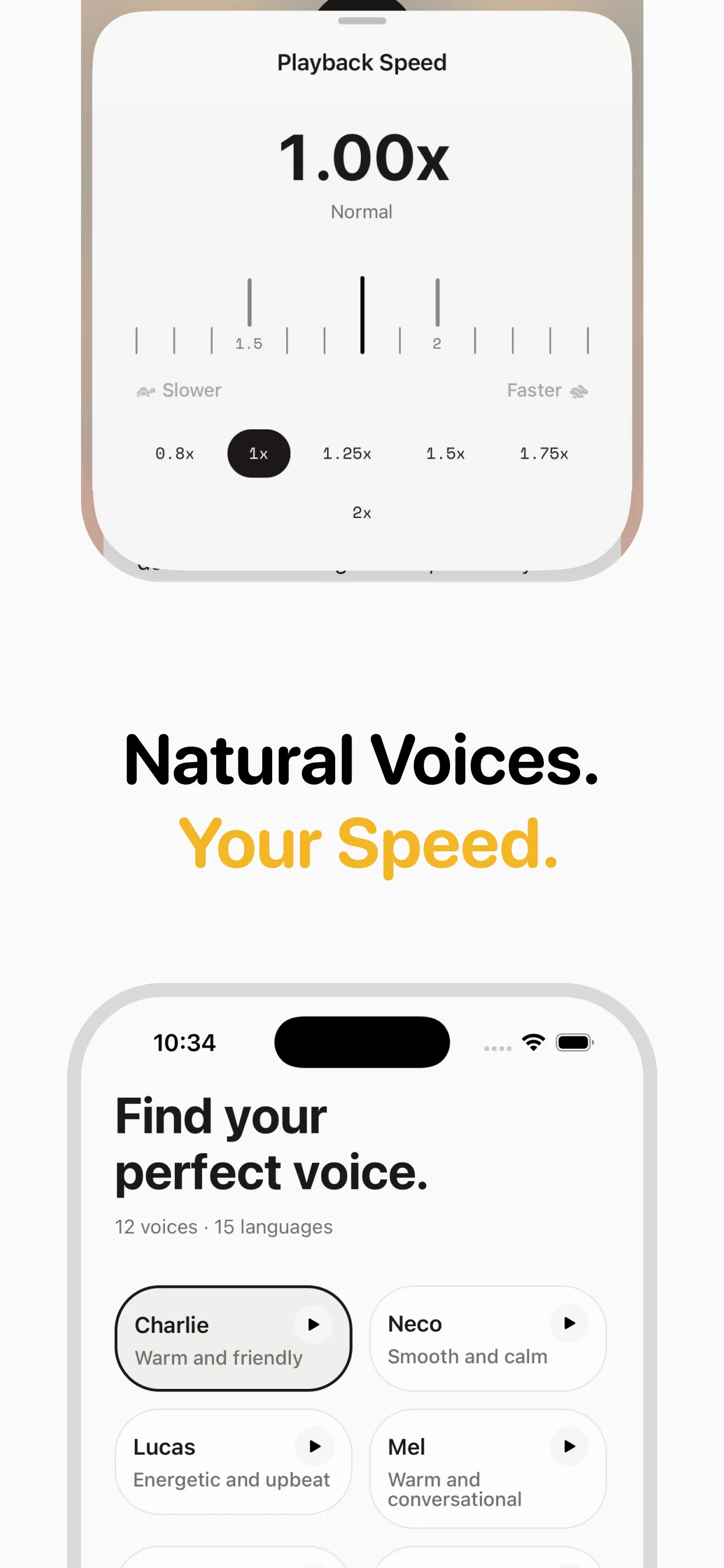
Instapaper deserves credit for essentially inventing the read-later category. Its clean, distraction-free reading view set the standard that every subsequent app has tried to match, and for visual reading, it remains one of the best options available. The typography is beautiful, the highlighting and annotation tools are useful, and the $29.99 annual price is very reasonable. Where Instapaper falls short is in its text-to-speech implementation. The app relies entirely on your device's built-in system voices, which sound noticeably robotic and lack the natural cadence that makes audio articles enjoyable. There is no voice selection beyond what iOS provides, no optimization for article narration, and no way to save generated audio for offline listening. For users who have come to rely on listening as their primary way to consume articles, this is a significant limitation. speakeasy is built specifically for the listening half of the article-consumption equation. It offers premium InWorld neural voices, iCloud-synced audio files, RSS feed subscriptions, and Twitter thread support, all in an app designed from the ground up for ears rather than eyes.
Reading vs. Listening: Two Different Workflows
Instapaper and speakeasy serve the same underlying need, getting through your reading list, but they approach it from opposite directions. Instapaper assumes you will be looking at a screen, so it optimizes for visual clarity with beautiful typography, adjustable fonts, and a distraction-free layout. speakeasy assumes you will be listening, so it optimizes for audio quality with neural AI voices, speed controls, and a persistent audio library. For many people, these are complementary tools rather than direct competitors. You might use Instapaper for deep reading at your desk and speakeasy for listening during commutes, workouts, or cooking. The key question is whether your current balance leans more toward reading or listening. If you find yourself wishing Instapaper's TTS was better more often than you use its highlighting features, speakeasy is likely the better primary app for your workflow.
The Voice Quality Gap
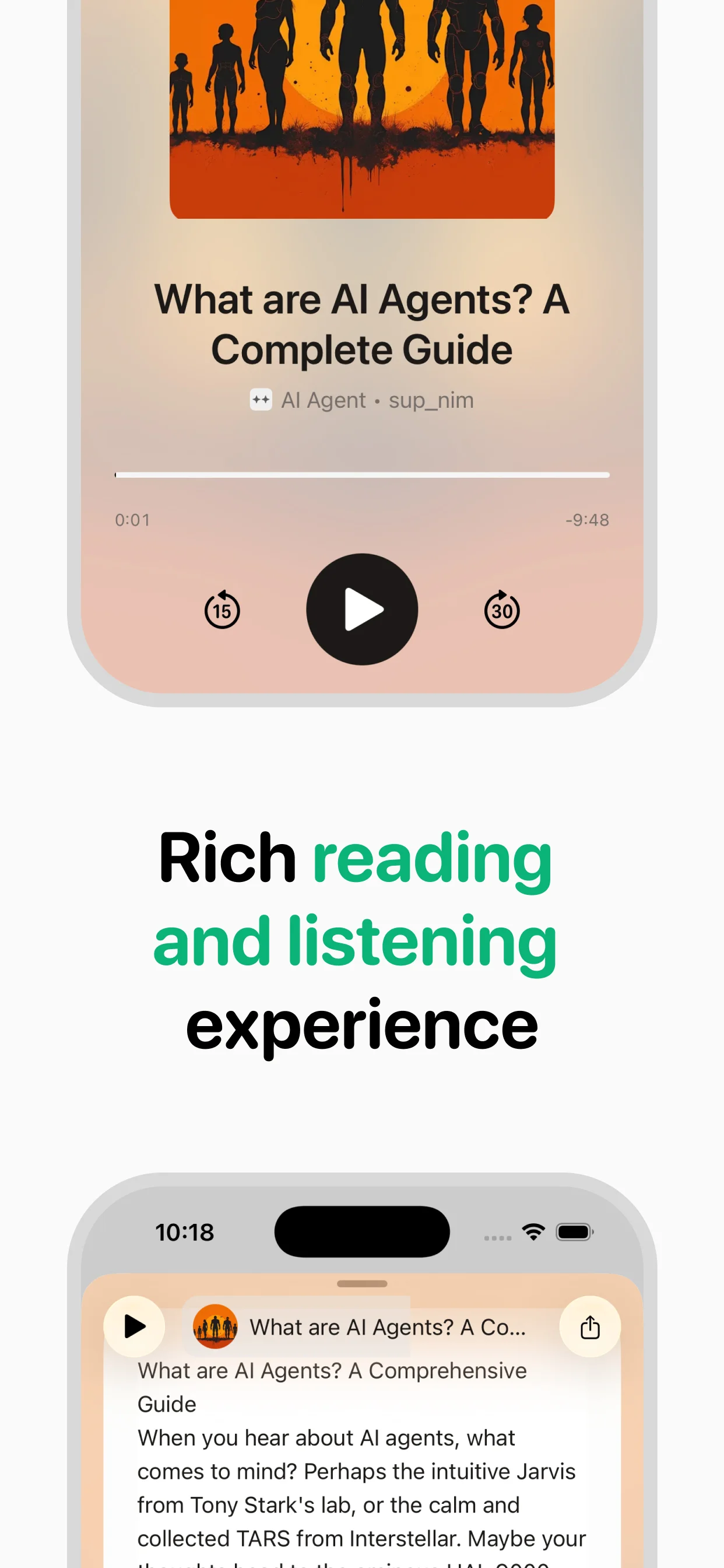
The difference between Instapaper's system TTS and speakeasy's InWorld neural voices is not subtle. System voices on iOS have improved over the years, but they still exhibit the telltale patterns of older text-to-speech: unnatural emphasis, awkward pauses at the wrong moments, and a flat intonation that makes long articles fatiguing to listen to. speakeasy's neural voices are trained on natural speech patterns and produce audio that flows with appropriate emphasis, breathing pauses, and emotional tone. For a five-minute article, the difference is noticeable but manageable. For a twenty-minute deep dive, it is the difference between an engaging experience and one you abandon halfway through. This matters because the whole point of audio articles is to make content consumption more accessible during moments when reading is not possible.
Features That Matter for Daily Listeners
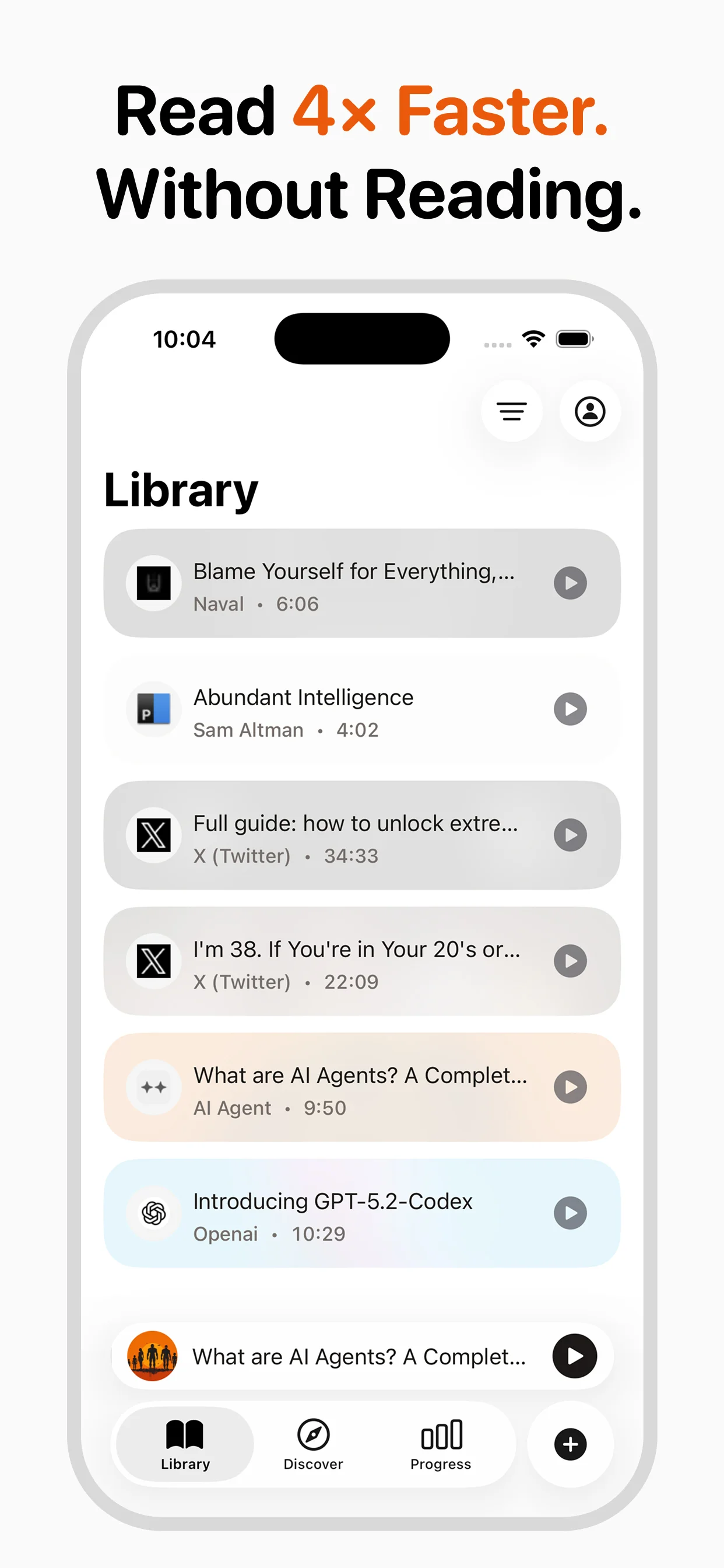
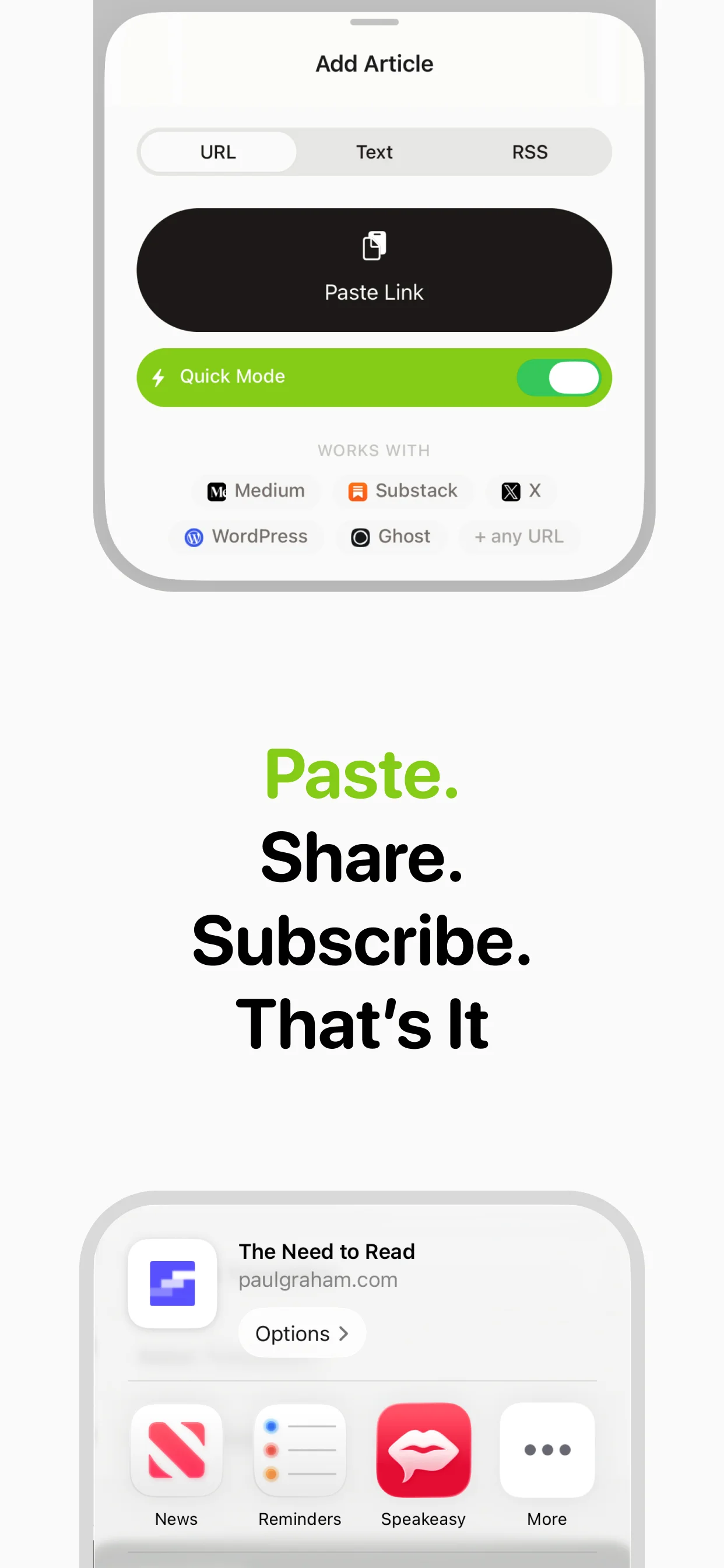
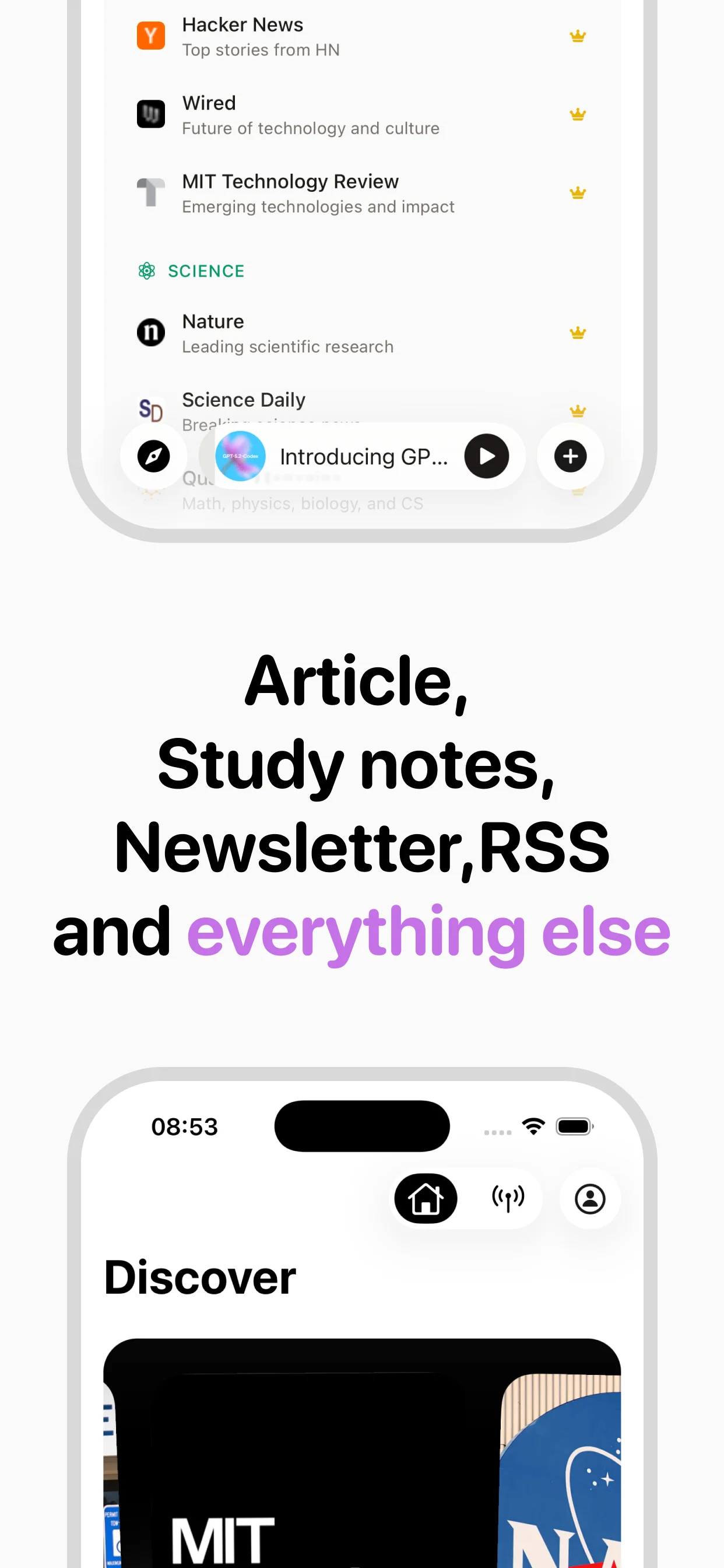
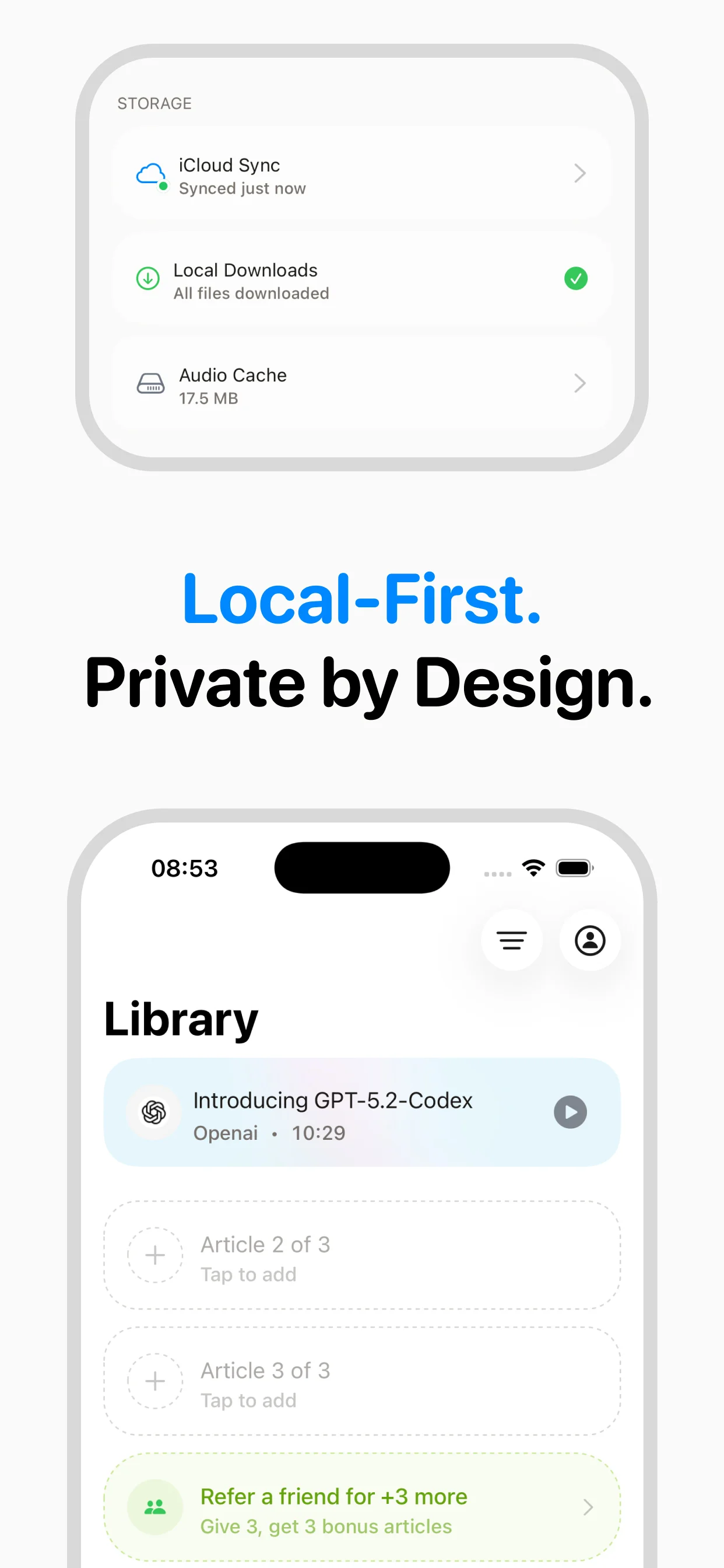
Beyond voice quality, speakeasy includes several features that Instapaper does not offer and that make a real difference for regular audio article consumers. RSS feed support lets you subscribe to publications so new articles are ready to listen to each morning without any manual saving. Twitter and X thread extraction converts threaded posts into flowing audio, opening up a category of content that Instapaper cannot handle at all. iCloud sync ensures your audio library follows you across Apple devices without any account creation or proprietary cloud setup. And offline playback means you can download articles over Wi-Fi and listen anywhere without an internet connection. Instapaper does offer offline reading for its visual mode, but its TTS requires an active internet connection on some configurations.
The Price Difference in Perspective
Instapaper Premium at $29.99 per year is significantly cheaper than speakeasy at $89.99 per year. This is a real consideration, and it is worth understanding why the difference exists. Instapaper's TTS uses your device's built-in voices, which cost nothing to run on the server side. speakeasy processes every article through InWorld's neural TTS infrastructure, which incurs real per-article costs for voice synthesis. The subscription price reflects those ongoing computational costs. The question is whether the quality improvement justifies the price. For occasional listeners, Instapaper's basic TTS might be sufficient. For daily listeners who spend 30 minutes or more each day consuming audio articles, the quality of speakeasy's voices transforms the experience from something you tolerate to something you look forward to. speakeasy's free tier of three articles per week lets you make that judgment firsthand before committing.
Why switch from Instapaper?
Feature comparison
Instapaper's limitations
Frequently asked questions
Verdict
Instapaper remains an excellent read-later app for visual reading. But if listening to articles is your thing, its TTS is embarrassingly basic. speakeasy costs more but delivers a genuinely premium audio experience with AI voices, RSS feeds, and iCloud sync. Use Instapaper for reading, speakeasy for listening.
Turn any article into natural-sounding audio. Paste a link, press play, and stay informed while you move.
Coming soon on Android