The Best Readwise Reader Alternative for Listening
Audio-first instead of annotation-first.
 speakeasy
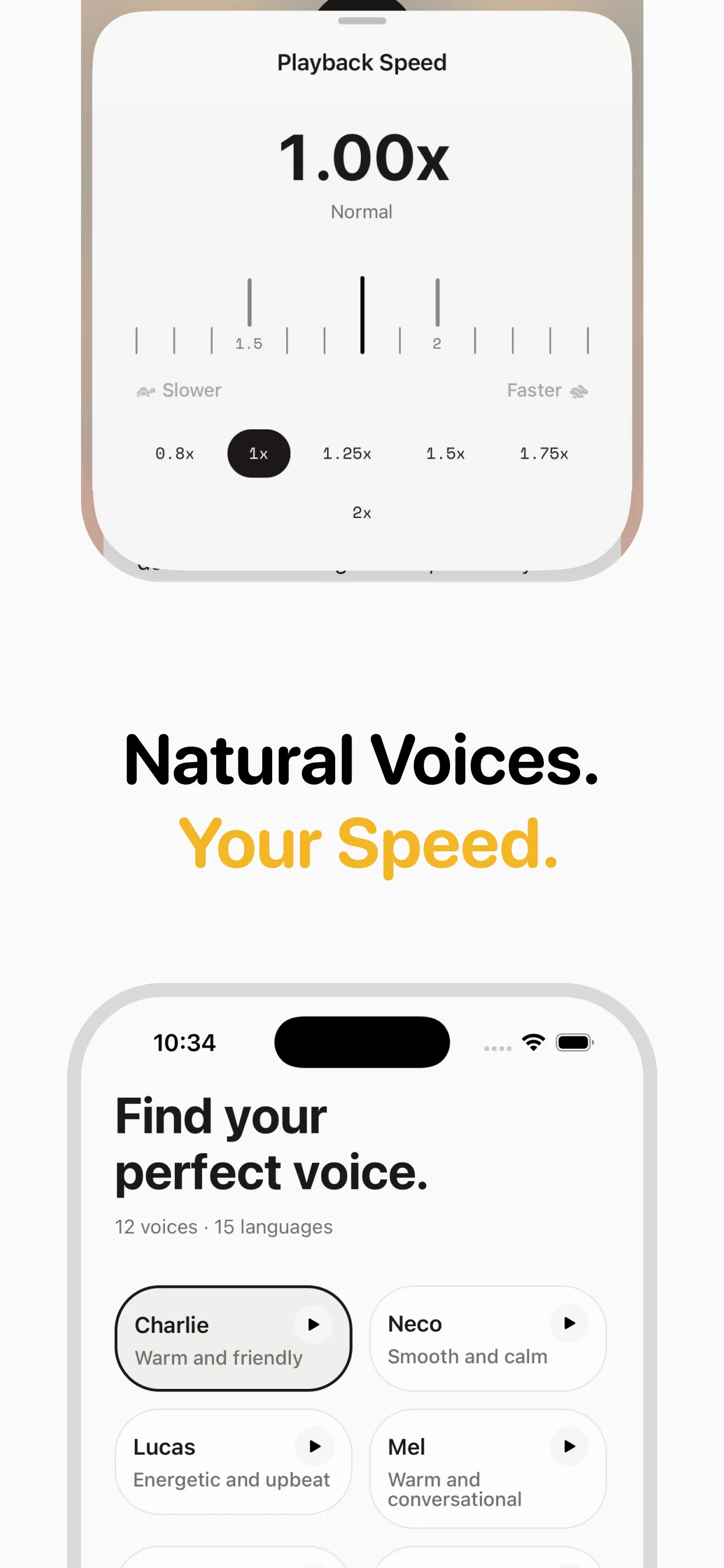
Readwise Reader has quickly become the go-to app for serious readers who want to do more than just consume content. Its highlighting, annotation, spaced repetition, and knowledge management features form a comprehensive system for retaining and connecting ideas across everything you read. For that use case, it is genuinely without peer. However, Readwise Reader's text-to-speech capability is functional at best. It uses standard voices that sound noticeably robotic, and the listening experience feels like an afterthought within an app designed primarily for visual reading and annotation. If you are a Readwise Reader user who frequently switches to audio during commutes, workouts, or household tasks, you have probably noticed this limitation. speakeasy is designed to fill exactly that gap. At a similar price point, it offers premium InWorld neural voices, a focused listening interface, iCloud sync, and RSS feed integration that auto-converts articles to audio. Many users find that running both apps, Readwise for deep reading and speakeasy for daily listening, gives them the best of both worlds.
Why Readwise Reader's TTS Falls Short
Readwise Reader is built around the idea that reading should be active. Highlights, notes, tags, and connections to your broader knowledge base are all first-class features. The app excels at turning passive reading into engaged learning. But this reading-first philosophy means that TTS was never a core design priority. The voices are basic, there are limited options for customization, and the audio experience does not benefit from the same thoughtful design that the visual reading experience receives. For users who split their time between reading and listening, this creates an odd imbalance: the reading experience is exceptional while the listening experience is merely adequate. speakeasy addresses this by providing a dedicated listening environment with InWorld neural voices that are optimized for long-form article narration.
Complementary Tools for the Modern Reader
Rather than positioning speakeasy as a complete replacement for Readwise Reader, it is more accurate to describe them as complementary tools. Readwise Reader excels at articles you want to deeply engage with: highlighting key passages, connecting ideas to your knowledge base, and scheduling reviews through spaced repetition. speakeasy excels at articles you want to consume through audio: converting URLs to natural-sounding speech, syncing audio files across Apple devices via iCloud, and building an automatic listening queue through RSS feeds. The overlap is in content sources. Both apps handle web articles, newsletters, and blog posts. The difference is in how you consume that content. Some articles deserve deep, annotated reading. Others are better suited for listening during a commute. Having both tools lets you route each article to the most appropriate consumption mode.
Comparing the Total Cost of Ownership
Readwise Reader costs $8.99 per month or $107.88 per year. speakeasy costs $9.99 per month or $89.99 per year. If you were choosing one or the other, the prices are comparable. If you use both, the combined cost is roughly $16 to $18 per month, which is still less than a Speechify subscription and provides a far more capable reading and listening setup. The value proposition depends on how you consume content. If you exclusively read visually and rarely use TTS, Readwise Reader alone is the right choice. If you exclusively listen and do not need annotation features, speakeasy alone covers your needs at a slightly lower price. But if you are a hybrid consumer who reads some articles and listens to others, the combination of Readwise Reader's annotation power and speakeasy's audio quality creates a workflow that neither app can match alone.
The RSS and Content Pipeline Advantage
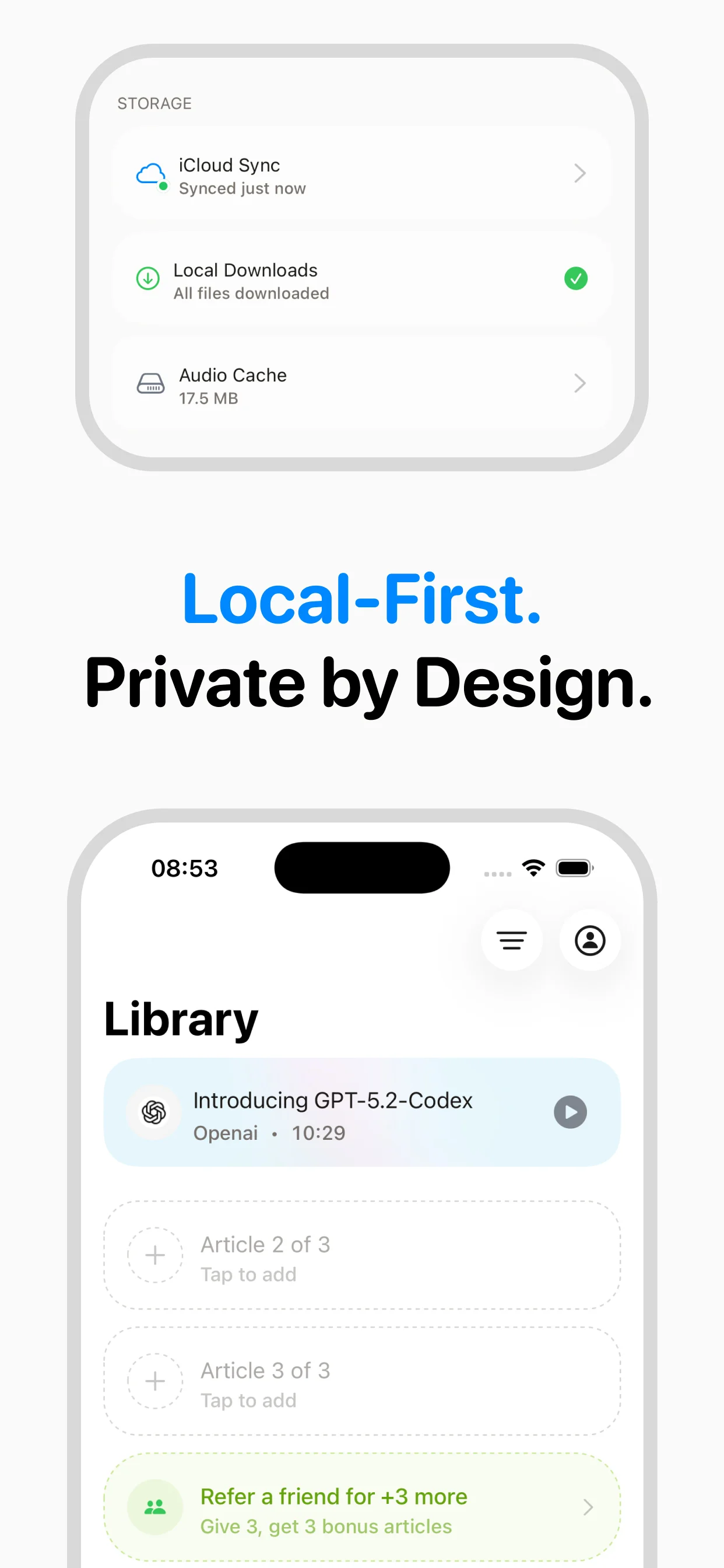
Both Readwise Reader and speakeasy support RSS feeds, but they use them differently. Readwise Reader brings RSS content into your reading queue alongside saved articles, Twitter threads, and email newsletters, all organized for visual reading and annotation. speakeasy's RSS integration is audio-first: new articles from your subscriptions are ready to be converted to natural-sounding audio with a single tap. For users who follow specific publications and want new content delivered as a daily listening queue, speakeasy's approach is more direct. There is no triage step between saving and listening. You open the app, see what is new from your subscriptions, and start listening. This simplicity is part of speakeasy's broader design philosophy. It does fewer things than Readwise Reader, but it does the listening workflow with less friction and higher audio quality.
Why switch from Readwise Reader?
Feature comparison
Readwise Reader's limitations
Frequently asked questions
Verdict
Readwise Reader is the best tool for readers who annotate, highlight, and build a knowledge base. But for listeners, speakeasy is far superior. Same price range, but dramatically better audio quality and a simpler experience. If you're a Readwise user who mostly listens, switching saves you complexity without sacrificing audio quality.
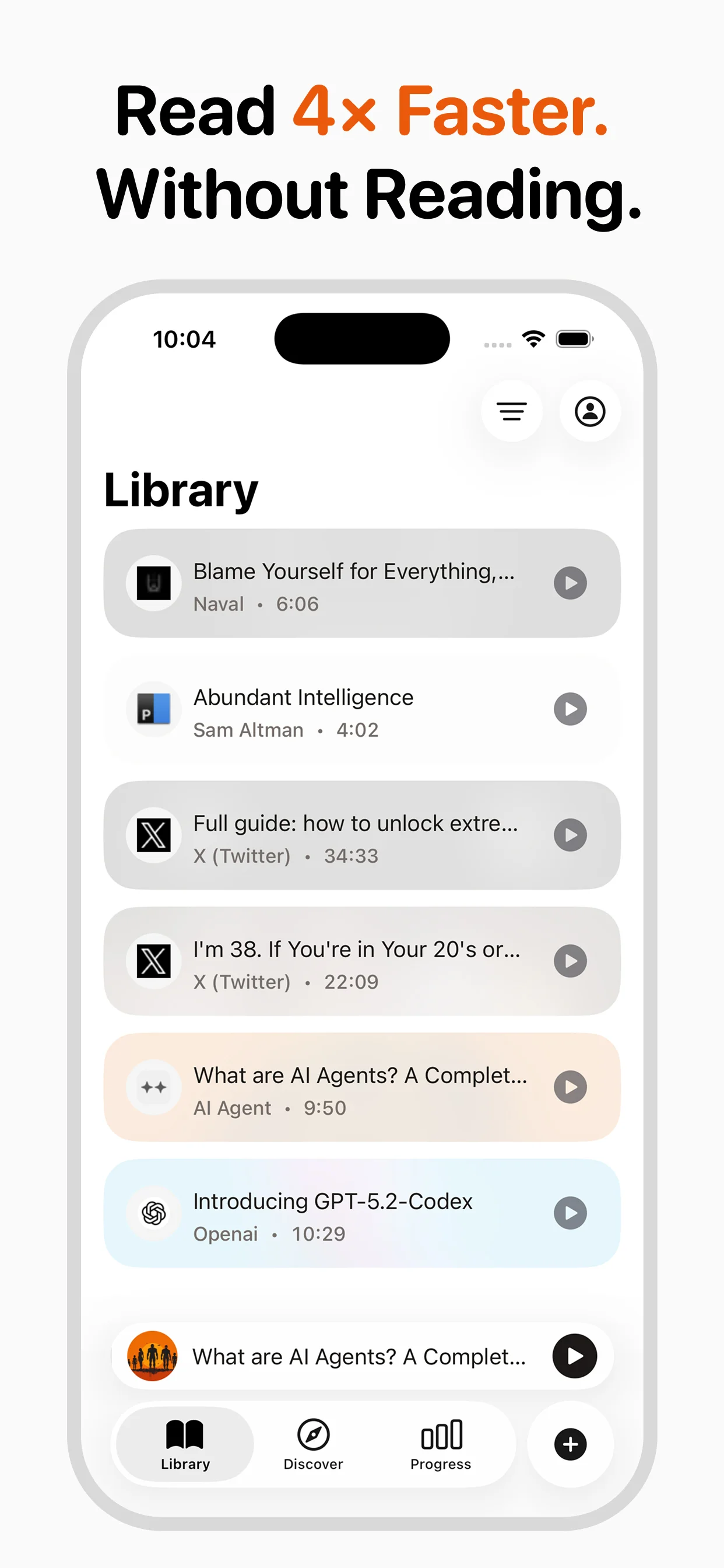
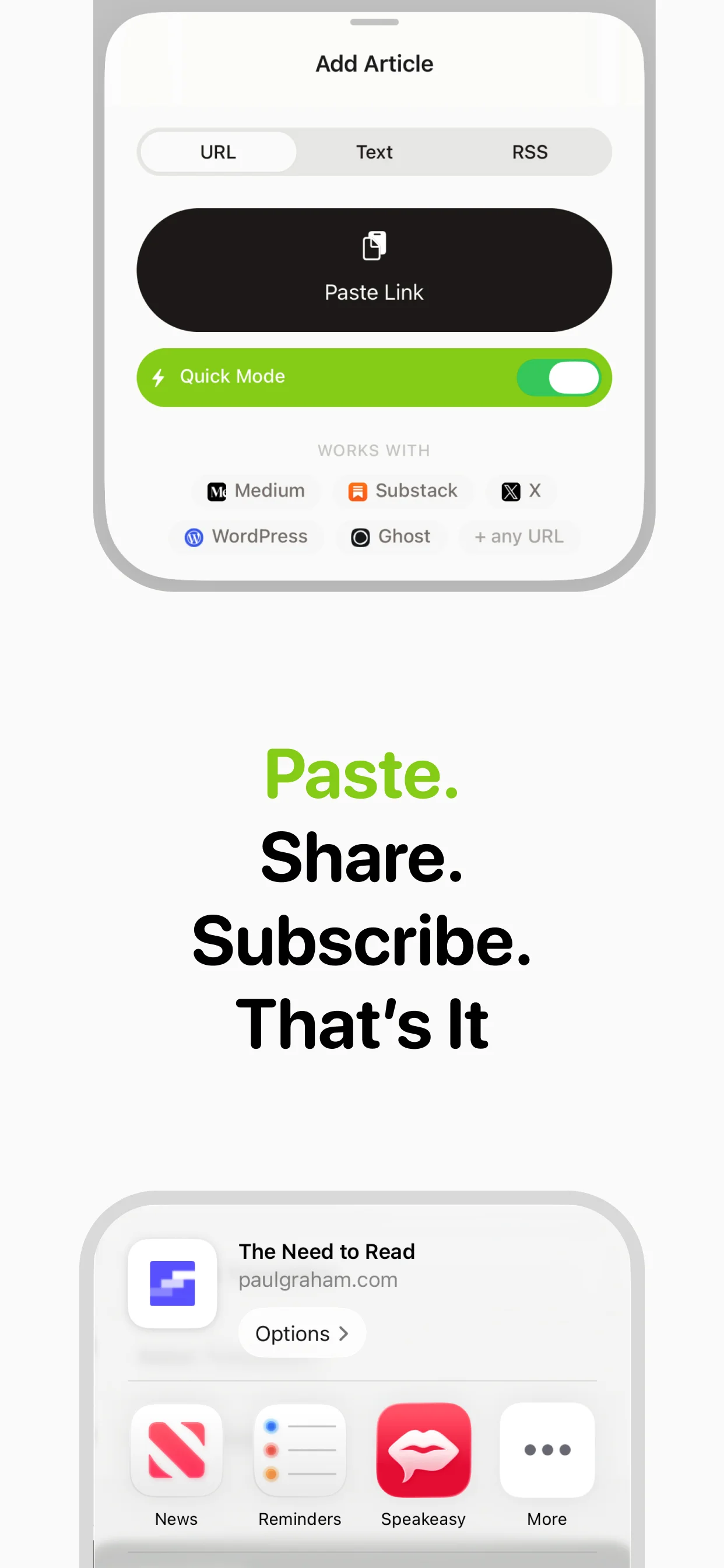
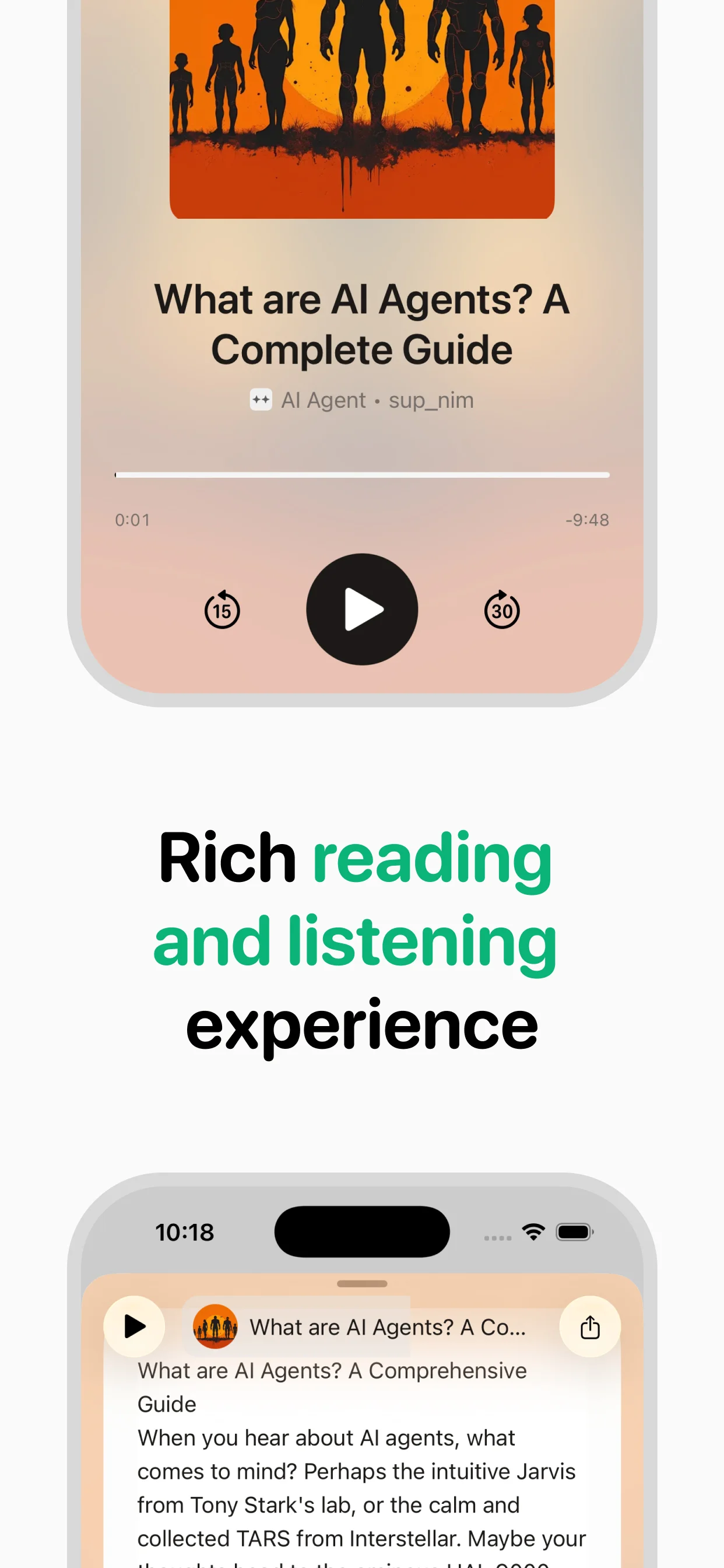
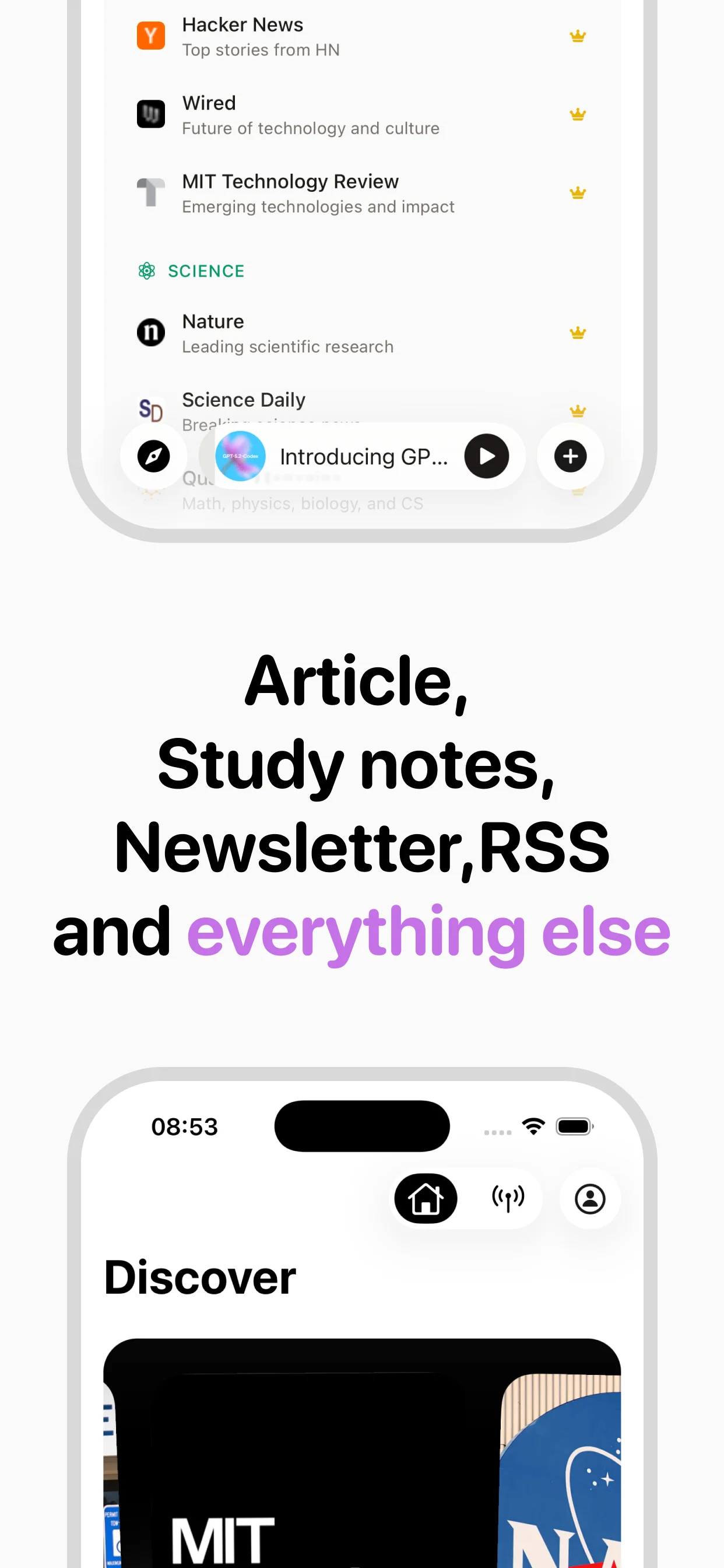
Turn any article into natural-sounding audio. Paste a link, press play, and stay informed while you move.
Coming soon on Android