
Dune by Frank Herbert
An epic of ecology, politics, and messianic power set on a desert world of unimaginable consequence
Reading time
8-10 hours
Listen with speakeasy
20-35 minutes with speakeasy summary
Summary
Set thousands of years in the future across a feudal interstellar civilization, Dune follows young Paul Atreides as his noble family assumes control of Arrakis — the only source of the galaxy's most valuable substance, the spice melange, which extends life and enables space navigation. When House Atreides is betrayed and Paul is forced into the desert, he finds refuge among the Fremen, the indigenous people of Arrakis who have long prophesied a messiah figure. Herbert uses this premise to construct one of science fiction's most elaborate critiques of heroism, ecological systems, religion as political tool, and the dangers of charismatic leadership. The novel's meticulous world-building — covering geology, religion, politics, pharmacology, and economics — set a new standard for speculative fiction. Herbert was explicitly warning against the seductiveness of messianic figures and the human tendency to surrender critical thinking to leaders who promise salvation. Dune won the inaugural Nebula Award for Best Novel and the Hugo Award, and remains the best-selling science fiction novel of all time.
Key takeaways
- Ecology and resource scarcity are inseparable from political power — whoever controls the spice controls the universe
- Herbert explicitly critiques messianic leadership and the dangers of surrendering judgment to charismatic heroes
- Religion functions as a tool of political control, engineered by the Bene Gesserit over centuries
- The novel is a prescient allegory for oil-dependent geopolitics and colonial exploitation of resource-rich regions
- True heroism in Herbert's world is complicated by the atrocities committed in a hero's name
Why listen?
Dune's layers of political allegory, ecological philosophy, and religious critique have inspired decades of rich academic and journalistic essays. With speakeasy, you can turn the best long-form writing about Herbert's universe into audio and explore the novel's ideas during commutes, workouts, or wherever suits you.
About Dune
Published in 1965 by Frank Herbert, Dune has become one of the most widely discussed titles in science fiction. At 412 pages, it's a substantial work that rewards careful attention — but in today's busy world, finding time to sit down with a 412-page book can feel impossible.
That's where speakeasy comes in. While we can't convert entire copyrighted books to audio (that's what audiobooks are for), we can help you engage with the rich ecosystem of content surrounding Dune: reviews, summaries, analysis essays, author interviews, and discussion pieces. These articles — often published on Substack, Medium, and literary blogs — provide valuable context and different perspectives on the book's themes.
Why Dune endures
Great books continue to generate conversation long after publication, and Dune is no exception. Frank Herbert's work has inspired countless essays, podcast discussions, and analytical deep-dives that explore its themes from new angles. Whether you've already read the book and want to deepen your understanding, or you're considering whether to pick it up, listening to analysis and reviews is one of the most efficient ways to engage with the ideas.
The science fiction genre has seen tremendous growth in online discourse, with writers on Substack and Medium regularly publishing thoughtful takes on books like Dune. speakeasy lets you convert these articles to audio and listen during your commute, workout, or evening routine — turning any moment into an opportunity to engage with great literature.
The listening advantage for book lovers
Audio content about books serves a different purpose than the books themselves. While audiobooks give you the full text, article audio gives you context, analysis, and multiple perspectives in a fraction of the time. A 20-minute article about Dune can surface insights that might take hours of reading to discover on your own.
speakeasy's natural AI voices make these articles feel like listening to a knowledgeable friend discuss the book with you. Adjust the playback speed to match your preference — 1.0x for relaxed listening, 1.3x for efficient consumption — and build a personal library of the best literary analysis the web has to offer. Your collection syncs across iPhone and Mac through iCloud, so your reading list is always at your fingertips.
Exploring Frank Herbert's wider work
If Dune resonated with you, Frank Herbert's broader body of work and the essays inspired by it offer even more to explore. Many of the web's best writers have published pieces connecting Dune to current events, personal experiences, and other works in science fiction.
Use speakeasy to build a listening queue around Frank Herbert's ideas: start with the most-shared reviews and analysis, then branch out to interviews, opinion pieces, and thematic essays that connect this book to the wider literary conversation. The result is a richer, more nuanced understanding of both the book and the ideas it explores — all consumed during time that would otherwise go unused.
Frequently asked questions





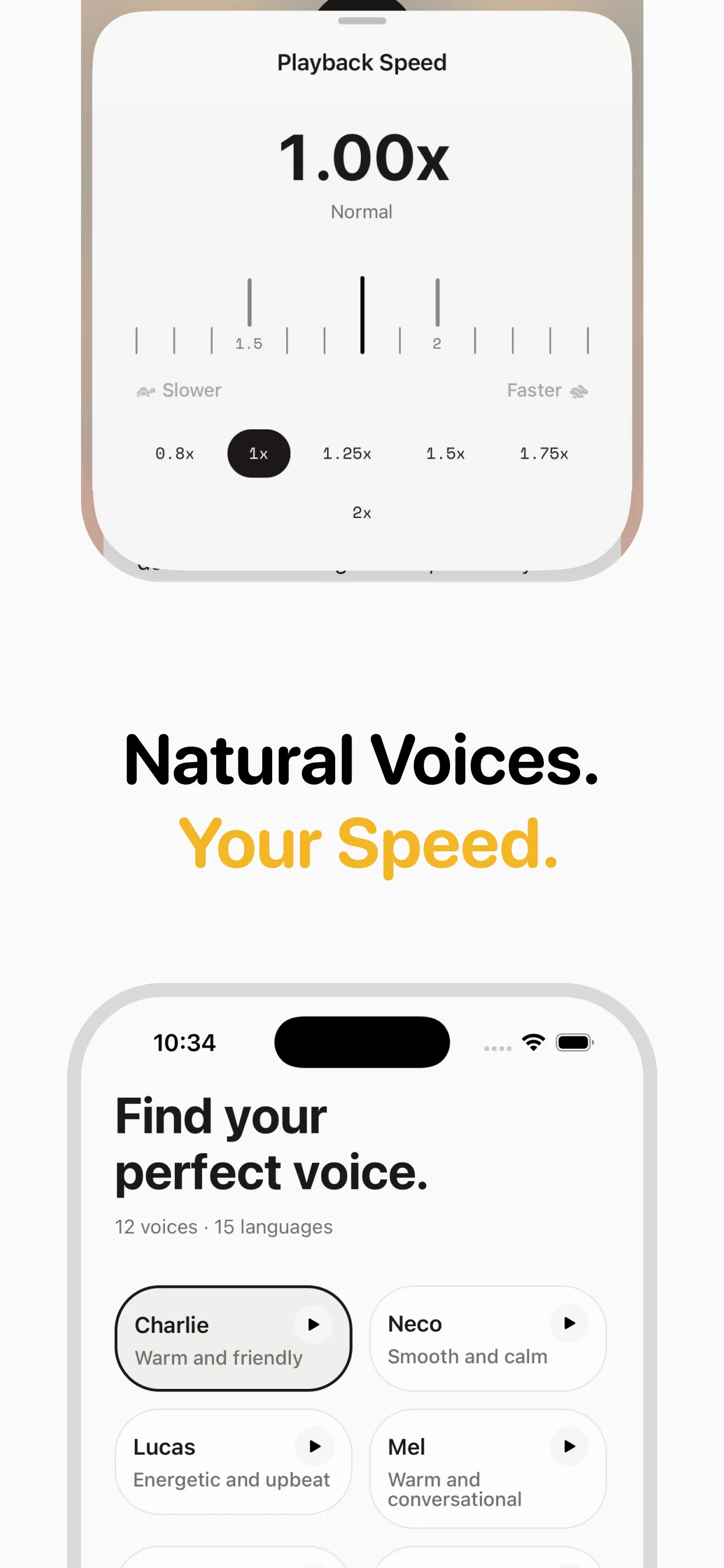

Turn any article into natural-sounding audio. Paste a link, press play, and stay informed while you move.
Coming soon on Android


