Listening vs Reading Comprehension
What decades of research tell us about how we process information through reading and listening.

The short answer
Comprehension through listening and reading is remarkably similar for most content types. A 2016 meta-analysis by Rogowsky, Calhoun, and Tallal published in the Journal of Research in Reading found no significant difference in comprehension between reading and listening for adults consuming non-fiction content. A 2019 study by Daniel Willingham at the University of Virginia confirmed this: for informational texts, the modality (reading vs. listening) matters far less than the complexity of the material and the audience's background knowledge.
When reading has an advantage
Reading is better for dense, technical material that requires re-reading passages, cross-referencing sections, or studying diagrams and equations. You can control your pace precisely, pause to think, and easily scan back to recheck a detail. Academic textbooks, legal documents, and code — anything with high information density or spatial layout — is typically easier to process visually.
When listening has an advantage
Listening has unique advantages for narrative and informational content. Prosody — the rhythm, stress, and intonation of speech — adds a layer of meaning that text lacks. Research by Fraundorf and Watson (2011) showed that listeners pick up on emphasis cues that help them identify important information. Listening also enables multitasking: commuting, exercising, cooking, or doing chores. Time that would otherwise be unproductive becomes learning time. For many people, this access advantage is more important than any marginal difference in retention.
The speed factor
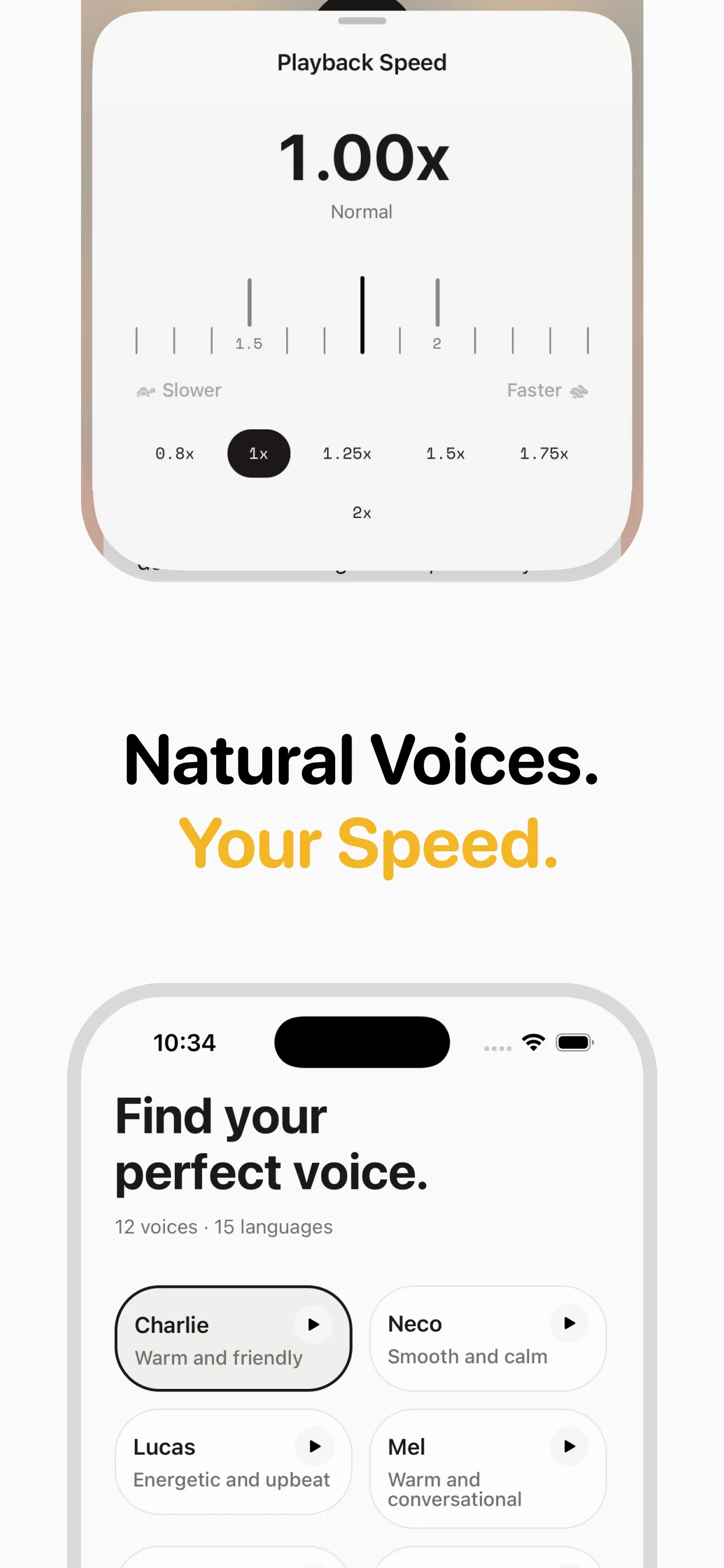
Average reading speed is about 250 words per minute. Average comfortable listening speed is 150-160 WPM at 1x. But trained listeners routinely comprehend audio at 2x-2.5x speed (300-400 WPM), and research by Peck (2012) at the University of Colorado found that comprehension remains stable up to about 2x speed for most content. At higher speeds, retention drops primarily for complex or unfamiliar material. speakeasy supports up to 4x speed, letting experienced listeners match or exceed typical reading speed.
Individual differences matter most
Perhaps the strongest finding in the research is that individual differences dwarf modality differences. Some people are naturally stronger auditory processors; others are visual. People with dyslexia often comprehend significantly better through listening (Snowling, 2000). People with ADHD may find audio easier to focus on than text, especially with engaging voices. The "best" modality is the one that fits your brain and your schedule.
The practical takeaway
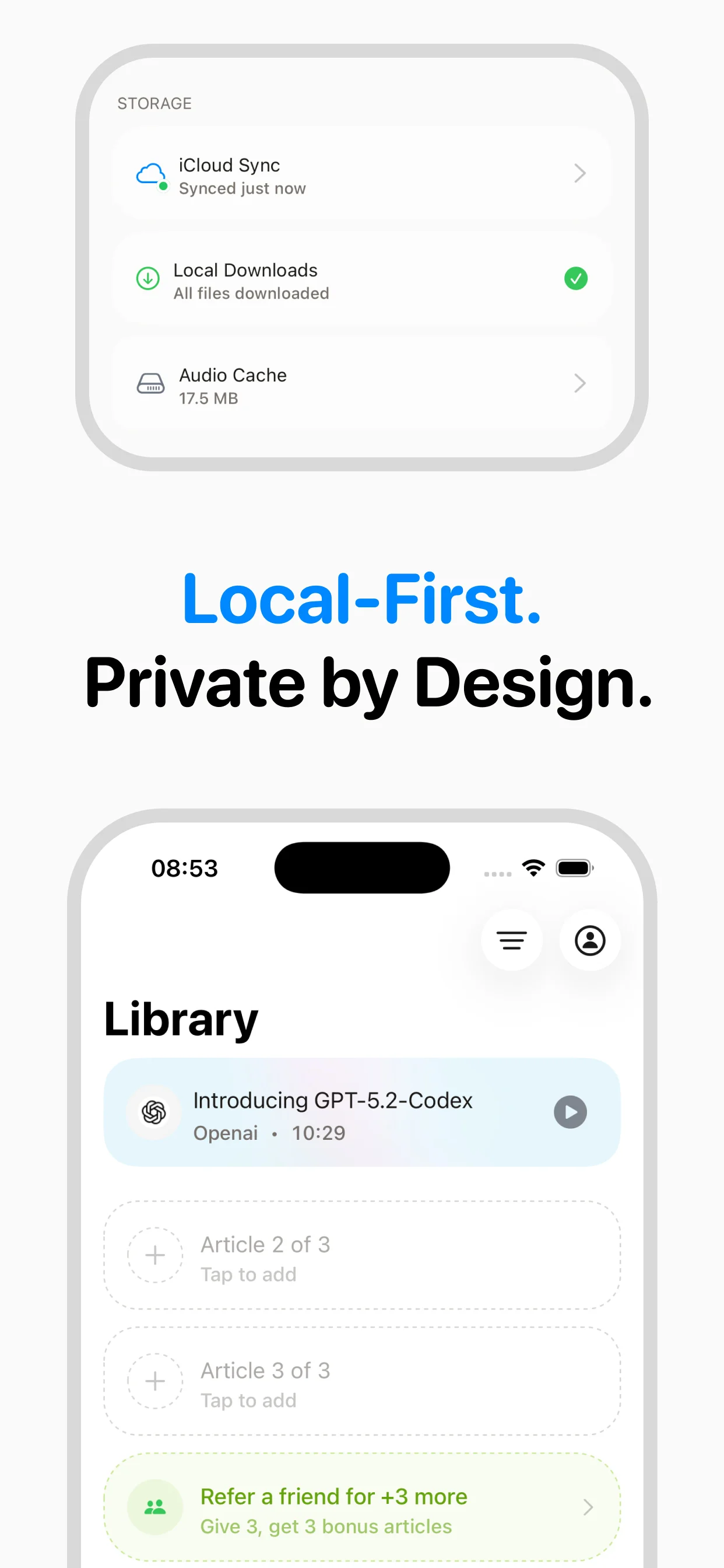
Don't think of listening and reading as competing — think of them as expanding your total bandwidth. Read when you're at a desk and the content is dense. Listen when you're moving and the content is informational. Tools like speakeasy let you convert your article backlog into audio, turning dead time into learning time. The research supports this: you'll retain the information either way.
Frequently asked questions

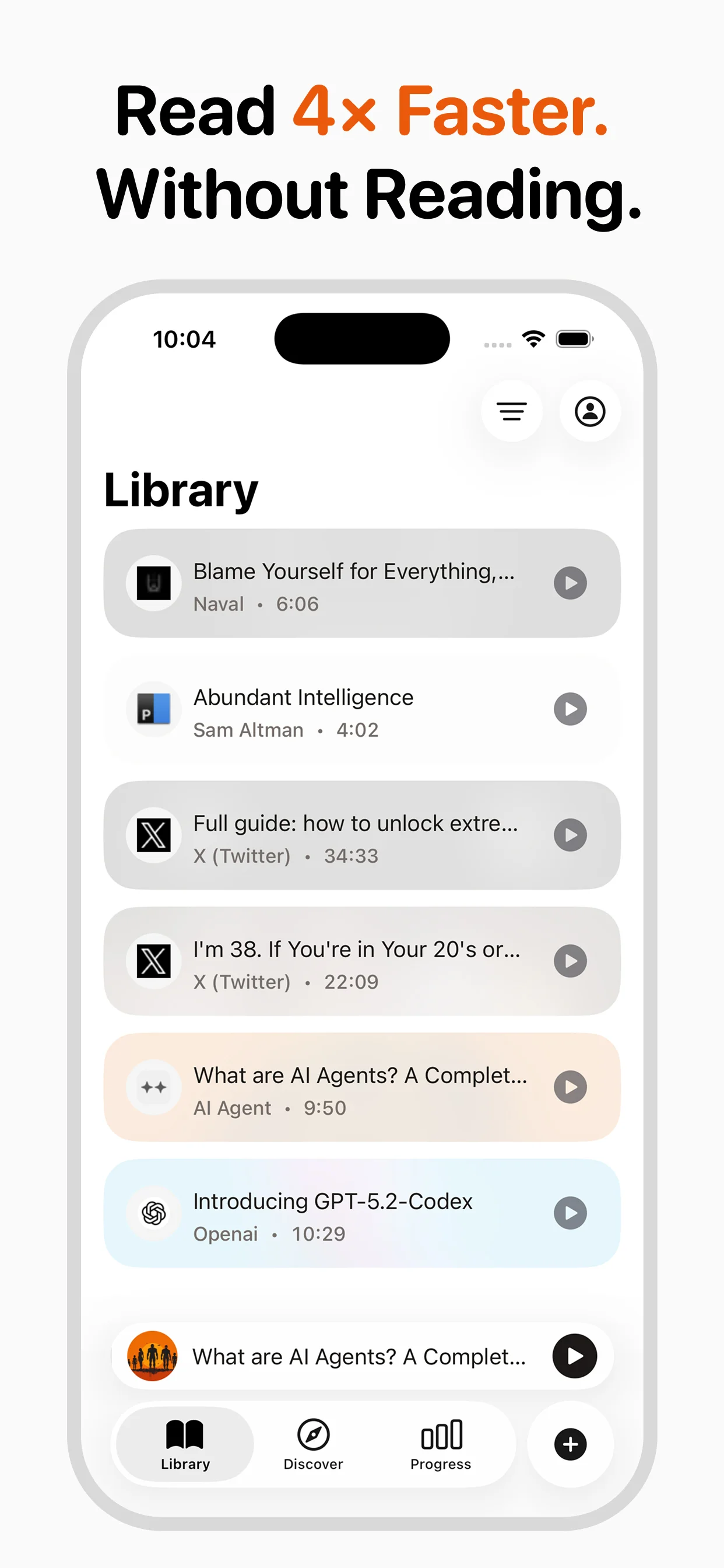
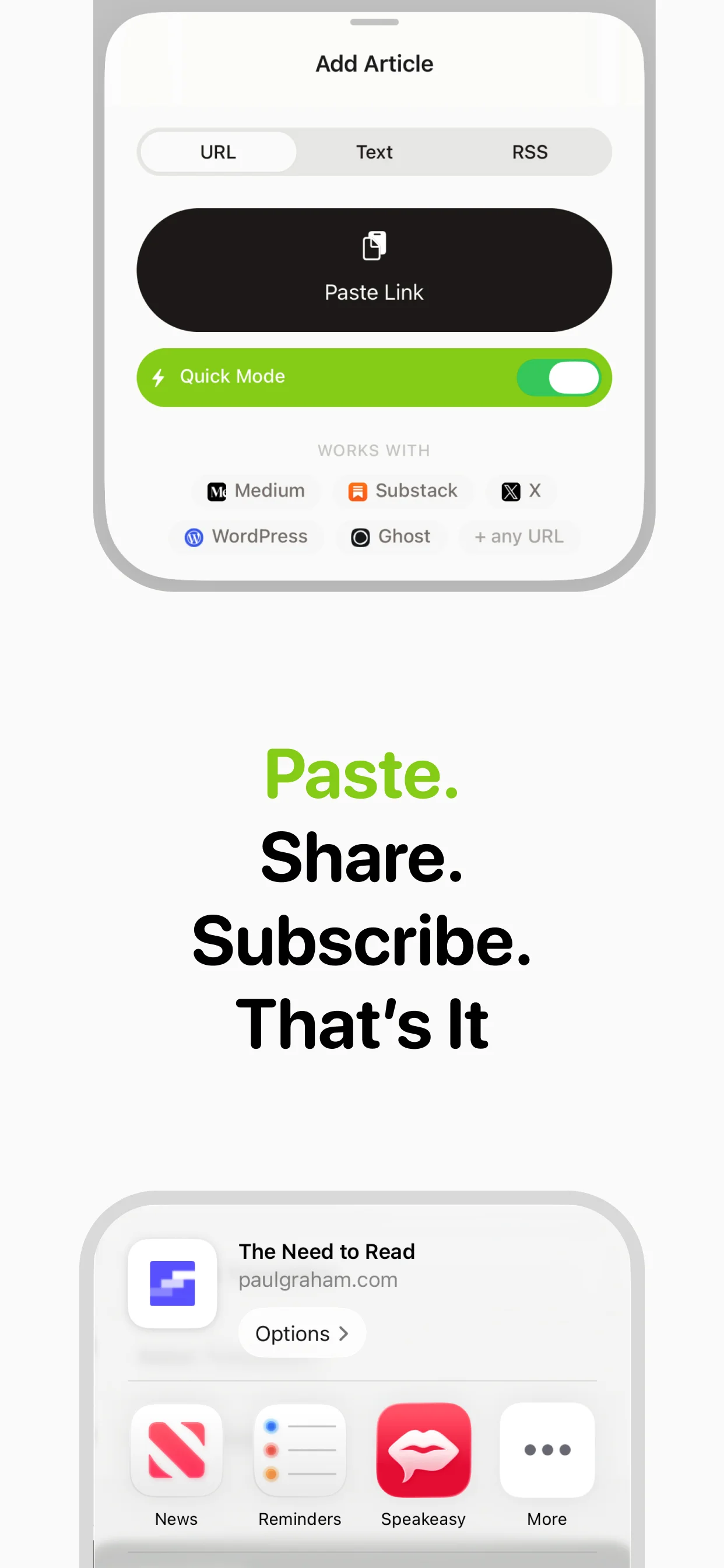
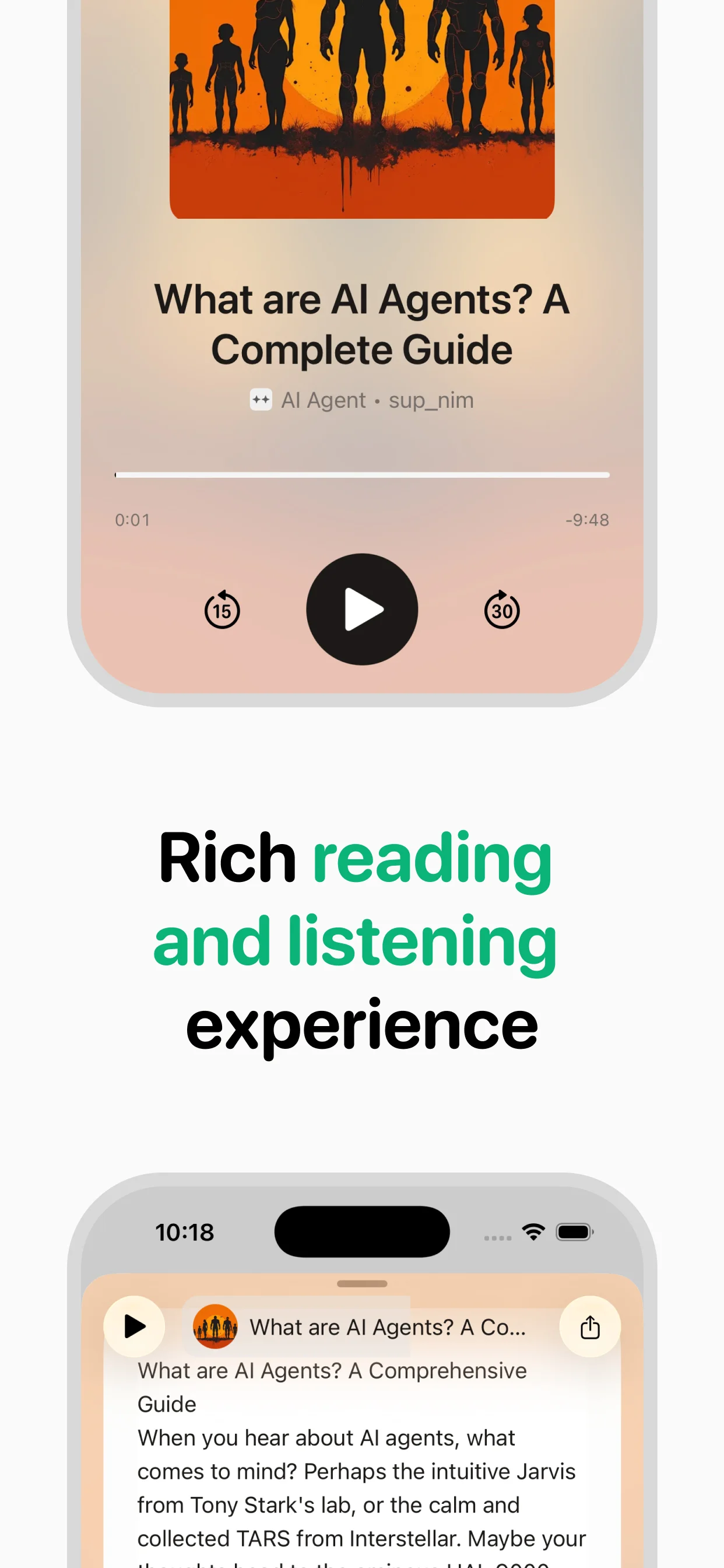
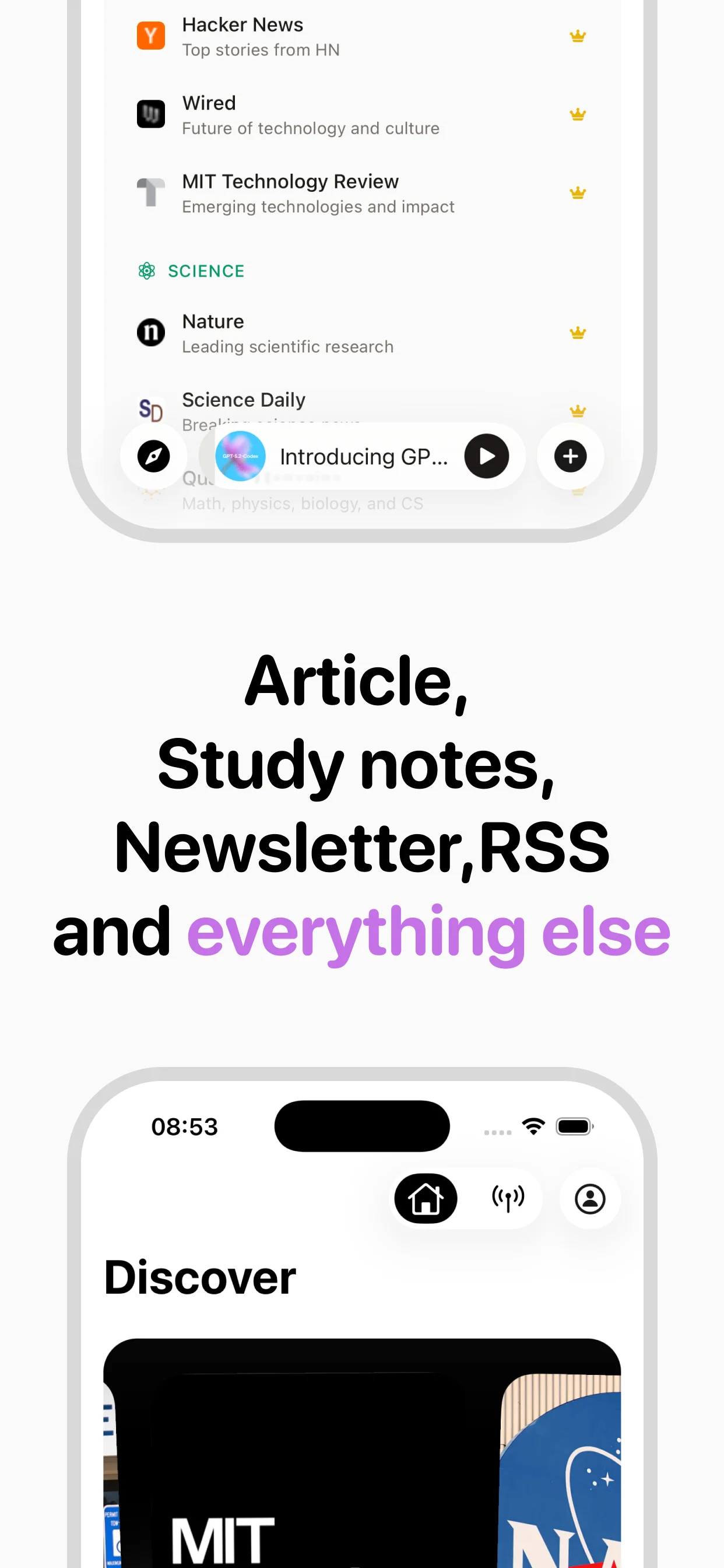
Turn any article into natural-sounding audio. Paste a link, press play, and stay informed while you move.
Coming soon on Android