TTS vs Audiobooks
Human-narrated audiobooks vs AI-generated speech — how they compare and when to use each.

The fundamental difference
Audiobooks are professionally produced recordings of specific books, narrated by voice actors or the authors themselves. Text-to-speech converts any written text — articles, newsletters, PDFs, blog posts, research papers — into audio on demand. Audiobooks excel at long-form books; TTS excels at everything else. They're complementary, not competing.
Content availability
Audiobooks cover roughly 500,000 titles on Audible — impressive, but a fraction of all published content. TTS has no catalog limitation: any text on the internet is available. That Substack newsletter, that academic paper, that 40-page policy document, that Reddit thread — none of these will ever be audiobooks. TTS makes all of this listenable. speakeasy converts any URL to audio in seconds, covering the vast majority of content that audiobooks never will.
Voice quality comparison
Professional audiobook narrators are still the gold standard — they bring character voices, emotional depth, and years of performance training. But the gap has narrowed dramatically. Neural TTS voices from InWorld and OpenAI now score 4.0-4.5 on Mean Opinion Score (MOS) tests, compared to 4.5-4.8 for professional narrators (on a 5-point scale). For informational content like news articles and blog posts, most listeners can't distinguish premium TTS from human narration.
Cost comparison
An Audible subscription costs $14.99/month for one credit (one book). Additional books cost $12-30 each. A heavy reader spending on Audible might pay $30-60/month. With TTS, you convert unlimited content — speakeasy Premium is $9.99/month for unlimited articles with premium voices, or use the free tier for 3 articles per week. For someone who consumes primarily articles, newsletters, and online content, TTS is dramatically cheaper.
Speed and flexibility
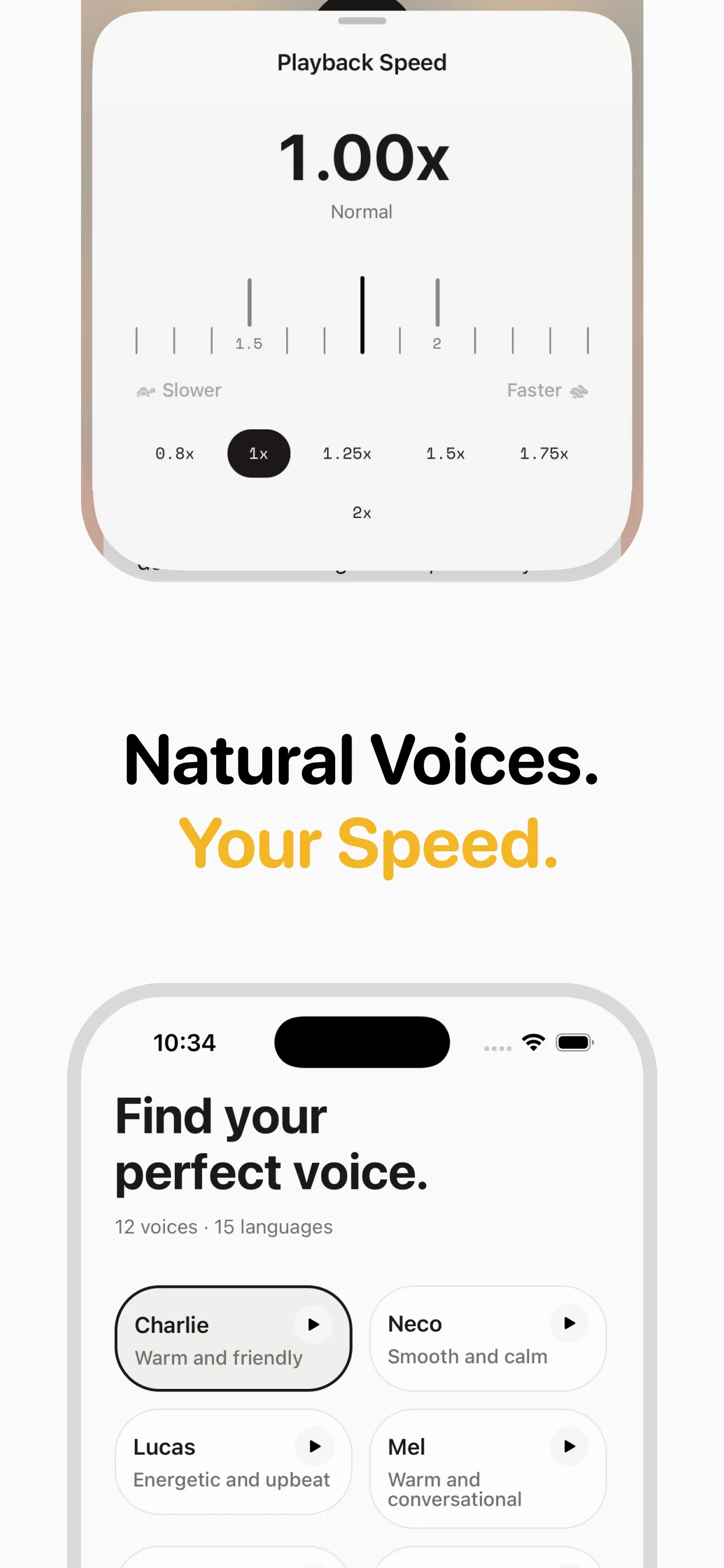
Audiobooks are pre-recorded at one speed. Most players offer 0.5x-3x playback speed, but higher speeds can sound unnatural because the pitch changes. TTS generated at different speeds maintains natural pitch because the synthesis adjusts duration directly. speakeasy supports 0.5x-4x speeds. There's also the latency difference: an audiobook must exist in the catalog. TTS converts anything instantly — paste a URL, press play.
When to use each
Choose audiobooks for: novels, memoirs, long non-fiction books — content that benefits from a narrator's performance. Choose TTS for: articles, newsletters, blog posts, documentation, research papers, news — content that needs to be consumed quickly and won't ever get an audiobook recording. Many avid listeners use both: audiobooks for their book queue, TTS for their article backlog.
Frequently asked questions

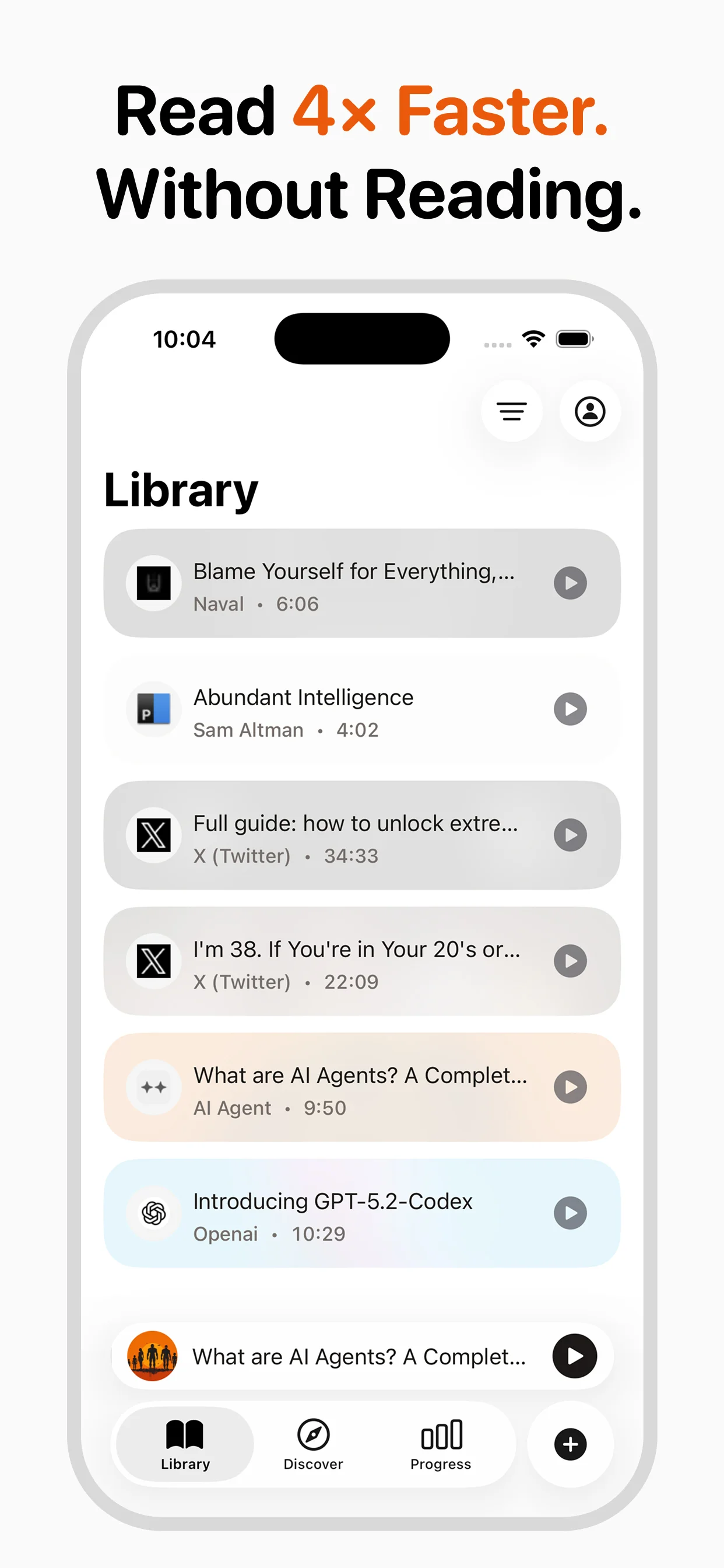
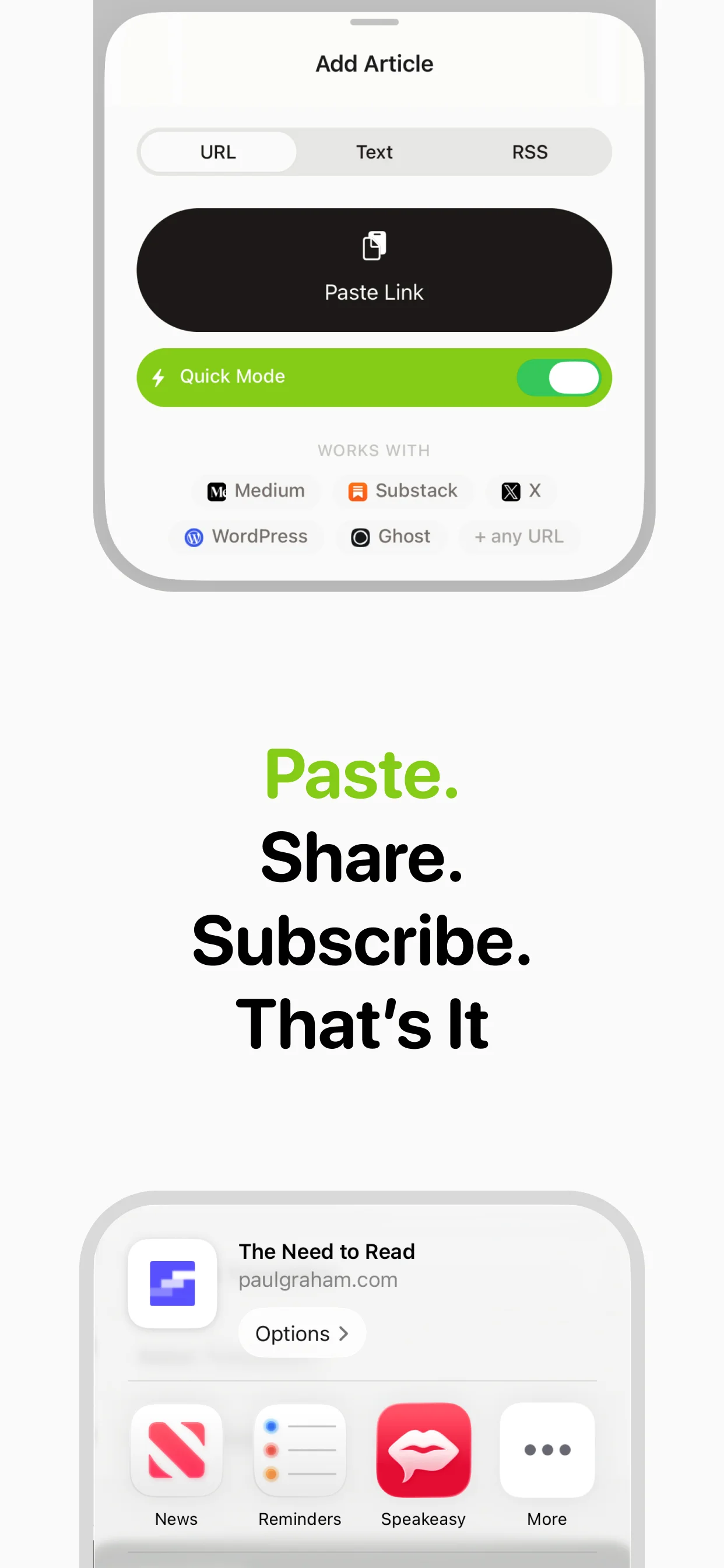
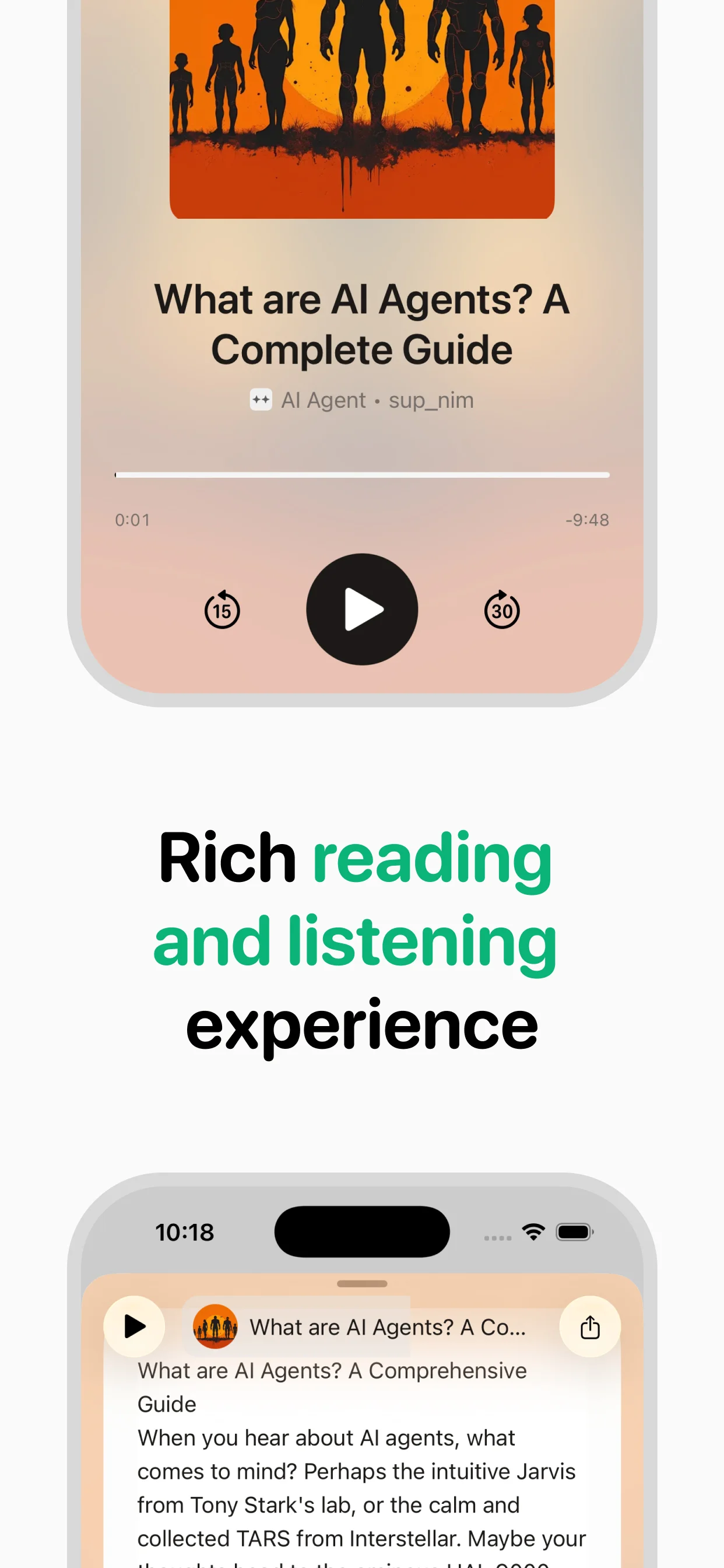
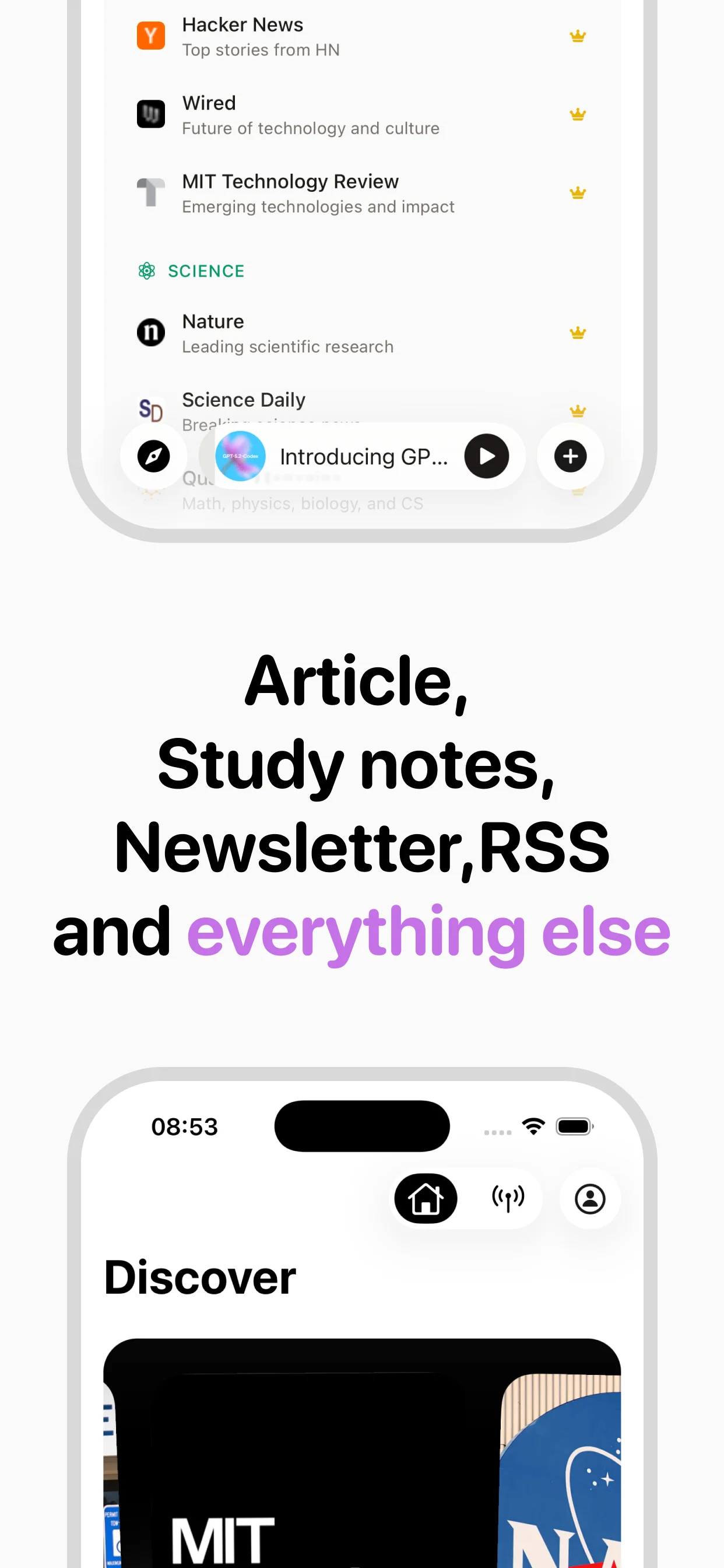
Turn any article into natural-sounding audio. Paste a link, press play, and stay informed while you move.
Coming soon on Android