The best selling children's books have shaped generations of young readers, turning bedtime stories into lifelong memories and sparking imaginations that carry well into adulthood. From picture books that parents know by heart after hundreds of readings to chapter books that give children their first taste of literary adventure, the greatest kids books share a common quality: they respect their audience. The titles on this list have collectively sold billions of copies worldwide, been translated into dozens of languages, and earned their place on bookshelves in homes, classrooms, and libraries across the globe. Whether you are building a collection for a new baby, searching for the right book for a reluctant reader, or revisiting the stories that meant the most to you growing up, these are the children's books that have stood the test of time and continue to captivate young minds today.
What Makes a Great Children's Book?
The best children's books work on multiple levels. For the youngest readers, rhythm, repetition, and vivid illustrations create an experience that is as much about sound and sight as it is about story. For older children, great books introduce complex emotions, moral questions, and worlds that expand what a child believes is possible. A truly great children's book does not talk down to its audience. It meets children where they are while gently pulling them forward. The language is precise without being condescending. The themes are honest without being overwhelming. And the best ones reward rereading, revealing new layers as a child grows. Illustration quality matters enormously in picture books, while chapter books succeed through memorable characters and plots that respect a young reader's intelligence.
The Best Selling Children's Books of All Time
1. Where the Wild Things Are by Maurice Sendak
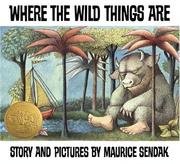
Maurice Sendak's 1963 masterpiece remains the gold standard for children's picture books. Max, sent to bed without supper after making mischief in his wolf suit, sails to an island of Wild Things and becomes their king. The genius of this book lies in its refusal to sanitize childhood emotions. Max is angry, and his anger takes him on a transformative journey. Sendak's crosshatched illustrations are simultaneously menacing and inviting, capturing the duality of a child's inner world. The book was controversial upon release for depicting a child who misbehaves without clear punishment, but that honesty is exactly what made it resonate. It has sold over 20 million copies and remains a foundational text in children's literature.
2. Charlotte's Web by E.B. White
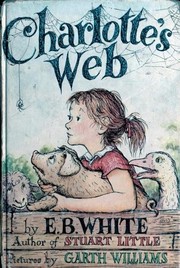
E.B. White's 1952 novel about the friendship between a pig named Wilbur and a spider named Charlotte is often cited as the greatest children's novel ever written. Charlotte's Web tackles life, death, friendship, and sacrifice with a clarity and emotional depth that few adult novels achieve. White's prose is a masterclass in simplicity. Every sentence does exactly what it needs to do, and the final chapters have brought tears to readers of every age for over seven decades. Garth Williams's original illustrations complement the text perfectly. The book has sold more than 45 million copies and continues to be one of the most frequently assigned novels in elementary schools worldwide.
3. The Very Hungry Caterpillar by Eric Carle
Eric Carle's 1969 picture book is a marvel of design and storytelling economy. A caterpillar eats its way through an increasingly absurd amount of food before transforming into a butterfly. The book's distinctive collage illustrations, die-cut pages, and simple narrative structure make it irresistible to toddlers and preschoolers. But its brilliance runs deeper than novelty. It teaches counting, days of the week, healthy eating, and the concept of metamorphosis without ever feeling didactic. The Very Hungry Caterpillar has sold over 55 million copies worldwide, making it one of the best selling picture books in history. It has been translated into more than 70 languages.
4. Goodnight Moon by Margaret Wise Brown

Margaret Wise Brown's 1947 bedtime book is deceptively simple. A young bunny says goodnight to everything in the great green room: the red balloon, the picture of the cow jumping over the moon, the kittens, the mittens. Clement Hurd's illustrations alternate between color spreads and black-and-white details, and the room gradually darkens as the book progresses. The rhythmic, hypnotic text has lulled millions of children to sleep. Goodnight Moon was not an immediate bestseller, but word of mouth among parents turned it into a phenomenon. It now sells roughly 800,000 copies per year and has become the definitive bedtime book in American households.
5. Green Eggs and Ham by Dr. Seuss
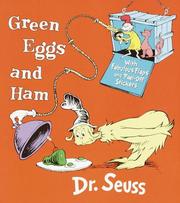
Dr. Seuss wrote Green Eggs and Ham in 1960 on a bet that he could not write a book using only 50 different words. The result is one of the most beloved children's books ever published. Sam-I-Am persistently offers green eggs and ham to a grumpy unnamed character who refuses them in every conceivable location and situation, until he finally relents and discovers he likes them. The book's brilliance is in its relentless rhythm and comedic escalation. It teaches children about trying new things while being endlessly entertaining. Green Eggs and Ham has sold over 8 million copies in the United States alone and remains a staple of early literacy programs.
6. Charlie and the Chocolate Factory by Roald Dahl
Roald Dahl's 1964 novel introduced the world to Willy Wonka and his fantastical chocolate factory. Poor but kind Charlie Bucket wins a golden ticket and enters a world of edible wallpaper, chocolate rivers, and Oompa-Loompas. Dahl's genius lies in his willingness to be genuinely dark. The spoiled children who tour the factory meet fates that are equal parts hilarious and terrifying. The book does not moralize gently. It celebrates imagination and kindness while gleefully punishing greed, gluttony, and entitlement. Charlie and the Chocolate Factory has sold over 20 million copies and inspired two major film adaptations.
7. Matilda by Roald Dahl
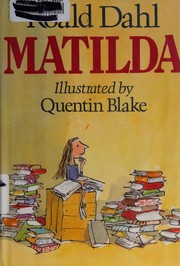
Dahl's 1988 novel about a brilliant girl trapped with ignorant parents and a tyrannical headmistress is a love letter to reading and intellectual curiosity. Matilda Wormwood discovers she has telekinetic powers and uses them to fight back against the monstrous Miss Trunchbull. The book resonates deeply with children who feel misunderstood or underestimated. Dahl crafts the adult villains with such exaggerated cruelty that defeating them feels genuinely triumphant. Quentin Blake's illustrations are inseparable from the text. Matilda has sold over 17 million copies and inspired a hit musical and multiple screen adaptations.
8. The Cat in the Hat by Dr. Seuss
Published in 1957, The Cat in the Hat was Dr. Seuss's response to a challenge: write a book using only words from a first-grader's vocabulary list that children would actually want to read. The anarchic Cat arrives at the home of two bored children on a rainy day and proceeds to cause magnificent chaos. The book revolutionized early readers by proving that controlled vocabulary did not have to mean boring stories. Its impact on children's publishing cannot be overstated. The Cat in the Hat led directly to the founding of Beginner Books and changed how publishers thought about early literacy.
9. Harry Potter and the Sorcerer's Stone by J.K. Rowling
J.K. Rowling's 1997 debut novel introduced Harry Potter, the orphaned boy who discovers he is a wizard, to millions of readers worldwide. The book works as a children's novel because its core emotional story is universally resonant: a neglected child discovers he is special and finds a community where he belongs. Hogwarts is one of the most fully realized fictional settings in literature, and Rowling's plotting is intricate even in this first installment. The Sorcerer's Stone has sold over 120 million copies, making it the best selling children's book of all time. It launched a series that fundamentally changed children's publishing and created a generation of devoted readers.
10. The Giving Tree by Shel Silverstein
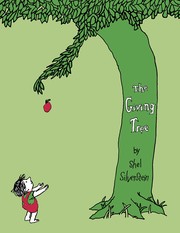
Shel Silverstein's 1964 picture book tells the story of a boy and a tree. The tree gives the boy everything it has over the course of his life: its apples, its branches, its trunk. The book is extraordinarily divisive among adults. Some read it as a beautiful story of unconditional love. Others see it as a cautionary tale about selfishness and exploitation. This interpretive richness is precisely what makes it endure. Children respond to the emotional simplicity of the relationship, while adults bring their own experiences to the text. The Giving Tree has sold over 10 million copies and remains one of the most discussed picture books in literary circles.
11. Diary of a Wimpy Kid by Jeff Kinney
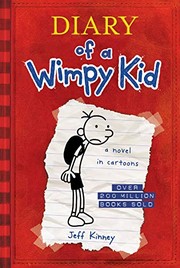
Jeff Kinney's 2007 novel, formatted as the illustrated journal of middle schooler Greg Heffley, struck a nerve with young readers. Greg is not heroic or particularly kind. He is self-absorbed, scheming, and frequently wrong about everything. This honesty about the middle school experience is what makes the series so addictive for its target audience. Kinney's stick-figure illustrations break up the text and make the books accessible to reluctant readers. The original Diary of a Wimpy Kid has sold over 75 million copies across the series, and the franchise has become one of the most commercially successful in children's publishing history.
12. Wonder by R.J. Palacio
R.J. Palacio's 2012 novel about August Pullman, a boy with severe facial differences who attends mainstream school for the first time, became a cultural phenomenon. The book rotates perspectives among Auggie and the people in his life, building empathy through multiple viewpoints. Wonder avoids sentimentality by giving Auggie a sharp sense of humor and a realistic inner life. It does not pretend that kindness is easy or that bullying has simple solutions. The book has sold over 15 million copies and spawned a movement with the "Choose Kind" campaign. It is now one of the most commonly assigned novels in middle school classrooms.
13. The Chronicles of Narnia: The Lion, the Witch and the Wardrobe by C.S. Lewis

C.S. Lewis's 1950 fantasy novel transports four siblings through a wardrobe into the magical land of Narnia, ruled by the White Witch in eternal winter. The book blends Christian allegory with thrilling adventure storytelling, though children rarely notice the allegory on first reading. Aslan the lion is one of the most iconic characters in children's literature, and the moment when spring returns to Narnia remains one of the most emotionally satisfying scenes in the genre. The full Chronicles of Narnia series has sold over 100 million copies, with The Lion, the Witch and the Wardrobe as the perennial entry point.
14. A Wrinkle in Time by Madeleine L'Engle
Madeleine L'Engle's 1962 novel was rejected by 26 publishers before finding a home. Meg Murry, her brother Charles Wallace, and their friend Calvin travel through space and time to rescue Meg's father from a cosmic evil. The book was revolutionary for featuring a female protagonist in a science fiction adventure and for refusing to simplify its scientific and philosophical ideas for young readers. L'Engle trusted children to grapple with concepts like tessering, the nature of evil, and the power of individual love against conformity. A Wrinkle in Time has sold over 14 million copies and won the Newbery Medal.
15. The Phantom Tollbooth by Norton Juster

Norton Juster's 1961 novel is a love letter to language, mathematics, and the life of the mind. Milo, a perpetually bored boy, drives a toy car through a mysterious tollbooth into the Lands Beyond, where he must rescue the princesses Rhyme and Reason. The wordplay is endlessly inventive. Characters like the Humbug, the Spelling Bee, and the Whether Man turn abstract concepts into living, breathing entities. Jules Feiffer's illustrations match the text's wit perfectly. The Phantom Tollbooth has sold millions of copies and remains one of the most intellectually stimulating children's novels ever written, appealing equally to children and the adults who read aloud to them.
16. The Little Prince by Antoine de Saint-Exupery
Antoine de Saint-Exupery's 1943 novella operates as both a children's story and a philosophical meditation on love, loss, and what matters in life. A pilot stranded in the Sahara meets a small prince from a tiny asteroid who tells of his travels through the universe. The book's deceptive simplicity conceals profound observations about human nature. "What is essential is invisible to the eye" has become one of the most quoted lines in literature. The Little Prince has sold over 200 million copies worldwide, making it one of the best selling books of any genre ever published.
17. James and the Giant Peach by Roald Dahl
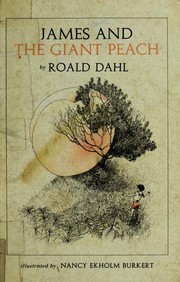
Dahl's 1961 novel follows orphaned James Henry Trotter, who escapes his cruel aunts by entering a magically enlarged peach inhabited by equally enlarged insects. The book exemplified Dahl's talent for combining fantastical premises with genuine emotional stakes. James's loneliness and his eventual discovery of friendship inside the peach give the surreal adventure its heart. The insect characters are vivid and distinct, and the journey across the Atlantic Ocean is filled with invention and danger. James and the Giant Peach has sold millions of copies and established the template for Dahl's subsequent children's novels.
18. The Secret Garden by Frances Hodgson Burnett
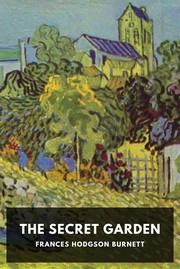
Frances Hodgson Burnett's 1911 novel about spoiled, sickly Mary Lennox who discovers a hidden garden at her uncle's Yorkshire estate is a story about the healing power of nature, friendship, and purpose. Mary's transformation from a disagreeable child into a compassionate one unfolds alongside the garden's return to life. The book's pacing is deliberate, rewarding patient readers with genuine emotional payoff. The Secret Garden has never gone out of print and has sold millions of copies over more than a century, inspiring countless adaptations and cementing its place as one of the foundational texts of children's literature.
19. Holes by Louis Sachar
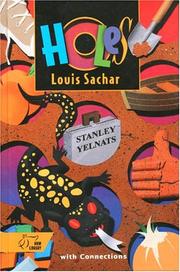
Louis Sachar's 1998 novel weaves together three timelines to tell the story of Stanley Yelnats, a boy sent to a juvenile detention camp where inmates dig holes in a dry lake bed every day. The plotting is extraordinary. Seemingly random details from the past and present click into place with the precision of a Swiss watch. Sachar treats his young readers as intelligent enough to follow a complex, nonlinear narrative, and they rewarded him with massive sales. Holes won the Newbery Medal and the National Book Award, has sold over 10 million copies, and remains one of the most structurally ambitious children's novels ever written.
20. Pippi Longstocking by Astrid Lindgren
Astrid Lindgren's 1945 creation is the strongest girl in the world, lives alone with a horse and a monkey, and answers to no adult authority. Pippi Longstocking was radical for its time and remains refreshing today. Pippi is generous, fearless, and utterly uninterested in conforming to expectations. Lindgren's episodic storytelling captures the way children actually experience adventure: as a series of disconnected, thrilling moments rather than a tidy narrative arc. The Pippi books have sold over 65 million copies worldwide and have been translated into 76 languages, making Pippi one of the most recognized characters in children's literature.
21. The BFG by Roald Dahl
Dahl's 1982 novel features Sophie, an orphan snatched from her bed by the Big Friendly Giant, who turns out to be a kind vegetarian in a world of child-eating giants. The language in The BFG is gloriously inventive. Dahl coined words like "whizzpopping," "snozzcumber," and "frobscottle," giving children permission to play with language and invent their own words. The relationship between Sophie and the BFG is tender and genuine, and the sequence where they visit the Queen of England to report the bad giants is comic gold. The BFG has sold millions of copies and was adapted into a film by Steven Spielberg.
22. The Velveteen Rabbit by Margery Williams

Margery Williams's 1922 story about a stuffed rabbit who becomes real through a child's love is one of the earliest and most enduring explorations of what it means to be authentic. The Skin Horse's famous speech about becoming real through being loved resonated when it was published and continues to resonate today. The story is genuinely moving without being maudlin, and its themes of love, loss, and transformation speak to readers of all ages. The Velveteen Rabbit has sold millions of copies in dozens of editions with illustrations by various artists, each generation discovering it anew.
23. Bridge to Terabithia by Katherine Paterson
Katherine Paterson's 1977 novel about the friendship between Jess Aarons and Leslie Burke, who create an imaginary kingdom in the woods, is one of the most emotionally powerful children's books ever written. The book deals with grief and loss in a way that is honest and devastating without being exploitative. Paterson does not shield young readers from pain, and the result is a book that helps children understand and process difficult emotions. Bridge to Terabithia won the Newbery Medal, has sold millions of copies, and remains one of the most important novels in the children's literature canon.
24. Corduroy by Don Freeman
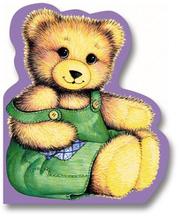
Don Freeman's 1968 picture book about a teddy bear in a department store who searches for his missing button is a story about acceptance, belonging, and love that does not require perfection. Lisa, the girl who eventually buys Corduroy, wants him exactly as he is. The book's emotional message is delivered through simple text and warm illustrations that capture both the vastness of a department store from a small bear's perspective and the intimacy of being chosen. Corduroy has sold millions of copies and remains a beloved fixture of early childhood reading.
25. Brown Bear, Brown Bear, What Do You See? by Bill Martin Jr. and Eric Carle

Bill Martin Jr.'s 1967 text paired with Eric Carle's bold, colorful collage illustrations created one of the most effective early literacy tools ever published. The repetitive, rhythmic structure teaches children about patterns, colors, and animals while building reading confidence through predictability. Each page asks what the animal sees, and the answer introduces the next animal. The simplicity is the point. Brown Bear has sold millions of copies, been used in classrooms worldwide, and proven that the earliest reading experiences should be joyful, participatory, and visually stunning.
Best Children's Books by Sub-Category
Best Picture Books
Picture books are a child's first encounter with narrative and visual art. Where the Wild Things Are by Maurice Sendak leads the category with its emotional honesty and iconic illustrations. The Very Hungry Caterpillar by Eric Carle combines tactile design with educational content in a way that has never been surpassed. Goodnight Moon by Margaret Wise Brown remains the definitive bedtime book, its rhythmic text perfectly calibrated for winding down. Corduroy by Don Freeman delivers a message about unconditional love through an irresistibly charming protagonist. Brown Bear, Brown Bear, What Do You See? by Bill Martin Jr. and Eric Carle makes the act of reading itself interactive and joyful. And The Giving Tree by Shel Silverstein proves that picture books can spark conversations that last a lifetime.
Best Chapter Books
The transition from picture books to chapter books is one of the most important moments in a young reader's life. Charlotte's Web by E.B. White is the ideal first chapter book, with clear prose and profound emotional depth. Matilda by Roald Dahl celebrates the power of reading itself, making it the perfect book for emerging independent readers. The Phantom Tollbooth by Norton Juster rewards curiosity and wordplay. Holes by Louis Sachar demonstrates that children can handle complex, nonlinear storytelling. Wonder by R.J. Palacio builds empathy through multiple perspectives. And Bridge to Terabithia by Katherine Paterson treats young readers as capable of processing real grief and loss.
Best Children's Book Series
Series books keep young readers coming back and build the habit of sustained reading. Harry Potter by J.K. Rowling is the most commercially successful children's series in history, growing in complexity alongside its readers. The Chronicles of Narnia by C.S. Lewis offers a rich fantasy world spread across seven self-contained adventures. Diary of a Wimpy Kid by Jeff Kinney captures the chaos of middle school with humor and relatable illustrations. Pippi Longstocking by Astrid Lindgren gives children a hero who defies every convention. And Charlie and the Chocolate Factory by Roald Dahl, along with its sequel Charlie and the Great Glass Elevator, builds an unforgettable world of pure imagination.
Best Educational Children's Books
The best educational children's books teach without the child realizing they are learning. The Very Hungry Caterpillar by Eric Carle covers counting, days of the week, food, and metamorphosis in 224 words. Green Eggs and Ham by Dr. Seuss was built on a constrained vocabulary that doubles as a first reader. Brown Bear, Brown Bear, What Do You See? teaches color recognition and pattern prediction through repetition. The Cat in the Hat by Dr. Seuss proved that controlled vocabulary lists could produce genuinely entertaining stories. The Little Prince by Antoine de Saint-Exupery introduces philosophical thinking to young minds through allegory and gentle storytelling. Each of these books embeds its lessons so naturally into the reading experience that education and entertainment become indistinguishable.
Frequently Asked Questions
What is the best selling children's book of all time?
The Little Prince by Antoine de Saint-Exupery holds the record with over 200 million copies sold, though it is also widely read by adults. Among books marketed exclusively to children, the Harry Potter series dominates, with Harry Potter and the Sorcerer's Stone alone selling over 120 million copies. The Very Hungry Caterpillar by Eric Carle has sold over 55 million copies, making it one of the best selling picture books ever.
What age should children start reading chapter books?
Most children are ready for chapter books between ages 6 and 8, though this varies widely. Early chapter books like the Magic Tree House series or Junie B. Jones bridge the gap between picture books and full novels. Charlotte's Web and The Cat in the Hat are excellent transitional reads. The key is to follow the child's interest and reading level rather than adhering to a strict age guideline. Reading chapter books aloud to younger children is also a wonderful way to introduce them to longer narratives before they can read independently.
How do I choose the right children's book for a reluctant reader?
Reluctant readers often respond best to books with humor, illustrations, or unconventional formats. Diary of a Wimpy Kid by Jeff Kinney has converted countless reluctant readers with its journal format and cartoon illustrations. Captain Underpants by Dav Pilkey uses irreverent humor to build reading momentum. Graphic novels like Dog Man and the Amulet series offer visual storytelling that keeps pages turning. The most important strategy is to let the child choose what interests them rather than insisting on what adults consider "good" literature.
Are classic children's books still relevant for today's kids?
Absolutely. Books like Charlotte's Web, Where the Wild Things Are, and The Phantom Tollbooth deal with universal human experiences: friendship, fear, curiosity, loss, and wonder. These themes do not expire. While it is important to supplement classics with diverse contemporary voices, the emotional truths in the best classic children's books remain as powerful today as when they were first published. Many parents find that sharing the books they loved as children creates meaningful intergenerational connections.
Discover your next great children's read without extra screen time. speakeasy converts book reviews, author interviews, and literary articles into audio you can enjoy anywhere. Paste any URL and listen -- 3 free articles per week, no account needed.
Related reading: Best Young Adult Books | Best Fantasy Books | Best Adventure Books