The best selling business books have shaped how millions of people think about work, leadership, and the pursuit of meaningful careers. They are not simply instruction manuals for making money. The most enduring titles in this genre challenge fundamental assumptions about strategy, human behavior, organizational design, and what it means to build something that lasts. From Dale Carnegie's depression-era guide to interpersonal influence to Eric Ries's framework for launching startups in an age of uncertainty, these books have collectively redefined the vocabulary of modern business. What distinguishes the twenty-five titles on this list from the thousands of business books published every year is their staying power. These are books that professionals recommend a decade after reading them, books that founders cite as inflection points in their thinking, and books that continue to sell steadily long after their initial publication because the ideas they contain remain relevant regardless of market conditions or technological change.
What Makes a Great Business Book?
The difference between a business book that endures and one that disappears within a year is the quality of the underlying idea. Great business books do not offer quick fixes or motivational platitudes. They present frameworks for thinking that remain useful across industries, economic cycles, and career stages. They are built on genuine research, whether that means years of academic study, decades of operational experience, or deep investigative journalism. The best business authors write with clarity and intellectual honesty, acknowledging the limitations of their frameworks rather than overselling them. They use specific examples and case studies not as decoration but as evidence, allowing readers to test the ideas against their own experience. And they respect the reader's intelligence enough to present complexity without simplifying it into soundbites. The books below have earned their place by meeting that standard.
The Best Selling Business Books of All Time
1. Good to Great by Jim Collins
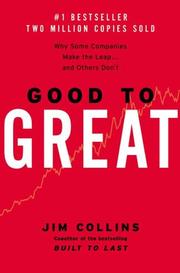
Jim Collins and his research team spent five years analyzing companies that made the leap from good performance to sustained greatness, comparing them against carefully matched control companies that failed to make the same transition. The resulting framework, including concepts like Level 5 Leadership, the Hedgehog Concept, and the Flywheel Effect, has become standard vocabulary in boardrooms and business schools worldwide. What makes Good to Great exceptional is the rigor of its methodology. Collins does not offer opinions disguised as research. He presents data-driven conclusions that frequently contradict conventional wisdom about what makes companies successful. The book has sold more than four million copies and remains one of the most cited works in management literature.
2. The Lean Startup by Eric Ries
Eric Ries transformed how startups are built by arguing that the traditional approach of writing a business plan, pitching investors, building a product, and hoping for the best was fundamentally flawed. Instead, Ries proposed a cycle of building minimum viable products, measuring customer response, and learning from the data to iterate rapidly. The Build-Measure-Learn feedback loop became the foundational methodology for thousands of startups and was eventually adopted by established corporations seeking to innovate more effectively. The Lean Startup is not just a book about technology companies. Its principles apply to any venture operating under conditions of extreme uncertainty.
3. Zero to One by Peter Thiel
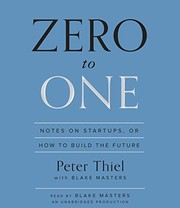
Peter Thiel's contrarian manifesto argues that the most valuable businesses are those that create something entirely new rather than competing in existing markets. Going from "zero to one," creating a monopoly through genuine innovation, is fundamentally different from going from "one to n," making incremental improvements to existing products. Thiel draws on his experience co-founding PayPal and investing early in Facebook to illustrate how the best companies avoid competition entirely by building products so superior that they define their own category. The book is provocative, occasionally infuriating, and impossible to dismiss. It challenges entrepreneurs to think bigger than optimization.
4. How to Win Friends and Influence People by Dale Carnegie

Dale Carnegie's 1936 classic has sold more than thirty million copies worldwide, making it one of the best-selling nonfiction books in history. The book's principles, which include showing genuine interest in others, avoiding criticism, and making the other person feel important, may seem obvious. But Carnegie's genius was in articulating what most people know intuitively but fail to practice consistently. The book endures because its advice is not about manipulation but about the fundamental human desire to feel valued and understood. Nearly nine decades after publication, Carnegie's framework for building relationships remains as relevant in digital communication as it was in face-to-face conversation.
5. The 4-Hour Workweek by Tim Ferriss
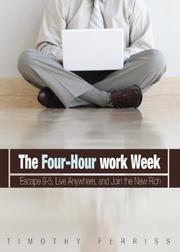
Tim Ferriss challenged the assumption that success requires working eighty-hour weeks by presenting a framework for designing a life around freedom rather than accumulation. His concepts of "lifestyle design," outsourcing mundane tasks, and building automated income streams resonated with a generation of professionals questioning whether the traditional career ladder was the only path to a meaningful life. The book is polarizing. Critics call it unrealistic. Advocates credit it with fundamentally changing how they think about the relationship between work and life. Regardless of where you land, The 4-Hour Workweek forced a conversation about productivity and purpose that the business world needed to have.
6. Thinking, Fast and Slow by Daniel Kahneman

Daniel Kahneman's synthesis of decades of research on cognitive psychology and behavioral economics earned him the Nobel Prize and gave business leaders a framework for understanding how decisions actually get made. The book's central insight, that human thinking operates in two modes, the fast, intuitive System 1 and the slow, deliberate System 2, explains why smart people consistently make irrational choices. Kahneman writes with the authority of a researcher who spent a career designing experiments to reveal the biases and heuristics that distort human judgment. Thinking, Fast and Slow is not an easy read, but it is one of the most important books ever written about how humans process information and make decisions under uncertainty.
7. Start with Why by Simon Sinek
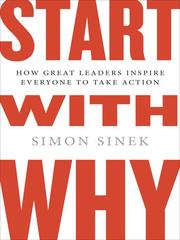
Simon Sinek's argument that the most inspiring leaders and organizations communicate from the inside out, starting with "why" before explaining "how" and "what," became one of the most influential business ideas of the 2010s. His TED talk on the subject is one of the most viewed in history, and the book expands on the concept with case studies including Apple, Martin Luther King Jr., and the Wright Brothers. Sinek argues that people do not buy what you do but why you do it, and that organizations that articulate a clear purpose attract more loyal customers and more passionate employees. The framework has been adopted by companies, nonprofits, and political campaigns worldwide.
8. The Hard Thing About Hard Things by Ben Horowitz
Ben Horowitz wrote the business book that most business books avoid: one about the brutal, unglamorous reality of running a company when everything is going wrong. Drawing on his experience as CEO of Opsware during the dot-com crash and its aftermath, Horowitz addresses the decisions that keep founders awake at night, including when to lay off friends, how to manage your own psychology when the company is failing, and why the right answer is often the one that feels worst. The book contains no easy frameworks or optimistic platitudes. It is a manual for surviving the hardest parts of leadership, written by someone who has lived through them.
9. Shoe Dog by Phil Knight
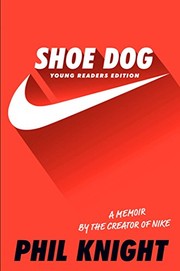
Phil Knight's memoir of founding Nike is both a business narrative and a deeply personal story about obsession, risk, and the relentless uncertainty of building something from nothing. Knight started by selling Japanese running shoes out of his car after graduating from Stanford Business School, and the book follows Nike through two decades of cash crises, manufacturing disasters, and lawsuits that nearly destroyed the company multiple times. What sets Shoe Dog apart from typical founder memoirs is Knight's emotional honesty. He writes openly about fear, doubt, and the toll that building Nike took on his family and relationships.
10. Built to Last by Jim Collins and Jerry I. Porras

Jim Collins and Jerry Porras studied eighteen "visionary" companies that had outperformed the market over decades and compared them against carefully selected control companies to identify what made the great ones endure. Their findings challenged the conventional wisdom that visionary companies need visionary leaders. Instead, Collins and Porras found that the most enduring organizations were built around core ideologies that transcended any individual leader and embraced a culture of experimentation and continuous improvement. Built to Last introduced the concept of "BHAGs" (Big Hairy Audacious Goals) and remains a foundational text in organizational design.
11. The Innovator's Dilemma by Clayton Christensen
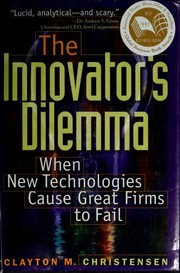
Clayton Christensen's theory of disruptive innovation explained why successful, well-managed companies fail when confronted by technologies that initially appear inferior to their existing products. Using case studies from the disk drive industry, steel manufacturing, and mechanical excavation, Christensen demonstrated that the same management practices that make companies successful in sustaining innovation make them vulnerable to disruption from below. The book's insights have influenced strategy at companies from Intel to Netflix, and the phrase "disruptive innovation" has entered the mainstream vocabulary. Christensen's framework remains essential for any business leader trying to understand why market leadership is so difficult to maintain.
12. Measure What Matters by John Doerr
John Doerr introduced the concept of OKRs (Objectives and Key Results) to Google in 1999, borrowing the framework from Andy Grove at Intel. His book traces the history and application of OKRs across organizations including Google, the Gates Foundation, Bono's ONE Campaign, and numerous startups. Doerr argues that setting clear, measurable objectives and tracking progress against specific key results creates focus, alignment, and accountability at every level of an organization. The book is practical and case-study-driven, offering a system that has been adopted by thousands of companies seeking to translate ambitious goals into concrete, trackable actions.
13. Never Split the Difference by Chris Voss
Chris Voss spent twenty-four years as an FBI hostage negotiator before applying his techniques to business negotiation. His central argument is that negotiation is not a rational exercise but an emotional one, and that the most effective negotiators are those who master tactical empathy, the ability to understand and articulate the other side's perspective without necessarily agreeing with it. Voss's techniques, including calibrated questions, mirroring, and labeling emotions, are drawn from situations where the stakes were literally life and death. The result is a negotiation book that is more practical, more grounded, and more immediately applicable than anything in the academic tradition.
14. Principles by Ray Dalio
Ray Dalio built Bridgewater Associates into the world's largest hedge fund and codified the management philosophy that guided the firm into a set of principles organized around the concept of "radical transparency." The book argues that success in both life and business depends on developing a systematic approach to decision-making, embracing failure as a learning mechanism, and creating organizations where the best ideas win regardless of who proposes them. Dalio's principles are specific, numbered, and cross-referenced, giving the book the structure of a reference manual. Whether readers find his approach inspiring or exhausting, the intellectual rigor behind it is undeniable.
15. Sapiens by Yuval Noah Harari
Yuval Noah Harari's sweeping history of humankind may seem like an unusual inclusion on a business book list, but its influence on the business world has been enormous. Sapiens traces human history from the Cognitive Revolution seventy thousand years ago to the present, arguing that humanity's dominance is built on our unique ability to create and believe in shared fictions, including money, nations, corporations, and human rights. Business leaders from Mark Zuckerberg to Bill Gates have cited the book as essential reading because it forces a fundamental reconsideration of the institutions and assumptions that underpin modern commerce. Understanding why humans organize the way they do is the deepest form of business intelligence.
16. Atomic Habits by James Clear
James Clear's framework for building good habits and breaking bad ones became one of the fastest-selling nonfiction books in publishing history. While often categorized as self-help, the book's applications to business productivity, team management, and organizational culture have made it a staple recommendation among entrepreneurs and executives. Clear argues that habits are the compound interest of self-improvement, and that small changes, consistently applied, produce remarkable results over time. His four-step framework, consisting of making habits obvious, attractive, easy, and satisfying, is specific enough to implement immediately and flexible enough to apply across virtually any professional context.
17. The E-Myth Revisited by Michael E. Gerber
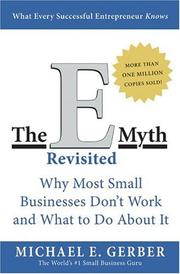
Michael Gerber's book addresses the fatal assumption that destroys most small businesses: the belief that understanding the technical work of a business qualifies someone to run a business that does that technical work. Gerber argues that successful businesses are built on systems rather than the heroic efforts of their founders, and that the key to growth is working on the business rather than in it. The E-Myth Revisited has sold millions of copies and remains the most widely recommended book for small business owners because it diagnoses a problem that nearly every entrepreneur recognizes: the exhausting trap of doing everything yourself because no one else can do it "right."
18. Influence by Robert Cialdini
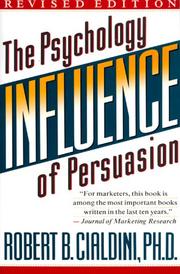
Robert Cialdini's research into the psychology of persuasion identified six universal principles that drive human compliance: reciprocity, commitment and consistency, social proof, authority, liking, and scarcity. Published in 1984, Influence transformed how businesses think about marketing, sales, and consumer behavior. Cialdini's genius was in translating academic research into practical frameworks that anyone could understand and apply. The book is simultaneously a guide for ethical persuasion and a defense manual against manipulation, helping readers recognize when they are being influenced and decide whether to comply.
19. The Five Dysfunctions of a Team by Patrick Lencioni
Patrick Lencioni presents his framework for team effectiveness as a business fable, following a fictional CEO who inherits a dysfunctional executive team and must diagnose and fix the issues preventing them from working together. The five dysfunctions, which include absence of trust, fear of conflict, lack of commitment, avoidance of accountability, and inattention to results, build on each other in a pyramid structure. The fable format makes the concepts accessible and memorable, and the model has been adopted by thousands of organizations as a diagnostic tool for team health. Lencioni proves that the most common problems in team dynamics are also the most fixable.
20. Outliers by Malcolm Gladwell
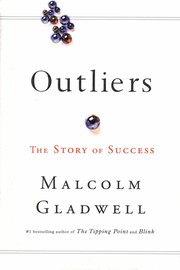
Malcolm Gladwell's exploration of what makes high achievers different from ordinary people challenged the myth of the self-made success story. Through case studies ranging from the Beatles to Bill Gates, Gladwell argues that individual talent and ambition are necessary but insufficient conditions for extraordinary success. Factors including cultural heritage, timing, accumulated practice (the famous "10,000 hours" concept), and access to opportunity play equally critical roles. Outliers is valuable for business leaders because it reframes success as a systemic phenomenon rather than a purely individual achievement, with implications for hiring, talent development, and organizational design.
21. Lean In by Sheryl Sandberg
Sheryl Sandberg's examination of why women's progress in achieving leadership positions had stalled ignited a global conversation about gender in the workplace. Drawing on research and her own experience as Facebook's COO, Sandberg argued that women face both external barriers and internal obstacles, including a tendency to hold themselves back from opportunities they feel unready for. The book was controversial precisely because it engaged seriously with questions that many business leaders preferred to avoid. Whatever one's position on Sandberg's arguments, Lean In forced corporate America to confront the structural and cultural factors that limit women's advancement.
22. Crossing the Chasm by Geoffrey Moore
Geoffrey Moore's framework for marketing technology products to mainstream customers has guided startup strategy since its publication in 1991. Moore argues that a dangerous gap, the "chasm," exists between early adopters and the early majority, and that most technology companies fail because they cannot bridge it. His solution involves focusing on a specific niche market, dominating it completely, and using that beachhead to expand into adjacent segments. The book's influence on technology marketing is difficult to overstate. Entire go-to-market strategies at companies from Salesforce to Slack have been built around Moore's framework.
23. The Lean Six Sigma Pocket Toolbook by Michael L. George, John Maxey, David Rowlands, and Mark Price
While not a narrative business book, this practical guide to Lean Six Sigma methodology has sold millions of copies to operations managers, quality engineers, and process improvement professionals worldwide. The book combines the waste-elimination focus of Lean manufacturing with the variation-reduction methodology of Six Sigma into a portable reference that practitioners use daily. Its inclusion on this list reflects the enormous influence that process improvement methodologies have had on modern business, from manufacturing to healthcare to software development. The book succeeds because it is genuinely useful as a working tool rather than a theoretical treatise.
24. Rework by Jason Fried and David Heinemeier Hansson
Jason Fried and David Heinemeier Hansson, the founders of Basecamp, wrote a business book that rejects most of what other business books teach. Rework argues against writing business plans, seeking outside investment, holding meetings, and hiring rapidly. Instead, Fried and Hansson advocate for staying small, building less, and doing more with fewer resources. The book is structured as a series of short essays, each challenging a conventional piece of business wisdom with an alternative approach drawn from their own experience building a profitable company with a small team. It resonated with entrepreneurs who were tired of being told they needed to scale at all costs.
25. Blue Ocean Strategy by W. Chan Kim and Renee Mauborgne
W. Chan Kim and Renee Mauborgne argue that the most successful companies do not beat their competitors but make them irrelevant by creating new market spaces, which they call "blue oceans," where competition does not yet exist. Drawing on a study of 150 strategic moves across thirty industries over a hundred years, the authors identify patterns that distinguish value innovation from traditional competitive strategy. The book provides a systematic framework for identifying and creating blue ocean opportunities, including tools like the Strategy Canvas and the Four Actions Framework. Blue Ocean Strategy has been translated into nearly fifty languages and remains one of the most influential strategy books of the twenty-first century.
Best Business Books by Sub-Category
Best Business Books for Entrepreneurs
Entrepreneurs face a unique set of challenges that most management books fail to address. The Lean Startup by Eric Ries provides the operational methodology for building a company under extreme uncertainty. The Hard Thing About Hard Things by Ben Horowitz offers the psychological survival guide that founders desperately need but rarely find. Zero to One by Peter Thiel challenges entrepreneurs to think about monopoly rather than competition. The E-Myth Revisited by Michael Gerber diagnoses the systemic error that causes most small businesses to fail. And Shoe Dog by Phil Knight demonstrates through lived experience that building a great company is a decades-long commitment with no guarantee of success. Together, these books form the essential entrepreneurial reading list.
Best Leadership Books
Leadership books are only as valuable as the honesty of their authors. Good to Great by Jim Collins defines great leadership as a paradoxical combination of personal humility and professional will, demolishing the myth of the charismatic CEO. Start with Why by Simon Sinek provides a framework for inspiring others through purpose rather than authority. The Five Dysfunctions of a Team by Patrick Lencioni identifies the behaviors that undermine team performance and offers practical solutions. Principles by Ray Dalio presents a comprehensive system for decision-making that scales from individual choices to organizational governance. These books share a common thread: the best leaders are those who create systems and cultures that succeed independently of their personal involvement.
Best Business Strategy Books
Strategy is the discipline of making choices about where to compete and how to win. Good to Great by Jim Collins identifies the strategic patterns that separate sustained excellence from mediocrity. The Innovator's Dilemma by Clayton Christensen explains why market leaders are systematically vulnerable to disruption from below. Blue Ocean Strategy by Kim and Mauborgne offers a framework for creating uncontested market space. Crossing the Chasm by Geoffrey Moore provides the tactical playbook for bringing disruptive products to mainstream markets. Zero to One by Peter Thiel argues that the most valuable strategy is to avoid competition entirely by creating something genuinely new. Each of these books approaches strategy from a different angle, but all share the conviction that strategic thinking is the most important capability a business leader can develop.
Best Business Books for Beginners
If you are new to business reading, start with books that combine accessible writing with foundational ideas. How to Win Friends and Influence People by Dale Carnegie teaches the interpersonal skills that underpin every professional relationship. Atomic Habits by James Clear provides a framework for personal productivity that applies to any career stage. Start with Why by Simon Sinek offers an inspiring introduction to purposeful leadership. Outliers by Malcolm Gladwell challenges assumptions about success and achievement in ways that are immediately thought-provoking. And Thinking, Fast and Slow by Daniel Kahneman provides a foundation in behavioral psychology that will make every subsequent business book more useful. Begin with any of these and let your interests guide you deeper.
Frequently Asked Questions
What is the single best business book for someone starting a company?
There is no single answer because starting a company involves fundamentally different challenges at different stages. For the earliest stage, when the idea is still forming, Zero to One by Peter Thiel will sharpen your thinking about what kind of company is worth building. Once you are ready to build, The Lean Startup by Eric Ries provides the methodology for testing your assumptions with minimal waste. When the company begins to grow and you face the reality of leadership, The Hard Thing About Hard Things by Ben Horowitz is the most honest book about what that experience actually feels like. If pressed to recommend only one, most entrepreneurs point to The Lean Startup because its framework applies regardless of industry, stage, or scale.
Are business books still relevant in the age of podcasts and online courses?
Business books remain relevant because they offer something that shorter formats cannot: sustained argument. A podcast episode or online lecture can introduce a concept, but a book can develop that concept across hundreds of pages with nuance, evidence, and qualification. The books on this list have endured precisely because they reward rereading. You will extract different insights from Thinking, Fast and Slow at different stages of your career. That said, the formats are complementary rather than competitive. Many readers discover books through podcast interviews with authors and use online courses to implement what they learn from reading. The best approach is to use all available formats.
How should I apply what I read in business books?
The most common mistake is trying to implement every idea from every book simultaneously. Instead, treat business books as thinking tools rather than instruction manuals. Read actively, taking notes on the ideas that resonate with your current challenges. Test one concept at a time in your actual work environment and observe the results. Discuss what you have read with colleagues to stress-test the ideas against different perspectives. And revisit books periodically, because the chapters that seemed irrelevant two years ago may contain exactly the insight you need today. The goal is not to follow any single author's framework but to build your own mental model from the best ideas across many sources.
Where can I find more book recommendations by genre?
This list covers business books, but great reading extends across every category. For personal development, explore our guides to self-help and personal finance. For deeper understanding of human behavior, check out our psychology recommendations. Browse all genres →
Discover your next great business read without extra screen time. speakeasy converts book reviews, author interviews, and literary articles into audio you can enjoy anywhere. Paste any URL and listen — 3 free articles per week, no account needed.