The best selling biography and memoir books have a rare power that fiction cannot replicate: they ground extraordinary stories in the knowledge that every word is rooted in real experience. When someone tells you about surviving a childhood in the Appalachian mountains with a father who stockpiled fuel for the end of days, or about building a billion-dollar shoe company from the trunk of a car, the weight of truth transforms the narrative into something more urgent, more affecting, and more lasting. These are books that have sold millions of copies not because of marketing budgets or celebrity name recognition alone, but because readers passed them hand to hand with the insistence that "you have to read this." Biography and memoir remain among the most popular nonfiction genres precisely because they offer something irreplaceable: proof that real life can be stranger, harder, and more beautiful than anything a novelist could invent.
What Makes a Great Biography or Memoir?
The difference between a forgettable autobiography and a book that endures for decades comes down to honesty and craft. The best memoirs do not simply recount events in chronological order. They interrogate memory itself, questioning what the author thought they knew and revealing how experience reshaped their understanding. A great biography, on the other hand, demands exhaustive research combined with a narrative instinct that turns historical facts into a story with momentum and stakes. Whether written in first person or third, the strongest life stories share a willingness to confront failure, contradiction, and vulnerability. Readers can sense when an author is performing rather than revealing, and the books on this list earned their place by refusing to look away from the difficult truths that make a life worth examining.
The Best Selling Biography and Memoir Books of All Time
1. Educated by Tara Westover
Tara Westover grew up in a survivalist family in rural Idaho, never setting foot in a classroom until she was seventeen. Her memoir traces the journey from a childhood defined by her father's paranoia and her family's distrust of medicine and education to earning a PhD from Cambridge University. What makes Educated extraordinary is not the dramatic arc of escape and transformation, though that alone would be compelling. It is the precision with which Westover captures the slow, painful process of questioning everything she was taught to believe. The book grapples with the cost of education in its truest sense: the knowledge that learning to think for yourself can mean losing the people who raised you. It spent years on the bestseller lists and became one of the defining memoirs of the 2010s.
2. Becoming by Michelle Obama
Michelle Obama's memoir covers her childhood on the South Side of Chicago, her career as a lawyer and hospital administrator, and her eight years as First Lady of the United States. The book sold more than ten million copies in its first five months, making it one of the best selling memoirs in publishing history. What distinguishes Becoming from the typical political memoir is its refusal to be one. Obama writes with candor about her marriage, her struggles with fertility, and the toll of public scrutiny on her family. The narrative is organized around the concept of "becoming" as an ongoing, unfinished process rather than a destination, giving the book a philosophical undercurrent that elevates it well beyond its political context.
3. Steve Jobs by Walter Isaacson
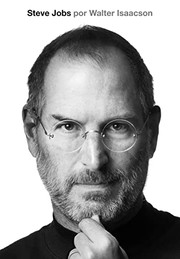
Walter Isaacson's authorized biography of Apple's co-founder is built on more than forty interviews with Jobs himself, along with conversations with family, colleagues, competitors, and friends. Jobs granted Isaacson complete editorial control, requesting only that the book be honest. The result is a portrait that does not shy away from its subject's cruelty, obsessiveness, and capacity for manipulation, even as it illuminates the creative vision that produced the Macintosh, the iPod, the iPhone, and Pixar. Published shortly after Jobs's death in 2011, the biography became an instant bestseller and remains the definitive account of one of the most influential figures in modern technology.
4. The Diary of a Young Girl by Anne Frank
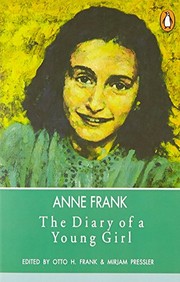
Anne Frank began her diary on her thirteenth birthday in 1942 and continued writing for just over two years while hiding from the Nazis in a concealed annex above her father's office in Amsterdam. The diary was published posthumously in 1947 and has since been translated into more than seventy languages, selling tens of millions of copies worldwide. What continues to astonish readers is the vitality and intelligence of Frank's voice. She writes about fear and confinement, but also about adolescent longing, family tension, and her ambition to become a writer. The book endures because it refuses to reduce its author to a symbol, insisting instead on the full complexity of a young life that was violently cut short.
5. Born a Crime by Trevor Noah
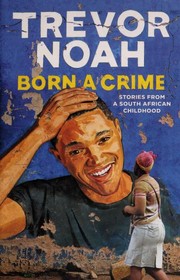
Trevor Noah's memoir about growing up in South Africa during and after apartheid is simultaneously one of the funniest and most harrowing books on this list. Born to a Black Xhosa mother and a white Swiss-German father, Noah's very existence was a crime under apartheid law. He writes about navigating racial categories that had no place for him, his mother's fierce and unconventional parenting, and the poverty and violence that surrounded his adolescence. The book succeeds because Noah treats humor not as a way to soften difficult material but as a survival mechanism that illuminates how people endure systems designed to crush them.
6. When Breath Becomes Air by Paul Kalanithi
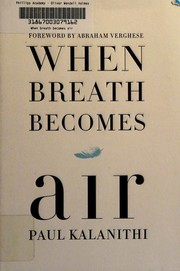
Paul Kalanithi was a neurosurgery resident at Stanford when he was diagnosed with terminal lung cancer at the age of thirty-six. His memoir, published posthumously, explores what makes life meaningful when you know death is imminent. Kalanithi writes with the precision of a surgeon and the searching intelligence of the English literature student he once was, drawing on both disciplines to confront mortality without sentimentality. The book is devastating not because it is sad, though it is profoundly sad, but because it is so relentlessly honest about the gap between what we expect from life and what we actually receive.
7. The Glass Castle by Jeannette Walls
Jeannette Walls's memoir of her chaotic, poverty-stricken childhood became one of the longest-running bestsellers in New York Times history. Her parents were brilliant, charming, and catastrophically irresponsible. Her father was an alcoholic with grand plans he never executed. Her mother was an artist who saw child-rearing as an inconvenience. The family moved constantly, lived without electricity or running water, and left their children to fend for themselves. Walls writes about this upbringing without self-pity, presenting the facts with a journalist's restraint and allowing readers to form their own emotional responses. The restraint is what makes the book so powerful.
8. Long Walk to Freedom by Nelson Mandela
Nelson Mandela's autobiography traces his life from his childhood in the Transkei through his years as a young lawyer, his radicalization as an anti-apartheid activist, his twenty-seven years in prison, and his emergence as the first democratically elected president of South Africa. The book is remarkable for its scope and for Mandela's ability to write about decades of suffering without bitterness. His prose is measured and deliberate, reflecting the patience and strategic thinking that defined his political career. Long Walk to Freedom is not just a personal story but a history of South Africa in the twentieth century, told by the man who did more than anyone to change its course.
9. I Know Why the Caged Bird Sings by Maya Angelou
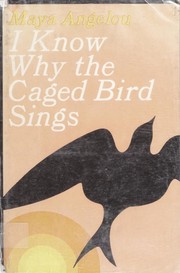
Maya Angelou's first autobiographical work, published in 1969, covers her childhood in the segregated American South. The book deals frankly with racism, sexual abuse, and the displacement of growing up between her grandmother's home in rural Arkansas and her mother's apartment in St. Louis. Angelou's prose is lyrical and precise, transforming painful material into literature that reads like poetry without sacrificing narrative clarity. The book was groundbreaking for its honest depiction of a Black woman's coming-of-age experience and remains one of the most widely read memoirs in the American literary canon.
10. Shoe Dog by Phil Knight
Phil Knight's memoir of founding Nike reads like a startup thriller. He began by selling Japanese running shoes out of his car's trunk after graduating from Stanford Business School, and the book follows the company's precarious first two decades through cash crises, lawsuits, and manufacturing disasters that nearly destroyed the business multiple times. Knight writes with surprising vulnerability about the anxiety and doubt that accompanied every phase of Nike's growth. Shoe Dog is not just a business memoir but a meditation on obsession, risk, and the difference between passion and certainty.
11. Greenlights by Matthew McConaughey
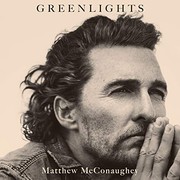
Matthew McConaughey's unconventional memoir is part philosophy, part adventure story, and part self-help manifesto. Drawn from decades of journals the actor kept throughout his life, the book moves freely between Hollywood stories, solo journeys to remote locations, and reflections on the patterns he has identified in a life marked by deliberate risk-taking. The book avoids the typical celebrity memoir formula of chronological career recap. Instead, McConaughey organizes his experiences around the concept of "greenlights," the moments when preparation meets opportunity and life opens up.
12. A Promised Land by Barack Obama
The first volume of Barack Obama's presidential memoirs covers his early political career through the raid that killed Osama bin Laden. At nearly 800 pages, it is exhaustive in its detail, offering an inside account of the decisions, compromises, and pressures that defined the first two years of his presidency. Obama writes with a literary sensibility that distinguishes the book from most political memoirs. He is frank about his mistakes, generous in his assessment of opponents, and willing to sit with ambiguity rather than reduce complex policy debates to simple narratives of right and wrong.
13. The Autobiography of Malcolm X by Malcolm X and Alex Haley
Told to journalist Alex Haley and published shortly after Malcolm X's assassination in 1965, this autobiography traces one of the most dramatic personal transformations in American history. From a childhood marked by racial violence through years of crime and imprisonment to his conversion to the Nation of Islam and eventual break with Elijah Muhammad, Malcolm X's story unfolds with the momentum of a novel. The book remains essential reading for understanding the Civil Rights era and the range of Black political thought in mid-century America.
14. Open by Andre Agassi
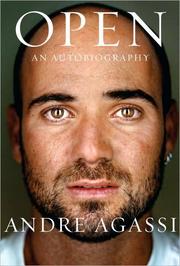
Andre Agassi's memoir contains one of the most startling opening lines in the genre: "I play tennis for a living even though I hate tennis." From that provocation, Agassi unfolds the story of a childhood dominated by his father's obsessive training regimen, a professional career marked by spectacular rises and falls, and a personal life defined by the tension between public image and private reality. Written with Pulitzer Prize-winning journalist J.R. Moehringer, Open transcends sports memoir to become a penetrating study of what it means to pursue excellence in something you never chose.
15. Bossypants by Tina Fey
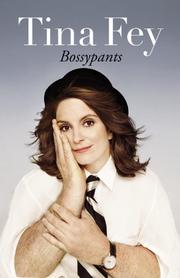
Tina Fey's memoir is disarmingly funny and quietly subversive. She writes about growing up in suburban Philadelphia, her years at Second City and Saturday Night Live, and the creation of 30 Rock with the comedic timing of a veteran performer. But beneath the humor, Bossypants is a sharp examination of what it means to be a woman in an industry that was not built for women. Fey addresses sexism, body image, and the impossible standards placed on working mothers with the same deadpan intelligence that defined her comedy career.
16. Man's Search for Meaning by Viktor Frankl
Viktor Frankl's account of surviving the Nazi concentration camps and the psychological framework he developed from that experience has sold more than sixteen million copies since its publication in 1946. The first half of the book describes life in Auschwitz with a psychiatrist's clinical eye, observing how different prisoners responded to dehumanization. The second half presents Frankl's logotherapy, which argues that the primary human drive is not pleasure or power but meaning. The book's enduring popularity reflects its central claim: that even in the most extreme suffering, humans retain the freedom to choose their attitude toward their circumstances.
17. Wild by Cheryl Strayed
Cheryl Strayed hiked more than a thousand miles of the Pacific Crest Trail alone at the age of twenty-six, with no experience and a backpack so heavy she nicknamed it "Monster." Her memoir recounts the physical ordeal of the hike alongside the emotional wreckage that drove her to attempt it: her mother's death, her marriage's collapse, and her descent into heroin use. Strayed writes with raw honesty about grief and self-destruction, and the trail serves as both literal setting and metaphor for the slow, painful work of rebuilding a life.
18. The Year of Magical Thinking by Joan Didion
Joan Didion's memoir of the year following her husband John Gregory Dunne's sudden death is a masterpiece of controlled grief. Didion examines her own irrational behaviors and thought patterns in the aftermath of loss with the same analytical precision she brought to her journalism. The book is a study of how the mind processes catastrophe, circling back to the same moments and details as Didion tries to make sense of an event that resists understanding. It won the National Book Award and established a new standard for writing about bereavement.
19. Just Kids by Patti Smith
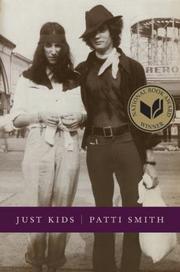
Patti Smith's memoir of her relationship with photographer Robert Mapplethorpe in 1960s and 1970s New York City won the National Book Award for Nonfiction. The book is a love story, an artist's coming-of-age narrative, and a portrait of a city that no longer exists. Smith writes with a poet's attention to image and rhythm, capturing the hunger and beauty of two young people trying to become artists in a world that offered no guarantees. Just Kids is as much about the creative process as it is about any individual life.
20. Persepolis by Marjane Satrapi
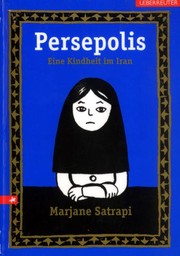
Marjane Satrapi's graphic memoir of growing up in Iran during the Islamic Revolution proved that the comic form could carry the weight of political history and personal trauma. Her stark black-and-white drawings depict her childhood during the revolution, the Iran-Iraq War, and her adolescent exile in Vienna with an economy and emotional directness that prose might not achieve. Persepolis became a global bestseller and introduced millions of Western readers to Iranian culture and history through the eyes of a rebellious, intelligent young woman.
21. Crying in H Mart by Michelle Zauner
Michelle Zauner's memoir explores grief, identity, and the connection between food and memory through the lens of her mother's death from cancer. Zauner, the frontwoman of the band Japanese Breakfast, writes about her Korean American identity and the way cooking Korean food became her primary connection to a heritage she feared losing. The book resonated with readers far beyond any single cultural community because its central themes, the fear of forgetting, the desire to hold onto the dead through sensory experience, are universal.
22. Know My Name by Chanel Miller
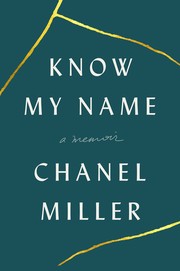
Chanel Miller was known for years only as "Emily Doe," the victim in the Stanford sexual assault case that made national headlines in 2016. Her memoir reclaims her identity and tells the full story of the assault, the trial, and its aftermath in prose that is both legally precise and emotionally searing. Miller writes about the criminal justice system's treatment of assault survivors with an anger that is controlled, articulate, and devastating. Know My Name is both a personal narrative and an indictment of institutional failure.
23. Hillbilly Elegy by J.D. Vance
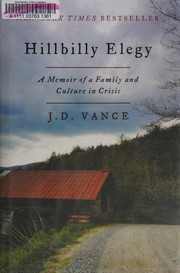
J.D. Vance's memoir of growing up in a struggling Ohio steel town and the Appalachian values of his Kentucky family became a cultural flashpoint upon its publication in 2016. Regardless of the political debates it ignited, the book works as a raw account of poverty, addiction, and family dysfunction. Vance writes about his grandmother's fierce protectiveness, his mother's struggle with substance abuse, and his own unlikely path from a chaotic childhood to Yale Law School. The memoir sold millions of copies and sparked widespread conversation about class in America.
24. Tuesdays with Morrie by Mitch Albom
Mitch Albom's account of reconnecting with his dying former college professor, Morrie Schwartz, became one of the best selling memoirs of the late twentieth century. Over fourteen Tuesdays, Albom visits Schwartz as ALS slowly takes his body, and the two discuss the meaning of life, death, family, forgiveness, and regret. The book's simplicity is its strength. Schwartz's observations are neither original nor philosophically complex, but they carry the authority of a man who is actively dying and has nothing left to perform. Tuesdays with Morrie endures because it offers comfort without pretension.
25. Eat, Pray, Love by Elizabeth Gilbert
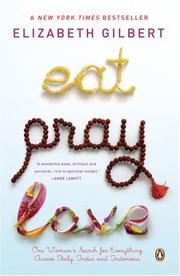
Elizabeth Gilbert's memoir of traveling through Italy, India, and Indonesia after a devastating divorce became a publishing phenomenon, spending nearly four years on the bestseller list. Gilbert writes about pleasure, devotion, and balance as she eats her way through Rome, meditates at an ashram in India, and finds love in Bali. The book was criticized by some as privileged navel-gazing and celebrated by others as a liberating account of a woman choosing herself. Whatever one's stance, its commercial success and cultural impact are undeniable, and it expanded the audience for memoir as a genre.
Best Biography and Memoir Books by Sub-Category
Best Celebrity Memoirs
Celebrity memoirs succeed when they transcend the familiar arc of fame and fortune to reveal something genuinely personal. Bossypants by Tina Fey works because Fey uses comedy as a vehicle for sharp cultural commentary. Greenlights by Matthew McConaughey defies expectations by offering philosophical reflection instead of Hollywood gossip. Open by Andre Agassi strips away the athletic hero narrative to expose the ambivalence at the heart of a champion's career. Born a Crime by Trevor Noah uses celebrity as a backdrop for a much larger story about race, poverty, and survival in South Africa. These books prove that the best celebrity writing happens when the author is willing to be something other than a celebrity on the page.
Best Political Biographies
Political biography at its best illuminates not just the leader but the era. Long Walk to Freedom by Nelson Mandela is inseparable from the history of apartheid and democratic South Africa. A Promised Land by Barack Obama offers an unusually introspective account of presidential decision-making. The Autobiography of Malcolm X captures the urgency and complexity of the Civil Rights movement through one man's radical evolution. Becoming by Michelle Obama redefines political memoir by centering personal identity over policy. Together, these books form a reading list that spans continents and decades while sharing a commitment to honest self-examination within the context of political power.
Best Business Biographies
The strongest business biographies go beyond success stories to reveal the doubt, obsession, and near-failures that precede achievement. Steve Jobs by Walter Isaacson is the gold standard, offering an unflinching portrait of genius and its costs. Shoe Dog by Phil Knight reads like a startup narrative with real stakes, capturing the years when Nike was one bad quarter away from collapse. Man's Search for Meaning by Viktor Frankl, while not a business book in the traditional sense, has been adopted by business leaders for its insights into purpose-driven leadership. These books remind readers that behind every successful enterprise is a human story marked by uncertainty and risk.
Best Memoirs About Overcoming Adversity
The memoirs that endure are rarely simple triumph narratives. Educated by Tara Westover complicates the idea of escape by showing what is lost in the process of gaining knowledge. The Glass Castle by Jeannette Walls presents her parents' failures without reducing them to villains, allowing readers to hold compassion and anger simultaneously. Wild by Cheryl Strayed is honest about the fact that hiking a thousand miles does not fix a broken life but rather creates the conditions for healing to begin. Know My Name by Chanel Miller turns personal trauma into a systemic critique without losing the intimacy of individual experience. These books honor the complexity of survival.
Frequently Asked Questions
What is the difference between a biography and a memoir?
A biography is a comprehensive account of a person's life, typically written by someone other than the subject, based on extensive research including interviews, archives, and historical records. A memoir is a first-person narrative written by the subject, focusing on specific themes, periods, or experiences rather than attempting to cover an entire life. Walter Isaacson's Steve Jobs is a biography. Tara Westover's Educated is a memoir. The distinction matters because each form brings different strengths. Biographies offer perspective and context that the subject cannot provide. Memoirs offer interiority and emotional truth that no outside observer can access.
What are the best biography and memoir books for someone new to the genre?
For readers new to biography and memoir, start with books that combine compelling narrative with accessible prose. Born a Crime by Trevor Noah is an ideal entry point because it reads like a novel while delivering genuine insight into apartheid-era South Africa. Educated by Tara Westover has the momentum of a thriller. Shoe Dog by Phil Knight appeals to readers who enjoy business narratives. For shorter, more focused memoirs, When Breath Becomes Air by Paul Kalanithi and Tuesdays with Morrie by Mitch Albom are both powerful and concise. The best starting point depends on your interests, but any of these books will demonstrate why memoir and biography remain among the most rewarding forms of nonfiction.
Are audiobooks a good way to experience memoirs?
Memoirs are among the best genres for audio listening, particularly when narrated by the author. Hearing Michelle Obama read Becoming, Trevor Noah perform Born a Crime, or Tina Fey deliver Bossypants adds a dimension that the printed page cannot replicate. The author's voice carries emotional nuance, comedic timing, and personal inflection that deepen the reading experience. Even third-person biographies benefit from skilled narration, as a good reader can bring historical figures to life in ways that make long books feel effortless. If you enjoy memoirs, audio is worth exploring as a format.
Where can I find more book recommendations by genre?
This list focuses on biography and memoir, but great reading spans every genre. You can explore our full collection of curated recommendations across fiction and nonfiction categories. We cover everything from history and self-help to true crime and beyond. Browse all genres →
Discover your next great biography or memoir read without extra screen time. speakeasy converts book reviews, author interviews, and literary articles into audio you can enjoy anywhere. Paste any URL and listen — 3 free articles per week, no account needed.