The best selling fantasy books transport readers to worlds where magic is real, kingdoms rise and fall, and ordinary people become heroes. Fantasy fiction generates over $590 million in annual revenue, making it one of the fastest-growing genres in publishing. From Tolkien's Middle-earth to Sanderson's Cosmere, these are the novels that defined what fantasy can be and why millions of readers keep returning to imagined worlds.
This list covers 25 essential fantasy novels, spanning golden age classics, modern epics, and recent bestsellers that are reshaping the genre. Whether you are a seasoned fantasy reader or looking for your entry point, these books represent the best the genre has to offer.
What Makes a Great Fantasy Book?
The best fantasy novels build worlds that feel as real as our own. They create magic systems with internal logic, characters whose choices carry real consequences, and stories that explore universal themes through extraordinary settings. Great fantasy does not just escape reality. It uses the freedom of invented worlds to examine power, morality, identity, and what it means to be human. The finest fantasy authors make you forget you are reading fiction, even as dragons fill the sky.
The Best Selling Fantasy Books of All Time
1. The Lord of the Rings by J.R.R. Tolkien
The novel that created modern fantasy. Tolkien's epic trilogy follows hobbit Frodo Baggins on a quest to destroy the One Ring and save Middle-earth from the dark lord Sauron. Published between 1954 and 1955, The Lord of the Rings has sold over 150 million copies and established virtually every trope that epic fantasy still uses: the quest narrative, the fellowship of diverse companions, the invented languages, the detailed maps. Tolkien did not just write a novel. He created a mythology so complete that scholars still study it. No fantasy list can begin anywhere else.
2. The Hobbit by J.R.R. Tolkien
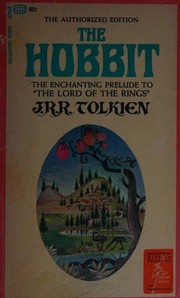
Before Frodo, there was Bilbo. Tolkien's 1937 adventure novel follows a reluctant hobbit recruited by the wizard Gandalf to help a company of dwarves reclaim their mountain homeland from the dragon Smaug. The Hobbit is lighter and more accessible than The Lord of the Rings, making it the perfect entry point for fantasy readers of all ages. It has sold over 100 million copies and remains one of the best-selling novels in history. The riddle scene with Gollum is one of the most iconic passages in all of literature.
3. Harry Potter and the Sorcerer's Stone by J.K. Rowling
J.K. Rowling's 1997 debut introduced the world to a boy wizard living under the stairs at Number Four, Privet Drive. The Harry Potter series went on to sell over 600 million copies worldwide, making it the best-selling book series in history. The first novel establishes the magical world of Hogwarts with such vivid detail that millions of readers felt genuinely disappointed not to receive their own acceptance letters. Rowling's genius was making magic feel like a school subject you could actually study, grounding the fantastical in the familiar.
4. A Game of Thrones by George R.R. Martin
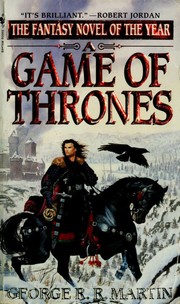
George R.R. Martin upended fantasy conventions with this 1996 novel, the first in A Song of Ice and Fire. Martin brought moral ambiguity, political intrigue, and genuine consequences to a genre that had often relied on clear-cut good versus evil. No character is safe, alliances shift constantly, and power is won through cunning as often as swordplay. The HBO television adaptation made Martin a household name, but the novel's dense, layered storytelling stands on its own as a masterwork of modern fantasy.
5. The Chronicles of Narnia by C.S. Lewis

C.S. Lewis's seven-novel series, beginning with The Lion, the Witch and the Wardrobe in 1950, has sold over 100 million copies. The Narnia books blend Christian allegory with adventure fantasy in a way that works for both believing and secular readers. The image of Lucy stepping through a wardrobe into a snow-covered forest is one of fantasy's most enduring moments. Lewis proved that fantasy could be profound without being ponderous, accessible without being shallow.
6. The Name of the Wind by Patrick Rothfuss
Patrick Rothfuss's 2007 debut is widely regarded as one of the finest fantasy novels of the 21st century. Kvothe, a legendary figure, tells the true story of his life to a chronicler over three days. The prose is lyrical and precise, the magic system is grounded in logic, and the narrative structure of a legend deconstructing his own myth is endlessly compelling. The Name of the Wind revitalized interest in literary fantasy writing and proved that beautiful prose and epic storytelling are not mutually exclusive.
7. The Way of Kings by Brandon Sanderson
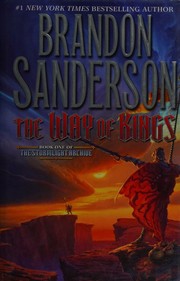
Brandon Sanderson launched his most ambitious project with this 2010 epic, the first book in The Stormlight Archive. Set on the storm-ravaged world of Roshar, the novel weaves together multiple storylines across a world where magical storms shape everything from ecology to warfare. Sanderson's trademark is his rigorously designed magic systems, and The Way of Kings delivers his most complex and rewarding one yet. At over 1,000 pages, it demands commitment but rewards it generously.
8. A Wizard of Earthsea by Ursula K. Le Guin
Ursula K. Le Guin's 1968 novel follows young Ged as he studies magic on the island of Roke and accidentally unleashes a shadow that pursues him across the archipelago of Earthsea. Le Guin's prose is spare and beautiful, and her exploration of power, identity, and the balance of nature influenced every fantasy author who followed. A Wizard of Earthsea was one of the first major fantasy novels to center a protagonist of color, and its Taoist philosophical underpinnings give it a depth that distinguishes it from its contemporaries.
9. The Eye of the World by Robert Jordan
Robert Jordan's 1990 epic launched The Wheel of Time, a 14-book series that became one of fantasy's most ambitious undertakings. The Eye of the World begins with familiar quest-fantasy tropes before expanding into a world of staggering complexity. Jordan's world-building is among the most detailed in the genre, with distinct cultures, political systems, and a magic system divided by gender. The series has sold over 90 million copies and was completed by Brandon Sanderson after Jordan's death, a passing of the torch that honored both authors.
10. Mistborn: The Final Empire by Brandon Sanderson

Sanderson's 2006 novel asks a deceptively simple question: what if the Dark Lord won? In a world ruled by an immortal tyrant for a thousand years, street thief Vin discovers she possesses Allomancy, a magic system based on ingesting and burning metals. Mistborn is a heist novel wrapped in an epic fantasy, and its magic system is one of the most inventive and satisfying in the genre. Sanderson's ability to deliver twist endings that recontextualize everything you have read is on full display here.
11. American Gods by Neil Gaiman
Neil Gaiman's 2001 novel imagines that the gods of every mythology exist in America, brought by immigrants and now struggling for relevance in a land that worships technology and media. Shadow Moon, recently released from prison, becomes bodyguard to the mysterious Mr. Wednesday and is drawn into a war between old gods and new. American Gods won the Hugo, Nebula, and Bram Stoker awards. Gaiman's ability to blend mythology, Americana, and contemporary fiction created something entirely original.
12. The Colour of Magic by Terry Pratchett
Terry Pratchett's 1983 debut novel launched the Discworld series, which spans 41 novels and has sold over 85 million copies. The Colour of Magic introduces the flat, disc-shaped world carried through space on the backs of four elephants standing on a giant turtle. Pratchett's genius was using absurdist fantasy as a vehicle for razor-sharp social satire. The Discworld novels are consistently funny, surprisingly wise, and increasingly regarded as some of the finest comic literature in the English language.
13. The Fifth Season by N.K. Jemisin

N.K. Jemisin made history by winning three consecutive Hugo Awards for Best Novel with her Broken Earth trilogy, beginning with The Fifth Season in 2015. The novel uses second-person narration to tell the story of Essun, a woman searching for her daughter on a continent plagued by catastrophic seismic events. Jemisin's world-building is dense and original, her themes of oppression and survival are urgent, and her willingness to experiment with form pushed fantasy literature forward. This is essential modern fantasy.
14. The Priory of the Orange Tree by Samantha Shannon
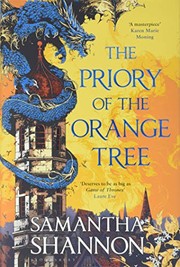
Samantha Shannon's 2019 standalone epic offers a sprawling, multi-POV fantasy inspired by diverse mythologies. Queens, dragonriders, and mages across multiple continents face a rising draconic threat. The Priory of the Orange Tree is notable for its inclusive representation, feminist perspective, and the ambition of telling an epic fantasy story in a single volume rather than a series. Shannon proved that standalone fantasy epics can deliver the same scope and satisfaction as multi-book sagas.
15. Assassin's Apprentice by Robin Hobb
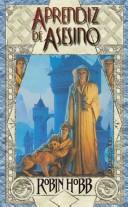
Robin Hobb's 1995 debut introduces FitzChivalry Farseer, the bastard son of a prince, trained as a royal assassin. Hobb's gift is character depth. Fitz is one of the most fully realized protagonists in fantasy fiction, and his journey across the Realm of the Elderlings series (16 novels in total) is deeply personal and emotionally devastating. Assassin's Apprentice launched one of fantasy's most beloved series by prioritizing the internal life of its hero over spectacle.
16. The Blade Itself by Joe Abercrombie
Joe Abercrombie's 2006 debut launched grimdark fantasy into the mainstream. The First Law trilogy follows a tortured barbarian, a crippled inquisitor, and a vain nobleman through a world where heroism is rare and moral compromise is constant. Abercrombie's dark humor, morally gray characters, and subversion of fantasy tropes influenced a generation of writers. If Tolkien showed what fantasy could aspire to, Abercrombie showed what it looks like when those aspirations collide with human nature.
17. The Lies of Locke Lamora by Scott Lynch
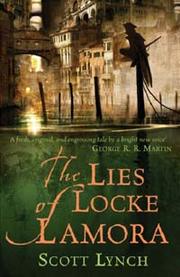
Scott Lynch's 2006 debut is a fantasy heist novel following Locke Lamora, a con artist operating in a city inspired by Renaissance Venice. The novel's intricate plotting, sharp dialogue, and inventive world-building made it an instant fan favorite. Lynch combines the structure of a caper film with epic fantasy world-building, proving that fantasy does not need to center on chosen ones and dark lords. Sometimes a thief with a clever plan is more than enough.
18. Good Omens by Neil Gaiman and Terry Pratchett

Two of fantasy's greatest minds collaborated on this 1990 comic novel about an angel and a demon who have grown fond of Earth and decide to sabotage the Apocalypse. Good Omens is brilliantly funny, surprisingly tender, and showcases both authors at their most playful. The novel's cult following exploded after the 2019 television adaptation. It remains one of the finest examples of comic fantasy and proof that the genre does not have to be grim to be great.
19. The Earthsea Cycle by Ursula K. Le Guin
While A Wizard of Earthsea is the entry point, the full Earthsea cycle spans six books written across four decades. Le Guin returned to Earthsea repeatedly, each time bringing new maturity and perspective. Tehanu, the fourth book, is a feminist reimagining of the world she had created, questioning the assumptions of power and gender embedded in her earlier work. The series as a whole represents one of fantasy's most thoughtful and evolving bodies of work.
20. The Princess Bride by William Goldman
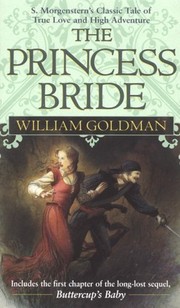
William Goldman's 1973 novel, presented as an abridgment of a (fictional) longer work, is a loving satire of fairy tale romance and adventure. Buttercup and Westley's love story, Inigo Montoya's quest for revenge, and the comedic machinations of Prince Humperdinck have become cultural touchstones. The 1987 film is iconic, but the novel offers a deeper, funnier, and more metafictional experience. Goldman's framing device of an unreliable editor adds layers that the film could not capture.
21. Piranesi by Susanna Clarke
Susanna Clarke's 2020 novel is a puzzle-box fantasy set in a mysterious House of infinite halls filled with statues and tidal oceans. Piranesi, the narrator, explores this strange world with scientific curiosity and childlike wonder, slowly uncovering the truth of his existence. At under 300 pages, it is compact and perfectly paced. Piranesi won the Women's Prize for Fiction and proved that fantasy can be intimate, philosophical, and structurally inventive while remaining accessible and deeply moving.
22. The Stormlight Archive Series by Brandon Sanderson

While The Way of Kings launches the series, the Stormlight Archive as a whole represents modern epic fantasy at its most ambitious. Across four published volumes (with a fifth forthcoming), Sanderson builds a world of extraordinary detail, with magic systems that interlock, characters who evolve across thousands of pages, and themes of mental health, leadership, and redemption. Sanderson's Kickstarter campaigns have broken records, and his dedicated readership rivals any author in the genre.
23. The Kingkiller Chronicle by Patrick Rothfuss
Rothfuss's ongoing series, encompassing The Name of the Wind and The Wise Man's Fear, has redefined what literary fantasy prose can achieve. Kvothe's story, told in his own words, is a meditation on storytelling itself. How do legends form? How does a person become a myth? The writing is gorgeous, the University setting is richly imagined, and the framing narrative creates an irresistible tension between who Kvothe claims to be and who he actually is.
24. Fourth Wing by Rebecca Yarros
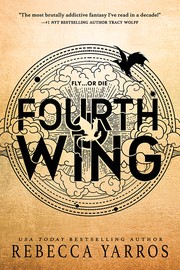
Rebecca Yarros's 2023 novel became a publishing phenomenon, blending dragon-riding military academy fantasy with intense romance. Violet Sorrengail enters the elite Basgiath War College, where cadets bond with dragons or die trying. Fourth Wing tapped into the romantasy movement at exactly the right moment, selling millions of copies and becoming one of the best-selling fantasy novels of the decade. Yarros proved that romance-forward fantasy has enormous commercial potential. See our romantasy list →
25. Gardens of the Moon by Steven Erikson
Steven Erikson's 1999 debut launched the Malazan Book of the Fallen, a ten-book series widely considered the most complex and ambitious in fantasy history. Gardens of the Moon drops readers into a world of warring empires, ascendant gods, and ancient races without hand-holding. The learning curve is steep, but readers who persevere discover a series of extraordinary depth and philosophical richness. Erikson, a trained archaeologist and anthropologist, brings an academic's rigor to his world-building.
Best Fantasy Books by Sub-Category
Best Epic Fantasy Series
The Lord of the Rings by Tolkien remains the gold standard. The Wheel of Time by Robert Jordan offers the most expansive world-building. The Stormlight Archive by Brandon Sanderson represents modern epic fantasy at its peak. A Song of Ice and Fire by George R.R. Martin redefined the genre's approach to moral complexity. The Malazan Book of the Fallen by Steven Erikson is the most intellectually ambitious.
Best Standalone Fantasy
Piranesi by Susanna Clarke, The Priory of the Orange Tree by Samantha Shannon, Circe by Madeline Miller, The Golem and the Jinni by Helene Wecker, and Spinning Silver by Naomi Novik all prove that fantasy does not require a multi-book commitment to deliver a complete and satisfying experience.
Best Fantasy for Beginners
Start with The Hobbit for classic fantasy, Harry Potter for accessible modern fantasy, The Name of the Wind for literary fantasy, Mistborn for innovative magic systems, or Good Omens for comic fantasy. Each offers a compelling entry point without requiring prior genre knowledge.
Best Dark Fantasy
The Blade Itself by Joe Abercrombie, The Poppy War by R.F. Kuang, Prince of Thorns by Mark Lawrence, The Black Company by Glen Cook, and Between Two Fires by Christopher Buehlman represent fantasy at its darkest and most morally complex.
Frequently Asked Questions
What is the best-selling fantasy book of all time?
Harry Potter and the Sorcerer's Stone by J.K. Rowling holds the record with the series selling over 600 million copies total. For adult fantasy, The Lord of the Rings by J.R.R. Tolkien has sold over 150 million copies. The Hobbit has sold over 100 million. Among modern fantasy, A Game of Thrones and the broader A Song of Ice and Fire series has sold over 90 million copies.
What fantasy series should I read first?
If you are new to fantasy, start with Harry Potter for its accessibility, The Hobbit for its classic charm, or Mistborn for a tight, modern introduction to the genre. If you want something more complex, The Name of the Wind offers literary fantasy prose, while A Game of Thrones provides political intrigue with fantasy elements.
Is fantasy the same as science fiction?
Fantasy and science fiction are distinct but related genres. Fantasy uses magic, mythology, and supernatural elements. Science fiction uses technology, scientific concepts, and speculative futures. Some works blend both. The key difference is the source of the extraordinary elements: magic (fantasy) versus science and technology (science fiction). Explore our sci-fi list →
What is grimdark fantasy?
Grimdark fantasy is a subgenre characterized by moral ambiguity, realistic violence, and a world where conventional heroism is rare or punished. The term comes from the Warhammer 40,000 tagline "In the grim darkness of the far future, there is only war." Key authors include Joe Abercrombie, Mark Lawrence, and R.F. Kuang. Grimdark is a reaction to the more idealistic fantasy of Tolkien and his imitators.
Looking for more genres? Browse all genres → | Related: Best Science Fiction Books → · Best Romance Books → · Best Romantasy Books →
Discover your next great fantasy read without extra screen time. speakeasy converts book reviews, author interviews, and literary articles into audio you can enjoy anywhere. Paste any URL and listen — 3 free articles per week, no account needed.