The best selling adventure books transport you to places you will never go, into situations you hope you will never face, and through feats of courage and endurance that redefine what you thought was humanly possible. Adventure fiction is one of the oldest literary traditions, stretching back to Homer's Odyssey and the epic tales of exploration that defined the Age of Sail. The genre has never stopped evolving. Today it encompasses everything from swashbuckling historical romps to harrowing survival narratives, from jungle expeditions to deep-sea odysseys, from classic quest stories to modern thrillers set at the edges of the known world. This list covers 25 essential adventure books that have captivated millions of readers across generations. Whether you want heart-racing fiction or jaw-dropping true stories of survival, these books deliver. For recommendations across other genres, browse all genres here.
What Makes a Great Adventure Book?
A great adventure book creates forward momentum that makes it physically difficult to stop reading. The best adventure writers understand pacing instinctively, alternating between moments of intense action and quieter passages that build character and deepen the stakes. Setting is paramount in adventure fiction. The environment is never mere backdrop but an active force that tests the protagonist and shapes the story. The Amazon jungle, the open ocean, a frozen mountain peak, an uncharted island -- these landscapes become characters in their own right. Great adventure books also demand transformation. The protagonist who returns from the journey must be fundamentally different from the one who set out. That transformation, forged through physical ordeal and moral testing, is what separates true adventure literature from simple action sequences strung together.
The Best Selling Adventure Books of All Time
1. The Count of Monte Cristo by Alexandre Dumas

Alexandre Dumas's The Count of Monte Cristo is the greatest revenge story ever told and one of the finest adventure novels in any language. Edmond Dantes, a young sailor falsely imprisoned for fourteen years, escapes, discovers a vast treasure, and reinvents himself as the wealthy and mysterious Count of Monte Cristo to systematically destroy the men who betrayed him. The novel is enormous -- over 1,200 pages in most editions -- but its pacing never falters. Dumas was a master of suspense, planting narrative seeds hundreds of pages before they bear fruit. The book explores justice, mercy, patience, and the cost of obsessive vengeance with a sophistication that belies its reputation as a simple adventure tale. It remains as gripping today as when it was serialized in the 1840s.
2. Treasure Island by Robert Louis Stevenson
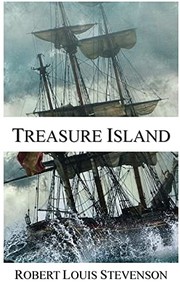
Robert Louis Stevenson invented the modern pirate story with Treasure Island, and every pirate tale since exists in its shadow. The novel follows young Jim Hawkins from a quiet English inn to the deck of the Hispaniola and onto the shores of a treasure-laden island, accompanied by the unforgettable Long John Silver. Stevenson wrote the book to entertain his stepson, and that sense of unrestrained narrative pleasure radiates from every chapter. What elevates Treasure Island beyond simple adventure is the moral complexity of Silver, a villain who is charming, intelligent, and genuinely fond of Jim even as he schemes and murders. The book has never been out of print since its publication in 1883 and has sold tens of millions of copies worldwide.
3. The Call of the Wild by Jack London
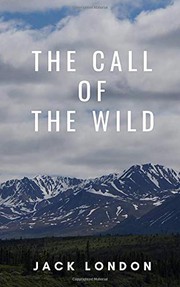
Jack London's The Call of the Wild follows Buck, a domesticated dog stolen from a California ranch and sold into service as a sled dog during the Klondike Gold Rush. As Buck adapts to the brutal conditions of the Yukon, he sheds the habits of civilization and reconnects with the primal instincts buried within his domesticated nature. London wrote the novel in thirty days, and the raw energy of its composition shows in every page. The prose is muscular and direct, perfectly suited to a story about physical endurance and the stripping away of everything inessential. The book has sold over ten million copies and remains one of the most popular adventure novels ever written, beloved by readers who have never set foot in the wilderness and never will.
4. Jurassic Park by Michael Crichton
Michael Crichton's Jurassic Park merged cutting-edge science with pulse-pounding adventure to create one of the most commercially successful novels of the twentieth century. The premise -- a billionaire uses genetic engineering to resurrect dinosaurs on a remote island, with predictably catastrophic results -- is brilliant in its simplicity. Crichton, who held a medical degree from Harvard, gave the science enough rigor to feel plausible and the adventure enough velocity to feel relentless. The novel explores themes of scientific hubris, the unpredictability of complex systems, and the arrogance of assuming that nature can be controlled. Steven Spielberg's film adaptation became the highest-grossing movie of 1993, but the novel is darker, more detailed, and more intellectually ambitious than the film it inspired.
5. The Adventures of Huckleberry Finn by Mark Twain

Mark Twain's The Adventures of Huckleberry Finn is simultaneously one of the greatest adventure novels and one of the most important works of American literature. Huck and the escaped slave Jim raft down the Mississippi River, encountering con artists, feuding families, and the full spectrum of antebellum Southern society. Twain uses Huck's naive voice to devastating satirical effect, exposing the hypocrisy and cruelty of a civilization built on slavery. Ernest Hemingway famously declared that all modern American literature comes from this book. The novel's treatment of race has made it perpetually controversial, but its combination of adventure, humor, social criticism, and moral courage makes it irreplaceable. The river journey at its center is the archetype for every road story that followed.
6. Life of Pi by Yann Martel

Yann Martel's Life of Pi tells the story of Piscine Patel, a young Indian boy stranded on a lifeboat in the Pacific Ocean with a 450-pound Bengal tiger named Richard Parker. The novel is a survival story on its surface, and the mechanics of Pi's 227-day ordeal -- obtaining fresh water, catching fish, maintaining a precarious truce with the tiger -- are gripping and inventive. But the novel operates on a deeper level as an allegory about storytelling, faith, and the stories we choose to believe. The ending, which offers two competing versions of Pi's survival, forces the reader to decide which narrative they prefer and to confront what that choice reveals about them. The book won the Man Booker Prize and has sold over ten million copies.
7. Into the Wild by Jon Krakauer

Jon Krakauer's Into the Wild traces the journey of Christopher McCandless, a recent college graduate who abandoned his possessions, donated his savings to charity, and hitchhiked to Alaska to live alone in the wilderness. McCandless died of starvation in an abandoned bus in Denali National Park in 1992. Krakauer, himself an experienced mountaineer and wilderness traveler, wrote the book with a combination of admiration and critical distance, neither lionizing McCandless as a romantic hero nor dismissing him as a fool. The result is a meditation on the allure and danger of radical self-reliance, the pull of wild places on the human imagination, and the thin line between adventure and recklessness. The book has sold over three million copies and sparked ongoing debate about McCandless's legacy.
8. The Alchemist by Paulo Coelho
Paulo Coelho's The Alchemist follows Santiago, an Andalusian shepherd boy who dreams of finding treasure at the Egyptian pyramids and sets out on a journey across North Africa. The novel is structured as a fable, with each encounter along Santiago's path delivering a lesson about following one's personal legend -- Coelho's term for one's true purpose in life. The prose is simple and direct, the symbolism is transparent, and the philosophy is unapologetically earnest. Critics have been divided on the book since its publication in 1988, but readers have not: The Alchemist has sold over 150 million copies worldwide, making it one of the best selling books in history. Its enduring appeal lies in its insistence that the universe conspires to help those who pursue their dreams with genuine conviction.
9. Robinson Crusoe by Daniel Defoe

Daniel Defoe's Robinson Crusoe, published in 1719, is often cited as the first English novel and is certainly the first great survival adventure story. Crusoe is shipwrecked on an uninhabited island and must build shelter, grow food, and create a functioning life from nothing over twenty-eight years of solitude. Defoe's genius was in the specificity of the survival details: every tool Crusoe makes, every crop he plants, every structure he builds is described with practical precision that makes the reader feel the weight of each accomplishment. The novel invented the survival genre and the desert island narrative. It has been continuously in print for over three hundred years and has been translated into virtually every written language on Earth.
10. Around the World in Eighty Days by Jules Verne
Jules Verne's Around the World in Eighty Days captures the spirit of the late nineteenth century's fascination with technology, speed, and the shrinking of the globe. Phileas Fogg, an English gentleman of rigid habits, bets his fellow club members that he can circumnavigate the Earth in eighty days using the new networks of railways and steamship routes. The novel is a travelogue, a comedy, a romance, and a thriller all at once, with Fogg and his resourceful valet Passepartout encountering obstacles on every continent. Verne wrote the book as a serial, and the episodic structure keeps the pace brisk and the variety of settings constantly refreshing. The novel has never gone out of print and remains one of the most purely enjoyable adventure stories ever written.
11. 20,000 Leagues Under the Sea by Jules Verne
Jules Verne's second entry on this list takes readers beneath the ocean's surface aboard the Nautilus, the submarine commanded by the enigmatic Captain Nemo. Published in 1870, the novel predicted submarine technology with remarkable accuracy, but its lasting appeal goes beyond scientific prophecy. Nemo is one of literature's great anti-heroes: brilliant, cultured, and driven by a hatred of imperialism that has led him to reject human society entirely. The underwater sequences -- hunting in submarine forests, walking on the ocean floor, battling giant squid -- remain vivid and exciting. Verne combines genuine scientific curiosity with adventure storytelling in a way that few authors have matched since. The novel has influenced everything from marine biology to naval engineering to science fiction.
12. The Three Musketeers by Alexandre Dumas

Alexandre Dumas's The Three Musketeers is the quintessential swashbuckling adventure, a novel of swordfights, intrigue, loyalty, and romance set in seventeenth-century France. Young d'Artagnan travels to Paris to join the Musketeers of the Guard and befriends Athos, Porthos, and Aramis, forming a brotherhood bound by the motto "All for one and one for all." The novel moves at a breakneck pace, leaping from duel to conspiracy to chase to battlefield with the energy of an author who was himself as larger-than-life as his characters. Dumas published the novel as a serial, and each installment was designed to end on a cliffhanger that made waiting for the next unbearable. The book has been adapted countless times, but nothing matches the original for sheer narrative exuberance.
13. Into Thin Air by Jon Krakauer

Jon Krakauer's Into Thin Air is a first-person account of the 1996 Mount Everest disaster, in which eight climbers died during a single storm. Krakauer was on the mountain as a journalist, and his position as both participant and observer gives the book an immediacy that no after-the-fact reconstruction could match. The writing is precise and harrowing, capturing the physical deterioration caused by extreme altitude, the decision-making failures that compounded the disaster, and the guilt of survival. Into Thin Air became an immediate bestseller and remains the defining account of the Everest commercialization debate. It is a book about the gap between ambition and ability, and about the mountain's indifference to both.
14. Endurance: Shackleton's Incredible Voyage by Alfred Lansing
Alfred Lansing's Endurance tells the story of Ernest Shackleton's 1914 Antarctic expedition, in which his ship was crushed by pack ice, stranding twenty-eight men on the frozen sea for nearly two years. What followed -- a journey across ice floes, open-ocean crossings in small boats, and a final desperate trek across uncharted mountains -- is the greatest survival story ever documented. Lansing conducted extensive interviews with surviving crew members and reconstructed the ordeal with novelistic precision. The remarkable fact about the Endurance expedition is that every single crew member survived, a testament to Shackleton's leadership and the extraordinary resilience of his men. The book has been in print since 1959 and is consistently ranked among the greatest adventure narratives ever written.
15. The Revenant by Michael Punke
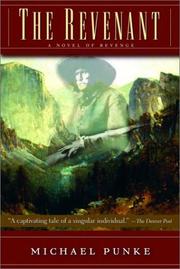
Michael Punke's The Revenant is based on the true story of Hugh Glass, a frontiersman who was mauled by a grizzly bear in 1823 and left for dead by his companions in the uncharted wilderness of the Dakota Territory. Glass survived, and what followed was a 200-mile crawl to the nearest settlement, driven by the desire for revenge against the men who abandoned him. Punke fills in the gaps of the historical record with vivid and well-researched fiction, creating a portrait of the American frontier that is beautiful, brutal, and unsparing. The novel was adapted into the Academy Award-winning film starring Leonardo DiCaprio, but the book offers a richer and more nuanced exploration of Glass's world and motivations.
16. The Odyssey by Homer
Homer's Odyssey is the original adventure story, the template against which all subsequent journey narratives measure themselves. Odysseus's ten-year voyage home from the Trojan War takes him past man-eating Cyclopes, seductive sirens, vengeful gods, and the temptation of eternal life. The poem, composed nearly three thousand years ago, remains astonishingly readable in modern translations -- Robert Fagles and Emily Wilson have produced versions that capture both the grandeur and the humanity of the original. The Odyssey is not just a series of thrilling episodes but a meditation on homecoming, identity, and the cost of adventure on those left behind. Every adventure novel on this list owes something to Homer's storytelling instincts.
17. The Lost City of Z by David Grann
David Grann's The Lost City of Z follows the obsession of Percy Fawcett, a British explorer who disappeared in the Amazon jungle in 1925 while searching for a legendary ancient civilization. Grann interweaves Fawcett's story with his own journey into the Amazon to trace Fawcett's final expedition. The book is a gripping account of exploration-era adventure and a meditation on the human compulsion to seek the unknown, even at the cost of everything. Grann's research is extraordinary, drawing on Fawcett's private papers and previously unpublished materials. The Lost City of Z reveals that Fawcett may not have been as delusional as history assumed -- recent archaeological discoveries have confirmed the existence of complex pre-Columbian civilizations in the Amazon. The book was adapted into a feature film in 2016.
18. King Solomon's Mines by H. Rider Haggard

H. Rider Haggard's King Solomon's Mines, published in 1885, is the prototype for the lost world adventure genre. Allan Quatermain, a grizzled hunter and guide, leads an expedition into uncharted African territory to find the legendary diamond mines of King Solomon. The novel established many of the conventions that would define adventure fiction for the next century: the treasure map, the rugged guide, the perilous journey through hostile terrain, the ancient civilization hidden from the modern world. Haggard wrote the novel as a bet that he could produce something as compelling as Treasure Island, and while the book reflects the racial attitudes of its era, its narrative energy and sense of wonder remain powerful. It directly influenced the creation of Indiana Jones.
19. Kon-Tiki by Thor Heyerdahl
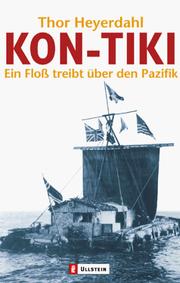
Thor Heyerdahl's Kon-Tiki is the firsthand account of his 1947 expedition across the Pacific Ocean on a balsa-wood raft, undertaken to prove that ancient South Americans could have settled Polynesia. The voyage covered 4,300 miles over 101 days, and Heyerdahl's account captures the terror and exhilaration of crossing the world's largest ocean on a craft that most experts predicted would disintegrate. Sharks circled the raft, storms threatened to capsize it, and the crew navigated by stars and currents. Whether or not Heyerdahl's anthropological thesis was correct -- subsequent research has complicated it -- the voyage itself is one of the great adventure stories of the twentieth century. The book has sold over 50 million copies and been translated into over 70 languages.
20. The Jungle Book by Rudyard Kipling
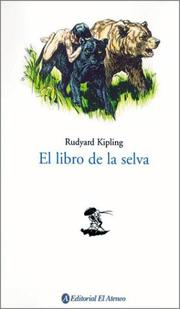
Rudyard Kipling's The Jungle Book is far richer and darker than the Disney adaptations suggest. The stories of Mowgli, a boy raised by wolves in the Indian jungle, explore themes of belonging, law, loyalty, and the tension between the human and animal worlds. Kipling's prose is muscular and rhythmic, and his animal characters -- Baloo the bear, Bagheera the panther, Shere Khan the tiger, Kaa the python -- are drawn with a specificity that elevates them beyond simple allegory. The non-Mowgli stories, including "Rikki-Tikki-Tavi" and "The White Seal," are equally accomplished. The Jungle Book has been continuously in print since 1894 and remains one of the most vivid evocations of wild landscape in English literature.
21. Hatchet by Gary Paulsen

Gary Paulsen's Hatchet is the survival novel that introduced millions of young readers to adventure fiction. Thirteen-year-old Brian Robeson is stranded alone in the Canadian wilderness after the pilot of his small plane dies of a heart attack. Armed with nothing but a hatchet -- a gift from his mother -- Brian must learn to build shelter, find food, and survive. Paulsen's writing is spare and precise, and his depiction of Brian's transformation from helpless city kid to competent wilderness survivor is utterly convincing. The book won a Newbery Honor and has sold over four million copies. For many readers, it was the first book that made them feel the physical reality of being alone in nature with nothing but their own resourcefulness.
22. The Swiss Family Robinson by Johann David Wyss

Johann David Wyss's The Swiss Family Robinson, published in 1812, follows a Swiss family shipwrecked on an uninhabited tropical island. Unlike Robinson Crusoe's solitary ordeal, the Robinsons are a family unit, and the novel is as much about cooperation and ingenuity as it is about survival. The family builds an elaborate treehouse, domesticates animals, cultivates crops, and transforms their island into a functioning homestead. Wyss, a Swiss pastor, intended the book as an instructional tale about self-reliance and natural science, and the encyclopedic detail about plants, animals, and practical skills gives the novel a quality that modern readers might call "competence porn." The book has been in continuous print for over two hundred years and inspired both the Disney attraction and countless survival stories.
23. Papillon by Henri Charriere

Henri Charriere's Papillon is the autobiographical account of his imprisonment in the brutal French penal colonies of French Guiana and his repeated escape attempts, culminating in a final leap into the ocean from Devil's Island on a sack of coconuts. The book is one of the most visceral prison narratives ever written, describing conditions so horrific that they seem fictional. Charriere's determination to escape, despite punishments that included years of solitary confinement in total darkness, makes the book a testament to the human refusal to accept captivity. Some details have been questioned by historians, but the narrative force of Papillon is undeniable. It sold over 15 million copies and was adapted into films starring Steve McQueen and Charlie Hunnam.
24. The Old Man and the Sea by Ernest Hemingway
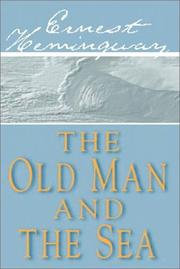
Ernest Hemingway's The Old Man and the Sea is the purest adventure story ever distilled onto the page. Santiago, an aging Cuban fisherman who has gone eighty-four days without a catch, hooks a giant marlin in the Gulf Stream and battles the fish for three days and nights. The novella is spare, symbolic, and relentless, stripping adventure down to the elemental contest between a man and the natural world. Hemingway won the Pulitzer Prize for the book and cited it as the best work he had ever done. The Old Man and the Sea was instrumental in his receiving the Nobel Prize in Literature. At barely a hundred pages, it proves that adventure needs neither length nor complexity to achieve greatness. It needs only conviction.
25. Shantaram by Gregory David Roberts
Gregory David Roberts's Shantaram is a semi-autobiographical novel about an Australian heroin addict who escapes from prison and flees to Bombay, where he disappears into the city's underworld. The novel sprawls across more than 900 pages, covering Roberts's experiences living in a slum, working as a street doctor, joining the Bombay mafia, fighting with the mujahideen in Afghanistan, and navigating the city's labyrinthine social structures. The prose is lush and unapologetically romantic, and Bombay itself is rendered with a sensory intensity that makes you feel the heat, smell the streets, and hear the chaos. The book has sold millions of copies worldwide and became a cultural phenomenon, particularly among travelers and expats. It is maximalist adventure fiction at its most intoxicating.
Best Adventure Books by Sub-Category
Best Survival Adventures
Survival adventure is the genre at its most elemental: one person (or a small group) against nature, with death as the constant alternative to resourcefulness. Alfred Lansing's Endurance is the gold standard, documenting Shackleton's Antarctic ordeal with unflinching detail. Jon Krakauer's Into Thin Air brings the same intensity to Mount Everest. Jon Krakauer's Into the Wild offers a more ambiguous take on survival, questioning whether Christopher McCandless was a visionary or a victim of his own naivety. Jack London's The Call of the Wild puts the survival instinct in an animal protagonist. Gary Paulsen's Hatchet is the ideal introduction for younger readers. Michael Punke's The Revenant transforms a true frontier survival story into visceral historical fiction.
Best Sea Adventures
The ocean has inspired adventure writers for centuries. Jules Verne's 20,000 Leagues Under the Sea remains the most imaginative submarine adventure ever written. Robert Louis Stevenson's Treasure Island defined pirate fiction. Herman Melville's influence looms over the genre, and Thor Heyerdahl's Kon-Tiki proved that the greatest sea adventure of the twentieth century was a real one. Ernest Hemingway's The Old Man and the Sea distills the sea adventure to its purest form. Daniel Defoe's Robinson Crusoe bridges the gap between sea adventure and island survival. These books share a common understanding: the ocean is not a setting but an adversary, beautiful and indifferent and utterly unforgiving.
Best Historical Adventures
Historical adventure fiction transports you to eras when the world was larger and less mapped, when journeys took months instead of hours, and when exploration meant genuine risk of the unknown. Alexandre Dumas dominates this category with both The Count of Monte Cristo and The Three Musketeers, novels that make seventeenth- and nineteenth-century France feel as vivid as today. H. Rider Haggard's King Solomon's Mines captures the Victorian era's obsession with exploration. Homer's The Odyssey predates them all and still surpasses most of them. David Grann's The Lost City of Z brings the age of exploration into the twentieth century. Henri Charriere's Papillon proves that the age of adventure did not end with the frontier.
Best Modern Adventure Fiction
Contemporary adventure fiction reflects a world that has been mostly mapped but never fully understood. Michael Crichton's Jurassic Park turned scientific speculation into blockbuster adventure. Yann Martel's Life of Pi used the survival narrative as a vehicle for philosophical inquiry. Paulo Coelho's The Alchemist reframed the adventure quest as a spiritual journey. Gregory David Roberts's Shantaram proved that the modern city can be as wild and dangerous as any jungle. Mark Twain's The Adventures of Huckleberry Finn, while set in the nineteenth century, invented the American road narrative that modern adventure fiction still follows. These books demonstrate that adventure is not about geography but about transformation through ordeal.
For related recommendations, explore our guides to the best selling thriller books, best selling historical fiction books, and best selling travel books. You can also browse all genres to discover more.
Frequently Asked Questions
What is the greatest adventure book ever written?
The answer depends on whether you prefer fiction or nonfiction. In fiction, Alexandre Dumas's The Count of Monte Cristo is widely regarded as the greatest adventure novel, combining revenge, romance, and intrigue across a sweeping narrative that has captivated readers for nearly two centuries. In nonfiction, Alfred Lansing's Endurance is frequently cited as the greatest real-life adventure story, documenting Ernest Shackleton's Antarctic survival with a level of detail and narrative skill that rivals the best fiction. Both books have remained continuously in print for decades and continue to attract new readers.
What is the difference between adventure books and thriller books?
Adventure books and thrillers share pacing and tension, but they differ in focus and scope. Adventure fiction typically involves a journey or quest, with the protagonist moving through unfamiliar environments and facing physical challenges. Thrillers tend to focus on psychological tension, often involving mysteries, conspiracies, or antagonists who must be outwitted rather than outfought. Adventure books emphasize landscape, physical endurance, and transformation through ordeal. Thrillers emphasize suspense, plot twists, and intellectual engagement. Many books blend both elements -- Michael Crichton's Jurassic Park is both an adventure and a techno-thriller -- but the distinction helps readers understand what to expect from each genre.
Are adventure books suitable for young readers?
Many classic adventure books are ideal for young readers, including Robert Louis Stevenson's Treasure Island, Rudyard Kipling's The Jungle Book, Johann David Wyss's The Swiss Family Robinson, and Gary Paulsen's Hatchet. These books combine exciting narratives with themes of resourcefulness, courage, and independence that resonate strongly with younger audiences. Jack London's The Call of the Wild and Mark Twain's The Adventures of Huckleberry Finn are appropriate for older children and teenagers. Some adult adventure novels, particularly those involving graphic violence like The Revenant, are better suited for mature readers.
What are the best adventure books based on true stories?
Several of the best adventure books on this list are based on real events. Jon Krakauer's Into the Wild and Into Thin Air are both nonfiction accounts of real expeditions. Alfred Lansing's Endurance documents Shackleton's Antarctic survival. Thor Heyerdahl's Kon-Tiki is a firsthand account of his Pacific crossing. David Grann's The Lost City of Z traces a real explorer's disappearance in the Amazon. Michael Punke's The Revenant is a fictionalized account of the real Hugh Glass's frontier survival. Henri Charriere's Papillon is an autobiographical prison escape narrative. These books prove that real adventures often surpass anything a novelist could invent.
Discover your next great adventure read without extra screen time. speakeasy converts book reviews, author interviews, and literary articles into audio you can enjoy anywhere. Paste any URL and listen -- 3 free articles per week, no account needed.