The best selling science fiction books do more than imagine the future -- they interrogate the present. When George Orwell wrote about surveillance states in 1949, he was diagnosing tendencies he saw in his own era. When Frank Herbert constructed the ecology of Arrakis in 1965, he was writing about oil dependency and religious manipulation. When Octavia Butler explored gene trading with alien species, she was examining power, consent, and what it means to be human. Science fiction has always been the genre that uses speculative settings to ask the most urgent questions about technology, society, and consciousness. The 25 novels on this list represent the best selling and most influential works in the genre's history, from golden age classics to modern masterpieces. These are the must-read books that shaped our vision of the future and continue to resonate with millions of readers worldwide. Whether you are a lifelong fan or just discovering the genre, these are the books that define what science fiction can accomplish.
What Makes a Great Science Fiction Book?
Great science fiction builds a world that feels internally consistent and then uses that world to explore an idea that matters. The technology, alien species, or future society is never the point in itself -- it is the lens through which the author examines something fundamentally human. The best sci-fi writers balance worldbuilding with character development, creating protagonists who feel real even when surrounded by the impossible. Pacing matters too. The genre's worst tendency is to prioritize exposition over narrative momentum, burying compelling stories under technical detail. The critically acclaimed novels on this list avoid that trap. They are page-turners as well as thought experiments, award-winning works that deliver both intellectual depth and the primal satisfaction of a great story. Whether the setting is a generation ship, a dystopian regime, or a Martian desert, the novels below earn their place through the quality of their storytelling as much as the ambition of their ideas.
The Best Selling Science Fiction Books of All Time
1. Dune by Frank Herbert
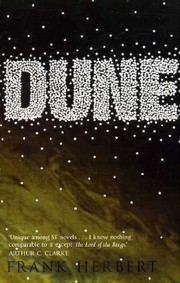
Frank Herbert's 1965 epic is the best selling science fiction novel of all time, with over 20 million copies sold. Set on the desert planet Arrakis, the sole source of the universe's most valuable substance, Dune follows young Paul Atreides as his family assumes stewardship of the planet and is drawn into a web of political betrayal, ecological crisis, and messianic prophecy. Herbert wove together ecology, religion, politics, and human evolution into a narrative of staggering complexity that nonetheless reads as a gripping adventure. Dune won both the Hugo and Nebula Awards and spawned five sequels by Herbert himself. Its influence on science fiction, fantasy, and popular culture -- from Star Wars to modern climate fiction -- is immeasurable. No list of great science fiction is complete without it.
2. 1984 by George Orwell
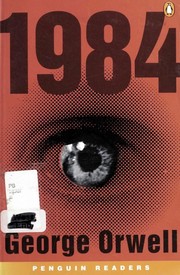
George Orwell's 1949 dystopian masterpiece has sold over 50 million copies and introduced concepts -- Big Brother, doublethink, thoughtcrime, the memory hole -- that have become fundamental to how we discuss surveillance, propaganda, and authoritarian control. Winston Smith lives in Oceania, a totalitarian state where the Party controls reality itself, rewriting history and language to eliminate the possibility of dissent. Orwell's genius was not in predicting specific technologies but in understanding the psychological mechanisms of totalitarianism. 1984 remains the NYT bestseller that spikes in sales every time a government overreaches. It is arguably the most influential novel of the twentieth century and the work against which every subsequent dystopia is measured.
3. Brave New World by Aldous Huxley
Aldous Huxley's 1932 novel imagines a future where humanity is controlled not by force but by pleasure -- genetic engineering, conditioning, and an all-purpose drug called soma keep citizens docile, productive, and content. Where Orwell feared prohibition, Huxley feared that no one would need to ban anything because no one would want to resist. Brave New World has sold over 10 million copies and has proven at least as prophetic as 1984, predicting consumer culture, pharmaceutical mood management, and the trivialization of intimacy with eerie accuracy. The novel challenges readers to consider whether a world without suffering is worth the cost of a world without meaning. It remains essential and critically acclaimed reading nearly a century after its publication.
4. The Hitchhiker's Guide to the Galaxy by Douglas Adams

Douglas Adams' 1979 novel proved that science fiction could be hilarious without sacrificing intelligence. Arthur Dent, an ordinary Englishman, escapes the demolition of Earth (to make way for a hyperspace bypass) and hitchhikes across the galaxy with his alien friend Ford Prefect. Adams used the absurdity of science fiction tropes to satirize bureaucracy, philosophy, and the human search for meaning -- culminating in the revelation that the answer to life, the universe, and everything is 42. The book has sold over 15 million copies and spawned a beloved five-book "trilogy." Adams' wit and inventiveness influenced generations of writers, comedians, and technologists. The Hitchhiker's Guide remains the most quoted science fiction novel in the English language.
5. Ender's Game by Orson Scott Card
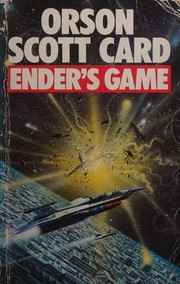
Orson Scott Card's 1985 novel follows Andrew "Ender" Wiggin, a brilliant child recruited into a military academy orbiting Earth where children are trained through increasingly brutal war games to fight an alien invasion. Ender's tactical genius and the ethical horror of how the adults exploit him create a narrative that works simultaneously as military science fiction and a devastating commentary on the instrumentalization of children. Ender's Game won both the Hugo and Nebula Awards and has sold millions of copies. It has been adopted as recommended reading by the United States Marine Corps for its insights into leadership and strategic thinking. The novel's final twist recontextualizes everything that precedes it with devastating moral force.
6. Neuromancer by William Gibson
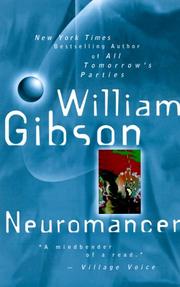
William Gibson's 1984 debut novel invented cyberpunk and predicted the internet, virtual reality, and corporate-dominated digital culture with uncanny prescience. Case, a washed-up computer hacker in a neon-drenched future Japan, is recruited for one last job: penetrating the most powerful artificial intelligence in the world. Gibson's dense, poetic prose and noir-inflected plotting created a new aesthetic for science fiction that influenced everything from The Matrix to modern tech culture. Neuromancer won the Hugo, Nebula, and Philip K. Dick Awards -- the first novel to sweep all three. The book coined the term "cyberspace" and remains the definitive vision of a digitally mediated future. It is essential reading for anyone interested in where technology and humanity intersect.
7. Foundation by Isaac Asimov

Isaac Asimov's 1951 novel launched the most ambitious project in science fiction: a saga spanning thousands of years as mathematician Hari Seldon predicts the fall of the Galactic Empire and establishes a Foundation to preserve knowledge and shorten the coming dark age. Asimov's concept of psychohistory -- using statistical mathematics to predict the behavior of large populations -- was a genuinely original idea that continues to influence thinking about data science and societal modeling. The Foundation series won a special Hugo Award for Best All-Time Series. Asimov's prose is functional rather than literary, but his ideas are so compelling that the novels remain page-turners despite minimal character development. Apple TV+'s adaptation introduced the series to a new generation, but the books remain the definitive experience.
8. The Martian by Andy Weir
Andy Weir's 2011 self-published novel (republished by Crown in 2014) follows astronaut Mark Watney after he is accidentally stranded on Mars with limited supplies and no way to communicate with Earth. Watney must use his engineering and botanical knowledge to survive until rescue is possible, narrating his ordeal with irreverent humor and meticulous scientific problem-solving. The Martian became one of the biggest bestsellers of the decade, selling millions of copies and spawning Ridley Scott's blockbuster film adaptation. Weir's obsessive commitment to scientific accuracy -- he wrote orbital mechanics software to plot trajectories -- gives the novel a credibility rare in science fiction. It is the book that proved hard sci-fi could also be laugh-out-loud funny and deeply human.
9. Fahrenheit 451 by Ray Bradbury
Ray Bradbury's 1953 novel imagines a future America where books are banned and "firemen" burn any that are found. Guy Montag, a fireman who begins to question his profession, discovers the transformative power of literature and must choose between compliance and rebellion. Bradbury wrote the novel in nine days on a rented typewriter in the UCLA library basement, and the urgency of its composition shows in every page. Fahrenheit 451 has sold over 10 million copies and remains the most widely assigned science fiction novel in American schools. The novel's warning about censorship and intellectual complacency grows more relevant with each passing decade. It is a bestseller that doubles as a love letter to the printed word.
10. The Left Hand of Darkness by Ursula K. Le Guin
Ursula K. Le Guin's 1969 novel follows Genly Ai, an envoy sent to the planet Gethen to persuade its inhabitants to join an interstellar collective. The Gethenians are ambisexually human -- they have no fixed gender, assuming male or female characteristics only during a monthly reproductive cycle. Le Guin used this premise to explore gender, politics, and the nature of trust with a depth and subtlety that remain unmatched in science fiction. The Left Hand of Darkness won both the Hugo and Nebula Awards and is widely regarded as one of the finest novels in the genre. Le Guin's prose is luminous, her worldbuilding meticulous, and her insights into human nature timeless.
11. Slaughterhouse-Five by Kurt Vonnegut
Kurt Vonnegut's 1969 novel draws on his experience as a prisoner of war who survived the firebombing of Dresden to create a fractured, time-jumping narrative about Billy Pilgrim, a man who becomes "unstuck in time" and experiences moments from his life in random order. The novel is simultaneously a war story, a science fiction tale involving alien abduction by the Tralfamadorians, and a meditation on free will and the human inability to prevent suffering. Slaughterhouse-Five is Vonnegut's masterpiece and one of the most critically acclaimed American novels of the twentieth century. Its dark humor, structural innovation, and moral seriousness influenced every antiwar novel that followed. "So it goes" entered the language as an expression of resigned acceptance.
12. Do Androids Dream of Electric Sheep? by Philip K. Dick
Philip K. Dick's 1968 novel asks the most fundamental question in science fiction: what does it mean to be human? In a post-apocalyptic Earth, bounty hunter Rick Deckard must "retire" six escaped androids so sophisticated they are nearly indistinguishable from humans. Dick uses this premise to explore empathy, authenticity, and the moral implications of creating sentient beings for exploitation. The novel inspired Ridley Scott's Blade Runner and its sequel, which amplified Dick's themes for a visual medium. Dick's prose is paranoid, compassionate, and deeply unsettling in equal measure. Do Androids Dream remains the essential text for understanding artificial intelligence through a humanistic lens, growing more relevant as AI capabilities advance.
13. The Handmaid's Tale by Margaret Atwood
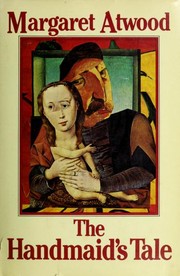
Margaret Atwood's 1985 novel depicts the Republic of Gilead, a theocratic regime that has replaced the United States and reduced women to reproductive servitude. Offred, a Handmaid assigned to bear children for a Commander's household, narrates her constrained existence and the memories of freedom that sustain her resistance. Atwood drew every element of Gilead's oppression from historical precedent, making the novel a work of speculative fiction rather than pure fantasy. The Handmaid's Tale won the Arthur C. Clarke Award and has sold millions of copies, with sales surging dramatically after the acclaimed Hulu television adaptation. It is the bestseller that readers reach for whenever reproductive rights or religious authoritarianism enter public debate.
14. Project Hail Mary by Andy Weir
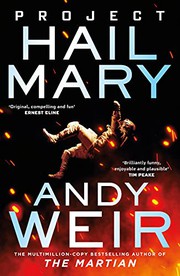
Andy Weir's 2021 novel follows Ryland Grace, a middle school science teacher who wakes up alone on a spaceship with no memory of how he got there or why. He gradually discovers that he is humanity's last hope to solve an extinction-level threat to Earth's sun, and his only ally is an alien from a different star system. Project Hail Mary combines the scientific problem-solving that made The Martian a bestseller with deeper emotional resonance and one of the most beloved alien characters in modern science fiction. The novel spent months on the New York Times bestseller list and was optioned for a film starring Ryan Gosling. Weir proved that his debut was no fluke -- he is the rare author who makes hard science genuinely moving.
15. Snow Crash by Neal Stephenson
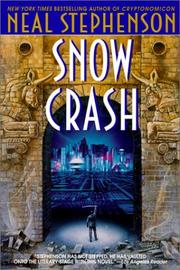
Neal Stephenson's 1992 novel imagines a near-future America where the federal government has collapsed, corporations run sovereign territories, and people spend much of their lives in the Metaverse, a virtual reality successor to the internet. Hiro Protagonist -- a hacker, pizza delivery driver, and last freelance swordsman in America -- investigates a new drug called Snow Crash that affects users in both the virtual and physical worlds. Stephenson's satirical extrapolation of early-1990s trends proved remarkably prescient, anticipating everything from Second Life to cryptocurrency to Facebook's metaverse ambitions. Snow Crash is dense, funny, and bursting with ideas on every page. It remains the award-winning cyberpunk novel that technologists cite most frequently as inspiration.
16. The War of the Worlds by H.G. Wells
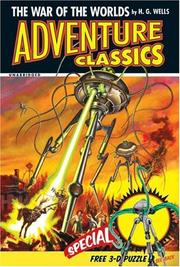
H.G. Wells' 1898 novel is the origin of the alien invasion story, and it has never been surpassed for sheer visceral impact. An unnamed narrator in Victorian England witnesses Martian cylinders landing in Surrey and unleashing tripod fighting machines that devastate everything in their path. Wells' genius was using the invasion to critique British imperialism -- the Martians treat humans exactly as the British Empire treated colonized peoples. The War of the Worlds has been continuously in print for over a century and has inspired countless adaptations, most famously Orson Welles' panic-inducing 1938 radio broadcast. It established the template for invasion fiction and remains a page-turner that reads with startling immediacy.
17. Childhood's End by Arthur C. Clarke
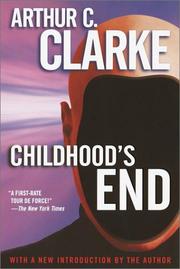
Arthur C. Clarke's 1953 novel begins with the arrival of the Overlords, a vastly superior alien race that peacefully takes control of Earth and ushers in a golden age of prosperity, eliminating war, poverty, and disease. But the Overlords have a hidden purpose, and humanity's destiny turns out to be far stranger and more transcendent than anyone imagined. Childhood's End is Clarke's most philosophically ambitious work, exploring the tension between comfort and evolution, individuality and cosmic purpose. The novel has sold millions of copies and remains one of the most discussed endings in science fiction. Clarke's vision is simultaneously hopeful and devastating, suggesting that humanity's greatest achievement may require its dissolution.
18. The Time Machine by H.G. Wells
H.G. Wells' 1895 novella introduced the concept of a machine for traveling through time and launched an entire subgenre of science fiction. The Time Traveller journeys to the year 802,701, where he discovers humanity has diverged into two species: the childlike, surface-dwelling Eloi and the brutal, subterranean Morlocks. Wells used this future to satirize Victorian class divisions, extrapolating the gap between the leisured upper class and the industrial working class to its horrifying logical conclusion. The Time Machine has never been out of print and remains one of the most influential works of speculative fiction ever written. Its central idea -- that technology might enable us to witness our own species' decline -- continues to resonate.
19. Ringworld by Larry Niven

Larry Niven's 1970 novel follows an expedition to the Ringworld, an artificial ring surrounding a distant star with a habitable inner surface equivalent to three million Earths. The concept -- inspired by the Dyson sphere -- is one of the most spectacular feats of imagination in science fiction, and Niven works through its engineering implications with rigorous detail. The expedition team includes humans, a catlike alien warrior, and a cowardly alien puppeteer, creating dynamic interspecies tension throughout. Ringworld won the Hugo, Nebula, and Locus Awards and spawned three sequels. It is the definitive "big dumb object" novel, demonstrating that awe-inspiring scale and compelling narrative are not mutually exclusive. The book remains a must-read for fans of hard science fiction.
20. Hyperion by Dan Simmons
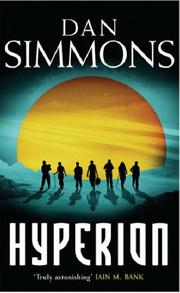
Dan Simmons' 1989 novel uses a Canterbury Tales structure to tell the stories of seven pilgrims traveling to the Time Tombs on the world of Hyperion, where a terrifying creature called the Shrike awaits. Each pilgrim's tale reveals a different facet of a complex future civilization and the mysteries surrounding the Shrike. Hyperion won the Hugo Award and is widely regarded as one of the greatest science fiction novels of the late twentieth century. Simmons blends literary ambition with space opera scope, creating something that feels simultaneously like Chaucer and Star Wars. The novel demands an engaged reader and rewards that engagement with some of the most emotionally powerful sequences in the genre.
21. Ready Player One by Ernest Cline
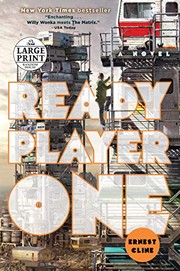
Ernest Cline's 2011 novel is set in 2045, where most of humanity escapes a decaying world by living in the OASIS, a vast virtual reality universe. When the OASIS creator dies and leaves his fortune to whoever can solve a series of puzzles based on 1980s pop culture, teenage orphan Wade Watts joins a global treasure hunt with life-or-death stakes. Ready Player One became a massive bestseller and was adapted into a Steven Spielberg film. The novel works as both a nostalgic celebration of geek culture and a cautionary tale about the seductive escape that virtual worlds offer. Cline's pacing is relentless, and the puzzle-within-a-puzzle structure keeps pages turning. It is the page-turner that launched a renewed interest in virtual reality fiction.
22. The Forever War by Joe Haldeman

Joe Haldeman's 1974 novel draws directly on his Vietnam War experience to tell the story of William Mandella, a soldier fighting an interstellar war against the alien Taurans. Because of relativistic time dilation, each tour of duty lasts only months for Mandella but decades pass on Earth, making him increasingly alienated from a society that has evolved beyond recognition. The Forever War won the Hugo, Nebula, and Locus Awards and is widely considered the finest military science fiction novel ever written. Haldeman's critique of war is devastating precisely because it is grounded in personal experience rather than abstract philosophy. The novel demonstrates that the greatest cost of war is not death but disconnection from everything that makes life meaningful.
23. Frankenstein by Mary Shelley
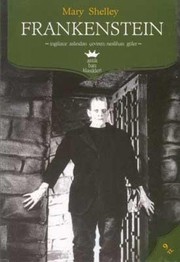
Mary Shelley's 1818 novel is not only the first science fiction novel but also one of the most enduring works in Western literature. Victor Frankenstein, a young scientist, creates a living being from dead tissue and then abandons it in horror, setting in motion a tragedy of rejection, loneliness, and revenge. Shelley was eighteen when she began the novel, and her exploration of creation, responsibility, and the consequences of unchecked ambition remains as relevant in the age of artificial intelligence as it was in the age of galvanism. Frankenstein has never gone out of print and has been adapted into hundreds of films, plays, and other works. It is the critically acclaimed origin point from which all science fiction descends.
24. Contact by Carl Sagan
Carl Sagan's 1985 novel follows Dr. Ellie Arroway, a radio astronomer who detects a signal from the star Vega containing instructions for building a machine of unknown purpose. The novel explores the intersection of science and faith, asking how the discovery of extraterrestrial intelligence would affect religion, politics, and our understanding of our place in the universe. Sagan, the world's most famous astronomer at the time of publication, brought scientific credibility and poetic wonder to every page. Contact became a bestseller and was adapted into a critically acclaimed film starring Jodie Foster. The novel remains the most scientifically rigorous first-contact story ever written and a moving argument for the compatibility of scientific rigor and spiritual awe.
25. The Expanse: Leviathan Wakes by James S.A. Corey

James S.A. Corey's 2011 novel launched The Expanse series, which revitalized space opera for a new generation. Set in a future where humanity has colonized the solar system, the novel follows detective Miller and ship officer Holden as they investigate a conspiracy involving a mysterious alien substance called the protomolecule. The writing team of Daniel Abraham and Ty Franck created a future that feels lived-in and politically complex, with Earth, Mars, and the Belt locked in tensions that mirror contemporary geopolitics. Leviathan Wakes was nominated for the Hugo Award and the series became a critically acclaimed television adaptation on Amazon. It is the bestseller that proved space opera could be both scientifically grounded and deeply character-driven.
Best Science Fiction Books by Sub-Category
Best Space Opera
Space opera delivers science fiction at its most ambitious and sweeping. Dune by Frank Herbert is the undisputed masterwork, combining political intrigue with ecological vision on a galactic scale. Foundation by Isaac Asimov offers the grandest temporal scope in the genre, spanning millennia of civilizational rise and fall. Hyperion by Dan Simmons achieves literary depth rare in space opera, while Leviathan Wakes by James S.A. Corey brought the subgenre into the modern era with hard science and complex geopolitics. For pure spectacle and sense of wonder, Ringworld by Larry Niven remains unmatched.
Best Hard Sci-Fi
Hard science fiction prioritizes scientific accuracy and plausibility, using real physics, biology, and engineering as the foundation for its speculation. The Martian by Andy Weir is the most accessible entry point, turning orbital mechanics and potato farming into page-turning drama. Project Hail Mary, also by Weir, pushes further into astrobiology and xenolinguistics. Contact by Carl Sagan brings a working scientist's rigor to first-contact fiction. Ringworld by Larry Niven and The Forever War by Joe Haldeman demonstrate that hard sci-fi can accommodate both engineering wonder and profound human emotion.
Best Sci-Fi Series
Some of science fiction's greatest achievements unfold across multiple volumes. Frank Herbert's Dune saga spans six novels of increasing philosophical complexity. Isaac Asimov's Foundation series charts the mathematical prediction of civilizational collapse and renewal. Orson Scott Card's Ender saga extends from military science fiction into deep explorations of alien consciousness and human redemption. James S.A. Corey's Expanse series, beginning with Leviathan Wakes, delivers nine novels of politically nuanced space opera. And Douglas Adams' five-book Hitchhiker's "trilogy" proves that serialized science fiction can be consistently hilarious across hundreds of pages.
Best Sci-Fi for Beginners
If you are new to science fiction and want accessible entry points that do not require genre fluency, start with The Martian by Andy Weir -- it reads like a survival adventure that happens to take place on Mars. The Hitchhiker's Guide to the Galaxy by Douglas Adams is pure fun with no homework required. 1984 by George Orwell and Fahrenheit 451 by Ray Bradbury are short, powerful, and immediately relevant to contemporary concerns. Project Hail Mary by Andy Weir combines accessible science with genuine emotional warmth. These five books will give you a foundation for exploring the genre further.
Frequently Asked Questions
What is the best science fiction book for someone who does not usually read sci-fi?
The Martian by Andy Weir is the ideal gateway book. It requires no knowledge of science fiction conventions, reads like a survival thriller, and features a protagonist whose humor and determination make him immediately likable. If you prefer something more philosophical, 1984 by George Orwell is equally accessible and deals with themes that feel urgently contemporary.
What is the difference between science fiction and fantasy?
Science fiction extrapolates from real science and technology, imagining futures or alternate realities that could theoretically exist. Fantasy creates worlds governed by magic and supernatural forces with no obligation to scientific plausibility. The boundary is blurry -- Dune has prophetic visions, and Star Wars has the Force -- but the intent matters. Science fiction asks "what if this were possible?" while fantasy asks "what if this were true?" For fantasy recommendations, see our guide to the best selling fantasy books.
What are the most important science fiction awards?
The Hugo Award (voted by fans), the Nebula Award (voted by professional authors), and the Arthur C. Clarke Award (judged panel) are the three most prestigious awards in science fiction. Many books on this list have won multiple awards: Neuromancer swept the Hugo, Nebula, and Philip K. Dick Awards, while Dune and The Left Hand of Darkness each won both the Hugo and Nebula. Award-winning status is a reliable indicator of quality in science fiction, as the voting bodies are knowledgeable and selective.
Are science fiction books good for listening as audio?
Science fiction translates exceptionally well to audio, particularly novels with strong first-person narration like The Martian and Project Hail Mary. The genre's tradition of vivid worldbuilding creates rich mental imagery when heard aloud, and many sci-fi audiobooks feature full-cast productions or author narration. Books heavy on visual elements like maps or diagrams (some editions of Dune, for instance) lose something in translation, but the vast majority of science fiction is enhanced by the audio format. For more on dystopian fiction, see our guide to the best selling dystopian books.
More Science Fiction Recommendations
If you enjoyed this list, explore related genres for more speculative reading:
- Best Selling Fantasy Books -- epic worlds, magic systems, and mythic quests
- Best Selling Dystopian Books -- dark futures and cautionary tales
- Best Selling Horror Books -- when you want your speculation terrifying
Discover your next great science fiction read without extra screen time. speakeasy converts book reviews, author interviews, and literary articles into audio you can enjoy anywhere. Paste any URL and listen -- 3 free articles per week, no account needed.