The best selling travel books transport readers across continents without ever leaving home. Travel writing occupies a unique space in literature because it combines memoir, journalism, history, and philosophy into a single narrative thread. The best entries in this genre do more than describe beautiful places -- they reveal something about the human need to move, explore, and redefine ourselves against unfamiliar landscapes. Whether the author is hiking the Appalachian Trail, settling into a crumbling farmhouse in Provence, or riding buses through East Africa, the underlying question is always the same: what happens when we remove ourselves from the familiar? This list collects the 25 best selling travel books of all time, spanning decades and destinations. Some are memoirs of personal transformation. Others are sharp, funny observations about culture and geography. A few are adventure stories that blur the line between travel writing and survival narrative. Together they represent the breadth of what travel literature can accomplish.
What Makes a Great Travel Book?
A great travel book is never just about the destination. The place is the backdrop, but the real subject is perception -- how the writer sees, interprets, and is changed by their surroundings. The strongest travel writing balances external observation with internal reflection. You learn about the food markets in Florence and, simultaneously, about the writer's relationship with solitude or ambition or loss. Prose quality matters enormously. Travel writing that reads like a guidebook entry fails to hold attention. The best authors in this genre bring literary skill to their descriptions, finding fresh language for sunsets, strangers, and the particular exhaustion of being lost in a city where you do not speak the language. Finally, great travel books carry a sense of honesty. The author admits to discomfort, boredom, and the moments when the romantic vision of the road gives way to mosquitoes, bad food, and loneliness.
The Best Selling Travel Books of All Time
1. A Year in Provence by Peter Mayle
Peter Mayle's account of his first year living in the Luberon region of Provence became one of the best selling travel books of the 1990s and transformed the region's tourism industry overnight. The book follows Mayle and his wife month by month as they renovate a 200-year-old farmhouse and navigate the rhythms of rural French life. What makes it endure is Mayle's gentle humor and his genuine affection for his neighbors, from the stonemasons who never finish on time to the farmers who measure the seasons by what they eat. The writing is warm without being sentimental, and the food descriptions alone have inspired thousands of readers to book flights to Marseille. It remains the gold standard for expat-in-a-charming-village literature.
2. Eat, Pray, Love by Elizabeth Gilbert
Elizabeth Gilbert's memoir of spending a year traveling through Italy, India, and Indonesia after a devastating divorce became a global phenomenon. The book sold over 15 million copies worldwide and was translated into more than 30 languages. Gilbert's voice is confessional and witty, moving between deep spiritual inquiry and self-deprecating humor about eating gelato for breakfast. The Italy section is a love letter to pleasure. The India section grapples with discipline and devotion. The Indonesia section brings romance and resolution. Critics sometimes dismiss it as self-indulgent, but the book resonated with millions of readers precisely because Gilbert was honest about how painful and unglamorous the process of rebuilding a life can be. It redefined the travel memoir as a vehicle for personal transformation.
3. In a Sunburned Country by Bill Bryson
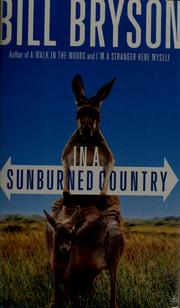
Bill Bryson's exploration of Australia is arguably his funniest book, which is saying something for an author who has turned bewildered observation into an art form. Bryson travels across the continent from Sydney to Perth, through the Outback and along the coasts, cataloging the country's astonishing wildlife, peculiar history, and the laid-back warmth of its people. His gift is making you laugh while simultaneously teaching you about the world's most venomous creatures, the history of Aboriginal displacement, and the staggering emptiness of the Australian interior. The book works because Bryson never pretends to be an expert -- he is a curious, slightly anxious tourist who happens to write beautifully about what he sees.
4. The Alchemist by Paulo Coelho
Paulo Coelho's allegorical novel about a young Andalusian shepherd named Santiago who travels to Egypt in search of treasure has sold over 150 million copies worldwide, making it one of the best selling books in history. While it is technically fiction, The Alchemist functions as a travel book in spirit. The journey itself is the point. Santiago's passage through the markets of Tangier, across the Sahara Desert, and into the pyramids follows the ancient pattern of the quest narrative. Coelho's prose is simple and parable-like, which has drawn both praise for its accessibility and criticism for its philosophical simplicity. Regardless, the book has inspired generations of readers to see travel as a spiritual practice rather than mere tourism.
5. On the Road by Jack Kerouac

Jack Kerouac's 1957 novel defined the Beat Generation and established the American road trip as a literary genre. Based on Kerouac's own cross-country journeys with Neal Cassady (fictionalized as Dean Moriarty), the book captures the restless energy of postwar American youth searching for meaning through movement, jazz, and spontaneous experience. The prose famously pours out in long, breathless sentences that mirror the rhythm of driving through the night. On the Road remains one of the most influential travel narratives ever written, even though the travel itself is often aimless and the destinations matter less than the momentum. It gave permission to an entire generation to value the journey over the arrival.
6. Into the Wild by Jon Krakauer

Jon Krakauer's reconstruction of Christopher McCandless's journey into the Alaskan wilderness is part biography, part adventure narrative, and part meditation on the dangerous romance of radical self-reliance. McCandless, a college graduate from a comfortable family, gave away his savings, abandoned his car, and hitchhiked to Alaska, where he walked alone into the backcountry and died of starvation in an abandoned bus. Krakauer tells this story with the pacing of a thriller and the empathy of someone who understands the appeal of McCandless's choices even as he acknowledges their fatal consequences. The book raises uncomfortable questions about the difference between courage and recklessness, and about who gets to romanticize danger.
7. Wild by Cheryl Strayed
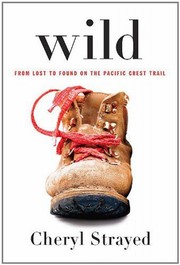
Cheryl Strayed's memoir of hiking the Pacific Crest Trail alone at age 26, with virtually no experience, became a massive best seller and was adapted into a film starring Reese Witherspoon. Strayed undertook the hike in the aftermath of her mother's death, a divorce, and a period of self-destructive behavior. The book is brutally honest about physical suffering -- blistered feet, lost toenails, a backpack so heavy she named it Monster -- and equally honest about emotional pain. What elevates Wild above a simple adventure memoir is Strayed's writing, which is raw and precise. She never sentimentalizes her journey or pretends that hiking 1,100 miles solved her problems. It simply gave her the space to begin.
8. Travels with Charley by John Steinbeck
In 1960, John Steinbeck set out to rediscover America by driving a custom camper truck across the country with his French poodle, Charley. The resulting book is part travelogue, part social observation, and part elegy for a country that Steinbeck felt he no longer recognized. He traveled through New England in autumn, across the Great Plains, through Montana, down to Texas, and into the segregated South. The writing is vintage Steinbeck -- spare, observant, occasionally melancholy. Later scholars questioned how much of the book was embellished, but its portrait of mid-century America and its meditation on aging and alienation remain compelling. The conversations Steinbeck has with strangers along the way are small masterpieces of dialogue.
9. A Walk in the Woods by Bill Bryson
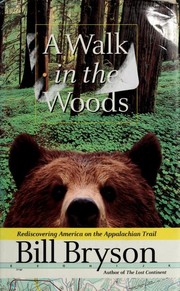
Bill Bryson's account of his attempt to hike the Appalachian Trail with his out-of-shape friend Stephen Katz is one of the funniest travel books ever written. The two middle-aged men set out from Georgia with the ambitious goal of walking 2,190 miles to Maine, and the comedy of their unpreparedness drives much of the narrative. But Bryson weaves in serious threads about the ecology of the eastern forests, the history of the trail, and the quiet devastation of American wilderness. The book alternates between slapstick misadventure and genuine wonder at the natural world. Bryson and Katz never complete the trail, which makes the book more honest than most hiking memoirs. The journey was the point.
10. The Art of Travel by Alain de Botton
Alain de Botton's philosophical meditation on why and how we travel stands apart from most entries in this genre. Rather than describing his own journeys in chronological order, de Botton organizes the book around themes -- anticipation, the exotic, curiosity, the sublime -- and pairs each with a historical figure who embodied it. Flaubert in Egypt. Wordsworth in the Lake District. Van Gogh in Provence. The result is a book that makes you think differently about the act of traveling itself. De Botton argues that our experience of a place depends far more on our state of mind than on the destination's objective qualities. It is the rare travel book that might actually change how you travel.
11. Shantaram by Gregory David Roberts
Gregory David Roberts's sprawling novel, based on his own experiences as an Australian fugitive living in the slums of Bombay, is an epic of travel literature. At over 900 pages, it follows Lin, an escaped convict who builds a new life in India, running a free health clinic in a slum, falling in love, and eventually becoming entangled with the Bombay mafia. The book is maximalist in every sense -- the prose is lush, the emotions are operatic, and the plot encompasses enough incident for five novels. Critics have questioned the line between memoir and fiction, but readers worldwide have embraced Shantaram for its passionate immersion in Indian life and its exploration of redemption through radical displacement.
12. The Geography of Bliss by Eric Weiner
Eric Weiner, a self-described grump and longtime NPR correspondent, set out to visit the happiest and unhappiest countries on earth to understand what makes a place conducive to well-being. He travels to the Netherlands, Switzerland, Bhutan, Qatar, Iceland, Moldova, Thailand, and other nations, combining social science research with personal observation and dry humor. The book avoids the trap of reducing happiness to simple formulas. Weiner finds that wealth does not guarantee contentment (Qatar), that cold and darkness do not preclude it (Iceland), and that culture shapes emotional life in ways that are difficult to export. It is travel writing in service of a philosophical question, and Weiner's grumpy charm keeps the inquiry entertaining.
13. Dark Star Safari by Paul Theroux
Paul Theroux's overland journey from Cairo to Cape Town is one of the great modern travel narratives. Theroux, who had lived and taught in Africa decades earlier, returned to travel the continent by train, bus, and truck, through Egypt, Sudan, Ethiopia, Kenya, Uganda, Tanzania, Malawi, Mozambique, Zimbabwe, and South Africa. The book is unflinching in its depictions of corruption, poverty, and the failures of foreign aid, which angered some readers and critics. But Theroux also writes with deep affection for the people he meets and the landscapes he crosses. Dark Star Safari is not comfortable reading, but it is honest travel writing that refuses to simplify a complex continent.
14. Turn Right at Machu Picchu by Mark Adams
Mark Adams, an armchair explorer and magazine editor, decided to retrace the steps of Hiram Bingham, the Yale explorer who brought Machu Picchu to international attention in 1911. Adams hired an Australian survival guide and set out on the same mountain trails Bingham had walked a century earlier. The book alternates between Adams's modern expedition and Bingham's historical one, and the contrast between the two travelers -- Bingham the entitled academic, Adams the self-deprecating desk worker -- provides much of the humor. Adams weaves in Inca history, archaeological controversy, and genuine physical hardship. It is a book about how adventure exists on a spectrum, and how even reluctant explorers can find transformation on a trail.
15. Under the Tuscan Sun by Frances Mayes
Frances Mayes's memoir of buying and restoring a villa in Cortona, Italy, launched an entire subgenre of expat renovation literature. The book chronicles the purchase of Bramasole, a crumbling estate surrounded by olive groves, and the years of renovation, gardening, and cooking that followed. Mayes writes with a poet's eye for detail -- she was a published poet before this book -- and her descriptions of Tuscan landscapes, markets, and meals are richly sensory. The appeal is aspirational but grounded. Mayes does not pretend the renovation was easy or that Italian bureaucracy is charming. The book endures because it captures a specific dream -- leaving behind a complicated life for sun, stone, and good food -- with both beauty and realism.
16. The Beach by Alex Garland
Alex Garland's debut novel follows Richard, a young British backpacker in Bangkok who discovers a hand-drawn map leading to a hidden beach paradise on a remote Thai island. What begins as a backpacker fantasy quickly darkens into a Lord of the Flies scenario as the secret community on the beach unravels under jealousy, paranoia, and violence. The novel became a touchstone for a generation of Southeast Asian travelers and was adapted into a film starring Leonardo DiCaprio. Garland captures the peculiar culture of backpacker hostels -- the competitive one-upmanship about authenticity, the desire to find places unspoiled by tourism -- with sharp precision. It is both a celebration and a critique of the travel impulse.
17. In Patagonia by Bruce Chatwin
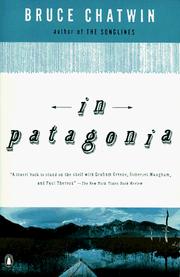
Bruce Chatwin's 1977 account of traveling through southern Argentina and Chile is one of the foundational texts of modern travel writing. The book is structured as a series of encounters and digressions rather than a linear journey, weaving together the stories of Welsh settlers, Butch Cassidy and the Sundance Kid, Patagonian dinosaurs, and the fragment of a supposed brontosaurus skin that inspired Chatwin's journey as a child. The prose is precise and crystalline, each sentence deliberately crafted. Chatwin blurs the line between travel writing and fiction in ways that later scholars have questioned, but the literary quality of the writing is undeniable. In Patagonia defined the travel book as a form of literary art.
18. The Lost City of Z by David Grann
David Grann's nonfiction account of the British explorer Percy Fawcett, who disappeared in the Amazon in 1925 while searching for a legendary lost civilization, reads like a novel. Grann interweaves Fawcett's historical expeditions with his own journey into the same jungle to investigate what happened. The book reveals how the Amazon consumed dozens of rescue parties sent to find Fawcett, and how the jungle itself became the real antagonist of the story. Grann's research is meticulous, and his willingness to put himself in physical danger to complete the story adds a layer of immediacy. It is exploration literature that questions the entire premise of exploration.
19. Vagabonding by Rolf Potts
Rolf Potts wrote the definitive guide to long-term independent travel. Vagabonding is not a memoir but a philosophy and practical handbook for taking extended trips on a modest budget. Potts argues that the biggest barrier to travel is not money but time and willingness -- that most people could afford to travel for months if they rearranged their priorities. The book covers everything from saving money before departure to handling re-entry after a long trip, but it is the philosophical framework that distinguishes it. Potts draws on Thoreau, Whitman, and the Stoics to argue that travel is not an escape from real life but a deeper engagement with it. It has inspired thousands of people to quit their jobs and go.
20. A Short Walk in the Hindu Kush by Eric Newby

Eric Newby's 1958 account of his attempt to climb Mir Samir in Afghanistan with virtually no mountaineering experience is a masterpiece of comic travel writing. Newby, a London fashion buyer, recruited his friend Hugh Carless and set off for one of the most remote regions on earth with minimal preparation. The resulting narrative is equal parts dangerous and absurd. The two men struggle with altitude, equipment failures, and their own incompetence, while encountering Nuristani tribespeople and spectacular landscapes. Newby writes with the dry, understated humor of mid-century British literature, and the book's charm lies in its honest admission that ambition frequently outpaces ability.
21. The Snow Leopard by Peter Matthiessen
Peter Matthiessen's 1978 account of a trek through the Himalayas of Nepal to study the bharal, or Himalayan blue sheep, and hopefully glimpse the elusive snow leopard is one of the most celebrated works of nature and travel writing. The journey doubles as a spiritual pilgrimage. Matthiessen, grieving the recent death of his wife, uses the physical hardship of high-altitude trekking as a framework for Buddhist meditation on impermanence and loss. The prose is luminous and precise, capturing both the harsh beauty of the Tibetan Plateau and the inner landscape of a man working through grief. Whether Matthiessen sees the snow leopard is almost beside the point. The search itself is the teaching.
22. Riding the Iron Rooster by Paul Theroux
Paul Theroux spent a year traveling through China by train in the mid-1980s, a period when the country was opening to the outside world after decades of isolation. The resulting book covers thousands of miles of rail travel from Shanghai to Tibet, from Xinjiang to Kunming, and every journey becomes an occasion for observation about Chinese culture, history, and the tensions between tradition and modernization. Theroux is an expert at the art of the train conversation, and his encounters with fellow passengers -- officials, students, farmers, soldiers -- form the backbone of the narrative. The China he describes has changed dramatically, which makes the book valuable both as travel writing and as a historical document.
23. Notes from a Small Island by Bill Bryson
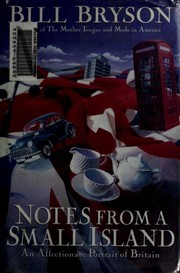
Before he walked the Appalachian Trail, Bill Bryson wrote this love letter to Britain, the country where he had lived for two decades before returning to America. Bryson travels from the south coast to the Scottish Highlands, visiting towns and cities by bus and train, and documenting British peculiarities with the affection of someone who has adopted the culture as his own. The humor is gentler than his later work -- more bemused than bewildered -- and the book captures a specific moment in British life before the internet and budget airlines transformed the country. It remains enormously popular in Britain, where readers recognize their own eccentricities in Bryson's fond cataloging.
24. West with the Night by Beryl Markham
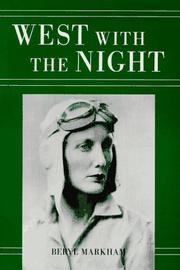
Beryl Markham's 1942 memoir of growing up in Kenya and becoming the first person to fly solo across the Atlantic from east to west is one of the great adventure memoirs of the twentieth century. Markham was raised among the Nandi people, trained racehorses, and became a bush pilot before attempting her transatlantic flight in 1936. The prose is startlingly beautiful. Ernest Hemingway famously praised it, writing that Markham could "write rings around all of us." The book fell out of print for decades before being rediscovered in 1982, and it has since been recognized as a masterpiece of both travel writing and literary memoir. Markham's Africa is vivid, dangerous, and utterly alive.
25. Neither Here nor There by Bill Bryson
Bill Bryson's account of backpacking through Europe -- first as a young man in the 1970s and then retracing his steps as a middle-aged adult -- captures the comedy and confusion of European travel with characteristic warmth. He moves from Norway to Turkey, through Paris, Brussels, Florence, and Istanbul, and the dual timeline allows him to contrast youthful idealism with adult pragmatism. The book is lighter than some of his later work, but the observational humor is sharp and the affection for Europe's diversity is genuine. For many readers, it captures the specific experience of being an American abroad -- slightly out of place, frequently confused, but fundamentally enchanted.
Best Travel Books by Sub-Category
Best Travel Memoirs
The travel memoir is the beating heart of the genre. These books use journeys as frameworks for personal stories that would otherwise lack structure. Eat, Pray, Love by Elizabeth Gilbert remains the most commercially successful travel memoir of the twenty-first century, but Wild by Cheryl Strayed offers a grittier, more physically demanding version of the same impulse -- using a long walk to process grief and rebuild identity. A Year in Provence by Peter Mayle transforms the simple act of living in a new country into comedy gold, while Under the Tuscan Sun by Frances Mayes brings a poet's sensibility to a similar theme. For something darker, Shantaram by Gregory David Roberts immerses the reader in the chaos of Bombay with a fugitive's urgency. Each of these books proves that the best travel memoirs are really about transformation, with the destination serving as catalyst.
Read more memoir recommendations →
Best Armchair Travel Books
Not every great travel book requires the reader to lace up hiking boots. Some of the finest entries in the genre are best enjoyed from a comfortable chair with a cup of tea. The Art of Travel by Alain de Botton is explicitly designed for readers who think about travel as much as they do it, offering philosophical frameworks for understanding why we go anywhere at all. The Geography of Bliss by Eric Weiner wraps a global survey of happiness in wry, accessible prose. Notes from a Small Island by Bill Bryson captures Britain with enough warmth and humor that you feel you have visited without leaving home. In Patagonia by Bruce Chatwin is so beautifully written that the experience of reading it rivals the experience of actually being in southern Argentina. These are books for readers who want to travel in their minds.
Best Travel Adventure Books
When travel writing meets danger, the results are electrifying. Into the Wild by Jon Krakauer is the defining adventure travel book of the modern era, a story of idealism and its consequences in the Alaskan wilderness. The Lost City of Z by David Grann brings the same intensity to the Amazon, following a Victorian explorer into a jungle that swallowed him whole. Wild by Cheryl Strayed transforms a long-distance hike into a survival narrative, while A Short Walk in the Hindu Kush by Eric Newby proves that amateur adventures can be just as gripping as professional expeditions. West with the Night by Beryl Markham offers aerial adventure over the African landscape and the Atlantic Ocean, written in some of the most beautiful prose the genre has ever produced.
Explore adventure book recommendations →
Best Travel Writing About Europe
Europe has inspired more travel writing than any other continent, and the best of it goes beyond tourist itineraries to capture something essential about the cultures, landscapes, and contradictions of the region. A Year in Provence by Peter Mayle and Under the Tuscan Sun by Frances Mayes established the template for the expat-in-southern-Europe memoir, balancing renovation chaos with food, wine, and village life. Neither Here nor There by Bill Bryson covers the continent with comedic breadth, while Notes from a Small Island offers a focused and affectionate portrait of Britain. In Patagonia is not about Europe, but Bruce Chatwin's earlier travel writing drew heavily on European literary traditions. The Art of Travel by Alain de Botton uses European destinations and thinkers as its primary reference points. For readers who love the continent, these books offer fresh ways to see familiar places.
Browse nonfiction recommendations →
Frequently Asked Questions
What is the best travel book for someone who has never read travel writing?
Start with Bill Bryson. Either A Walk in the Woods or In a Sunburned Country will work. Bryson is the most accessible entry point into travel literature because his humor keeps the pages turning and his curiosity is infectious. He never assumes expertise in his readers, and his self-deprecating style makes even the most exotic destinations feel approachable. Once you enjoy Bryson, you can branch out to more literary writers like Chatwin or Matthiessen, or to memoirists like Strayed and Gilbert.
Are travel books still relevant in the age of social media and travel blogs?
More relevant than ever. Social media reduces travel to a series of images optimized for envy. Travel books do the opposite -- they slow down the experience, add context, and explore the emotional and intellectual dimensions of being in a new place. A photograph of Machu Picchu tells you what it looks like. Mark Adams's book tells you what it meant, how it was built, who discovered it, and what it feels like to climb toward it on shaking legs. The depth of a well-written travel book cannot be replicated in a 30-second video or a photo carousel.
What is the difference between travel writing and travel guides?
Travel guides tell you where to go, where to eat, and what to see. Travel writing tells you what it feels like to be there. The distinction is between information and experience. A guidebook might note that the food markets in Florence open at 7 a.m. A travel writer like Frances Mayes will describe the smell of fresh basil, the sound of vendors arguing over prices, and the way morning light falls across stone arches. Both have value, but travel writing aspires to literature while travel guides aspire to utility. The best travel books make you want to visit a place not because of its attractions but because of the story the author tells about being there.
Can fiction count as travel writing?
Absolutely. Several books on this list blur the line between fiction and nonfiction. The Alchemist by Paulo Coelho is a novel, but its journey across North Africa has inspired as much real travel as any memoir. On the Road by Jack Kerouac is based closely on real events but takes novelistic liberties. The Beach by Alex Garland is pure fiction, yet it captures the culture of Southeast Asian backpacking more precisely than most nonfiction accounts. Shantaram by Gregory David Roberts exists somewhere between memoir and novel. The genre has always been comfortable with this ambiguity, and some of the most powerful travel writing uses fictional techniques to arrive at emotional truths.
Discover your next great travel read without extra screen time. speakeasy converts book reviews, author interviews, and literary articles into audio you can enjoy anywhere. Paste any URL and listen -- 3 free articles per week, no account needed.