The best selling non-fiction books represent the most compelling attempts to explain the world as it actually is. Where fiction invites us into imagined worlds, non-fiction tackles reality itself: the sweep of human history, the mechanics of the natural world, the structures of society, and the stories of remarkable people who shaped all three. The titles on this list span science, history, memoir, sociology, and investigative journalism, but they share a common quality: each one changed how millions of readers understood something fundamental about the world they live in. These are not textbooks or academic papers. They are works of narrative craft that happen to be true, written by authors who recognized that the real world is strange enough, tragic enough, and wonderful enough to sustain the same level of engagement as any novel. Collectively, these books have sold hundreds of millions of copies and continue to define what great non-fiction can accomplish.
What Makes a Great Non-Fiction Book?
The best non-fiction books succeed on two levels simultaneously. They inform and they captivate. A great non-fiction book presents ideas, evidence, or experiences that genuinely expand the reader's understanding, but it does so through storytelling that creates the kind of forward momentum usually associated with fiction. The strongest non-fiction writers are researchers who can write, or writers who can research, and the intersection of those skills is rarer than it might seem. Beyond narrative skill, the best non-fiction challenges comfortable assumptions. It reveals hidden systems, questions conventional wisdom, and presents perspectives that readers would never encounter in their daily lives. Great non-fiction also endures. The books on this list were not written for a news cycle. They address questions large enough to remain relevant across decades: What makes civilizations rise and fall? How does the human body work? What does it mean to overcome impossible odds? These questions do not expire.
The Best Selling Non-Fiction Books of All Time
1. Sapiens: A Brief History of Humankind by Yuval Noah Harari
Yuval Noah Harari's sweeping account of human history from the Stone Age to the present became a global phenomenon by asking a deceptively simple question: how did Homo sapiens come to dominate the planet? His answer centers on our unique ability to create and believe in shared fictions, from religions and nations to money and human rights. These imagined realities allow millions of strangers to cooperate in ways no other species can match. Harari moves from the Cognitive Revolution through the Agricultural Revolution to the Scientific Revolution, challenging readers at every stage to reconsider what they think they know about progress, happiness, and the human condition. The book has been praised for its ambition and accessibility, though some specialists have criticized its broad generalizations. Regardless, it has become one of the defining non-fiction works of its era, translated into over sixty languages.
2. A Brief History of Time by Stephen Hawking

Stephen Hawking achieved something that should have been impossible: he made cosmology a bestseller. Published in 1988, A Brief History of Time explains the nature of the universe, from the Big Bang to black holes, in language accessible to readers with no scientific background. Hawking covers relativity, quantum mechanics, the expansion of the universe, the arrow of time, and the search for a unified theory of physics, all without using a single mathematical equation (except E=mc2). The book spent over four years on the Sunday Times bestseller list and has sold over 25 million copies. Its cultural impact extends beyond science education. Hawking demonstrated that profound curiosity about the universe is not limited to physicists, and that the biggest questions in science are accessible to anyone willing to think carefully.
3. Educated by Tara Westover
Tara Westover grew up in a survivalist family in rural Idaho with no birth certificate, no medical records, and no formal education. Her father, likely suffering from bipolar disorder, stockpiled food and fuel for the end of days. Her older brother was physically abusive. Yet Westover taught herself enough mathematics and grammar to gain admission to Brigham Young University, and eventually earned a PhD from Cambridge. The memoir is not a simple triumph-over-adversity story. It is a complex exploration of family loyalty, the cost of self-invention, and the painful process of replacing one worldview with another. Westover writes with remarkable precision about the experience of education as both liberation and loss. The book became a massive bestseller because it speaks to universal questions about identity, belonging, and the courage required to see your own life clearly.
4. The Immortal Life of Henrietta Lacks by Rebecca Skloot
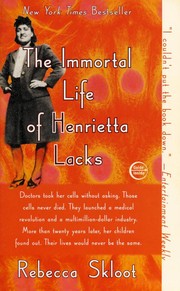
Rebecca Skloot spent over a decade researching the story of Henrietta Lacks, a poor Black tobacco farmer whose cancer cells were taken without her knowledge in 1951 and became one of the most important tools in medical history. Known as HeLa cells, they were vital to developing the polio vaccine, cloning, gene mapping, and countless other medical advances. Meanwhile, the Lacks family could not afford health insurance. Skloot weaves together three narratives: the science of HeLa cells, the story of the Lacks family, and her own journey to uncover the truth. The book raises urgent questions about medical ethics, informed consent, racial injustice in healthcare, and who profits from scientific discovery. It is investigative journalism, science writing, and social history combined into a narrative that is both intellectually rigorous and deeply moving.
5. Freakonomics by Steven D. Levitt and Stephen J. Dubner

Steven Levitt and Stephen Dubner applied economic analysis to unconventional questions and produced one of the most surprising non-fiction books of its era. Why do drug dealers live with their mothers? How is the Ku Klux Klan like a group of real estate agents? What do schoolteachers and sumo wrestlers have in common? By examining data that others overlooked, Levitt revealed hidden incentive structures behind seemingly unrelated phenomena. The book's most controversial chapter argued that the legalization of abortion in the 1970s contributed to the dramatic decline in crime in the 1990s. While some of the book's specific claims have been challenged by subsequent research, its central contribution, demonstrating that economics is not about money but about the study of incentives, has influenced how millions of readers think about causation, correlation, and the hidden logic of everyday life.
6. Guns, Germs, and Steel by Jared Diamond
Jared Diamond's Pulitzer Prize-winning book tackles one of history's most important questions: why did certain civilizations develop advanced technology, political organization, and military power while others did not? Diamond's answer rejects racial or cultural explanations in favor of geographic and environmental factors. Civilizations that developed in regions with domesticable plants and animals, an east-west continental axis that facilitated the spread of agriculture, and exposure to livestock-borne diseases that conferred immunity had compounding advantages over thousands of years. The book covers 13,000 years of human history across every continent, drawing on archaeology, linguistics, genetics, and ecology. While some anthropologists have criticized Diamond for environmental determinism and oversimplification of complex societies, the book's central argument that geography shaped destiny has become foundational in understanding global inequality.
7. Thinking, Fast and Slow by Daniel Kahneman
Daniel Kahneman's exploration of the two systems that drive human thought is both a landmark in behavioral science and one of the most influential non-fiction books of the twenty-first century. System 1 operates automatically, making rapid judgments based on heuristics and pattern recognition. System 2 is slow, deliberate, and effortful. Kahneman demonstrates through decades of Nobel Prize-winning research how systematic biases in System 1, including anchoring, the availability heuristic, loss aversion, and the planning fallacy, lead to predictable errors in judgment. The book is remarkable for its intellectual honesty. Kahneman freely admits that understanding these biases does not make you immune to them. The writing is dense but rewarding, and its influence extends across economics, medicine, law, policy, and everyday decision-making. For anyone who wants to understand how the mind actually works, this book is indispensable.
For a deeper exploration of psychology and behavioral science, see our guide to the best selling psychology books.
8. Quiet: The Power of Introverts in a World That Can't Stop Talking by Susan Cain
Susan Cain's examination of introversion challenged a cultural bias so deeply embedded that most people did not recognize it existed. Western culture, and American culture in particular, valorizes extroversion: the assertive, outgoing, team-oriented personality type. Cain draws on psychological research, neuroscience, and cultural history to argue that this "Extrovert Ideal" systematically undervalues the contributions of introverts, who make up one-third to one-half of the population. She profiles introverted leaders, scientists, and artists, examines how schools and workplaces are designed for extroverts, and offers practical guidance for introverts navigating a loud world. The book launched a cultural conversation about temperament and personality that continues to influence how organizations design workspaces, how schools structure classrooms, and how individuals understand their own social needs.
9. The Wright Brothers by David McCullough
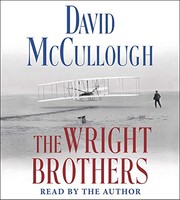
David McCullough's biography of Wilbur and Orville Wright is a masterclass in narrative non-fiction. Drawing on the brothers' extensive personal correspondence, diaries, and notebooks, McCullough reconstructs their journey from bicycle mechanics in Dayton, Ohio, to the inventors of powered flight. The book demolishes the myth that the Wright brothers were lucky tinkerers. They were systematic, brilliant engineers who approached the problem of flight with scientific rigor, building their own wind tunnel and testing over 200 wing designs before constructing their aircraft. McCullough also captures the personal dimension: the brothers' close relationship, their modest temperaments, and their determination in the face of repeated failures and public skepticism. The book is a testament to what dedicated, methodical work can achieve and a reminder that transformative innovation often comes from unexpected places.
10. Becoming by Michelle Obama
Michelle Obama's memoir became the best selling memoir in history, selling over 17 million copies worldwide. The book traces her journey from the South Side of Chicago through Princeton and Harvard Law School to the White House, and it does so with a candor that surprised many readers. Obama writes openly about her struggles with imposter syndrome, her ambivalence about political life, her marriage counseling with Barack Obama, and the experience of raising children under constant public scrutiny. The book succeeds because Obama refuses to present a polished version of her life. She describes moments of doubt, frustration, and genuine difficulty alongside the extraordinary experiences of being First Lady. It is a memoir about identity, resilience, and the ongoing process of becoming the person you want to be, told by someone whose journey is both unique and universally relatable.
11. Born a Crime by Trevor Noah
Trevor Noah's memoir of growing up in South Africa under and after apartheid is simultaneously hilarious and devastating. Born to a Black Xhosa mother and a white Swiss-German father, Noah's very existence was a crime under apartheid law. The book recounts his childhood navigating a society defined by racial classification, from hiding indoors to avoid being seen in public with his mother to using his gift for languages and mimicry to move between different racial and cultural groups. The heart of the book is his relationship with his mother, Patricia, a fiercely independent woman whose faith, humor, and toughness shaped everything Noah became. The writing is vivid, funny, and emotionally precise. Noah does not sentimentalize poverty or violence, but he finds humanity and humor in circumstances that would seem to allow for neither.
12. Outliers: The Story of Success by Malcolm Gladwell
Malcolm Gladwell's investigation into the hidden factors behind extraordinary achievement challenged the myth of the self-made success story. Through case studies ranging from the Beatles to Silicon Valley entrepreneurs to Canadian hockey players, Gladwell demonstrates that success is the product of opportunity, timing, cultural legacy, and accumulated advantage as much as individual talent. The book popularized the "10,000 hours" concept, drawing on Anders Ericsson's research on deliberate practice, and showed how seemingly arbitrary factors like birth month can create compounding advantages in competitive environments. While some specific claims have faced academic debate, the book's central argument, that we drastically underestimate the role of circumstance in determining who succeeds, has fundamentally shifted public discourse about achievement, privilege, and the structures that create winners and losers.
13. The Emperor of All Maladies: A Biography of Cancer by Siddhartha Mukherjee
Siddhartha Mukherjee, an oncologist and researcher, wrote a "biography" of cancer that reads like a novel. The book traces the disease from its first documented description in an ancient Egyptian text through centuries of failed treatments to the modern era of targeted therapies and immunology. Mukherjee interweaves the scientific narrative with the stories of individual patients he treated during his residency, giving the history emotional weight and urgency. The book also examines the politics of cancer research, including the War on Cancer declared by Richard Nixon and the decades of debate over tobacco regulation. It won the Pulitzer Prize for General Nonfiction and has been called one of the most important medical books ever written. For anyone who wants to understand what cancer is, why it has been so difficult to treat, and where the science is heading, this book is essential.
14. Homo Deus: A Brief History of Tomorrow by Yuval Noah Harari

Having chronicled humanity's past in Sapiens, Yuval Noah Harari turned his attention to the future. Homo Deus examines the forces that are likely to shape the twenty-first century: artificial intelligence, biotechnology, and the algorithms that increasingly govern human decision-making. Harari argues that having largely conquered famine, plague, and war, humanity's next projects will be the pursuit of immortality, happiness, and divinity, hence the title. The book raises provocative questions about the future of consciousness, free will, and human purpose in a world where algorithms may know us better than we know ourselves. While some critics have called Harari's predictions overly speculative, the book succeeds in framing the existential questions that technological progress forces us to confront. It is speculative non-fiction at its most thought-provoking.
15. Unbroken by Laura Hillenbrand
Laura Hillenbrand tells the true story of Louis Zamperini, an Olympic runner who survived a plane crash over the Pacific Ocean during World War II, spent 47 days adrift on a raft, and then endured two years of brutal captivity in Japanese prisoner-of-war camps. The book is a feat of narrative construction, taking readers from Zamperini's childhood as a juvenile delinquent through his transformation into a world-class athlete and then into the depths of human endurance. Hillenbrand researched the book over seven years, conducting extensive interviews with Zamperini and consulting military records, survivor accounts, and Japanese sources. The writing is precise and propulsive, treating extraordinary events with the same discipline that Zamperini brought to his survival. The book spent over four years on the New York Times bestseller list and demonstrated that true stories of resilience can be as gripping as any thriller.
16. In Cold Blood by Truman Capote
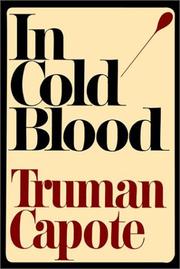
Truman Capote's 1966 account of the murder of the Clutter family in Holcomb, Kansas, is widely credited with inventing the true crime genre and pioneering the "non-fiction novel." Capote spent six years researching the murders, conducting extensive interviews with the killers, Dick Hickock and Perry Smith, as well as investigators, neighbors, and community members. The result reads like a novel, with scene-setting, dialogue, and character development that literary fiction writers would envy. Capote builds tension even though the outcome is known, creating a portrait of small-town America shattered by senseless violence. The book raises questions about the nature of evil, the death penalty, and the social conditions that produce violent criminals. It remains a benchmark for narrative non-fiction and a demonstration of what journalism can achieve when it aspires to the standards of literature.
17. The Glass Castle by Jeannette Walls

Jeannette Walls's memoir recounts a childhood defined by poverty, neglect, and two extraordinary parents whose intelligence and creativity were undermined by addiction and mental illness. Her father, Rex Walls, was a charismatic dreamer who taught his children physics and geology but could not hold a job or stop drinking. Her mother, Rose Mary, was an artist who refused to work and painted while her children went hungry. Walls writes about her family with a remarkable absence of self-pity. She presents events with reportorial clarity, allowing readers to form their own judgments about parents who were simultaneously fascinating and negligent. The book's power lies in this restraint. By refusing to editorialize, Walls creates space for the full complexity of her experience, including the uncomfortable truth that she loved her parents even as she recognized the harm they caused.
18. Quiet by Susan Orlean (The Library Book)

Susan Orlean's The Library Book begins with the devastating 1986 fire at the Los Angeles Central Library that destroyed over 400,000 books and damaged 700,000 more. From that event, Orlean expands outward into a meditation on the role of libraries in American life, the history of the Los Angeles public library system, and the investigation into whether the fire was arson. The book is a love letter to libraries, librarians, and the act of reading itself. Orlean profiles the characters who populate the library world, from the suspected arsonist to the dedicated professionals who rebuilt the collection. Her writing is warm, curious, and precise, finding stories in places that most people overlook. The book became a bestseller because it reminded millions of readers why public libraries matter and what is at stake when they are threatened.
19. Bad Blood: Secrets and Lies in a Silicon Valley Startup by John Carreyrou

John Carreyrou's account of the rise and fall of Theranos, the blood-testing startup founded by Elizabeth Holmes, is investigative journalism at its finest. Carreyrou reveals how Holmes and her partner Sunny Balwani built a multi-billion-dollar company on technology that did not work, endangering patients' lives and defrauding investors including Rupert Murdoch, the Walton family, and Betsy DeVos. The book reads like a thriller, with whistleblowers risking their careers, private investigators following sources, and a web of deception that ensnared some of the most powerful people in America. Carreyrou's reporting, which began with a series of Wall Street Journal articles, ultimately brought down the company and led to Holmes's criminal conviction. The book is a case study in corporate fraud, regulatory failure, and the dangers of Silicon Valley's "fake it till you make it" culture.
20. Between the World and Me by Ta-Nehisi Coates

Ta-Nehisi Coates wrote this book as a letter to his teenage son, and the intimate format allows him to address race in America with an urgency and directness that more conventional arguments cannot match. Drawing on personal experience, history, and the intellectual legacy of James Baldwin, Coates examines what it means to inhabit a Black body in a country built on the exploitation and destruction of Black bodies. He writes about growing up in Baltimore, attending Howard University, and the fear that accompanied him through every stage of life. The book does not offer hope or consolation. Instead, it demands that readers confront the reality of systemic racism without the comfort of easy solutions. It won the National Book Award and became one of the most discussed books of its decade, crystallizing a moment in American racial consciousness.
21. Stiff: The Curious Lives of Human Cadavers by Mary Roach
Mary Roach takes readers on a cheerfully macabre tour through the afterlife of the human body. From medical school anatomy labs to car crash test facilities to body farms where forensic scientists study decomposition, Roach investigates what happens to our bodies after we die and the surprising ways that cadavers have contributed to science, medicine, and technology. The book covers organ transplantation, embalming, human composting, and the use of cadavers in ballistics research, all with Roach's signature combination of scientific rigor and irreverent humor. What could be a morbid or disrespectful treatment becomes instead a celebration of the body's final utility. Roach treats both the dead and the living with dignity and curiosity, and the result is a book that is simultaneously educational, hilarious, and oddly life-affirming.
22. The Sixth Extinction by Elizabeth Kolbert
Elizabeth Kolbert's Pulitzer Prize-winning investigation into the current mass extinction event combines field reporting with scientific analysis to document the accelerating loss of species across the planet. Kolbert travels to the Great Barrier Reef, the Amazon rainforest, the Andes, and research laboratories around the world, meeting the scientists who are documenting extinction in real time. She places the current crisis in the context of the five previous mass extinctions, showing how human activity, from deforestation to ocean acidification to climate change, is driving species loss at a rate not seen since the asteroid that killed the dinosaurs. The book is meticulously reported and beautifully written, managing to convey the scale of the crisis without resorting to despair. It is one of the most important environmental books of the century, turning abstract statistics into vivid, unforgettable narratives.
23. Hidden Figures by Margot Lee Shetterly
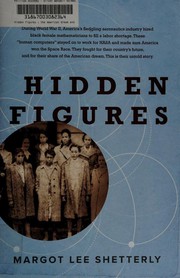
Margot Lee Shetterly tells the untold story of the Black women mathematicians who worked at NASA during the Space Race and were essential to some of the greatest achievements in American aerospace history. Dorothy Vaughan, Mary Jackson, Katherine Johnson, and Christine Darden overcame both racial and gender discrimination to perform calculations that put astronauts into orbit and onto the moon. Shetterly reconstructs their stories from oral histories, personnel records, and archival research, revealing how these women navigated the contradictions of working for an organization that depended on their brilliance while operating within a segregated system that denied their humanity. The book became a bestseller and was adapted into an Academy Award-nominated film. It is both a correction of the historical record and a testament to the persistence of talent in the face of institutional barriers.
24. Breath: The New Science of a Lost Art by James Nestor
James Nestor's investigation into the science of breathing reveals that how we breathe, through the mouth or nose, shallow or deep, fast or slow, has profound effects on health, athletic performance, and longevity. Drawing on research from Stanford, Harvard, and his own participation in breathing experiments, Nestor shows how modern humans have become poor breathers, contributing to conditions from sleep apnea to anxiety to crooked teeth. The book traces the history of breath across cultures, from ancient yoga practitioners to Soviet-era breathing therapists, and presents evidence for breathing techniques that can reduce blood pressure, improve sleep, and enhance athletic performance. The writing is engaging and personal. Nestor serves as his own test subject, submitting to experiments that demonstrate the dramatic differences between mouth breathing and nasal breathing. It is one of the most surprising health books in recent memory.
25. Surely You're Joking, Mr. Feynman! by Richard P. Feynman
Richard Feynman's collection of autobiographical anecdotes reveals the Nobel Prize-winning physicist as one of the most engaging minds of the twentieth century. The book covers his work on the Manhattan Project, his adventures cracking safes at Los Alamos, his experiences as a bongo-playing professor at Caltech, and his investigations into everything from biology to art to samba music in Brazil. Feynman's intellectual curiosity was boundless and his willingness to challenge authority was legendary. The stories are funny, surprising, and illuminating, revealing a mind that approached every subject with the same playful rigor. The book is not a physics textbook. It is a portrait of a life driven by curiosity, and it has inspired generations of scientists and non-scientists alike to approach the world with the same combination of wonder, skepticism, and delight.
Best Non-Fiction Books by Sub-Category
Best Science Non-Fiction
Science non-fiction at its best makes the natural world comprehensible and awe-inspiring. A Brief History of Time by Stephen Hawking remains the gold standard for popular cosmology, making black holes and the Big Bang accessible to general readers. The Sixth Extinction by Elizabeth Kolbert combines field reporting with climate science to document the ongoing mass extinction event. The Emperor of All Maladies by Siddhartha Mukherjee presents the history of cancer with the narrative drive of a novel. Breath by James Nestor reveals the surprising science behind something we do 20,000 times a day without thinking. And Stiff by Mary Roach explores the posthumous contributions of human cadavers with humor and scientific precision. These books demonstrate that science writing can be as compelling as any fiction when the author combines deep knowledge with narrative skill.
Best Social Science Non-Fiction
Social science non-fiction examines the hidden structures and forces that shape human societies. Guns, Germs, and Steel by Jared Diamond provides a geographic and environmental explanation for why some civilizations dominated others. Freakonomics by Levitt and Dubner reveals the hidden incentive structures behind everyday phenomena. Thinking, Fast and Slow by Daniel Kahneman maps the cognitive biases that distort human judgment. Outliers by Malcolm Gladwell challenges the myth of individual merit by showing how circumstances create success. And Between the World and Me by Ta-Nehisi Coates examines the lived experience of systemic racism in America. Together, these books reveal that the social world operates according to patterns that are often invisible but always consequential.
For more on the psychological dimensions of human behavior, explore our guide to the best selling psychology books.
Best Narrative Non-Fiction
Narrative non-fiction applies the techniques of literary storytelling to true events and real people. Unbroken by Laura Hillenbrand tells a survival story so extraordinary that it strains credulity, yet every detail is documented. In Cold Blood by Truman Capote pioneered the genre by treating a Kansas murder with the depth and craft of a novel. Born a Crime by Trevor Noah transforms a childhood under apartheid into a story that is both heartbreaking and laugh-out-loud funny. Bad Blood by John Carreyrou reads like a corporate thriller while documenting the real fraud at Theranos. And The Glass Castle by Jeannette Walls recounts a dysfunctional childhood with reportorial restraint that makes the events all the more powerful. These books prove that truth, skillfully told, can be more compelling than invention.
For more true stories of remarkable lives, see our guide to the best selling biography and memoir books.
Best Non-Fiction for Beginners
If you are new to non-fiction and want to discover the genre's potential, these books are ideal starting points. Sapiens by Yuval Noah Harari offers a sweeping, accessible history of the human species that requires no prior knowledge. Born a Crime by Trevor Noah is a memoir so engaging that it reads like a novel. Educated by Tara Westover tells a personal story with universal themes of identity and self-discovery. Hidden Figures by Margot Lee Shetterly combines history, science, and social justice in a story that is both inspiring and informative. And Surely You're Joking, Mr. Feynman! by Richard Feynman proves that non-fiction can be as entertaining as any comedy, while subtly conveying the joy of intellectual curiosity. Start with any of these and you will understand why non-fiction outsells fiction in most years.
For broader reading recommendations across all categories, explore our guide to the best selling history books.
Frequently Asked Questions
What is the best non-fiction book to start with?
Sapiens by Yuval Noah Harari is an excellent entry point because it covers the broadest possible subject, the entire history of the human species, in an accessible and engaging way. It requires no specialized knowledge and rewards curiosity about big questions. If you prefer memoir, Educated by Tara Westover or Born a Crime by Trevor Noah are compelling starting points that read like novels. The best first non-fiction book is ultimately the one whose subject matter interests you most, because the genre is so broad that there is genuinely something for everyone.
Is non-fiction harder to read than fiction?
Not necessarily. The books on this list are written for general audiences and prioritize readability alongside substance. Many non-fiction bestsellers, including Born a Crime, Unbroken, and In Cold Blood, use narrative techniques borrowed from fiction, including scene-setting, character development, and dramatic structure. Some non-fiction, particularly in science and social science, can be more demanding because it introduces unfamiliar concepts, but the best authors in those fields (Hawking, Kahneman, Kolbert) are skilled at making complex ideas accessible. If you find certain non-fiction books challenging, try starting with memoir or narrative non-fiction before moving to idea-driven books.
What is the difference between non-fiction and self-help?
Non-fiction is a broad category that includes any book based on real events, ideas, or information. Self-help is a specific subset of non-fiction focused on personal improvement and practical advice for the reader. The books on this list are primarily narrative non-fiction, science writing, memoir, and social analysis rather than prescriptive self-help. A book like Thinking, Fast and Slow explains how the mind works without telling you what to do about it, while a self-help book would focus on actionable steps for improvement. Both categories have value, and many readers benefit from reading widely across both.
How do I choose what non-fiction to read next?
Follow your curiosity. The best non-fiction reading experiences happen when a book answers a question you were already asking or introduces you to a subject you did not know fascinated you. If you enjoyed a book on this list, look at what subjects or themes drew you in. If it was the science, try The Sixth Extinction or Breath. If it was the personal story, try Educated or The Glass Castle. If it was the big ideas, try Homo Deus or Guns, Germs, and Steel. Reading reviews and summaries of potential next reads can help you decide without committing hours to a book that might not match your interests.
Discover your next great non-fiction read without extra screen time. speakeasy converts book reviews, author interviews, and literary articles into audio you can enjoy anywhere. Paste any URL and listen -- 3 free articles per week, no account needed.