The best selling true crime books force us to confront the darkest corners of human behavior with nothing but facts and narrative skill to guide us through. Unlike crime fiction, where the author controls every variable, true crime writers must find meaning and structure in events that are chaotic, senseless, and often unresolved. The genre's enduring popularity is not a morbid fascination with violence. It is a desire to understand how ordinary circumstances produce extraordinary horror, how justice systems succeed and fail, and how investigators piece together truth from fragments of evidence. From Truman Capote's genre-defining masterpiece in the 1960s to the investigative journalism that has exonerated the wrongfully convicted, true crime books have reshaped public understanding of criminal justice, forensic science, and the psychology of perpetrators. These twenty-five books represent the finest the genre has produced, each one a testament to the power of nonfiction storytelling at its most gripping.
What Makes a Great True Crime Book?
A great true crime book demands more than a sensational case. It requires a writer who can balance meticulous research with narrative momentum, who treats victims with dignity while refusing to look away from the details that matter. The best books in this genre function simultaneously as page-turning narratives and serious works of journalism or social criticism. They illuminate the systemic failures, cultural conditions, and human frailties that allowed crimes to occur. They avoid sensationalism without sacrificing intensity. And they grapple honestly with the moral complexity of turning real suffering into compelling reading. The twenty-five books below have earned their bestseller status not through shock value but through the quality of their writing, the depth of their reporting, and their ability to make readers see familiar stories in entirely new ways.
The Best Selling True Crime Books of All Time
1. In Cold Blood by Truman Capote
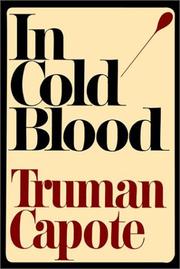
Truman Capote's 1966 account of the murder of the Clutter family in Holcomb, Kansas, is widely credited as the book that invented the modern true crime genre. Capote spent six years researching the case, conducting extensive interviews with the killers, Richard Hickock and Perry Smith, as well as investigators and community members. The result reads like a novel, with Capote applying the techniques of literary fiction to journalistic material. The book's power lies in its refusal to assign simple motives to a senseless crime and in Capote's complicated empathy for Perry Smith, which raises unsettling questions about the relationship between writer and subject that true crime authors still wrestle with today.
2. Helter Skelter by Vincent Bugliosi and Curt Gentry

Vincent Bugliosi prosecuted Charles Manson and his followers for the Tate-LaBianca murders of 1969, and his account of the case remains the best-selling true crime book in publishing history. Helter Skelter works because Bugliosi possesses both the legal expertise to explain the prosecution's strategy and the narrative instinct to build suspense around a case whose outcome was already known. The book reveals the painstaking work required to connect Manson to murders he did not physically commit and offers a detailed portrait of the cult dynamics that transformed middle-class young people into killers. It remains the definitive account of one of America's most notorious criminal cases.
3. I'll Be Gone in the Dark by Michelle McNamara
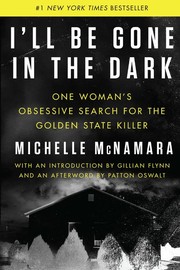
Michelle McNamara spent years obsessively researching the Golden State Killer, a serial rapist and murderer who terrorized California in the 1970s and 1980s. She died before finishing the book, which was completed by her researcher and a fellow journalist. Published in 2018, I'll Be Gone in the Dark arrived just weeks before DNA evidence led to the arrest of Joseph James DeAngelo. McNamara's writing is exceptional, combining the procedural detail of investigative journalism with prose that is atmospheric, urgent, and deeply personal. The book is as much about the act of obsessive investigation as it is about the crimes themselves.
4. The Stranger Beside Me by Ann Rule
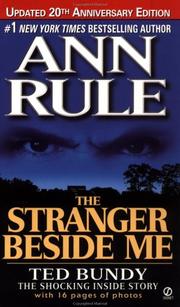
Ann Rule was a crime writer and former police officer who worked alongside Ted Bundy at a crisis hotline in Seattle. She had no idea that the charming, intelligent young man she considered a friend was one of the most prolific serial killers in American history. The Stranger Beside Me is unique in the true crime canon because Rule's personal relationship with Bundy gives the book a perspective no other writer could replicate. Her account of slowly recognizing the monster behind the mask remains one of the most chilling narratives in the genre and established Rule as one of true crime's most important authors.
5. The Devil in the White City by Erik Larson
Erik Larson's dual narrative interweaves the story of the 1893 Chicago World's Fair with the crimes of H.H. Holmes, one of America's first documented serial killers. The juxtaposition of Daniel Burnham's architectural ambition with Holmes's predatory cunning creates a book that is simultaneously a work of historical nonfiction and a true crime thriller. Larson's research is meticulous, drawing on primary sources to reconstruct both the fair's creation and Holmes's murder castle with vivid specificity. The Devil in the White City proved that true crime could operate at the highest level of literary nonfiction and brought the genre to readers who might never have picked up a conventional crime book.
6. Zodiac by Robert Graysmith
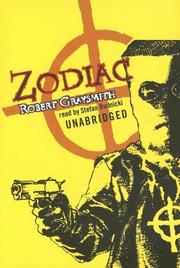
Robert Graysmith was a political cartoonist at the San Francisco Chronicle when the Zodiac Killer began sending coded letters to the newspaper in the late 1960s. His obsessive investigation into the case consumed years of his life and produced one of the most detailed accounts of an unsolved serial killer case ever written. Zodiac documents not only the murders and the investigation but the cryptographic puzzles that made the case a national obsession. Graysmith builds a circumstantial case against a suspect while honestly acknowledging the gaps in evidence that prevented an arrest. The book remains essential reading for anyone interested in unsolved crimes and the psychology of investigation.
7. Mindhunter by John Douglas and Mark Olshaker
John Douglas was one of the FBI's first criminal profilers, and Mindhunter draws on his decades of experience interviewing serial killers and developing the behavioral science techniques that transformed law enforcement. Douglas recounts face-to-face conversations with killers including Ed Kemper, Richard Speck, and Charles Manson, explaining how these interviews helped him develop profiles that aided active investigations. The book is fascinating both as a procedural account of how profiling works and as a study of the psychological toll that immersion in extreme violence takes on the investigators themselves. The Netflix series it inspired brought Douglas's work to an even wider audience.
8. Killers of the Flower Moon by David Grann

David Grann's investigation into the systematic murder of Osage Nation members in 1920s Oklahoma is one of the most important true crime books of the twenty-first century. After oil was discovered beneath their land, Osage people were murdered at an alarming rate, and the conspiracy to steal their wealth involved prominent white citizens, complicit local law enforcement, and a federal investigation that became one of the FBI's first major cases. Grann's reporting reveals layers of conspiracy that went far deeper than the original investigation uncovered, and the book functions as both a gripping crime narrative and a devastating account of American racism and institutional corruption.
9. American Predator by Maureen Callahan

Maureen Callahan's account of Israel Keyes, whom she argues was among the most intelligent and methodical serial killers in FBI history, is a terrifying study of a criminal who left almost no pattern for investigators to detect. Keyes buried murder kits years in advance, traveled thousands of miles to commit crimes unconnected to his home base, and used cash to avoid leaving a digital trail. Callahan documents how the FBI eventually caught Keyes through a single mistake and the disturbing revelations that followed his arrest. The book is a chilling reminder that the most dangerous predators are often the ones who attract no attention at all.
10. The Fact of a Body by Alexandria Marzano-Lesnevich
Alexandria Marzano-Lesnevich's genre-defying book blends a true crime investigation with a personal memoir in ways that challenge every assumption about how crime narratives should work. While working as a law student on the case of Ricky Langley, a convicted child murderer, Marzano-Lesnevich discovers parallels between Langley's history and her own childhood experience of sexual abuse. The book does not equate these experiences but uses them to interrogate how memory, narrative, and the legal system construct stories about guilt and innocence. The Fact of a Body is one of the most intellectually ambitious true crime books ever written.
11. Bad Blood by John Carreyrou
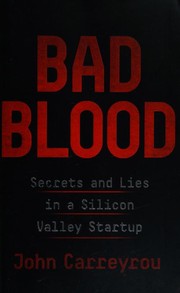
John Carreyrou's investigation into the Theranos fraud exposed one of the most audacious corporate deceptions in Silicon Valley history. Elizabeth Holmes claimed her company's technology could run hundreds of medical tests from a single drop of blood. It could not. Carreyrou's reporting, which began as a series of articles in the Wall Street Journal, revealed a culture of secrecy, intimidation, and outright fabrication that endangered patients who relied on inaccurate test results. While not a traditional murder mystery, Bad Blood demonstrates that true crime encompasses any narrative where deception and power intersect with devastating consequences for real people.
12. If You Tell by Gregg Olsen
Gregg Olsen's account of the crimes committed by Shelly Knotek, a mother who tortured and killed in her own home while maintaining a respectable public image, is one of the most disturbing domestic crime narratives ever published. Told primarily through the perspectives of Knotek's three daughters, who endured years of escalating abuse before finding the courage to expose their mother, the book reveals how family dynamics and community indifference can enable horrific violence. Olsen handles the material with sensitivity toward the survivors while unflinchingly documenting the cruelty they endured.
13. My Friend Anna by Rachel DeLoache Williams
Rachel DeLoache Williams's account of her friendship with Anna Delvey, the fake German heiress who defrauded New York's social elite, offers a ground-level perspective on one of the most audacious con artists of the social media era. Williams, a photo editor at Vanity Fair, was left with a $62,000 bill after a trip to Morocco that Delvey orchestrated and then refused to pay for. The book is both a cautionary tale about the vulnerability of trust and a sharp portrait of a New York social world where money and authenticity are easily confused.
14. The Five by Hallie Rubenhold

Hallie Rubenhold's book reclaims the five canonical victims of Jack the Ripper from more than a century of dehumanization. Rather than investigating the killer's identity, Rubenhold researches the lives of Mary Ann Nichols, Annie Chapman, Elizabeth Stride, Catherine Eddowes, and Mary Jane Kelly, documenting the social conditions, economic pressures, and personal circumstances that led each woman to Whitechapel. The Five is a powerful corrective to a genre that has historically treated victims as props in the killer's story, and it won the Baillie Gifford Prize for its rigorous historical scholarship.
15. Midnight in the Garden of Good and Evil by John Berendt

John Berendt's portrait of Savannah, Georgia, and the murder trial of antiques dealer Jim Williams is one of the most atmospheric books on this list. The murder, in which Williams shot his young companion Danny Hansford, is the book's central event, but Berendt is equally interested in the eccentric characters and gothic social dynamics of Savannah itself. The book spent a record 216 weeks on the New York Times bestseller list, and its success demonstrated that true crime could function as literary portraiture, capturing an entire culture through the lens of a single criminal case.
16. The Executioner's Song by Norman Mailer
Norman Mailer's Pulitzer Prize-winning account of Gary Gilmore, the convicted murderer who demanded his own execution in 1977, is one of the most ambitious true crime books ever written. At more than a thousand pages, Mailer reconstructs Gilmore's life, crimes, trial, and death with a novelistic attention to detail and psychological depth. The book raises profound questions about free will, the death penalty, and the American fascination with violence. Whether it is journalism, literature, or something entirely its own, The Executioner's Song remains a landmark achievement in nonfiction storytelling.
17. The Innocent Man by John Grisham
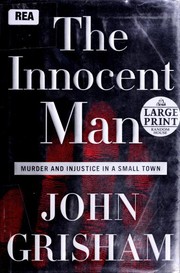
John Grisham's only nonfiction book tells the story of Ron Williamson, a former minor league baseball player who was wrongfully convicted of murder in Ada, Oklahoma, and spent eleven years on death row before DNA evidence exonerated him. Grisham brings his novelist's instinct for pacing and suspense to a real case that exposes catastrophic failures in the criminal justice system, including false confessions, junk science, and prosecutorial misconduct. The Innocent Man is a devastating indictment of a system that nearly executed an innocent man.
18. Columbine by Dave Cullen
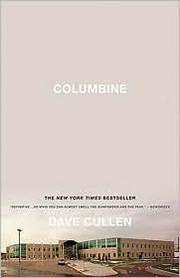
Dave Cullen spent ten years researching the 1999 Columbine High School massacre, and his book systematically dismantles nearly every myth that emerged from the tragedy. The killers were not bullied loners. They were not part of a "Trench Coat Mafia." The attack was not spontaneous but meticulously planned over more than a year. Cullen's reporting draws on thousands of pages of previously unreleased documents, and the result is both a definitive account of the attack and a study of how media narratives can distort public understanding of complex events.
19. Lost Girls by Robert Kolker
Robert Kolker's investigation into the murders of five women whose bodies were found along a stretch of Long Island beach transforms a serial killer narrative into a broader examination of class, sex work, and the failures of law enforcement to protect marginalized victims. Kolker focuses not on the unidentified killer but on the lives of the women, documenting how economic desperation, addiction, and social stigma made them invisible to the systems that should have protected them. Lost Girls is true crime as social criticism at its most powerful.
20. Catch Me If You Can by Frank Abagnale
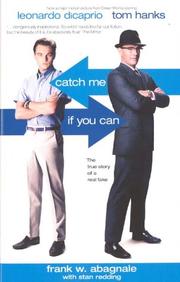
Frank Abagnale's memoir of his years as a teenage con artist who impersonated an airline pilot, a doctor, and a lawyer while cashing millions in fraudulent checks is one of the most entertaining books in the true crime genre. Abagnale's escapades are so audacious they seem fictional, but the book is grounded in the specific techniques he used to exploit trust and bureaucratic systems. The story's appeal lies not in violence but in the sheer ingenuity of Abagnale's deceptions and the cat-and-mouse dynamic with the FBI agent who eventually caught him.
21. Under the Banner of Heaven by Jon Krakauer

Jon Krakauer investigates the 1984 murder of Brenda Lafferty and her infant daughter by her brothers-in-law, who claimed divine inspiration for the killings. Krakauer uses this case as a lens to examine the history of the Church of Jesus Christ of Latter-day Saints and the fundamentalist splinter groups that practice polygamy and claim ongoing revelation. The book is controversial precisely because it takes the relationship between religious belief and violence seriously, tracing a line from the church's founding doctrines to modern acts of extremism without reducing that connection to a simple causal argument.
22. Talking to Strangers by Malcolm Gladwell
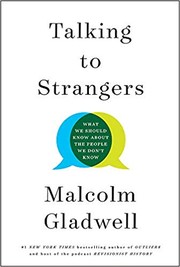
Malcolm Gladwell's examination of why humans are so consistently bad at detecting deception draws on true crime cases including the Sandra Bland traffic stop, the Jerry Sandusky scandal, and the interrogation of Amanda Knox. Gladwell argues that our default to trust, combined with a failure to account for context, leads to catastrophic misreadings of other people's behavior. While not a traditional true crime book, Talking to Strangers uses criminal cases to illuminate a psychological phenomenon with implications far beyond the justice system.
23. The Wiseguy by Nicholas Pileggi
Nicholas Pileggi's account of Henry Hill's life in the Lucchese crime family provided the basis for Martin Scorsese's Goodfellas and remains one of the most vivid depictions of organized crime ever written. Pileggi, a journalist who covered the mob for years, renders the daily texture of mafia life with specificity and authenticity that fictional accounts rarely achieve. Hill's narrative voice is casual and matter-of-fact, which makes the violence all the more disturbing. The book captures both the seductive appeal and the inevitable destruction of life inside a criminal organization.
24. Missoula by Jon Krakauer
Jon Krakauer's investigation into sexual assault cases at the University of Montana and the institutional failures that followed is a meticulous work of investigative journalism that exposes how universities, police departments, and prosecutors systematically failed survivors. Krakauer follows multiple cases in detail, documenting the victim-blaming, bureaucratic indifference, and legal maneuvering that allowed perpetrators to avoid accountability. Missoula is difficult reading, but its thorough documentation of systemic failure makes it essential for understanding how institutions handle sexual violence.
25. People Who Eat Darkness by Richard Lloyd Parry
Richard Lloyd Parry's account of the disappearance and murder of British hostess Lucie Blackman in Tokyo in 2000 is a masterwork of narrative nonfiction. Parry, who covered the case as a journalist in Japan, uses the investigation to explore the collision of Japanese and Western cultures, the world of Tokyo's hostess bars, and the agonizing experience of a family waiting for answers that may never come. The book is distinguished by Parry's patience and his refusal to simplify any aspect of a case that defied easy explanation.
Best True Crime Books by Sub-Category
Best True Crime About Serial Killers
The serial killer subgenre of true crime demands writers who can illuminate pathology without glamorizing it. In Cold Blood by Truman Capote established the template by treating its killers as complex human beings rather than monsters, a choice that made the violence more disturbing rather than less. The Stranger Beside Me by Ann Rule offers the unique perspective of someone who knew Ted Bundy personally. American Predator by Maureen Callahan demonstrates how modern forensic awareness has made serial killers harder to catch by documenting one who deliberately avoided patterns. Mindhunter by John Douglas provides the investigative perspective, showing how behavioral science transformed the pursuit of serial offenders. These books work because they refuse to reduce their subjects to archetypes.
Best True Crime Investigations
The best investigative true crime books read like detective stories where the outcome genuinely matters. Killers of the Flower Moon by David Grann exposes a conspiracy so vast that even the original investigators failed to grasp its full scope. I'll Be Gone in the Dark by Michelle McNamara demonstrates the power of civilian investigation in the age of digital information. Zodiac by Robert Graysmith captures the frustration and obsession of pursuing a case that may never be solved. Bad Blood by John Carreyrou shows that investigative true crime extends beyond violent crime to encompass any case where power is used to conceal truth. Each of these books celebrates the persistence required to uncover what someone worked very hard to hide.
Best True Crime Podcasts Turned Books
The explosion of true crime podcasts has created a new pathway to bestseller status. I'll Be Gone in the Dark by Michelle McNamara was adapted into an HBO documentary series that brought McNamara's research to an even wider audience. My Friend Anna by Rachel DeLoache Williams arrived alongside the podcast and documentary wave that turned Anna Delvey into a cultural phenomenon. Columbine by Dave Cullen, while predating the podcast era, has been featured on countless true crime shows and podcasts, each appearance driving new readers to the book. The cross-pollination between audio, visual, and print true crime has expanded the genre's audience dramatically.
Best Modern True Crime
Contemporary true crime writing has evolved beyond the procedural case study to incorporate memoir, social criticism, and literary experimentation. The Fact of a Body by Alexandria Marzano-Lesnevich blends personal narrative with legal investigation in ways that challenge genre boundaries. The Five by Hallie Rubenhold centers victims rather than killers, reflecting a broader cultural shift in how we think about crime narratives. Know My Name by Chanel Miller, while categorized as memoir, functions as true crime told from the survivor's perspective. Lost Girls by Robert Kolker uses individual cases to indict systemic inequality. Modern true crime at its best asks not just who committed a crime but what social conditions made it possible.
Frequently Asked Questions
What makes true crime different from crime fiction?
True crime is bound by facts. Every event, every character, every detail must be verifiable. This constraint creates a different kind of tension than fiction. In a novel, the author controls the outcome and can ensure that justice is served or that the narrative resolves satisfyingly. In true crime, cases go unsolved, innocent people are convicted, and the truth is often messier and more disturbing than any fictional plot. The best true crime writers find narrative structure within this messiness, shaping real events into coherent stories without falsifying the record. The genre's power comes precisely from the knowledge that everything described actually happened to real people.
Are true crime books appropriate for all readers?
True crime books vary enormously in their content and intensity. Books like Bad Blood by John Carreyrou or My Friend Anna by Rachel DeLoache Williams involve fraud and deception rather than physical violence and are accessible to virtually any adult reader. At the other end of the spectrum, books about serial killers or violent crimes can contain graphic descriptions that some readers find distressing. If you are new to the genre or sensitive to violent content, consider starting with books that focus on investigation and social context rather than graphic depictions of crime. The Devil in the White City by Erik Larson and Killers of the Flower Moon by David Grann are excellent entry points that emphasize historical context and narrative craft.
How do true crime books contribute to justice?
True crime books have had a measurable impact on criminal justice. The Innocent Man by John Grisham brought national attention to wrongful conviction and the failures of forensic science. I'll Be Gone in the Dark by Michelle McNamara helped keep public interest in the Golden State Killer case alive during decades when law enforcement had no active leads. Missoula by Jon Krakauer prompted institutional reforms in how universities handle sexual assault cases. More broadly, the genre educates the public about how the justice system actually operates, fostering informed advocacy for reform. The best true crime writing is not voyeuristic but civic.
Where can I find more book recommendations by genre?
This list covers true crime, but great reading extends across every genre. Explore our curated recommendations for mystery and thriller fiction, or dive into biography and memoir for more real-life stories. Browse all genres →
Discover your next great true crime read without extra screen time. speakeasy converts book reviews, author interviews, and literary articles into audio you can enjoy anywhere. Paste any URL and listen — 3 free articles per week, no account needed.