The best selling dystopian books do more than imagine dark futures. They hold a mirror to the present, exaggerating existing trends until the reflection becomes unbearable. These are novels about surveillance states and authoritarian governments, about ecological collapse and technological control, about what happens when societies trade freedom for safety or comfort or order. The dystopian genre has produced some of the most important and widely read fiction of the last century, from George Orwell's chilling vision of totalitarianism to Suzanne Collins's arena of televised violence. This list covers 25 essential dystopian novels that have shaped the genre and sold millions of copies worldwide. Whether you prefer classic cautionary tales or modern speculative fiction, these books will challenge how you think about power, conformity, and resistance. For recommendations across all genres, browse all genres here.
What Makes a Great Dystopian Book?
The best dystopian fiction builds a world that feels both alien and disturbingly recognizable. The great dystopian authors do not simply invent oppressive governments for shock value. They extrapolate from real tendencies -- the desire for security, the appeal of technological convenience, the human capacity for cruelty when sanctioned by authority -- and follow those tendencies to their logical extremes. A great dystopian novel makes you uncomfortable not because the world it describes is unimaginable, but because you can trace the path from here to there. The genre also demands compelling characters, because a dystopia without someone to resist it is just a thought experiment. The protagonists in these novels are rarely heroes in the traditional sense. They are ordinary people who begin to see the system they live in for what it is, and the tension between awareness and helplessness drives the narrative forward.
The Best Selling Dystopian Books of All Time
1. 1984 by George Orwell
George Orwell's 1984 is the foundational text of dystopian fiction and one of the most influential novels of the twentieth century. Set in a totalitarian superstate called Oceania, the novel follows Winston Smith, a low-ranking party member who begins to question the regime's absolute control over truth, language, and memory. Orwell's invention of concepts like Big Brother, doublethink, Newspeak, and the Thought Police has permanently shaped how we discuss surveillance and authoritarian power. The novel's genius lies in its depiction of a system so comprehensive that even rebellion becomes another form of control. Sales spike every time real-world politics echo Orwell's warnings, which has happened with unsettling frequency.
2. Brave New World by Aldous Huxley
Where Orwell imagined a dystopia of deprivation and fear, Aldous Huxley imagined one of pleasure and distraction. In Brave New World, citizens are genetically engineered, conditioned from birth, and kept docile through a happiness-inducing drug called soma. There are no jackbooted police because none are needed. People are too comfortable to rebel. Published in 1932, the novel has proven frighteningly prescient about consumer culture, pharmaceutical dependence, and the ways technology can be used to pacify rather than liberate. Many readers and critics have argued that Huxley's vision has proven more accurate than Orwell's, and the debate between their two models of control remains one of the most productive conversations in literary criticism.
3. The Hunger Games by Suzanne Collins
Suzanne Collins created one of the most commercially successful dystopian franchises in history with The Hunger Games, a novel set in a post-American nation called Panem where children are forced to fight to the death on live television. The book works on multiple levels: as a survival thriller, as a political allegory about media manipulation and class warfare, and as a coming-of-age story about a young woman who becomes a symbol of revolution against her will. Collins drew inspiration from the myth of Theseus, reality television, and the Iraq War. The trilogy has sold over 100 million copies worldwide and introduced an entire generation of young readers to dystopian fiction and the political questions it raises.
4. The Handmaid's Tale by Margaret Atwood
Margaret Atwood's The Handmaid's Tale describes the Republic of Gilead, a theocratic dictatorship that has replaced the United States and reduced women to reproductive servitude. Told through the eyes of Offred, a Handmaid assigned to a powerful Commander, the novel explores how quickly a democratic society can be dismantled when fear and ideology combine. Atwood has repeatedly stated that every atrocity in the novel has a historical precedent, and this grounding in reality gives the book its particular power. Originally published in 1985, the novel experienced a massive resurgence in the 2010s, becoming a cultural touchstone and the basis for an acclaimed television series. It remains one of the most important feminist dystopian works ever written.
5. Fahrenheit 451 by Ray Bradbury
Ray Bradbury's Fahrenheit 451 imagines a society where books are banned and firemen are employed to burn them. The protagonist, Guy Montag, is a fireman who begins to question his work after encountering a young woman who remembers what the world was like before reading was criminalized. Bradbury wrote the novel in the early 1950s, and while many readers interpret it as a warning about government censorship, Bradbury himself said it was more about how television and mass media could make people voluntarily stop reading. That distinction makes the novel even more relevant today, as debates about attention spans, algorithmic content, and the declining habit of deep reading have intensified.
6. The Road by Cormac McCarthy
Cormac McCarthy's The Road strips the dystopian genre down to its barest elements: a father and son walking through a post-apocalyptic landscape where nearly all life has been destroyed. There is no government to resist, no ideology to critique, just the raw question of whether goodness can survive in a world that has lost everything. McCarthy's prose is spare and haunting, using short declarative sentences that mirror the emptiness of the landscape. The novel won the Pulitzer Prize and became a bestseller that transcended genre boundaries. It is the most emotionally devastating book on this list and arguably the most powerful argument for human connection in all of dystopian fiction.
7. The Giver by Lois Lowry
Lois Lowry's The Giver introduced millions of young readers to dystopian fiction decades before The Hunger Games. Set in a seemingly utopian community that has eliminated pain, conflict, and choice, the novel follows twelve-year-old Jonas as he is selected to be the Receiver of Memory -- the one person who holds all the memories of life before Sameness. As Jonas receives memories of color, music, love, and suffering, he realizes that the cost of eliminating pain is the elimination of everything that makes life meaningful. The book has won the Newbery Medal and has been both celebrated and banned in schools across the United States. Its exploration of conformity versus individuality remains as relevant as ever.
8. Divergent by Veronica Roth
Veronica Roth published Divergent at age twenty-two, and the novel became an immediate phenomenon. Set in a future Chicago divided into five factions based on personality traits, the book follows Tris Prior as she discovers that she does not fit neatly into any category -- making her a threat to the social order. The novel explores themes of identity, conformity, and the danger of reducing human complexity to simple labels. Roth builds a society that functions smoothly precisely because it denies people the freedom to be more than one thing. The trilogy has sold over 35 million copies and was adapted into a major film series. Its central question -- what happens when you refuse to be categorized -- resonated deeply with young adult readers.
9. The Maze Runner by James Dashner
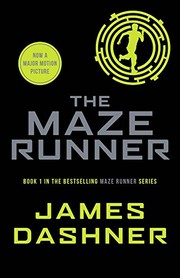
James Dashner's The Maze Runner drops its protagonist, Thomas, into a situation with no explanation: he wakes up in an elevator with no memory, surrounded by a group of boys trapped in a clearing at the center of an enormous, shifting maze. The novel is a puzzle box, releasing information in carefully controlled doses that keep you racing through the pages. The dystopian elements emerge gradually as Thomas and his companions discover why they were placed in the maze and who is responsible. The series has sold over 35 million copies and been adapted into a successful film trilogy. As a pure reading experience, few dystopian novels match its propulsive pacing.
10. A Clockwork Orange by Anthony Burgess
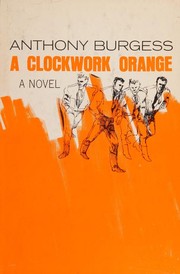
Anthony Burgess's A Clockwork Orange is a linguistic tour de force wrapped in a deeply unsettling moral argument. The novel follows Alex, a teenage gang leader in a near-future England, who speaks in a slang called Nadsat and commits acts of extreme violence with cheerful enthusiasm. When the state captures Alex and subjects him to behavioral conditioning that makes him physically unable to choose violence, Burgess forces the reader to confront a brutal question: is a person who is compelled to be good truly good at all? The novel and Stanley Kubrick's film adaptation sparked enormous controversy, but the philosophical dilemma at its center -- free will versus imposed virtue -- remains one of the most provocative ideas in dystopian fiction.
11. Never Let Me Go by Kazuo Ishiguro
Kazuo Ishiguro's Never Let Me Go is a dystopian novel disguised as a quiet English boarding school story. The narrator, Kathy H., reminisces about her childhood at Hailsham, a seemingly idyllic school where the students gradually learn the horrifying truth about their purpose. Ishiguro reveals this truth slowly, and the novel's power comes not from the revelation itself but from the characters' passive acceptance of their fate. Never Let Me Go is about complicity, denial, and the ways people accommodate themselves to systems that destroy them. Ishiguro won the Nobel Prize in Literature in 2017, and this novel is widely considered one of his finest achievements. It haunts you precisely because its characters do not fight back.
12. Station Eleven by Emily St. John Mandel
Emily St. John Mandel wrote Station Eleven before the COVID-19 pandemic, but reading it afterward feels almost prophetic. The novel follows a traveling Shakespeare company performing in the scattered settlements that exist twenty years after a flu pandemic has destroyed civilization. What makes Station Eleven exceptional is its insistence that art and culture are not luxuries but necessities. The company's motto, taken from Star Trek, is "survival is insufficient." Mandel structures the narrative as a web of interconnected stories spanning before and after the collapse, creating a meditation on the things that connect us across time and catastrophe. The novel won the Arthur C. Clarke Award and has sold millions of copies worldwide.
13. The Children of Men by P.D. James
P.D. James, best known for her detective novels, produced one of the most quietly terrifying dystopian works with The Children of Men. Set in 2021, the novel imagines a world where human fertility has mysteriously ceased. No children have been born anywhere on Earth for twenty-five years, and civilization is slowly winding down with no future generation to inherit it. James examines how a society with no stake in the future becomes increasingly authoritarian and nihilistic. The despotism in the novel is not imposed through violence but accepted with resigned indifference. The book was adapted into Alfonso Cuaron's acclaimed 2006 film, but the novel deserves attention on its own terms as a meditation on hope, purpose, and what happens when humanity loses its reason to continue.
14. Red Rising by Pierce Brown
Pierce Brown's Red Rising is set on a future Mars where society is divided into a rigid color-based hierarchy. Darrow, a Red -- the lowest caste -- infiltrates the Gold ruling class to destroy the system from within. The novel combines elements of dystopian fiction with science fiction world-building and the brutal competition narrative of The Hunger Games, but Brown's prose and political vision elevate it beyond its influences. The action is visceral, the betrayals are devastating, and the moral compromises Darrow must make to succeed as a revolutionary add genuine depth to what could have been a simple underdog story. The series has developed a passionate following and continues to expand with new installments.
15. Parable of the Sower by Octavia Butler
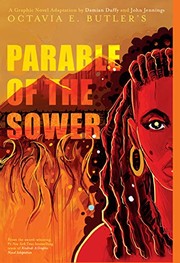
Octavia Butler's Parable of the Sower, published in 1993, is set in a 2024 America ravaged by climate change, economic collapse, and social disintegration. The protagonist, Lauren Olamina, possesses hyperempathy -- the ability to feel the pain and pleasure of others -- and develops a new philosophical and religious system called Earthseed as she leads a group of refugees north to safety. Butler's vision has proven disturbingly accurate in its prediction of gated communities, water scarcity, corporate feudalism, and the erosion of democratic institutions. The novel is both a survival story and a philosophical argument about humanity's need to adapt and grow. Butler's influence on contemporary dystopian and speculative fiction is immeasurable.
16. The Passage by Justin Cronin
Justin Cronin's The Passage is a dystopian epic that blends post-apocalyptic fiction with vampire mythology. A government experiment goes catastrophically wrong, releasing viral creatures that devastate North America. The novel jumps forward nearly a century to follow the inhabitants of a small, walled colony who have survived under artificial lights that keep the creatures at bay. Cronin, a literary fiction writer before turning to genre fiction, brings a literary sensibility to the material. The characterization is rich, the world-building is meticulous, and the sense of dread is sustained across the novel's considerable length. The trilogy has sold millions of copies and was adapted into a television series.
17. The Stand by Stephen King
Stephen King's The Stand is his most ambitious work: a 1,100-page post-apocalyptic epic in which a weaponized flu kills 99 percent of the world's population. The survivors split into two factions, one drawn to a benevolent figure in Nebraska and the other to a malevolent force in Las Vegas. The novel is King at his most expansive, building an enormous cast of characters whose individual stories weave into a larger battle between good and evil. While the supernatural elements push it beyond strict dystopian fiction, the novel's depiction of societal collapse, the struggle to rebuild, and the corrupting nature of power place it firmly within the genre's tradition. It remains one of King's most beloved and influential works.
18. Oryx and Crake by Margaret Atwood
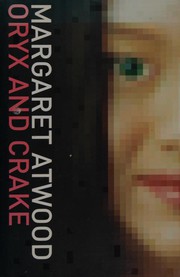
Margaret Atwood's second entry on this list is a dystopian novel about the dangers of unchecked genetic engineering and corporate power. Told through flashbacks by Snowman, apparently the last human alive, the novel reconstructs how his brilliant and unstable friend Crake designed a plague to wipe out humanity and replace it with a genetically engineered species. Atwood builds a pre-apocalyptic world dominated by corporate compounds, genetic modification run amok, and a society that has commodified everything including human bodies. Oryx and Crake is darker and more satirical than The Handmaid's Tale, and its warnings about biotechnology and corporate overreach feel increasingly urgent with each passing year.
19. We by Yevgeny Zamyatin
Yevgeny Zamyatin's We, published in 1924, is the grandmother of modern dystopian fiction. Written in Soviet Russia and promptly banned, the novel describes a glass-walled city called OneState where citizens are numbers rather than names, sex is scheduled by appointment, and imagination is considered a disease requiring surgical removal. Zamyatin directly influenced both Orwell and Huxley, and reading We after 1984 and Brave New World reveals how much those later masterworks owe to this earlier vision. The novel's portrayal of a perfectly rational society that has eliminated individuality in the name of mathematical harmony remains chillingly relevant. It is the least well-known book on this list and perhaps the most essential for understanding the genre's origins.
20. The Power by Naomi Alderman
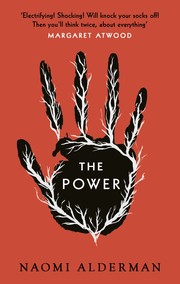
Naomi Alderman's The Power asks a deceptively simple question: what would happen if women suddenly developed the ability to generate electrical jolts from their hands, giving them physical dominance over men? The novel follows several characters around the world as this power shift unfolds, and Alderman's brilliance lies in showing that the result is not utopia but a mirror image of existing oppression. The Power argues that violence and domination are not inherently male traits but structural consequences of physical power imbalance. The novel won the Baillie Gifford Prize and was adapted into a television series. It is one of the most intellectually stimulating dystopian novels of the last decade.
21. Lord of the Flies by William Golding
William Golding's Lord of the Flies may be the most debated novel ever assigned in high school English classes. A group of British boys stranded on an uninhabited island after a plane crash attempt to govern themselves and descend into savagery. Golding wrote the novel as a deliberate inversion of the optimistic survival stories popular in earlier children's literature, arguing that civilization is a thin veneer over innate human brutality. While subsequent research on real-life cases of stranded children has complicated Golding's thesis, the novel's power as an allegory about the fragility of social order is undeniable. It has sold tens of millions of copies and remains a touchstone of dystopian and allegorical fiction.
22. The Testaments by Margaret Atwood
Margaret Atwood's sequel to The Handmaid's Tale is set fifteen years after the original novel and is narrated by three women, including the formidable Aunt Lydia. The Testaments answers questions that the original novel left deliberately open, revealing how resistance operates within Gilead's power structures. Atwood won the Booker Prize for the novel (shared with Bernardine Evaristo), and while some critics felt the sequel was less ambiguous than its predecessor, the storytelling is propulsive and the character of Aunt Lydia -- a collaborator who may also be a saboteur -- is one of the most complex figures in dystopian fiction. The book sold over a million copies in its first week.
23. Blindness by Jose Saramago

Jose Saramago's Blindness imagines an epidemic of sudden blindness that sweeps through an unnamed city, leading to the collapse of social order. The government quarantines the afflicted in an abandoned mental hospital where conditions deteriorate into filth, violence, and exploitation. Saramago's prose style -- long sentences without conventional punctuation, dialogue unmarked by quotation marks -- mirrors the disorientation of the characters. Blindness is a novel about how quickly the structures of civilization can collapse when the assumptions underlying them are removed. Saramago won the Nobel Prize in Literature, and this novel is widely regarded as his masterpiece. It is brutal, uncompromising, and impossible to forget.
24. Wool by Hugh Howey
Hugh Howey's Wool began as a self-published short story and grew into one of the most successful independent publishing phenomena of the 2010s. Set in an underground silo where thousands of people live without knowledge of why they are there or what exists on the surface, the novel follows Juliette, a mechanic who begins to question the rules that govern their enclosed society. Howey's world-building is excellent, slowly revealing the silo's secrets in a way that keeps you constantly reassessing what you thought you knew. The Silo series has sold millions of copies, was acquired by a major publisher, and was adapted into a critically acclaimed television series. It demonstrates that the dystopian genre continues to produce original and compelling visions.
25. The Book of the New Sun by Gene Wolfe
Gene Wolfe's The Book of the New Sun is set on a far-future Earth called Urth, where the sun is dying and civilization has declined to a quasi-medieval state built on the ruins of incomprehensible technology. The narrator, Severian, is an apprentice torturer who is exiled from his guild for showing mercy. Wolfe's prose is dense, allusive, and rewards rereading more than almost any other science fiction or dystopian work. The series is often cited by authors like Neil Gaiman and Ursula K. Le Guin as one of the greatest achievements in speculative fiction. It is not a quick or easy read, but for those willing to engage with its complexity, The Book of the New Sun is an unparalleled literary experience.
Best Dystopian Books by Sub-Category
Best Classic Dystopian Books
The classics of dystopian fiction remain required reading for anyone interested in the genre. George Orwell's 1984 defined the surveillance state narrative. Aldous Huxley's Brave New World imagined control through pleasure rather than pain. Yevgeny Zamyatin's We predated both and established the template they followed. Ray Bradbury's Fahrenheit 451 warned about a society that voluntarily abandons reading. Anthony Burgess's A Clockwork Orange posed the definitive question about free will and morality. William Golding's Lord of the Flies stripped civilization down to its primal foundations. These novels form the bedrock of the genre, and every dystopian work published since exists in conversation with them.
Best Modern Dystopian Books
Contemporary dystopian fiction reflects current anxieties with remarkable precision. Octavia Butler's Parable of the Sower predicted climate refugees and corporate feudalism with uncanny accuracy. Emily St. John Mandel's Station Eleven reimagined pandemic fiction as a meditation on art and connection. Naomi Alderman's The Power inverted gender dynamics to expose the structural nature of domination. Kazuo Ishiguro's Never Let Me Go explored complicity and passive acceptance of systemic horror. Patrick Radden Keefe and other nonfiction writers have noted that modern dystopian fiction increasingly blurs with reportage because reality keeps catching up. These novels feel less like warnings and more like dispatches from a future that is already arriving.
Best YA Dystopian Books
Young adult dystopian fiction experienced a golden age in the 2000s and 2010s, introducing millions of young readers to the genre. Suzanne Collins's The Hunger Games set the standard with its combination of survival narrative and political allegory. Veronica Roth's Divergent explored identity and categorization. James Dashner's The Maze Runner delivered pure puzzle-box pacing. Lois Lowry's The Giver, published earlier, laid the groundwork for all of them. These novels share a common structure -- a young protagonist who discovers the truth about their oppressive society and chooses to fight -- but each brings a distinct perspective to that template. For young readers ready to graduate to adult dystopian fiction, these books are the ideal bridge.
Best Dystopian Series
Many of the finest dystopian works extend across multiple volumes. Pierce Brown's Red Rising saga spans several books of escalating scope and ambition. Justin Cronin's The Passage trilogy builds an epic post-apocalyptic world over thousands of pages. Hugh Howey's Silo series (beginning with Wool) delivers a claustrophobic mystery that expands into a sweeping narrative. Margaret Atwood's The Handmaid's Tale and The Testaments form a powerful duology. Gene Wolfe's The Book of the New Sun rewards the commitment of its four-volume structure with some of the most layered prose in speculative fiction. For readers who want to immerse themselves deeply in a dystopian world, these series offer hundreds of hours of compelling reading.
For related recommendations, explore our guides to the best selling science fiction books, best selling young adult books, and best selling thriller books. You can also browse all genres to discover more.
Frequently Asked Questions
What is the most popular dystopian book?
George Orwell's 1984 is the most widely read and culturally influential dystopian novel, with estimated sales exceeding 30 million copies. However, Suzanne Collins's The Hunger Games has sold over 100 million copies across the trilogy, making it the best selling dystopian franchise by total volume. Both novels have had enormous cultural impact, with 1984 contributing concepts like "Big Brother" and "Orwellian" to everyday language and The Hunger Games sparking a global conversation about media, inequality, and resistance.
What is the difference between dystopian and post-apocalyptic fiction?
Dystopian fiction depicts a functioning but oppressive society, typically with a government or system that controls its population through surveillance, ideology, or force. Post-apocalyptic fiction takes place after a catastrophic event has destroyed civilization, focusing on survival in the aftermath. Some books, like Cormac McCarthy's The Road, are purely post-apocalyptic. Others, like The Hunger Games, combine both elements: the world has been devastated, and an oppressive government has risen from the ruins. The genres overlap frequently, but the core distinction is whether there is an organized oppressive system to resist or simply a ruined world to survive.
Are dystopian books appropriate for teenagers?
Many of the best dystopian novels were written specifically for young adult readers, including The Hunger Games, Divergent, The Maze Runner, and The Giver. These books deal with serious themes like violence, conformity, and political oppression in ways that are accessible to teenage readers while still being intellectually engaging for adults. Classic dystopian novels like 1984, Brave New World, and A Clockwork Orange contain more explicit content and are typically recommended for older teens and adults. The genre as a whole encourages critical thinking about authority and social structures, which makes it valuable reading at any age.
Why has dystopian fiction become so popular?
Dystopian fiction surges in popularity during periods of social and political uncertainty. The genre experienced a massive boom in the 2010s, driven by young adult series like The Hunger Games and real-world concerns about surveillance, climate change, and political polarization. Dystopian novels allow readers to explore worst-case scenarios from a safe distance, processing fears about the direction of society through narrative rather than news. The genre also appeals to readers who enjoy world-building, moral complexity, and protagonists who challenge unjust systems. As long as people worry about the future, dystopian fiction will find an audience.
Discover your next great dystopian read without extra screen time. speakeasy converts book reviews, author interviews, and literary articles into audio you can enjoy anywhere. Paste any URL and listen -- 3 free articles per week, no account needed.