The best selling history books share one thing in common: they make the past feel urgent. These are not dry textbooks or footnote-laden academic papers. They are narrative-driven works that pull you into vanished worlds, contested battles, and the decisions that shaped civilizations. Whether you are drawn to ancient Rome, the world wars, the American experiment, or the long arcs of human migration and power, the books on this list represent the finest popular history writing of the last century. They have sold millions of copies for good reason. Each one transforms research into storytelling, giving readers a visceral connection to events they never witnessed. This guide covers 25 essential history books organized by era and theme, with sub-category recommendations to help you find exactly where to start. If you enjoy reading across genres, you can browse all genres here.
What Makes a Great History Book?
The difference between a history book that sells a few thousand copies and one that sells millions comes down to narrative craft. Great history writers do not simply present facts in chronological order. They build tension, develop real people as characters, and frame events within a story arc that keeps you turning pages. The best history books make you feel the weight of decisions made under pressure, the randomness of outcomes that seem inevitable only in hindsight, and the human cost behind every statistic. Accessibility matters too. The authors on this list translate complex political, economic, and social forces into language that any curious reader can follow without dumbing down the material. They respect their readers enough to trust that a well-told story does not need academic jargon to be intellectually serious.
The Best Selling History Books of All Time
1. Sapiens: A Brief History of Humankind by Yuval Noah Harari
Sapiens changed the way millions of people think about human history. Harari covers roughly 70,000 years in under 500 pages, tracing the cognitive, agricultural, and scientific revolutions that turned an unremarkable primate into the dominant species on Earth. His central argument -- that human cooperation depends on shared myths, from religion to money to nations -- is provocative and compellingly argued. The book works because Harari writes with the confidence of someone synthesizing across disciplines rather than reporting from a single field. Some academic historians have quibbled with specific claims, but as a framework for understanding where we came from and why our societies look the way they do, Sapiens remains unmatched in its ambition and readability.
2. Guns, Germs, and Steel by Jared Diamond
Jared Diamond set out to answer one of history's biggest questions: why did certain civilizations conquer and dominate others? His answer, rooted in geography, agriculture, and disease rather than racial or cultural superiority, reshaped how popular audiences think about inequality between nations. Diamond argues that the availability of domesticable plants and animals, the orientation of continental axes, and exposure to germs gave Eurasian civilizations structural advantages that compounded over millennia. The book won the Pulitzer Prize and became one of the best selling nonfiction works of the 1990s. Its macro-level perspective remains a powerful corrective to simplistic narratives about civilizational success.
3. A People's History of the United States by Howard Zinn
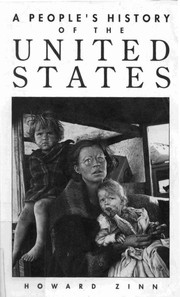
Howard Zinn's landmark work reframes American history from the perspective of those typically left out of traditional narratives: indigenous peoples, enslaved Africans, workers, women, and dissenters. First published in 1980, the book has sold over two million copies and become a staple of college syllabi and independent reading lists alike. Zinn does not pretend to be neutral. He explicitly argues that history written from the top down -- from the perspective of presidents and generals -- distorts our understanding of how change actually happens. Whether you agree with his political stance or not, the book forces a reckoning with the gap between American ideals and American reality that no serious reader of history can ignore.
4. The Rise and Fall of the Third Reich by William L. Shirer
William Shirer's monumental account of Nazi Germany remains the definitive popular history of the Third Reich more than six decades after its publication. Shirer was a correspondent in Berlin during the 1930s, giving him a firsthand perspective that few historians could claim. At over 1,200 pages, the book is exhaustive but never tedious. Shirer traces Hitler's rise from a failed artist to absolute dictator, the mechanics of totalitarian control, the decision-making behind the war, and the regime's eventual collapse. The prose is clear and driven by a journalist's instinct for narrative. For anyone seeking to understand how a modern democracy can descend into barbarism, this book is essential reading.
5. SPQR: A History of Ancient Rome by Mary Beard
Mary Beard brings the same irreverent intelligence to ancient Rome that she brings to her public commentary. SPQR covers roughly a thousand years of Roman history, from the city's mythical founding to the emperor Caracalla's extension of citizenship in 212 CE. What sets Beard apart is her willingness to challenge conventional wisdom. She questions the traditional stories Romans told about themselves, interrogates the evidence behind popular myths, and consistently asks who benefited from the narratives that survived. The result is a history of Rome that feels fresh and modern without being anachronistic. Beard writes for curious general readers, not classicists, and the book is all the better for it.
6. Team of Rivals by Doris Kearns Goodwin

Doris Kearns Goodwin's masterpiece examines Abraham Lincoln's political genius through the lens of his cabinet, many of whom were former rivals for the presidency. The book argues that Lincoln's greatest strength was his ability to surround himself with strong-willed, ambitious men who disagreed with him and with each other, then harness their talents toward a common purpose. Goodwin's research is meticulous, and her portraits of William Seward, Salmon Chase, and Edward Bates are as vivid as her portrayal of Lincoln himself. The book influenced Barack Obama's approach to cabinet selection and remains one of the finest works of American political biography ever written.
7. The Wright Brothers by David McCullough
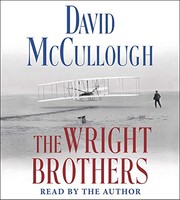
David McCullough tells the story of Wilbur and Orville Wright with the same narrative grace that defined his entire career. The book traces the brothers from their childhood in Dayton, Ohio, through their obsessive experimentation with flight, to the historic moment at Kitty Hawk and beyond. McCullough excels at making you understand the sheer improbability of their achievement. The Wright brothers had no college degrees, no government funding, and no formal engineering training. What they had was relentless curiosity, systematic thinking, and a willingness to fail repeatedly. McCullough turns their story into an argument for the power of disciplined imagination, and it is impossible to read without feeling inspired.
8. 1776 by David McCullough
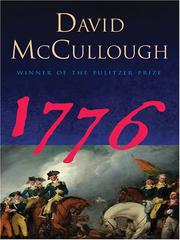
McCullough's second entry on this list focuses on the single most consequential year in American history. Rather than a broad survey of the Revolution, 1776 zooms in on the military campaign that nearly ended the American experiment before it began. The book follows George Washington and his ragged Continental Army through a series of devastating defeats, desperate retreats, and the audacious crossing of the Delaware that turned the tide. McCullough humanizes Washington, showing a leader plagued by self-doubt and surrounded by subordinates of wildly varying competence. The writing is cinematic, and the pacing makes you forget that you already know how the story ends.
9. The Silk Roads: A New History of the World by Peter Frankopan
Peter Frankopan argues that the standard Western-centric telling of world history fundamentally distorts our understanding of how civilizations developed. By placing Central Asia and the Middle East at the center of his narrative, Frankopan reveals how trade routes connecting East and West drove the exchange of goods, ideas, religions, and diseases that shaped the modern world. The Silk Roads reframes events like the Crusades, the Mongol conquests, and European colonialism as part of a larger story about connection and competition across continents. The book is ambitious in scope and accessible in execution, making it an ideal entry point for readers who want to move beyond Eurocentric history.
10. Genghis Khan and the Making of the Modern World by Jack Weatherford
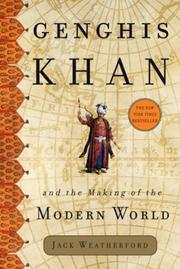
Jack Weatherford's revisionist portrait of Genghis Khan challenges the popular image of the Mongol conqueror as a mindless barbarian. Drawing on newly available Mongolian sources, Weatherford argues that Genghis Khan created the largest contiguous empire in history through military innovation, diplomatic pragmatism, and an unprecedented commitment to meritocracy and religious tolerance. The Mongol Empire, Weatherford shows, facilitated trade, communication, and cultural exchange on a scale that prefigured globalization. The book reads like an adventure story, with vivid descriptions of steppe life, battlefield tactics, and the political maneuvering that held the empire together. It is a compelling argument for reassessing one of history's most misunderstood figures.
11. The Warmth of Other Suns by Isabel Wilkerson
Isabel Wilkerson spent fifteen years researching the Great Migration, the movement of roughly six million Black Americans from the Jim Crow South to cities in the North, Midwest, and West between 1915 and 1970. She tells this enormous story through three individuals: Ida Mae Gladney, George Starling, and Robert Foster. By grounding the narrative in their specific experiences -- the terror they fled, the journeys they made, the new lives they built -- Wilkerson transforms demographic data into deeply human storytelling. The book won the National Book Critics Circle Award and is widely considered one of the finest works of narrative nonfiction in the 21st century. It reveals a chapter of American history that shaped every major city in the country yet remains poorly understood.
12. Caste: The Origins of Our Discontents by Isabel Wilkerson

Wilkerson's follow-up to The Warmth of Other Suns makes a bold argument: American racial hierarchy functions as a caste system comparable to those in India and Nazi Germany. By drawing structural parallels between these three systems, Wilkerson reframes racism not as individual prejudice but as an inherited ranking system that determines life outcomes from birth. The book is meticulously researched and powerfully written, blending historical analysis with personal narrative. Some critics have questioned whether the caste framework oversimplifies, but the book sparked a national conversation about the structural nature of inequality and became one of the most discussed nonfiction works of the decade.
13. Empire of Pain: The Secret History of the Sackler Dynasty by Patrick Radden Keefe

Patrick Radden Keefe traces the opioid epidemic back to the Sackler family, whose pharmaceutical company Purdue Pharma aggressively marketed OxyContin while downplaying its addictive potential. The book is equal parts family saga, corporate exposé, and public health tragedy. Keefe's reporting is devastating in its specificity, documenting how the Sacklers used their wealth to burnish their reputation through philanthropic donations to museums and universities while their product destroyed communities across America. Empire of Pain won the Baillie Gifford Prize and stands as one of the most important works of investigative nonfiction in recent years. It is a book about how power insulates itself from accountability.
14. Stalingrad by Antony Beevor
Antony Beevor's account of the Battle of Stalingrad is widely regarded as the finest single-battle history ever written. Drawing on newly opened Soviet archives, Beevor reconstructs the siege that became the turning point of World War II on the Eastern Front. The book captures the experience of soldiers and civilians on both sides with an unflinching clarity that borders on harrowing. Beevor excels at moving between the strategic decisions of generals and the daily reality of men fighting house to house in frozen rubble. Stalingrad sold over a million copies worldwide and established Beevor as the preeminent popular historian of the Second World War.
15. The Color of Law by Richard Rothstein

Richard Rothstein dismantles the myth that American residential segregation was the result of private choices and market forces. Through meticulous research, he demonstrates that federal, state, and local governments deliberately created and enforced racial segregation in housing through policies ranging from zoning laws to mortgage lending practices to public housing placement. The Color of Law is a work of legal and social history that changes how you see every American neighborhood. Rothstein writes with the precision of a legal brief and the moral urgency of someone who believes that understanding how segregation was constructed is the first step toward undoing it.
16. The Diary of a Young Girl by Anne Frank
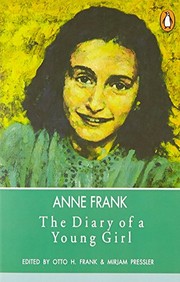
Anne Frank's diary, written while she and her family hid from the Nazis in an Amsterdam attic, remains one of the most widely read books in the world. It has been translated into over 70 languages and has sold more than 30 million copies. What makes the diary endure is not just the historical context but the voice. Anne was a gifted writer with a sharp eye for human behavior, a mordant sense of humor, and a capacity for self-reflection remarkable in anyone, let alone a teenager in hiding. The diary makes the Holocaust personal in a way that no historical analysis can, and its abrupt ending is among the most devastating silences in literature.
17. A Short History of Nearly Everything by Bill Bryson

Bill Bryson set out to understand how we know what we know about the physical world, and the result is a history of science that doubles as a history of human curiosity. From the Big Bang to the rise of civilization, Bryson covers physics, chemistry, geology, biology, and paleontology with the bemused wonder of an interested layman. The book works because Bryson is as interested in the scientists as in the science, filling the narrative with eccentric characters, petty rivalries, and accidental discoveries. It has sold over three million copies and remains the gold standard for making complex scientific history accessible and entertaining.
18. Killing Lincoln by Bill O'Reilly and Martin Dugard

Killing Lincoln reads more like a thriller than a history book, which is precisely why it became a massive bestseller. O'Reilly and Dugard reconstruct the final days of the Civil War and the conspiracy to assassinate Abraham Lincoln with a focus on pacing and tension. The book puts you inside the minds of both Lincoln and John Wilkes Booth as their paths converge toward Ford's Theatre. While some academic historians have noted factual quibbles, the narrative drive is undeniable, and the book introduced millions of readers to a pivotal moment in American history who might never have picked up a more traditional account.
19. The Devil in the White City by Erik Larson
Erik Larson interweaves two parallel narratives: the construction of the 1893 Chicago World's Fair and the crimes of serial killer H.H. Holmes, who operated a hotel near the fairgrounds. The juxtaposition of creation and destruction, ambition and depravity, makes for a reading experience unlike any other work of history. Larson's research is impeccable, and his ability to render late-nineteenth-century Chicago as a living, breathing place is extraordinary. The book has sold over two million copies and spawned a forthcoming film adaptation. It proved that narrative nonfiction, when done at this level, can compete with the best fiction for sheer entertainment value.
20. Educated by Tara Westover
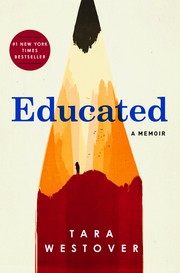
While often classified as memoir, Tara Westover's account of growing up in a survivalist family in rural Idaho and eventually earning a PhD from Cambridge is also a deeply researched work of social and cultural history. Westover's story illuminates the intersection of religious extremism, educational deprivation, and domestic violence in a specific American context. The book sold over five million copies and was named one of the best books of the decade by multiple publications. Westover writes with an historian's eye for structural forces and a memoirist's gift for emotional precision, creating a work that is simultaneously personal and universal.
21. The Guns of August by Barbara Tuchman
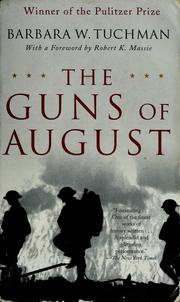
Barbara Tuchman's Pulitzer Prize-winning account of the first month of World War I set the standard for narrative military history. Published in 1962, the book traces the political miscalculations, military blunders, and diplomatic failures that turned a regional crisis into a global catastrophe. Tuchman writes with a novelist's sense of irony, highlighting the gap between what leaders believed would happen and what actually did. President Kennedy read the book during the Cuban Missile Crisis and credited it with helping him avoid a similar cascade of miscalculation. Decades later, The Guns of August remains a masterclass in how overconfidence and rigid planning can produce unintended disaster.
22. Midnight in Chernobyl by Adam Higginbotham
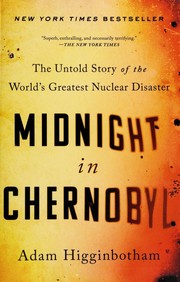
Adam Higginbotham spent over a decade researching the 1986 Chernobyl nuclear disaster, and the result is the definitive account of the event. The book follows the operators, engineers, scientists, and political officials involved from the reactor's construction through the explosion and its aftermath. Higginbotham is meticulous about technical detail without ever losing sight of the human story. He shows how a culture of secrecy and institutional arrogance created the conditions for catastrophe, then compounded the damage by delaying the response. Midnight in Chernobyl reads like a techno-thriller with the sickening addition that everything in it actually happened.
23. Say Nothing: A True Story of Murder and Memory in Northern Ireland by Patrick Radden Keefe
Patrick Radden Keefe's account of the Troubles in Northern Ireland centers on the 1972 abduction and murder of Jean McConville, a widow and mother of ten. Using McConville's story as a thread, Keefe unravels the broader history of the IRA, the British occupation, and the moral compromises that defined decades of conflict. The book is structured as a mystery, pulling you forward with questions about who was responsible and how an entire community maintained silence for decades. Say Nothing won the National Book Critics Circle Award and represents the finest kind of narrative history: one that uses a single story to illuminate an entire era.
24. The Splendid and the Vile by Erik Larson
Erik Larson brings his signature narrative style to Winston Churchill's first year as prime minister during the London Blitz. The book draws heavily on diaries, letters, and personal accounts to recreate the experience of living through nightly bombing raids. Larson is less interested in military strategy than in the texture of daily life under siege: how people coped with fear, maintained routines, and found moments of dark humor amid destruction. Churchill emerges as a complex figure whose personal charisma and rhetorical gifts were genuine tools of national survival. The Splendid and the Vile is a deeply human portrait of leadership under extreme duress.
25. Bury My Heart at Wounded Knee by Dee Brown

Dee Brown's 1970 account of the systematic destruction of Native American peoples in the American West remains one of the most powerful works of revisionist history ever published. Covering the period from 1860 to 1890, Brown tells the story exclusively from the Native American perspective, documenting broken treaties, forced relocations, massacres, and the gradual elimination of an entire way of life. The book sold over four million copies and fundamentally changed how Americans understood westward expansion. Brown's prose is restrained and factual, which makes the accumulation of injustice all the more devastating. It is a book that demands a reckoning with the cost of American continental ambition.
Best History Books by Sub-Category
Best Ancient History Books
For readers drawn to the ancient world, start with Mary Beard's SPQR for a fresh take on Rome that challenges everything you thought you knew. Follow it with Jack Weatherford's Genghis Khan and the Making of the Modern World for a perspective that extends beyond the Mediterranean. Peter Frankopan's The Silk Roads provides the connective tissue between civilizations, showing how trade and cultural exchange shaped the ancient and medieval worlds. Bill Bryson's A Short History of Nearly Everything offers a complementary scientific perspective on how ancient peoples understood their world.
Best World War History Books
The Second World War has produced some of the finest narrative history ever written. Antony Beevor's Stalingrad is the essential Eastern Front account, capturing the battle that broke the German army. William Shirer's The Rise and Fall of the Third Reich provides the comprehensive political and military context. Erik Larson's The Splendid and the Vile shows the war through the intimate lens of Churchill and the London Blitz. For the First World War, Barbara Tuchman's The Guns of August remains the definitive account of how Europe stumbled into catastrophe. Adam Higginbotham's Midnight in Chernobyl, while Cold War rather than wartime, captures the same dynamics of institutional failure and human courage.
Best American History Books
American history on this list spans from revolution to the present day. David McCullough's 1776 captures the precariousness of the founding. Howard Zinn's A People's History of the United States provides the counter-narrative. Doris Kearns Goodwin's Team of Rivals illuminates the Civil War era through Lincoln's political genius. Isabel Wilkerson's The Warmth of Other Suns covers the Great Migration, while her Caste examines the structural underpinnings of American inequality. Richard Rothstein's The Color of Law reveals how government policy created residential segregation. Together, these books provide a multilayered portrait of a nation constantly arguing with its own ideals.
Best History Books for Beginners
If you are new to reading history and want accessible entry points, start with Yuval Noah Harari's Sapiens for the broadest possible overview of human civilization. Bill Bryson's A Short History of Nearly Everything covers the history of science with humor and clarity. Erik Larson's The Devil in the White City demonstrates that history can be as gripping as any thriller. David McCullough's The Wright Brothers is a relatively short, beautifully written story that makes you appreciate the power of determination. From there, branch into whatever era or region interests you most -- every book on this list was written for general readers, not specialists.
For related recommendations, explore our guides to the best selling biography and memoir books, best selling non-fiction books, and best selling historical fiction books. You can also browse all genres to find your next great read.
Frequently Asked Questions
What is the best selling history book of all time?
While exact sales figures vary by source and edition, Yuval Noah Harari's Sapiens and Anne Frank's The Diary of a Young Girl are among the highest-selling history books ever published, with each exceeding 30 million copies worldwide. Jared Diamond's Guns, Germs, and Steel and Bill Bryson's A Short History of Nearly Everything are also perennial bestsellers that have collectively sold tens of millions of copies across dozens of languages.
Are history books better read or listened to as audio?
Many of the best history books translate exceptionally well to audio, particularly narrative-driven works by authors like Erik Larson, David McCullough, and Isabel Wilkerson. Their prose is already structured for storytelling, and a skilled narrator adds emotional resonance. Books heavy on maps, timelines, or data tables (like some academic histories) work better in print. The books on this list, however, were all written for general audiences with narrative clarity, making them strong candidates for audio consumption.
What history books should I read first if I am a beginner?
Start with books that prioritize storytelling over academic argumentation. Sapiens by Yuval Noah Harari gives you the broadest possible overview. The Devil in the White City by Erik Larson reads like a novel. The Wright Brothers by David McCullough is short and inspiring. From there, follow your curiosity. If a particular era or region catches your attention, you will find deeper explorations on this list and in our related genre guides.
How were these history books selected?
This list prioritizes history books that have demonstrated sustained commercial success, critical acclaim, and cultural influence. Every title has sold at least hundreds of thousands of copies and received recognition from major literary awards, bestseller lists, or widespread academic adoption. We also weighted narrative quality, since the goal of this list is to recommend history books that general readers will actually enjoy, not books that are merely important.
Discover your next great history read without extra screen time. speakeasy converts book reviews, author interviews, and literary articles into audio you can enjoy anywhere. Paste any URL and listen -- 3 free articles per week, no account needed.