The best selling horror books have terrified, disturbed, and thrilled readers for over two centuries, proving that our appetite for fear is as enduring as literature itself. Horror fiction taps into something primal. It forces us to confront the things we would rather not think about -- death, the unknown, the darkness inside ourselves -- and somehow transforms that confrontation into pleasure. The genre has produced some of the most influential and bestselling novels ever written, from the gothic masterpieces of the 19th century to the psychological terrors of the modern era. This list gathers the 25 must-read horror novels that have defined the genre, broken sales records, and left permanent marks on popular culture. Whether you prefer supernatural dread, gothic atmosphere, or the quiet horror of the everyday turned monstrous, these page-turners deliver. These are the books that keep you up at night and make you check the locks on your doors.
What Makes a Great Horror Book?
Great horror fiction does more than startle you. It burrows under your skin and stays there. The best horror novels build dread gradually, creating an atmosphere of unease that makes even ordinary moments feel charged with menace. A creaking floorboard, a shadow in the hallway, a child's laughter where no child should be -- horror transforms the familiar into the terrifying. But atmosphere alone is not enough. The greatest horror novels are also great character studies. We need to care about the people in danger for the fear to land. Stephen King understood this better than anyone: his books spend hundreds of pages making you love his characters before putting them through hell. The critically acclaimed novels on this list succeed because they combine visceral scares with genuine literary craft. They explore real anxieties -- grief, isolation, addiction, the loss of control -- through the lens of the fantastic and the grotesque. That is why they endure.
The Best Selling Horror Books of All Time
1. It by Stephen King
Stephen King's magnum opus follows seven children in the small town of Derry, Maine, who confront an ancient evil that takes the form of Pennywise the Dancing Clown. Twenty-seven years later, the friends reunite as adults to face the creature again. At over 1,100 pages, It is a massive, ambitious novel that is as much about the bonds of childhood friendship and the pain of growing up as it is about a shape-shifting monster. King weaves together timelines with masterful precision, building dread across decades. The novel has sold over 40 million copies and been adapted into a beloved television miniseries and two blockbuster films. It is the rare horror novel that makes you cry as often as it makes you flinch. For many readers, It is not just the best Stephen King book -- it is the best horror novel ever written.
2. The Shining by Stephen King
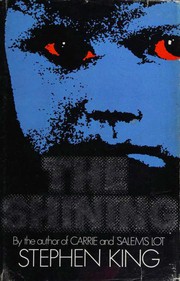
Jack Torrance, a recovering alcoholic and struggling writer, takes a job as winter caretaker of the isolated Overlook Hotel in the Colorado Rockies, bringing along his wife Wendy and young son Danny, who possesses a psychic ability known as "the shining." As winter seals the family inside, the hotel's malevolent presence begins to work on Jack's fragile psyche. The Shining is King at his most personal, drawing on his own struggles with alcoholism to create a portrait of a man losing himself to his worst impulses. The novel is terrifying not because of the ghosts, but because of what they reveal about Jack and the violence lurking beneath his surface. It has sold millions of copies and inspired Stanley Kubrick's iconic 1980 film adaptation. The Shining remains one of the most psychologically devastating horror novels ever written.
3. Frankenstein by Mary Shelley
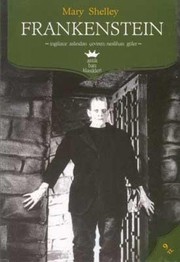
Mary Shelley's 1818 novel is the foundational text of modern horror and science fiction alike. Victor Frankenstein, a young scientist, creates a living creature from assembled body parts and then abandons it in horror. The creature, intelligent and articulate but monstrous in appearance, is rejected by everyone it encounters and turns to violence. Shelley was only eighteen when she began writing Frankenstein, and her youth makes the novel's philosophical depth all the more remarkable. It grapples with questions about the ethics of creation, the responsibilities of parenthood, and what it means to be human. Frankenstein has never gone out of print and has been adapted into countless films, plays, and television shows. It is not simply one of the best selling horror books of all time -- it is one of the most important novels in Western literature, period.
4. Dracula by Bram Stoker
Bram Stoker's 1897 epistolary novel introduced the world to Count Dracula, the Transylvanian vampire who travels to England to spread the undead curse. Told through letters, diary entries, and newspaper clippings, Dracula builds suspense through the accumulation of unsettling details and the growing realization of its characters that they are dealing with something beyond rational explanation. Stoker drew on Eastern European folklore and Victorian anxieties about sexuality, immigration, and disease to create a villain who has become the most iconic monster in popular culture. Dracula has sold millions of copies and spawned an entire industry of adaptations, sequels, and reimaginings. The novel itself remains genuinely atmospheric and unsettling, far more sophisticated than many readers expect. It is the bestseller that created the modern vampire genre.
5. The Exorcist by William Peter Blatty
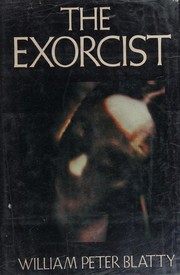
William Peter Blatty's 1971 novel about the demonic possession of twelve-year-old Regan MacNeil and the priests who attempt to save her became one of the most controversial and bestselling novels of the 20th century. Blatty based the novel on a real case of exorcism from 1949, and his meticulous research into Catholic theology and demonology gives the book an unsettling authority. The Exorcist works because Blatty takes the premise with absolute seriousness. There is no winking, no irony. The terror is spiritual as well as physical, and the novel raises genuine questions about faith, evil, and whether science can explain everything. The Exorcist has sold over 13 million copies and inspired a film that is widely considered the greatest horror movie ever made. The novel itself is a masterpiece of sustained dread.
6. The Haunting of Hill House by Shirley Jackson
Shirley Jackson's 1959 novel is widely regarded as the greatest haunted house story ever written. Four people arrive at Hill House to investigate its reputation for supernatural phenomena, and what follows is a masterclass in psychological horror. Jackson never makes it entirely clear whether the house is truly haunted or whether the events are projections of the protagonist Eleanor's troubled mind, and that ambiguity is the novel's greatest strength. The prose is elegant and precise, building unease through suggestion rather than spectacle. The Haunting of Hill House has influenced virtually every haunted house story written since, from Stephen King's The Shining to the acclaimed Netflix television adaptation. It is a critically acclaimed landmark of American literature and a must-read for anyone who believes that the scariest things are the ones you never quite see.
7. Pet Sematary by Stephen King
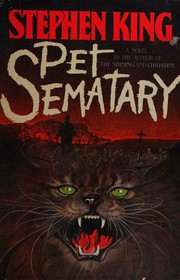
Stephen King has said that Pet Sematary is the novel that scared him the most, and it is easy to understand why. Dr. Louis Creed moves his family to rural Maine, where he discovers a burial ground in the woods behind his house that has the power to bring the dead back to life. What returns, however, is not what was buried. Pet Sematary is King's most unflinching exploration of grief, death, and the desperate human desire to undo loss. The novel builds with the terrible momentum of a tragedy, each step toward the inevitable climax feeling both horrifying and grimly logical. King wrote the novel in a burst and then put it in a drawer, convinced it was too dark to publish. It has since sold millions of copies. Pet Sematary is the rare horror novel that delivers genuine existential dread alongside its supernatural scares.
8. Mexican Gothic by Silvia Moreno-Garcia
Silvia Moreno-Garcia's 2020 novel brings gothic horror to 1950s Mexico, where socialite Noemi Taboada travels to a crumbling English-style mansion in the countryside to check on her recently married cousin. What she finds is a decaying family with dark secrets, a house that seems alive, and a horror rooted in colonialism, eugenics, and exploitation. Mexican Gothic revitalizes the gothic tradition by transplanting it to a new setting and examining it through a postcolonial lens. Moreno-Garcia writes with lush, atmospheric prose that makes the mansion and its surroundings feel oppressively real. The novel became a bestseller and a critical darling, earning a spot on numerous best-of-the-year lists. It is a page-turner that proves gothic horror is as potent as ever when paired with fresh perspectives and urgent themes.
9. The Turn of the Screw by Henry James
Henry James's 1898 novella is one of the most debated works in English literature. A young governess arrives at a remote English estate to care for two orphaned children and soon becomes convinced that the grounds are haunted by the ghosts of two former employees. But are the ghosts real, or is the governess losing her mind? James deliberately refuses to answer, creating a story that has generated over a century of scholarly argument. The Turn of the Screw is a masterpiece of ambiguity, a horror story that turns the reader into an active participant by forcing them to decide what they believe. It has influenced generations of writers and remains the benchmark for literary ghost stories. At under 100 pages, it is one of the shortest works on this list and one of the most powerful.
10. Bird Box by Josh Malerman
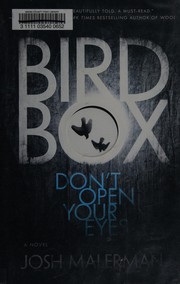
Josh Malerman's debut novel imagines a world where mysterious creatures drive anyone who sees them to violent insanity. Malorie, a mother of two, must navigate a river blindfolded while caring for her children, relying only on her hearing to survive. The narrative alternates between the desperate river journey and the events leading up to it, building tension from both directions. Bird Box is a masterclass in sustained suspense, exploiting the primal fear of not being able to see what is hunting you. Malerman never describes the creatures, and that restraint is the novel's greatest asset. The imagination fills in far worse things than any description could provide. Bird Box became a massive bestseller after its 2018 Netflix film adaptation broke streaming records. The novel is lean, propulsive, and deeply unsettling -- a must-read for fans of modern horror.
11. House of Leaves by Mark Z. Danielewski
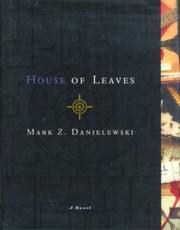
Mark Z. Danielewski's debut novel is unlike anything else in horror fiction. On the surface, it is the story of a family that discovers their house is bigger on the inside than the outside, and the dark, shifting labyrinth that exists within its walls. But House of Leaves is also a novel about the process of reading itself, told through multiple layers of narrative, footnotes, appendices, and typographical experiments that make the physical book feel as disorienting as the house it describes. Some pages contain only a few words. Others are printed upside down or in spiral patterns. The effect is genuinely uncanny. House of Leaves developed a cult following upon its publication in 2000 and has since become one of the most discussed and analyzed horror novels of the 21st century. It is an award-winning experiment in form that also happens to be deeply, profoundly frightening.
12. Interview with the Vampire by Anne Rice
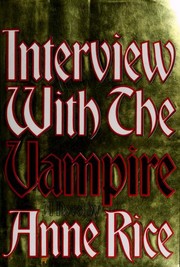
Anne Rice's 1976 novel reinvented the vampire for the modern era. Louis de Pointe du Lac narrates his life story to a journalist, recounting how he was turned into a vampire by the charismatic and cruel Lestat in 18th-century Louisiana. Rice brought a literary sensibility to vampire fiction, exploring themes of immortality, loneliness, morality, and the search for meaning in an existence defined by predation. Interview with the Vampire was a bestseller that launched The Vampire Chronicles, a series spanning thirteen novels. Rice's vampires are seductive, philosophical, and deeply conflicted, a far cry from the mindless monsters of earlier fiction. The novel has sold millions of copies and been adapted into a successful film starring Tom Cruise and Brad Pitt, as well as a critically acclaimed television series. It remains the most influential vampire novel since Dracula.
13. The Silence of the Lambs by Thomas Harris
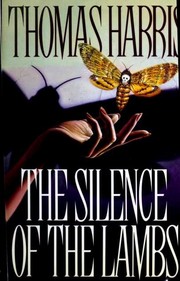
Thomas Harris's 1988 novel introduced the world to Hannibal Lecter, the brilliant, cultured psychiatrist who also happens to be a cannibalistic serial killer. FBI trainee Clarice Starling must consult Lecter to catch another serial killer, and the psychological chess match between them drives one of the most gripping narratives in thriller and horror fiction. Harris writes with clinical precision, making the horror feel disturbingly plausible. The Silence of the Lambs won the Bram Stoker Award for Best Novel and was adapted into a film that swept the Academy Awards, winning Best Picture, Best Director, Best Actor, and Best Actress. The novel has sold millions of copies and permanently changed the serial killer genre. It is a page-turner that works equally well as psychological horror, crime fiction, and literary thriller.
14. Rosemary's Baby by Ira Levin
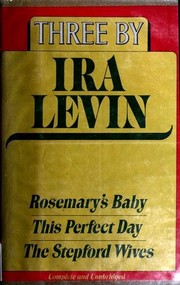
Ira Levin's 1967 novel follows Rosemary Woodhouse, a young woman who moves into a Manhattan apartment building with her ambitious husband and slowly realizes that her elderly neighbors have sinister designs on her unborn child. Rosemary's Baby is a masterpiece of paranoid horror, building dread through the accumulation of small, unsettling details that Rosemary -- and the reader -- cannot quite dismiss. Levin exploits the vulnerability of pregnancy and the gaslighting of a woman by everyone around her with devastating effectiveness. The novel was a massive bestseller and inspired Roman Polanski's equally celebrated 1968 film. Rosemary's Baby tapped into anxieties about bodily autonomy, trust, and the suppression of women's instincts that make it feel as relevant today as it did in the 1960s. It is a slim, perfectly constructed novel that proves horror does not need gore to be terrifying.
15. Something Wicked This Way Comes by Ray Bradbury
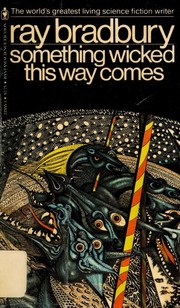
Ray Bradbury's 1962 novel is a dark fairy tale about two thirteen-year-old boys in a small Illinois town who discover that a mysterious traveling carnival is run by the sinister Mr. Dark, a man who feeds on human desires and fears. Something Wicked This Way Comes is Bradbury at his most lyrical and atmospheric, blending horror with a profound meditation on the passage of time, the loss of innocence, and the relationship between fathers and sons. The prose is rich and poetic, transforming a carnival horror story into something approaching myth. The novel has influenced countless writers and filmmakers, from Stephen King to Neil Gaiman. It is not the most frightening book on this list, but it may be the most beautiful. Something Wicked This Way Comes is a must-read for anyone who loves horror that reaches for something deeper than scares.
16. Hell House by Richard Matheson

Richard Matheson's 1971 novel follows four people who enter the Belasco House, known as the most haunted house in the world, to determine once and for all whether life after death exists. The house was the home of a depraved millionaire, and the evil that lingers within its walls begins to attack the investigators physically and psychologically. Hell House is a relentless, visceral haunted house novel that pushed the boundaries of what horror fiction could depict. Matheson, who also wrote the classic I Am Legend, was a master of pacing and tension, and Hell House builds to one of the most harrowing climaxes in the genre. The novel was adapted into the 1973 film The Legend of Hell House. It remains one of the most intense haunted house novels ever written and a must-read for anyone who thinks they have outgrown being scared by a book.
17. The Woman in Black by Susan Hill
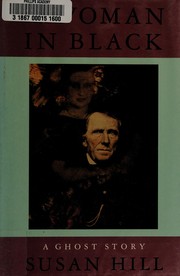
Susan Hill's 1983 novel is a classic ghost story in the English tradition. Arthur Kipps, a young solicitor, travels to a remote English coastal town to settle the estate of a recently deceased client and encounters the Woman in Black, a spectral figure whose appearances herald the deaths of children. Hill writes with elegant restraint, building atmosphere through the desolate marshland setting and Arthur's growing isolation and terror. The Woman in Black became a bestseller and was adapted into one of the longest-running plays in London's West End and a successful 2012 film starring Daniel Radcliffe. The novel proves that the traditional ghost story, when executed with skill and conviction, is still one of the most effective forms of horror fiction. It is a page-turner that can be read in a single sitting but will linger in the mind for much longer.
18. The Strain by Guillermo del Toro and Chuck Hogan

Guillermo del Toro and Chuck Hogan's 2009 novel reimagines the vampire as a parasitic biological organism, beginning when a dead plane lands at JFK Airport with all passengers killed except four survivors who carry an ancient plague. Dr. Ephraim Goodweather of the CDC investigates and discovers a centuries-old conspiracy involving a Master vampire intent on turning New York City into a feeding ground. The Strain brings a scientific and epidemiological approach to vampire fiction, treating the undead as a public health crisis rather than a supernatural mystery. Del Toro's background in visual horror gives the novel a cinematic intensity, and the trilogy it launched was adapted into a television series. The Strain is a bestseller that proves the vampire genre still has room for bold reinvention. It is gritty, fast-paced, and genuinely disturbing.
19. The Other by Thomas Tryon
Thomas Tryon's 1971 novel is a quiet, devastating psychological horror story about twin boys, Niles and Holland Perry, growing up on a Connecticut farm in the 1930s. A series of terrible accidents plague the family, and the truth about the twins' relationship is revealed in one of horror fiction's most shocking twists. Tryon, a former actor, wrote The Other as his debut novel, and it became a massive bestseller, spending months on the New York Times list. The novel's power lies in its restraint and its pastoral setting, which makes the horror feel all the more jarring. The Other is one of the great "evil child" novels, predating The Omen and influencing a generation of psychological horror. It deserves to be far better known than it is and rewards readers who appreciate slow-building dread over cheap shocks.
20. Ghost Story by Peter Straub
Peter Straub's 1979 novel follows the Chowder Society, a group of elderly men in a small New York town who gather to tell each other ghost stories. But they share a terrible secret from their youth, and when a mysterious woman arrives in town, the past returns to claim them. Ghost Story is an ambitious, literary horror novel that draws on the traditions of Henry James, Nathaniel Hawthorne, and the classic American ghost story while telling a thoroughly modern tale of guilt and retribution. Straub's prose is elegant and complex, demanding more from the reader than typical genre fiction. The novel was a bestseller and cemented Straub's reputation as one of horror's finest literary stylists. It is a critically acclaimed achievement that proves horror fiction can be as intellectually rewarding as any other form of literature.
21. The Passage by Justin Cronin

Justin Cronin's 2010 novel begins as a government experiment goes catastrophically wrong, unleashing a plague of vampire-like creatures called "virals" that devastate North America. The story then jumps forward nearly a century to a colony of survivors and a young girl who may hold the key to humanity's salvation. The Passage is epic in scope, blending horror with post-apocalyptic science fiction and literary ambition. Cronin, a literary fiction writer before turning to horror, brings a depth of characterization and prose quality unusual in genre fiction. The novel launched a trilogy and was adapted into a television series. At over 700 pages, The Passage demands commitment, but it rewards that commitment with one of the most immersive and emotionally resonant horror experiences of the 21st century. It is a bestseller that transcends genre boundaries.
22. The Ritual by Adam Nevill

Adam Nevill's 2011 novel follows four old university friends on a hiking trip through the Scandinavian wilderness. When one of them injures his knee, they decide to take a shortcut through an ancient forest, and what they find there is far worse than anything they imagined. Nevill divides the novel into two distinct halves, each delivering a different kind of horror, and the result is a relentless, deeply unsettling experience. The first half is a masterclass in wilderness horror, exploiting the primal fear of being lost and hunted in a vast, indifferent landscape. Nevill draws on Norse mythology and pagan folklore to create something genuinely original. The Ritual was adapted into a critically acclaimed Netflix film in 2017. It is a page-turner that proves folk horror is one of the genre's most potent subgenres, and Nevill is one of the best horror writers working in Britain today.
23. The Elementals by Michael McDowell
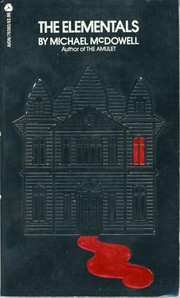
Michael McDowell's 1981 novel is set along the Gulf Coast of Alabama, where three Victorian houses stand on a stretch of beach slowly being consumed by sand dunes. Two of the houses belong to feuding branches of the same family. The third belongs to something else entirely. McDowell, who Stephen King once called "the finest writer of paperback originals in America today," crafted a Southern Gothic masterpiece that combines family drama with supernatural horror. The Elementals fell out of print for decades before being rediscovered and championed by a new generation of horror readers. It is now recognized as one of the finest haunted house novels ever written. The novel's patient, atmospheric approach to horror makes it a must-read for fans of literary horror and a perfect example of how great books sometimes need time to find their audience.
24. The Hunger by Alma Katsu

Alma Katsu's 2018 novel reimagines the doomed Donner Party expedition of 1846-1847, adding a supernatural dimension to one of American history's most horrifying true stories. As the pioneers head west, strange things begin to happen: livestock are slaughtered in the night, members of the party vanish, and an inexplicable evil seems to be following them. Katsu blends historical fiction with horror to devastating effect, and the real history of the Donner Party is already so grim that the supernatural elements feel like a natural extension rather than an intrusion. The novel received critical praise for its atmospheric writing and its respectful treatment of the real people involved. The Hunger is a critically acclaimed achievement that demonstrates how horror fiction can illuminate historical events by externalizing the terrors that were already present.
25. My Best Friend's Exorcism by Grady Hendrix

Grady Hendrix's 2016 novel is set in the late 1980s and follows Abby Rivers, whose best friend Gretchen begins acting strangely after a night in the woods. As Gretchen's behavior becomes increasingly disturbing, Abby realizes that something has taken hold of her friend, and the power of their friendship may be the only thing that can save her. Hendrix combines genuine horror with 1980s nostalgia and sharp humor, creating a novel that is both a loving tribute to the era and a surprisingly emotional story about the lengths we go to for the people we love. My Best Friend's Exorcism is a page-turner that balances scares and laughs with remarkable skill. It has become a fan favorite and was adapted into a film. For readers looking for horror that has heart alongside its frights, this is a must-read.
Best Horror Books by Sub-Category
Best Stephen King Books
No writer has dominated horror fiction the way Stephen King has for over five decades. His output is staggering in both volume and quality, and choosing his best work is a matter of intense debate among fans. It is his most ambitious novel, a 1,100-page epic that uses a shape-shifting monster as the vehicle for a profound story about childhood, memory, and the bonds that sustain us. The Shining is his most personal, drawing on his own struggles with addiction to create an unforgettable portrait of a man consumed by his demons. Pet Sematary is his darkest, an unrelenting exploration of grief and the human refusal to accept death. Beyond this list, readers should also seek out Misery, Salem's Lot, The Stand, and Carrie. King's greatest gift is his ability to create characters so real that their suffering becomes your own. That is why he has sold over 350 million books and why his influence on horror fiction is unmatched.
Best Gothic Horror
Gothic horror is the oldest tradition in horror fiction, stretching back to Horace Walpole's The Castle of Otranto in 1764. The genre is defined by its atmosphere: crumbling mansions, isolated settings, family secrets, and a sense of the past pressing down on the present. Frankenstein by Mary Shelley and Dracula by Bram Stoker are the twin pillars of gothic horror, establishing archetypes that the genre has been reworking for over a century. The Turn of the Screw by Henry James refined the form into something more psychologically complex. The Haunting of Hill House by Shirley Jackson brought gothic sensibility into the 20th century with devastating results. Mexican Gothic by Silvia Moreno-Garcia and The Elementals by Michael McDowell prove that the tradition remains vital and adaptable. Gothic horror endures because its core concerns -- the weight of history, the rot beneath beautiful surfaces, the terror of isolation -- never go out of style.
Best Modern Horror
Modern horror fiction, broadly defined as work published from the 2000s onward, has expanded the genre in exciting directions. Bird Box by Josh Malerman stripped horror down to its most primal elements, exploiting the fear of blindness with relentless efficiency. House of Leaves by Mark Z. Danielewski pushed the formal boundaries of what a novel could be. Mexican Gothic by Silvia Moreno-Garcia brought a postcolonial perspective to gothic tradition. The Passage by Justin Cronin proved that horror could sustain epic, literary ambitions across a trilogy. My Best Friend's Exorcism by Grady Hendrix demonstrated that horror and humor are natural companions. The Hunger by Alma Katsu showed how horror can illuminate real history. Modern horror is more diverse, more ambitious, and more formally inventive than at any point in the genre's history, and the books on this list represent the best of that evolution.
Best Horror Short Story Collections
Horror has always thrived in the short form, where a writer can deliver a single concentrated dose of terror. While this list focuses on novels, the genre's short fiction tradition is equally essential. Shirley Jackson's collections, particularly The Lottery and Other Stories, are foundational. Stephen King's Night Shift and Skeleton Crew contain some of his most frightening work. H.P. Lovecraft's collected stories defined cosmic horror for the 20th century. More recently, Carmen Maria Machado's Her Body and Other Parties blends horror with literary experimentation, and Mariana Enriquez's The Dangers of Smoking in Bed brings Latin American horror to English-language readers. For readers who want to explore horror beyond the novel, short story collections offer the genre at its most concentrated and potent.
Frequently Asked Questions
Why is Stephen King so dominant in horror fiction?
Stephen King's dominance comes from a rare combination of prolific output, accessible prose, and genuine literary skill. He publishes roughly a book a year and has maintained a remarkably high standard across more than sixty novels. His secret is character development: King spends more time making you care about his characters than most horror writers spend on their entire plots. When something terrible happens in a King novel, it hurts because you have come to know and love the people involved. He also has an unmatched ability to capture the rhythms of everyday American life, which makes his horror feel uncomfortably close to reality. Finally, his influence extends beyond his own work -- he has championed countless younger writers and helped legitimize horror as a serious literary genre.
What is the difference between horror and thriller?
Horror and thriller fiction share territory but differ in their primary aims. Horror seeks to evoke fear, dread, and unease, often through supernatural or inexplicable elements. Thriller seeks to create tension and suspense, typically through high-stakes plots involving crime, espionage, or survival. The Silence of the Lambs sits at the boundary: it is a thriller in its FBI procedural structure but a horror novel in its treatment of Hannibal Lecter and the visceral terror of its set pieces. Generally, if the primary emotion the author wants to evoke is fear of the unknown or the monstrous, it is horror. If the primary emotion is suspense about what will happen next in a dangerous situation, it is a thriller. Many of the best books in both genres blur this line deliberately.
Are horror books appropriate for younger readers?
This depends entirely on the specific book and the specific reader. Something Wicked This Way Comes by Ray Bradbury is often recommended for readers as young as twelve, as its horror is more atmospheric than graphic. The Woman in Black by Susan Hill and The Turn of the Screw by Henry James rely on suggestion rather than explicit content. On the other hand, novels like Pet Sematary, The Exorcist, and Hell House contain graphic violence and disturbing themes that are intended for adult readers. Parents and educators should read reviews and content guides before recommending horror to younger readers. The genre can be a powerful tool for helping young people process fear and anxiety, but the match between book and reader matters.
What makes a horror book "literary" versus "genre"?
This distinction is increasingly seen as artificial, but it persists in publishing and criticism. "Literary horror" typically refers to works that prioritize prose style, thematic depth, and psychological complexity alongside their scares. House of Leaves, The Haunting of Hill House, and Beloved (which is often classified as horror) are examples. "Genre horror" tends to prioritize plot, pacing, and visceral scares. In practice, the best horror fiction does both. Stephen King writes accessible prose that also contains genuine insight into human nature. Shirley Jackson writes elegant literary fiction that also happens to be deeply terrifying. The best approach for readers is to ignore the labels and focus on finding books that scare them and make them think. This list contains both "literary" and "genre" horror because the distinction matters far less than the quality of the work.
You might also enjoy exploring the best thriller books, the best mystery novels, or the best dystopian fiction for more reading inspiration.
Discover your next great horror read without extra screen time. speakeasy converts book reviews, author interviews, and literary articles into audio you can enjoy anywhere. Paste any URL and listen -- 3 free articles per week, no account needed.