The best selling literary fiction books represent the highest aspirations of the novel as an art form. These are the books that win major prizes, appear on university syllabi, and provoke the kind of passionate debates that last for decades. Literary fiction distinguishes itself through the quality of its prose, the complexity of its characters, and its willingness to grapple with the deepest questions of human existence. But the books on this list have done something that many literary novels do not: they have also found enormous commercial audiences. From twentieth-century classics that have sold tens of millions of copies to contemporary masterworks that dominated bestseller lists, these twenty-five novels prove that literary ambition and popular appeal are not opposing forces. They are stories that reward careful reading, repay rereading, and leave permanent marks on the readers who encounter them. This is the definitive guide to the literary fiction books that have shaped modern literature and continue to resonate across generations.
What Makes a Great Literary Fiction Book?
Literary fiction prioritizes depth over speed. The best literary novels feature prose that does more than convey information. It creates atmosphere, reveals character, and operates on multiple levels simultaneously. A great literary novel builds characters who feel irreducibly complex, who cannot be summarized in a sentence, and whose motivations resist easy categorization. The plotting in literary fiction often defies conventional structure, prioritizing thematic resonance over tidy resolution. These books demand active engagement from the reader, rewarding attention to language, symbolism, and the spaces between what characters say and what they mean. The greatest literary fiction achieves universality through specificity. By rendering a particular time, place, and consciousness with absolute fidelity, it illuminates truths that transcend its setting. The result is fiction that changes how readers see the world.
The Best Selling Literary Fiction Books of All Time
1. To Kill a Mockingbird by Harper Lee
Harper Lee's 1960 novel remains the most beloved American novel of the twentieth century. Scout Finch narrates the story of her father, Atticus, a small-town Alabama lawyer who defends Tom Robinson, a Black man falsely accused of assaulting a white woman. Lee's achievement is in the voice. Scout's childhood perspective allows the novel to approach the horror of racial injustice with a clarity that adult narration might not achieve. The book is simultaneously a coming-of-age story, a courtroom drama, and a moral reckoning with America's racial history. To Kill a Mockingbird has sold over 45 million copies, won the Pulitzer Prize, and is one of the most commonly taught novels in American schools. Its influence on how Americans think about justice, courage, and conscience is immeasurable.
2. The Great Gatsby by F. Scott Fitzgerald
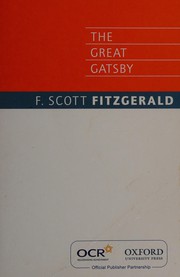
F. Scott Fitzgerald's 1925 novel is the definitive American literary novel, a compact masterpiece about wealth, desire, and the impossibility of recapturing the past. Jay Gatsby's obsessive pursuit of Daisy Buchanan across Long Island Sound is both a love story and a critique of the American Dream. Fitzgerald's prose is among the most celebrated in the English language, with the novel's final paragraphs ranking among the greatest passages in all of literature. The Great Gatsby was not a commercial success during Fitzgerald's lifetime but has since sold over 30 million copies. It is assigned in nearly every American high school and continues to generate new interpretations with each generation of readers.
3. One Hundred Years of Solitude by Gabriel Garcia Marquez
Gabriel Garcia Marquez's 1967 novel chronicles seven generations of the Buendia family in the fictional town of Macondo. The book is the foundational text of magical realism, a style in which the miraculous and the mundane coexist without contradiction. Rain that lasts for years, a plague of insomnia, a woman ascending bodily to heaven while hanging laundry -- Garcia Marquez presents these events with the same matter-of-fact authority he brings to political upheaval and family conflict. One Hundred Years of Solitude has sold over 50 million copies, been translated into 46 languages, and won its author the Nobel Prize in Literature. It fundamentally changed what the novel could do.
4. Beloved by Toni Morrison

Toni Morrison's 1987 novel is set in post-Civil War Ohio, where Sethe, a formerly enslaved woman, is haunted by the ghost of the daughter she killed rather than allow her to be returned to slavery. Beloved is not an easy read. Morrison's prose is dense, lyrical, and demands rereading. The narrative moves in circles, doubling back on itself as memory and trauma resist linear telling. The novel won the Pulitzer Prize and was a central factor in Morrison's Nobel Prize in Literature. Beloved has sold millions of copies and is widely regarded as the greatest American novel of the second half of the twentieth century. It confronts the legacy of slavery with an unflinching honesty that few works of art in any medium have matched.
5. The Catcher in the Rye by J.D. Salinger
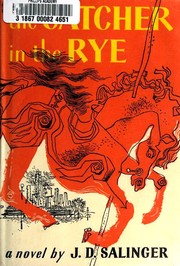
J.D. Salinger's 1951 novel gave American literature its most iconic adolescent voice. Holden Caulfield's three-day odyssey through New York City after being expelled from prep school captures the alienation, confusion, and desperate tenderness of youth with a rawness that felt revolutionary upon publication and continues to resonate. Holden's obsession with phoniness, his grief for his dead brother Allie, and his fierce protectiveness toward children (embodied in his fantasy of being the "catcher in the rye") make him one of the most psychologically complete characters in fiction. The novel has sold over 65 million copies and remains one of the most frequently banned and most frequently assigned books in American education.
6. The Road by Cormac McCarthy
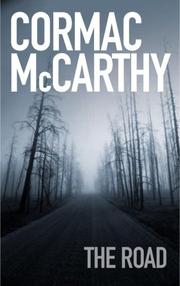
Cormac McCarthy's 2006 novel strips the English language down to its bones. A father and son walk through a post-apocalyptic landscape, pushing a shopping cart, trying to survive. McCarthy does not explain what caused the destruction. The novel's power comes from what it does not say, from the vast silences between its spare, declarative sentences. The relationship between father and son is rendered with agonizing tenderness, each act of protection carrying the weight of a dying world. The Road won the Pulitzer Prize, has sold over 4 million copies, and demonstrated that literary fiction could achieve the bleakness of horror while remaining a profound meditation on love and moral responsibility.
7. Life of Pi by Yann Martel
Yann Martel's 2001 novel follows Pi Patel, a sixteen-year-old boy stranded on a lifeboat in the Pacific Ocean with a Bengal tiger named Richard Parker. The novel operates as both a survival adventure and a philosophical inquiry into the nature of storytelling and faith. Martel's prose is vivid and precise when describing the physical realities of ocean survival, and playfully intellectual when exploring religion and narrative. The novel's ending, which forces the reader to choose between two versions of events, is one of the most discussed conclusions in contemporary literature. Life of Pi won the Man Booker Prize, has sold over 12 million copies, and was adapted into an Oscar-winning film by Ang Lee.
8. The Goldfinch by Donna Tartt
Donna Tartt's 2013 novel follows Theo Decker from childhood to adulthood as he carries the burden -- literally and figuratively -- of a stolen painting. The novel is sprawling, Dickensian in scope, and unapologetically ambitious. Tartt spent eleven years writing it, and the meticulousness shows in every sentence. The Goldfinch sparked one of the most heated critical debates in recent memory: some reviewers hailed it as a masterpiece while others dismissed it as middlebrow entertainment dressed in literary clothing. The argument itself became part of the book's legacy. The Goldfinch won the Pulitzer Prize, has sold over 5 million copies, and forced a conversation about what "literary fiction" means in the twenty-first century.
9. A Little Life by Hanya Yanagihara

Hanya Yanagihara's 2015 novel is an 800-page epic of suffering and love that follows four college friends in New York City, centering on Jude St. Francis, whose childhood trauma is revealed in increasingly devastating detail. The novel's length and emotional intensity polarize readers. Admirers call it one of the most powerful reading experiences of their lives. Detractors accuse it of being exploitative in its depiction of suffering. Yanagihara's prose is controlled and precise even at its most harrowing, and her depiction of male friendship and devotion is among the most nuanced in contemporary fiction. A Little Life was shortlisted for the Booker Prize and the National Book Award, and has sold millions of copies worldwide.
10. The Secret History by Donna Tartt
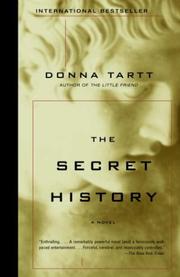
Donna Tartt's 1992 debut novel follows a group of classics students at a small Vermont college who commit a murder and then unravel under the weight of their secret. The novel inverts the mystery genre by revealing the murder at the outset and then exploring its psychological aftermath. Tartt writes about intellectual obsession, moral corruption, and the seductive danger of beauty with a confidence that belies her youth at the time of writing. The Secret History has sold millions of copies, influenced an entire generation of "dark academia" fiction and aesthetic, and established Tartt as one of the most distinctive voices in American literature.
11. Atonement by Ian McEwan
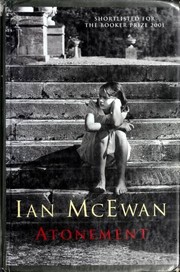
Ian McEwan's 2001 novel begins on a sweltering English summer day in 1935 when thirteen-year-old Briony Tallis misinterprets a scene between her sister Cecilia and Robbie Turner, with consequences that destroy lives. The novel is a meditation on the power and responsibility of storytelling itself. McEwan's prose in the first section is among the finest he has ever written, and the structural surprise of the novel's conclusion forces readers to reconsider everything they have read. Atonement has sold over 4 million copies, was shortlisted for the Booker Prize, and was adapted into an Oscar-nominated film. It remains one of the most structurally ambitious novels of the twenty-first century.
12. The Remains of the Day by Kazuo Ishiguro
Kazuo Ishiguro's 1989 novel follows Stevens, an English butler, as he takes a motoring trip through the countryside and reflects on his decades of service at Darlington Hall. The novel is a masterpiece of unreliable narration. Stevens's dignified, measured prose conceals an ocean of regret, lost love, and moral failure. What he does not say is as important as what he does. Ishiguro peels back the layers of English reserve to reveal the devastating human cost of emotional repression. The Remains of the Day won the Booker Prize, has sold millions of copies, and contributed to Ishiguro's Nobel Prize in Literature. It is one of the most quietly devastating novels ever written.
13. The Color Purple by Alice Walker

Alice Walker's 1982 novel is told through the letters of Celie, a poor Black woman in the rural South who endures abuse, oppression, and loss before finding her voice, her independence, and her capacity for love. Walker's use of the epistolary form and vernacular language was groundbreaking, giving Celie a voice that is unmistakably her own. The novel won both the Pulitzer Prize and the National Book Award, has sold over 6 million copies, and was adapted into a celebrated film by Steven Spielberg and a Tony-winning Broadway musical. The Color Purple is a testament to the resilience of the human spirit and the transformative power of self-expression.
14. Middlesex by Jeffrey Eugenides
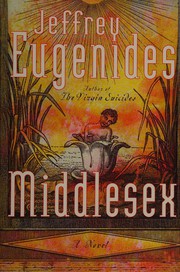
Jeffrey Eugenides's 2002 novel follows Cal Stephanides, an intersex narrator who traces three generations of a Greek-American family from a small village in Asia Minor to suburban Detroit. The novel is epic in scope, blending family saga, immigration story, and exploration of gender identity with Eugenides's characteristic wit and erudition. Cal's narration moves fluidly between first and third person, between past and present, creating a reading experience that is simultaneously intimate and panoramic. Middlesex won the Pulitzer Prize, has sold over 4 million copies, and remains one of the most inventive and compassionate novels about identity in contemporary literature.
15. The God of Small Things by Arundhati Roy
Arundhati Roy's 1997 debut novel is set in Kerala, India, and follows twins Estha and Rahel as their family is torn apart by love that crosses the boundaries of caste. Roy's prose is extraordinary: fragmented, poetic, and rhythmic, with a child's perspective that makes the ordinary seem magical and the tragic seem incomprehensible. The novel moves backward and forward in time, assembling its heartbreaking story piece by piece. The God of Small Things won the Man Booker Prize, has sold over 8 million copies, and announced Roy as one of the most distinctive prose stylists in the English language. It remains a landmark in Indian literature.
16. Never Let Me Go by Kazuo Ishiguro
Kazuo Ishiguro's 2005 novel follows Kathy, Tommy, and Ruth, students at the seemingly idyllic English boarding school Hailsham, as they slowly come to understand the terrible purpose they were created to serve. The novel is technically science fiction, but Ishiguro writes it with the quiet restraint of literary realism, making the horror of the premise more devastating for its understatement. Never Let Me Go is about mortality, love, and the human capacity to accept the unacceptable. It has sold millions of copies, been adapted into a film and a stage production, and is widely considered one of the finest novels of the twenty-first century.
17. The Brief Wondrous Life of Oscar Wao by Junot Diaz

Junot Diaz's 2007 novel follows Oscar de Leon, an overweight Dominican-American nerd in New Jersey who dreams of becoming the next J.R.R. Tolkien and finding true love. The narrative voice is explosive, mixing Dominican Spanish, English slang, and references to science fiction and comic books with footnoted digressions on Dominican history under Trujillo. Diaz creates a voice that feels entirely new in American literature. The novel won the Pulitzer Prize and the National Book Critics Circle Award, has sold millions of copies, and established Diaz as one of the most original voices of his generation. It is a novel about love, fate, and the curse of history.
18. White Teeth by Zadie Smith
Zadie Smith's 2000 debut novel follows two World War II veterans -- Englishman Archie Jones and Bangladeshi Samad Iqbal -- and their families in multicultural North London. Smith was twenty-four when the novel was published, and her ambition and energy are evident on every page. White Teeth is a sprawling, comic, and deeply intelligent exploration of race, immigration, identity, and the collision of cultures in modern Britain. The novel has sold millions of copies, launched Smith's career as one of the most important novelists of her generation, and provided a template for the multicultural British novel that followed.
19. The Kite Runner by Khaled Hosseini
Khaled Hosseini's 2003 debut novel bridges the gap between contemporary and literary fiction with its story of Amir and Hassan, two boys whose friendship is destroyed by an act of betrayal in pre-revolution Kabul. The novel's literary credentials rest on Hosseini's nuanced exploration of guilt, redemption, and the ways personal sin mirrors national tragedy. His depiction of Afghanistan across four decades is rendered with the specificity and emotional depth of the finest literary fiction. The Kite Runner has sold over 31 million copies and introduced world literature readers to Afghan storytelling traditions while telling a story that is universally human in its themes.
20. The Handmaid's Tale by Margaret Atwood
Margaret Atwood's 1985 novel imagines Gilead, a theocratic American state where women are stripped of all rights and fertile women are forced to bear children for the ruling class. Offred's narration is fragmented and unreliable, reflecting the psychological reality of living under totalitarian control. Atwood insisted on including nothing in the novel that had not already happened somewhere in history, grounding her dystopia in documented human behavior. The Handmaid's Tale has sold over 8 million copies, experienced a massive resurgence following its television adaptation and shifting political landscapes, and has become one of the most referenced novels in contemporary political discourse.
21. Americanah by Chimamanda Ngozi Adichie
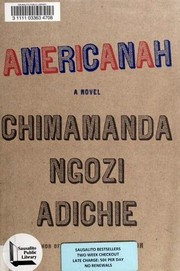
Chimamanda Ngozi Adichie's 2013 novel follows Ifemelu and Obinze, young lovers separated when Ifemelu leaves Nigeria for America and Obinze goes to London. The novel is a sweeping examination of race, immigration, love, and identity, told with Adichie's characteristic intelligence and precision. Ifemelu's blog posts about race in America are sharp, funny, and uncomfortable in their honesty. Adichie writes about the immigrant experience without sentimentality, capturing both the opportunities and the erasures that come with crossing borders. Americanah has sold millions of copies and cemented Adichie's position as one of the most important novelists working today.
22. On Earth We're Briefly Gorgeous by Ocean Vuong
Ocean Vuong's 2019 debut novel takes the form of a letter from a Vietnamese American son to his illiterate mother. The prose is luminous, drawing on Vuong's background as a poet to create sentences that operate as both narrative and lyric. The novel explores war, intergenerational trauma, addiction, sexuality, and the relationship between language and identity. Vuong writes about violence and tenderness with equal skill, creating a reading experience that is both devastating and beautiful. On Earth We're Briefly Gorgeous has sold hundreds of thousands of copies and established Vuong as a major literary voice whose work transcends genre boundaries.
23. The Overstory by Richard Powers
Richard Powers's 2018 novel follows nine characters whose lives are connected to and transformed by trees. The novel is an ecological epic that uses the apparatus of literary fiction -- deep characterization, structural ambition, prose of extraordinary beauty -- to make an argument about the interconnectedness of all living things. Powers writes about botany with the passion of a convert, and his descriptions of forests and trees are among the most extraordinary nature writing in contemporary literature. The Overstory won the Pulitzer Prize, has sold over 2 million copies, and demonstrated that the novel form can engage with ecological crisis in ways that are both intellectually rigorous and emotionally overwhelming.
24. A Gentleman in Moscow by Amor Towles
Amor Towles's 2016 novel follows Count Alexander Rostov, a Russian aristocrat sentenced by a Bolshevik tribunal to house arrest in Moscow's Metropol Hotel for the rest of his life. The novel spans three decades as Rostov creates a full and meaningful life within the confines of the hotel. Towles writes with wit, elegance, and warmth, and his depiction of Rostov is one of the most charming character portraits in contemporary fiction. A Gentleman in Moscow has sold over 5 million copies and proved that a novel set almost entirely in a single building, focused on manners, friendship, and the art of living, could captivate millions of readers in an era that tends to reward fast-paced plotting.
25. All the Light We Cannot See by Anthony Doerr
Anthony Doerr's 2014 novel alternates between Marie-Laure, a blind French girl who flees Paris with her father, and Werner, a German orphan whose talent for radio engineering draws him into the Nazi war machine. The short, precisely crafted chapters build toward the characters' convergence in the besieged city of Saint-Malo. Doerr's prose is poetic without being indulgent, his descriptions of Marie-Laure's tactile world among the most remarkable feats of empathetic imagination in contemporary fiction. All the Light We Cannot See won the Pulitzer Prize, has sold over 15 million copies, and stands as one of the finest literary novels about World War II written in the twenty-first century.
Best Literary Fiction Books by Sub-Category
Best Pulitzer Prize Winners
The Pulitzer Prize for Fiction is the most prestigious American literary award, and its winners represent the best of American literary achievement. To Kill a Mockingbird by Harper Lee remains the most widely read Pulitzer winner, its moral clarity resonating across generations. Beloved by Toni Morrison won a Pulitzer that many felt was overdue, and its unflinching examination of slavery's legacy set a new standard for American literature. The Road by Cormac McCarthy proved that spare, almost biblical prose could win the nation's highest literary honor. The Goldfinch by Donna Tartt reignited the debate about what constitutes literary merit. The Overstory by Richard Powers expanded the novel's scope to encompass the nonhuman world. Together, these winners chart the evolving ambitions of the American novel.
Best Booker Prize Winners
The Man Booker Prize (now the Booker Prize) honors the finest novel written in English each year, and its winners have shaped the global literary landscape. The Remains of the Day by Kazuo Ishiguro is a masterwork of restraint and subtlety. Life of Pi by Yann Martel turned a survival story into a philosophical inquiry. The God of Small Things by Arundhati Roy brought Indian literature to global attention with prose of astonishing originality. The Secret History and The Goldfinch by Donna Tartt, while only the latter won, both demonstrate the Booker's role in elevating ambitious literary fiction. These prize winners remind readers that literary fiction is a global tradition, enriched by voices from every continent.
Best Literary Debuts
A great literary debut announces the arrival of a voice that cannot be ignored. The Secret History by Donna Tartt set an impossibly high bar for first novels, its confidence and polish remarkable for a writer in her twenties. White Teeth by Zadie Smith captured multicultural London with the energy and ambition of a writer who had nothing to lose. The God of Small Things by Arundhati Roy won the Booker Prize with her first novel, an achievement that remains extraordinary. The Brief Wondrous Life of Oscar Wao by Junot Diaz created a narrative voice so original that it changed what American fiction sounded like. On Earth We're Briefly Gorgeous by Ocean Vuong brought a poet's precision to the novel form. These debuts share a quality of urgency, as though the stories they tell could not wait a moment longer.
Best Modern Classics
Modern classics are novels written in the last fifty years that have already earned a permanent place in the literary canon. Beloved by Toni Morrison is the American novel that future generations will read to understand the nation's deepest wound. One Hundred Years of Solitude by Gabriel Garcia Marquez redefined what the novel could do and became the central text of an entire literary movement. The Handmaid's Tale by Margaret Atwood has proven its relevance across changing political climates, a feat few novels achieve. Never Let Me Go by Kazuo Ishiguro uses genre conventions to explore the most fundamental questions of human existence. Atonement by Ian McEwan is a novel about the power and danger of fiction itself, a fitting modern classic for an age obsessed with narrative.
Frequently Asked Questions
What is the difference between literary fiction and genre fiction?
Literary fiction prioritizes prose quality, thematic complexity, and character depth over plot mechanics. Genre fiction -- including mystery, romance, science fiction, and thriller -- follows established conventions and reader expectations. The distinction is not about quality. Exceptional genre fiction can be beautifully written, and literary fiction can be poorly plotted. The difference lies in primary intent: literary fiction aims to explore the human condition through language, while genre fiction aims to deliver a specific type of reading experience. Many of the best contemporary novels blur this boundary entirely, drawing on genre conventions while maintaining literary ambition.
Do I need to read literary fiction in order to appreciate it?
Literary fiction rewards patience and attention, but it does not require specialized knowledge. The best literary novels are accessible to any engaged reader. Start with novels that combine strong narratives with literary prose, such as The Secret History, Life of Pi, or A Gentleman in Moscow. These books draw you in with compelling stories while delivering the depth and complexity that define the genre. As you read more literary fiction, you develop an ear for prose and an eye for thematic structure, but the starting point is simply a willingness to slow down and pay attention.
Which literary fiction books have won the most awards?
Beloved by Toni Morrison has arguably accumulated the most critical recognition, including the Pulitzer Prize and its central role in Morrison's Nobel Prize in Literature. One Hundred Years of Solitude anchored Garcia Marquez's Nobel Prize. The Remains of the Day won the Booker Prize for Ishiguro, who later won the Nobel. Among more recent novels, All the Light We Cannot See by Anthony Doerr won the Pulitzer and the Andrew Carnegie Medal. The Brief Wondrous Life of Oscar Wao won both the Pulitzer and the National Book Critics Circle Award. These novels represent the highest level of achievement in literary fiction.
How do I choose between so many acclaimed literary novels?
Start with what interests you thematically rather than what feels obligatory. If you care about history, begin with All the Light We Cannot See or A Gentleman in Moscow. If you are drawn to psychological intensity, try The Secret History or A Little Life. If you want to explore identity and immigration, Americanah and The Brief Wondrous Life of Oscar Wao are excellent entry points. If prose style matters most to you, One Hundred Years of Solitude and On Earth We're Briefly Gorgeous showcase language at its most extraordinary. The "best" literary novel is the one that speaks to where you are right now as a reader.
Discover your next great literary fiction read without extra screen time. speakeasy converts book reviews, author interviews, and literary articles into audio you can enjoy anywhere. Paste any URL and listen -- 3 free articles per week, no account needed.
Related reading: Best Contemporary Fiction Books | Best Historical Fiction Books | Best Poetry Books