The best selling poetry books prove that poetry never died -- it just changed addresses. For decades, publishers and critics declared poetry a dying art, read only by academics and written only for other poets. Then Rupi Kaur posted poems on Instagram, Amanda Gorman read at a presidential inauguration, and millions of readers discovered that verse could speak directly to their lives without requiring a graduate degree to understand. But the story of popular poetry did not start with social media. Walt Whitman self-published Leaves of Grass in 1855 and sold copies door to door. Shel Silverstein's Where the Sidewalk Ends has been a children's bestseller since 1974. Rumi, a 13th-century Persian mystic, outsells most living American poets. The books on this list span centuries, continents, and styles, but they share one quality: they found massive audiences by making readers feel something real. Whether you prefer classical sonnets or contemporary free verse, this list covers the essential poetry collections that shaped and continue to shape the literary landscape.
This list is part of our broader guide to Browse all genres →.
What Makes a Great Poetry Book?
A great poetry book does not simply collect good individual poems -- it creates an experience that builds across pages, with poems that resonate off each other and accumulate emotional weight. The best collections have a sense of arc, whether through chronological narrative, thematic progression, or tonal variation that takes the reader on a journey. Voice matters enormously. The poets who sell millions of copies are the ones whose voices are so distinctive that you could identify them from a single stanza. Technical skill matters too, even in free verse -- line breaks, rhythm, imagery, and word choice all contribute to the compression that makes poetry different from prose. But above all, a great poetry book connects. It makes readers feel recognized, articulated, or shaken in ways they did not expect. The collections that endure are the ones that feel both timeless and urgently present.
The Best Selling Poetry Books of All Time
1. Milk and Honey by Rupi Kaur
Rupi Kaur's 2014 debut changed the economics of contemporary poetry. Self-published initially and then picked up by Andrews McMeel, Milk and Honey has sold over 10 million copies worldwide and spent years on the New York Times bestseller list. The book is divided into four chapters -- the hurting, the loving, the breaking, the healing -- and addresses sexual violence, immigration, femininity, love, and loss through short, unadorned free verse accompanied by Kaur's simple line drawings. Critics have debated whether Kaur's minimalist style constitutes "real" poetry, but the argument misses the point. Milk and Honey brought millions of new readers to poetry by meeting them where they were: on Instagram, on their phones, in language that felt immediate rather than academic. Its influence on publishing, social media, and a generation of young poets is undeniable.
2. The Sun and Her Flowers by Rupi Kaur

Kaur's follow-up, published in 2017, expanded her thematic range while maintaining the accessible style that defined Milk and Honey. Organized into five sections -- wilting, falling, rooting, rising, blooming -- the collection explores generational trauma, displacement, self-love, and growth through the metaphor of a flower's life cycle. Kaur draws more explicitly on her Punjabi heritage, addressing the immigrant experience and the pain of cultural dislocation alongside the personal themes of love and heartbreak. The Sun and Her Flowers sold over a million copies in its first three months and demonstrated that Kaur's debut was not a fluke but the beginning of a sustained career. The book also cemented the visual poetry format -- short poems with illustrations -- as a viable commercial model for publishers.
3. Where the Sidewalk Ends by Shel Silverstein
Shel Silverstein published Where the Sidewalk Ends in 1974, and it has never gone out of print. The collection of poems and drawings for children features pieces like "Sick," "Invitation," and "The Giving Tree" poet's trademark blend of humor, imagination, and gentle subversion. Silverstein's poems are funny, strange, and slightly dark -- a reflection of his background as a cartoonist for Playboy and a songwriter for Johnny Cash. Children love the wordplay and absurdist scenarios. Adults recognize the deeper currents of loneliness, nonconformity, and the desire to see the world differently. The book has sold tens of millions of copies and remains the bestselling children's poetry collection in American history. Its enduring popularity demonstrates that the best children's poetry does not talk down to its audience but invites them into a world where language is play.
4. Leaves of Grass by Walt Whitman
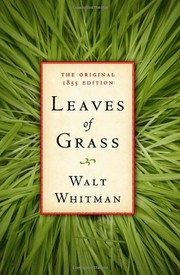
Walt Whitman first published Leaves of Grass in 1855 as a slim volume of twelve untitled poems. He spent the rest of his life revising and expanding it through nine editions, ultimately producing a 400-poem collection that redefined American literature. Whitman's long, rolling free verse lines celebrated democracy, the body, nature, sexuality, and the spiritual unity of all things. "Song of Myself," the collection's centerpiece, remains one of the most ambitious and influential poems in the English language. Ralph Waldo Emerson recognized its genius immediately, writing to Whitman: "I greet you at the beginning of a great career." Whitman's openness about the body and sexuality scandalized his contemporaries but liberated future generations of poets. Leaves of Grass is the foundation on which modern American poetry was built.
5. The Collected Poems of Emily Dickinson
Emily Dickinson wrote nearly 1,800 poems during her lifetime, but fewer than a dozen were published before her death in 1886. Her sister Lavinia discovered the manuscripts and arranged for their publication, beginning a process of editing and compilation that continued for over a century. Dickinson's poems are compressed, enigmatic, and formally innovative -- she used dashes instead of conventional punctuation, slant rhyme instead of perfect rhyme, and condensed imagery that packs enormous meaning into four-line stanzas. Her subjects -- death, immortality, nature, love, madness, faith -- are explored with an intensity that remains startling. The collected poems have sold millions of copies in various editions and established Dickinson as one of the two foundational figures (alongside Whitman) of American poetry. Her influence on modern and contemporary poetry is immeasurable.
6. Ariel by Sylvia Plath
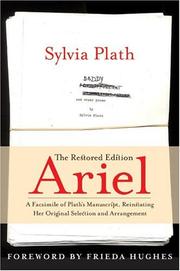
Published in 1965, two years after Sylvia Plath's death by suicide at age 30, Ariel contains some of the most electrifying poems written in the English language. Poems like "Lady Lazarus," "Daddy," and "Ariel" channel rage, grief, and ecstatic energy through imagery that is simultaneously personal and mythic. Plath wrote most of these poems in a furious burst of creativity during October 1962, producing one or two poems a day while living alone with her two young children after her separation from Ted Hughes. The collection transformed American poetry by demonstrating that extreme personal experience could be forged into art of the highest order. Ariel established Plath as a central figure of the confessional poetry movement and has never been out of print.
7. The Waste Land and Other Poems by T.S. Eliot
T.S. Eliot published The Waste Land in 1922, and the poem's fragmented, allusive style became the defining voice of literary modernism. At 434 lines, it weaves together references to Dante, Shakespeare, the Bible, Hindu scripture, music hall songs, and overheard conversations to create a portrait of post-World War I civilization in spiritual collapse. The poem famously opens with "April is the cruellest month" and moves through five sections that shift between voices, languages, and time periods. Ezra Pound's editing reduced the manuscript significantly, and Eliot dedicated the published version to Pound as "il miglior fabbro" (the better craftsman). Collections that include The Waste Land alongside Eliot's other major poems -- "The Love Song of J. Alfred Prufrock," "The Hollow Men," "Ash Wednesday" -- have sold millions of copies and remain staples of university literature courses worldwide.
8. Devotions by Mary Oliver
Mary Oliver published Devotions in 2017 as a career-spanning selection of her best work, chosen and arranged by Oliver herself. The collection includes beloved poems like "The Summer Day" (ending with the famous question "Tell me, what is it you plan to do / with your one wild and precious life?"), "Wild Geese," and "The Journey." Oliver's poetry is rooted in the natural world -- she wrote about ponds, birds, flowers, trees, and the act of walking through landscapes with attentive eyes. Her language is clear, her imagery precise, and her spiritual sensibility grounded in direct experience rather than doctrine. Oliver won both the Pulitzer Prize and the National Book Award during her career. Devotions became a number one New York Times bestseller and introduced her work to a new generation of readers who discovered her through social media.
9. The Hill We Climb by Amanda Gorman

Amanda Gorman was 22 years old when she read "The Hill We Climb" at President Joe Biden's inauguration on January 20, 2021, becoming the youngest inaugural poet in American history. The poem, written in the aftermath of the January 6 Capitol attack, addresses a nation grappling with division, injustice, and the possibility of renewal. Gorman's performance -- confident, rhythmic, and precisely articulated -- went viral, and the book version (which includes the full poem alongside a foreword by Oprah Winfrey) became the fastest-selling poem in American publishing history. Over a million copies sold in its first week. Gorman's work draws from the traditions of Maya Angelou, Langston Hughes, and the spoken word movement, blending formal craft with performance energy. The poem's success demonstrated that poetry can still function as public speech capable of unifying millions.
10. Home Body by Rupi Kaur
Kaur's third collection, published in 2020, arrived during the global pandemic and addressed themes of community, identity, self-acceptance, and the relationship between the personal and political. Home Body is more introspective than its predecessors, reflecting Kaur's growth as a writer grappling with the weight of expectation that came with her massive success. The collection maintains her signature short-form free verse and hand-drawn illustrations but ventures into longer poems and more complex emotional territory. It debuted at number one on the New York Times bestseller list and sold over a million copies in its first months. Whether Kaur's body of work represents a revolution in poetry or a dilution of the form remains a matter of active debate, but her commercial impact is beyond question.
11. Pillow Thoughts by Courtney Peppernell

Courtney Peppernell's 2017 collection established her as one of the leading voices in the Instagram poetry movement alongside Rupi Kaur. Pillow Thoughts is organized around the idea of late-night reflections -- the thoughts that surface when you are lying in bed, unable to sleep, processing the events and emotions of the day. The poems address heartbreak, self-worth, anxiety, and the search for connection in language that is conversational and emotionally direct. Peppernell's approach strips away poetic ornamentation to focus on clarity of feeling, a style that resonates with readers who find traditional poetry intimidating. The book became a bestseller and spawned multiple sequels. Peppernell has spoken openly about writing as a form of therapy, and her readers often describe the same experience.
12. The Princess Saves Herself in This One by Amanda Lovelace

Amanda Lovelace's debut collection, published in 2017, won the Goodreads Choice Award for Best Poetry. The book is structured as a fairy tale in four acts -- the princess, the damsel, the queen, and you -- and uses the framework of fairy tale archetypes to explore abuse, loss, feminism, and self-empowerment. Lovelace writes in a style influenced by Kaur's minimalist approach but with a more narrative structure, creating a sense of progression from victimhood to agency. The collection resonated with readers who saw their own experiences of trauma and recovery reflected in its pages. Lovelace's success helped establish the young adult poetry market as a viable commercial category and demonstrated that poetry could function as both personal expression and collective empowerment for a generation raised on social media.
13. Love Poems by Pablo Neruda

Pablo Neruda's love poetry has been translated into dozens of languages and has sold millions of copies since the Chilean Nobel laureate published his first collection, Twenty Love Poems and a Song of Despair, in 1924 at age 19. Various compilations of his love poems circulate under different titles, but they draw from the same body of work -- sensual, earthy verse that celebrates desire, longing, and the beloved with an intensity that borders on the devotional. Neruda writes about love as a force of nature, using imagery drawn from the Chilean landscape: waves, forests, rivers, and sky. His poetry has become standard reading at weddings worldwide, and lines like "I want to do with you what spring does with the cherry trees" have entered the common language of romance. Neruda remains the most widely read love poet of the twentieth century.
14. Selected Poems by Rumi (translated by Coleman Barks)
Jalal ad-Din Muhammad Rumi, a 13th-century Persian Sufi mystic, has become the bestselling poet in America largely through the translations of Coleman Barks, who began rendering Rumi's work into contemporary English in the 1990s. Barks's translations -- collected in volumes like The Essential Rumi, The Book of Love, and A Year with Rumi -- strip away the formal structures of the original Persian and present Rumi's mystical imagery in free verse that feels startlingly modern. Rumi's poetry explores divine love, spiritual ecstasy, the dissolution of the ego, and the longing for union with the beloved (understood as both human and divine). His work has been embraced by yoga practitioners, spiritual seekers, and readers with no interest in Sufism or Islam, which has drawn criticism from scholars who argue that Barks's translations decontextualize the poetry from its Islamic roots. Regardless, these collections have introduced millions of readers to one of the greatest poets in human history.
15. Citizen: An American Lyric by Claudia Rankine

Claudia Rankine's 2014 collection defies easy categorization. Citizen blends poetry, essay, image, and cultural criticism to examine the daily experience of racism in America through a series of "micro-aggressions" rendered in the second person -- "you" -- that implicate both the subject and the reader. Rankine draws from incidents involving Serena Williams, Hurricane Katrina, Trayvon Martin, and unnamed encounters in grocery stores, classrooms, and tennis courts to build a cumulative portrait of what it means to exist as a Black person in a society structured by whiteness. The book won the National Book Critics Circle Award for Poetry (the first book to be nominated in both the poetry and criticism categories) and became a New York Times bestseller. Citizen demonstrated that poetry could function as urgent social commentary while pushing the boundaries of what a poem can be.
16. The Complete Poems of Maya Angelou
Maya Angelou's poetry -- collected in volumes like Just Give Me a Cool Drink of Water 'fore I Diiie, And Still I Rise, and The Complete Collected Poems -- has sold millions of copies and made her one of the most recognized poets in the world. Her work addresses race, womanhood, resilience, love, and the African American experience with a directness and musicality rooted in the Black oral tradition. The poem "Still I Rise" has become an anthem of perseverance, and "Phenomenal Woman" celebrates Black female identity with infectious confidence. Angelou's poetry is meant to be heard -- her reading voice, deep and rhythmic and unhurried, is inseparable from the poems themselves. She read "On the Pulse of Morning" at Bill Clinton's 1993 inauguration, establishing the modern tradition of inaugural poetry that Amanda Gorman later continued.
17. A Light in the Attic by Shel Silverstein
Silverstein followed Where the Sidewalk Ends with A Light in the Attic in 1981, and it spent 182 weeks on the New York Times bestseller list. The collection continues his signature blend of funny, strange, and slightly unsettling poems for children, featuring pieces like "Whatif" (a catalog of nighttime anxieties), "The Little Boy and the Old Man" (a gentle meditation on aging), and "Messy Room." Silverstein's genius lies in his ability to capture the way children actually think -- not sentimentalized or simplified, but curious, contradictory, and occasionally dark. His illustrations are as integral to the poems as the words, creating a visual-verbal unity that anticipates the Instagram poetry movement by decades. The book has never gone out of print and continues to sell hundreds of thousands of copies annually.
18. The Collected Poems of Langston Hughes
Langston Hughes was the poet laureate of the Harlem Renaissance, and his work spans four decades of American history from the 1920s through the 1960s. His collected poems, published posthumously in 1994 and edited by Arnold Rampersad, bring together over 800 poems that chronicle the African American experience with jazz rhythms, blues cadences, and vernacular speech. Hughes wrote about Harlem, poverty, dreams deferred, and the contradictions of American democracy with a deceptive simplicity that made his work accessible to audiences far beyond the literary establishment. Poems like "The Negro Speaks of Rivers," "Harlem" ("What happens to a dream deferred?"), and "I, Too" remain cornerstones of American literature. His influence extends through generations of Black poets, spoken word artists, and hip-hop lyricists.
19. The Poetry of Robert Frost
Robert Frost's collected works have sold millions of copies and established him as the most commercially successful American poet of the twentieth century. Frost's poetry uses the landscapes, seasons, and rural characters of New England to explore profound questions about choice, mortality, isolation, and the relationship between humans and nature. "The Road Not Taken," "Stopping by Woods on a Snowy Evening," "Fire and Ice," and "Mending Wall" are among the most quoted poems in the English language. Frost's achievement was making poetry that sounds simple while operating on multiple levels of meaning and irony. His conversational tone and accessible imagery made him popular with general readers, while his formal precision and philosophical depth earned him four Pulitzer Prizes. He remains the rare poet who is both critically acclaimed and genuinely beloved by a mass audience.
20. Felicity by Mary Oliver
Published in 2015, Felicity is Mary Oliver's collection devoted entirely to love and happiness. While much of her earlier work explored grief, loss, and the natural world with a contemplative gravity, Felicity turns toward joy, gratitude, and the experience of loving and being loved. The poems are short, luminous, and deeply personal, capturing moments of domestic intimacy alongside observations of the natural world that feel charged with spiritual significance. Oliver's late-career work, including Felicity and Devotions, found an enormous audience partly through social media sharing, where individual poems circulated widely on platforms like Instagram and Tumblr. The collection demonstrates that happiness is as legitimate a subject for serious poetry as suffering, and that writing about joy requires as much skill and honesty as writing about pain.
21. Howl and Other Poems by Allen Ginsberg

Allen Ginsberg read "Howl" at the Six Gallery in San Francisco on October 7, 1955, and American poetry split into before and after. The poem, a long, ecstatic, furious catalogue of the lives destroyed by what Ginsberg called "Moloch" -- his name for the dehumanizing forces of American capitalism, conformity, and militarism -- was published by City Lights Books in 1956 and immediately seized by U.S. Customs agents on obscenity charges. The resulting trial, which City Lights won, established a legal precedent for the publication of controversial literature. "Howl" draws its power from Whitman's long-line tradition, jazz improvisation, and raw confessional honesty about drugs, sexuality, and madness. The collection has sold millions of copies and remains the founding document of the Beat Generation and a permanent fixture in the American literary canon.
22. The Sun Also Rises in Poetry: New and Selected Poems by Ocean Vuong
Ocean Vuong's poetry, collected primarily in Night Sky with Exit Wounds (2016) and Time Is a Mother (2022), has established him as one of the most celebrated poets of his generation. Vuong, who was born in Vietnam and raised in Hartford, Connecticut, writes about war, displacement, queerness, family, and the immigrant experience in language that is lyrical, precise, and devastatingly beautiful. Night Sky with Exit Wounds won the T.S. Eliot Prize and the Whiting Award, while Time Is a Mother, written in the aftermath of his mother's death, became a New York Times bestseller. Vuong's ability to move between English and Vietnamese, between the American present and the Vietnamese past, creates a poetry of dislocation and belonging that speaks to the contemporary experience of living between worlds.
23. Caste: Poetry of the Marginalized -- Teaching My Mother How to Give Birth by Warsan Shire
Warsan Shire, a Somali-British poet born in Kenya and raised in London, gained worldwide attention when Beyonce used her poetry as the narrative framework for the visual album Lemonade in 2016. Shire's chapbook Teaching My Mother How to Give Birth (2011) and her full collection Bless the Daughter Raised by a Voice in Her Head (2022) explore the refugee experience, womanhood, family, and displacement with a visceral intensity that has made her one of the most quoted poets on social media. Her famous lines -- "No one leaves home unless home is the mouth of a shark" and "At the end of the day, no one can walk your journey but you" -- circulate independently of their source, a testament to their emotional power. Shire was appointed the Young People's Poet Laureate of London in 2014.
24. The Carrying by Ada Limon

Ada Limon, who became the 24th Poet Laureate of the United States in 2022, published The Carrying in 2018 to widespread acclaim. The collection grapples with infertility, miscarriage, the desire for motherhood, and the relationship between the human body and the natural world. Limon writes in a conversational free verse that moves fluidly between humor, grief, and wonder, often within a single poem. Her ability to locate the extraordinary within the ordinary -- a horse in a field, a walk around the neighborhood, the act of trying and failing to conceive -- gives her work an accessibility that has drawn readers far beyond the usual poetry audience. The Carrying won the National Book Critics Circle Award and cemented Limon's reputation as a poet who makes the personal universal without sentimentality.
25. Salt by Nayyirah Waheed
Nayyirah Waheed self-published Salt in 2013 and built a massive following almost entirely through Instagram and word of mouth. The collection addresses race, womanhood, love, identity, and belonging in poems that are often only a few lines long -- some no more than a single sentence. Waheed's extreme minimalism divides readers and critics. Supporters praise her ability to compress enormous emotional weight into the smallest possible space. Detractors argue that the poems are too brief to constitute serious verse. What is beyond debate is her influence. Waheed demonstrated that a poet could bypass traditional publishing entirely, build an audience through social media, and sell hundreds of thousands of copies without reviews, book tours, or institutional support. Salt is a landmark of the self-published poetry movement and a document of how the internet changed who gets to be a poet.
Best Poetry Books by Sub-Category
Best Classic Poetry
For readers who want to engage with the foundational works of English-language poetry, these collections represent the essential starting points. Leaves of Grass by Walt Whitman invented modern American poetry with its long-lined free verse celebrations of democracy and the self. The Collected Poems of Emily Dickinson offer the compressed, enigmatic counterpoint -- poems that pack entire philosophical arguments into four-line stanzas. Ariel by Sylvia Plath channels extreme personal experience into formally brilliant verse. The Waste Land and Other Poems by T.S. Eliot defines literary modernism. Howl and Other Poems by Allen Ginsberg broke American poetry open in the 1950s. Together, these five collections trace the evolution of English-language poetry from Whitman through the Beats, establishing the tradition that contemporary poets continue to build on and react against.
Best Modern and Instagram Poetry
The rise of social media transformed poetry from a niche literary form into a mainstream cultural force. Milk and Honey by Rupi Kaur is the book that launched the Instagram poetry movement, proving that short, accessible verse could sell millions of copies. Pillow Thoughts by Courtney Peppernell and The Princess Saves Herself in This One by Amanda Lovelace expanded the audience further. Salt by Nayyirah Waheed demonstrated that self-publishing could be a viable path for poets. The Hill We Climb by Amanda Gorman brought poetry back into the political mainstream. These books share an emphasis on accessibility, emotional directness, and visual presentation that makes them ideal for readers who are new to poetry or who find traditional verse intimidating. They have also sparked important conversations about what poetry is and who gets to define it.
Best Love Poetry
Love has been the dominant subject of poetry for centuries, and the best love poetry collections offer entry points for every reader. Love Poems by Pablo Neruda remains the gold standard for romantic verse -- earthy, sensual, and unapologetically passionate. Selected Poems by Rumi (translated by Coleman Barks) explore love as both human desire and spiritual longing. Felicity by Mary Oliver celebrates the quiet joy of domestic love and gratitude. Devotions by Oliver also contains essential love poems, though her love is directed as much toward the natural world as toward other people. For a modern perspective, Night Sky with Exit Wounds by Ocean Vuong weaves love, grief, and displacement into poetry that feels both ancient and urgently contemporary. These collections prove that the love poem is an inexhaustible form, capable of renewal in every generation.
Best Poetry for Beginners
Starting with poetry can feel daunting if your only experience was being forced to analyze sonnets in high school. The best entry points are books that prioritize emotional connection over technical complexity. Where the Sidewalk Ends by Shel Silverstein is where many readers first fell in love with language -- returning to it as an adult reveals depths that the child missed. Devotions by Mary Oliver offers clear, imagistic nature poetry that requires no specialized knowledge. Milk and Honey by Rupi Kaur is polarizing among critics but undeniably accessible, and its success has brought millions of readers into the poetry world. The Hill We Climb by Amanda Gorman shows poetry functioning as public speech. For a slightly more challenging but immensely rewarding starting point, The Carrying by Ada Limon writes about everyday life with a conversational directness that makes even skeptical readers see what poetry can do.
Related reading: Best selling literary fiction books | Best selling spirituality books | Best selling non-fiction books
Frequently Asked Questions
Is poetry still relevant in the age of social media?
Poetry is arguably more relevant now than at any point in the past fifty years. Social media did not kill poetry -- it revived it. Instagram, TikTok, and Twitter created platforms where short-form text thrives, and poetry is the original short-form text. Rupi Kaur has sold over 10 million books. Amanda Gorman's inauguration poem was watched by 33 million viewers. Poetry accounts on Instagram have millions of followers. The gatekeeping structures that once limited poetry to academic journals and small press chapbooks have been bypassed entirely, allowing poets to find audiences directly. Whether this popularization has come at the cost of craft and depth is a legitimate debate, but the claim that poetry is irrelevant contradicts every available sales figure.
Do I need to understand poetry to enjoy it?
No. The idea that poetry requires special training to appreciate is one of the most damaging myths in literary culture. The best poetry works on an emotional level before it works on an intellectual level. You do not need to identify the meter, locate the metaphors, or understand every allusion to have a poem move you. Start with poets whose language is clear and whose subjects are recognizable -- Mary Oliver writing about a summer day, Langston Hughes writing about a dream, Rupi Kaur writing about heartbreak. Let the poems do their work without analyzing them. As you read more, your ear for rhythm, imagery, and structure will develop naturally. Poetry was an oral art form long before it was an academic subject, and listening to it (whether through audio recordings or reading aloud) is often the fastest way to understand what it is doing.
What is the difference between poetry and prose?
The simplest distinction is that poetry uses line breaks -- the poet decides where each line ends, and that decision affects meaning, rhythm, and emphasis. Prose fills the page from margin to margin. But the boundary is more porous than it appears. Prose poetry uses the compression and imagery of verse without line breaks. Claudia Rankine's Citizen blends poetry, essay, and image in ways that resist categorization. Song lyrics are poetry set to music. The more useful distinction is one of density: poetry compresses language so that every word, every pause, every sound carries maximum weight. A poem says in twenty words what an essay says in two thousand. This compression is what makes poetry feel intense and sometimes difficult -- but it is also what makes it rewarding. When a poem lands, it lands with a force that prose rarely achieves.
How do I choose between classic and modern poetry?
You do not have to choose. The best approach is to read both and discover what resonates with your temperament and interests. If you are drawn to formal structure, musical language, and historical perspective, start with the classics: Whitman, Dickinson, Frost, Eliot. If you want poetry that speaks directly to contemporary experience in conversational language, start with modern poets: Oliver, Kaur, Gorman, Vuong. Many readers find that starting with accessible modern poetry builds confidence and curiosity that leads them back to the classics. Others discover that the density and music of classical verse spoils them for anything else. There is no hierarchy. A Rumi poem from the 13th century and a Rupi Kaur poem from 2014 are both trying to make you feel something true. The question is which ones succeed for you.
Discover your next great poetry read without extra screen time. speakeasy converts book reviews, author interviews, and literary articles into audio you can enjoy anywhere. Paste any URL and listen -- 3 free articles per week, no account needed.