The best selling psychology books have shaped how millions of people understand their own minds, relationships, and behavior. Psychology as a discipline has moved far beyond the therapy couch. Today, the most popular psychology books draw on rigorous research in cognitive science, behavioral economics, social psychology, and neuroscience to explain why we think, feel, and act the way we do. Whether you want to understand what drives decision-making, how trauma lives in the body, or why some people thrive under pressure while others crumble, these books offer answers grounded in evidence rather than speculation. The titles on this list have collectively sold hundreds of millions of copies and continue to influence how we think about the human mind. From academic classics to accessible page-turners, these are the psychology books that have earned their place in the cultural conversation.
What Makes a Great Psychology Book?
The best psychology books share a few qualities that separate them from the thousands of self-improvement titles published each year. First, they are grounded in real research. Great psychology writing translates complex studies and data into narratives that general readers can follow without sacrificing accuracy. Second, they challenge assumptions. The most impactful books in this genre reveal that common sense is often wrong, that our intuitions mislead us, and that the mind operates according to rules we rarely notice. Third, they offer practical value. Understanding how memory works, why habits form, or what makes relationships succeed gives readers tools they can apply in their daily lives. Finally, the best psychology books tell great stories. Human behavior is inherently fascinating, and the strongest authors in this space use case studies, experiments, and personal narratives to make the science come alive. A truly great psychology book changes how you see yourself and the people around you.
The Best Selling Psychology Books of All Time
1. Thinking, Fast and Slow by Daniel Kahneman

Daniel Kahneman's masterwork distills decades of Nobel Prize-winning research into a framework anyone can understand. The book introduces two systems of thought: System 1, which operates automatically and quickly, and System 2, which allocates attention to effortful mental activities. Kahneman demonstrates through vivid experiments how cognitive biases like anchoring, the availability heuristic, and loss aversion shape our judgments in ways we rarely recognize. What makes this book endure is its relentless honesty. Kahneman does not exempt himself from the biases he describes. He shows that even experts fall prey to predictable errors in reasoning. For anyone who wants to make better decisions, understand risk, or simply grasp why smart people do irrational things, this is the essential starting point.
2. The Body Keeps the Score by Bessel van der Kolk
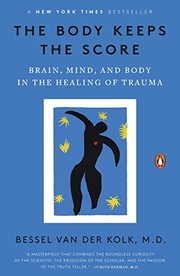
Bessel van der Kolk spent over thirty years treating trauma survivors, and this book represents his life's work. The central argument is powerful and now widely accepted: trauma is not just a psychological event but a physiological one. The body literally stores traumatic experiences, reshaping the brain and nervous system in ways that talk therapy alone cannot always address. Van der Kolk draws on neuroscience, attachment theory, and clinical experience to explain why traditional approaches to trauma often fall short. He also explores alternative treatments including EMDR, yoga, neurofeedback, and theater, presenting evidence for each. The book became a cultural phenomenon because it gave language to experiences that millions of people recognized but could not articulate. It remains one of the most important psychology books of the twenty-first century.
3. Influence: The Psychology of Persuasion by Robert Cialdini
Robert Cialdini identified six principles of persuasion that have become foundational in marketing, sales, and social psychology: reciprocity, commitment and consistency, social proof, authority, liking, and scarcity. What sets this book apart from other persuasion guides is its research base. Cialdini spent years going undercover in car dealerships, telemarketing firms, and fundraising organizations to observe these principles in action. Each chapter presents experimental evidence alongside real-world examples that make the concepts memorable and immediately applicable. The book serves a dual purpose: it teaches you how influence works so you can use it ethically, and it arms you against manipulation by helping you recognize when these principles are being used on you. Decades after publication, it remains the definitive text on persuasion.
4. Emotional Intelligence by Daniel Goleman
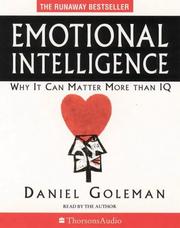
Daniel Goleman popularized the concept that IQ is not the sole predictor of success in life. Emotional intelligence, the ability to recognize, understand, and manage emotions in yourself and others, matters as much or more than raw cognitive ability. Goleman draws on neuroscience and psychological research to explain how emotional awareness develops, why some people with modest IQs outperform their brilliant peers, and how emotional skills can be strengthened at any age. The book had an enormous impact on education and corporate training, spawning entire curricula built around developing emotional competence. While some academics have debated the precise definition and measurement of emotional intelligence, Goleman's core insight remains powerful: how you handle your emotions determines the quality of your relationships, your career trajectory, and your overall well-being.
5. Man's Search for Meaning by Viktor Frankl
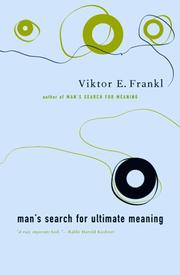
Viktor Frankl's account of surviving Nazi concentration camps and the psychological framework he developed from that experience has sold over sixteen million copies worldwide. The book is divided into two parts. The first is a memoir of Frankl's time in Auschwitz and Dachau, described with the clinical eye of a psychiatrist even as he endured unimaginable suffering. The second introduces logotherapy, his therapeutic approach based on the idea that the primary human drive is not pleasure or power but the search for meaning. Frankl's central argument, that we cannot always choose our circumstances but we can always choose our response, has provided comfort and direction to readers across generations. It is both a document of historical horror and a profound meditation on what makes life worth living.
6. Flow: The Psychology of Optimal Experience by Mihaly Csikszentmihalyi
Mihaly Csikszentmihalyi spent decades studying what makes people genuinely happy, and his answer was not wealth, fame, or leisure. It was flow, a state of complete absorption in a challenging activity that matches your skill level. When you are in flow, self-consciousness disappears, time distorts, and the activity itself becomes its own reward. The book synthesizes research from thousands of interviews with artists, athletes, surgeons, factory workers, and others who described their most fulfilling experiences. Csikszentmihalyi identified the conditions that produce flow and showed how anyone can structure their work and leisure to experience it more often. The concept has influenced fields from education to game design to organizational psychology, making this one of the most practically useful books in the positive psychology canon.
7. Predictably Irrational by Dan Ariely
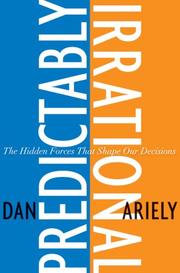
Dan Ariely demonstrates through clever experiments that human irrationality is not random but systematic and predictable. We consistently overpay for things labeled "free," we anchor our decisions to irrelevant numbers, and we behave differently when we think no one is watching. What makes this book compelling is the experimental design. Ariely does not just theorize about irrational behavior. He tests it in controlled settings that reveal exactly how and why our reasoning goes wrong. The writing is witty and accessible, making complex behavioral economics feel like a series of entertaining puzzles. For readers who enjoyed Thinking, Fast and Slow but want something lighter and more experiment-driven, Predictably Irrational is the perfect complement. It changed how many people think about pricing, decision-making, and the limits of willpower.
8. The Power of Habit by Charles Duhigg

Charles Duhigg's exploration of the science of habits became one of the most influential psychology books of the 2010s. The book explains the habit loop, a three-part cycle of cue, routine, and reward that governs much of our daily behavior. Duhigg draws on research from MIT, case studies from companies like Procter and Gamble, and stories of individuals who transformed their lives by understanding how habits work. The section on keystone habits, single changes that trigger cascading improvements in other areas, is particularly powerful. What makes the book effective is its balance of neuroscience and storytelling. You learn why habits form at a neurological level and then see exactly how that knowledge can be applied to break bad habits and build better ones. It remains a cornerstone of behavioral psychology for general readers.
9. Quiet: The Power of Introverts in a World That Can't Stop Talking by Susan Cain
Susan Cain challenged the cultural bias toward extroversion that dominates Western workplaces, schools, and social institutions. Drawing on research in psychology and neuroscience, she argues that introverts bring essential strengths to the table, including deep thinking, careful listening, and the ability to concentrate for extended periods. The book traces how American culture shifted toward the "Extrovert Ideal" in the twentieth century and shows the costs of a society that undervalues solitude and quiet contemplation. Cain profiles famous introverts, examines the neuroscience of temperament, and offers practical advice for introverts navigating an extroverted world. The book resonated deeply with the estimated one-third to one-half of the population who identify as introverts, giving them both validation and a vocabulary for their experience.
10. Attached: The New Science of Adult Attachment by Amir Levine and Rachel Heller
Amir Levine and Rachel Heller translated attachment theory from developmental psychology into a practical guide for adult relationships. The book identifies three primary attachment styles: anxious, avoidant, and secure. It explains how these styles develop in childhood, how they manifest in romantic relationships, and why certain combinations create recurring patterns of conflict. What makes the book so useful is its directness. Rather than offering vague relationship advice, it provides specific tools for identifying your own attachment style and your partner's, understanding the dynamics that arise from different pairings, and working toward more secure functioning. The book became a word-of-mouth bestseller because it gave people a framework that immediately explained relationship patterns they had struggled with for years.
11. The Gift of Fear by Gavin de Becker
Gavin de Becker argues that true fear is a survival signal that should never be ignored. Drawing on his work as a threat assessment expert, he explains how to distinguish genuine intuitive warnings from anxiety and worry. The book analyzes real cases of violence and shows how victims often had early warning signs they dismissed due to social conditioning. De Becker identifies specific pre-incident indicators, behavioral patterns that reliably predict violent intentions, and teaches readers to trust their instincts rather than rationalize away discomfort. The book is both empowering and unsettling, revealing how cultural norms around politeness can override the survival instincts that evolved to protect us. It has been especially influential among women and security professionals and remains essential reading on the psychology of intuition and threat detection.
12. Games People Play by Eric Berne
Eric Berne's 1964 classic introduced transactional analysis to the general public and spent over two years on the New York Times bestseller list. The book identifies recurring patterns of social interaction, which Berne calls "games," where people adopt predictable roles (Parent, Adult, or Child ego states) in their communications. Games like "Why Don't You, Yes But" and "If It Weren't For You" will feel immediately recognizable to anyone who has been caught in repetitive interpersonal dynamics. Berne's insight was that these games serve a psychological purpose, providing strokes (units of social recognition) while avoiding genuine intimacy. The book's lasting contribution is the idea that much of social interaction follows scripts we did not consciously choose. Understanding these scripts is the first step toward more authentic communication.
13. Stumbling on Happiness by Daniel Gilbert
Daniel Gilbert's exploration of affective forecasting, our attempts to predict what will make us happy, reveals that we are remarkably bad at it. Drawing on research from his Harvard laboratory, Gilbert shows that our imaginations are systematically biased. We overestimate the emotional impact of future events, both positive and negative. We fail to account for our psychological immune system, which helps us recover from setbacks faster than we expect. And we fill in details about the future based on present feelings rather than accurate predictions. The book is funny, rigorously researched, and genuinely surprising. It does not prescribe a path to happiness but instead shows why our intuitions about happiness are unreliable, which is arguably more useful. If you want to understand why getting what you want does not always make you happy, this book explains why.
14. The Psychopath Test by Jon Ronson
Jon Ronson takes readers on a journey through the world of psychopathy diagnosis, meeting researchers, patients, corporate executives, and criminal profilers along the way. The book centers on the PCL-R (Psychopathy Checklist-Revised), a diagnostic tool developed by Robert Hare, and raises uncomfortable questions about how we define mental illness and who gets to make that determination. Ronson's strength is his storytelling. He approaches the subject with curiosity rather than judgment, allowing readers to grapple with the ethical complexities of labeling people as psychopaths. The book also examines the broader mental health industry, questioning whether we have become too eager to pathologize human behavior. It is investigative journalism at its best, blending humor with serious inquiry into the nature of personality disorders.
15. Outliers: The Story of Success by Malcolm Gladwell
Malcolm Gladwell's examination of what makes high achievers different challenges the myth of the self-made individual. Through case studies ranging from the Beatles to Bill Gates to Canadian hockey players, Gladwell argues that success depends heavily on circumstances: when and where you were born, the opportunities you had access to, and the cultural legacies you inherited. The book popularized the "10,000 hours" concept (drawn from Anders Ericsson's research) and demonstrated how factors like birth month can create compounding advantages in competitive fields. While some of Gladwell's specific claims have faced academic scrutiny, the book's central message, that talent alone does not explain success, has reshaped how people think about achievement, privilege, and the hidden structures that shape outcomes.
16. The Man Who Mistook His Wife for a Hat by Oliver Sacks
Oliver Sacks was a neurologist with the soul of a storyteller, and this collection of case studies remains one of the most beloved books in popular neuroscience. Each chapter presents a patient with a neurological condition that reveals something surprising about how the brain constructs reality. The title case involves a man with visual agnosia who could not recognize faces or everyday objects. Other cases explore phantom limbs, amnesia, musical hallucinations, and Tourette syndrome. Sacks wrote with extraordinary compassion, treating his patients as whole people rather than medical curiosities. The book demonstrates that understanding what goes wrong in the brain illuminates how it normally works, making it both a medical classic and a deeply human exploration of consciousness and identity.
17. Blink: The Power of Thinking Without Thinking by Malcolm Gladwell
Malcolm Gladwell's investigation into rapid cognition explores when snap judgments are brilliant and when they are dangerously flawed. The book opens with the story of a Getty Museum kouros that art experts instinctively recognized as fake despite extensive scientific testing that said otherwise. Gladwell uses this and other examples to examine thin-slicing, the ability of our unconscious mind to find patterns in situations based on very narrow slices of experience. But the book also shows the dark side of rapid cognition, including how implicit biases affect police shootings and hiring decisions. The balanced treatment of intuition, celebrating its power while acknowledging its failures, makes Blink a nuanced contribution to the literature on decision-making and unconscious processing.
18. Mindset: The New Psychology of Success by Carol Dweck

Carol Dweck's research on fixed versus growth mindsets has transformed education, parenting, and corporate culture. The fixed mindset assumes that intelligence and talent are innate and unchangeable. The growth mindset sees these qualities as developable through effort, strategy, and learning from failure. Dweck shows through decades of research that the mindset you adopt profoundly affects your motivation, resilience, and achievement. Children praised for being "smart" develop fixed mindsets and avoid challenges, while those praised for effort develop growth mindsets and embrace difficulty. The book extends these findings to business, sports, and relationships, showing how mindset shapes every domain of life. While the concept has occasionally been oversimplified in popular culture, Dweck's core research remains robust and transformative.
19. The Happiness Hypothesis by Jonathan Haidt
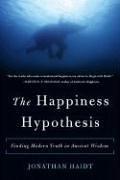
Jonathan Haidt examines ten great ideas from ancient philosophy and religion through the lens of modern psychological research. The result is a book that bridges Eastern and Western wisdom traditions with contemporary science on happiness, morality, and meaning. Haidt introduces the metaphor of the rider and the elephant, where the conscious mind (rider) tries to direct the automatic processes and emotions (elephant) that actually drive most behavior. He explores why we adapt to both good and bad circumstances, why relationships matter more than achievements for well-being, and why finding meaning requires connections to something larger than yourself. The book is scholarly without being dry, drawing on Stoic philosophy, Buddhist meditation, and experimental psychology with equal facility.
20. Grit: The Power of Passion and Perseverance by Angela Duckworth
Angela Duckworth's research demonstrates that the combination of passion and perseverance, what she calls grit, predicts success more reliably than talent or IQ in domains ranging from West Point military training to the National Spelling Bee. The book draws on longitudinal studies, interviews with high achievers, and Duckworth's own journey from McKinsey consultant to public school teacher to MacArthur Fellow. She outlines how grit develops through interest, practice, purpose, and hope, and argues that these components can be cultivated deliberately. The book sparked important debates about whether grit is truly independent of socioeconomic factors, but its core contribution, shifting the conversation from innate ability to sustained effort, has influenced how educators, coaches, and leaders think about developing human potential.
21. Behave: The Biology of Humans at Our Best and Worst by Robert Sapolsky
Robert Sapolsky takes on the most ambitious question in behavioral science: why do humans do what they do? His approach is to examine a single behavior, say an act of violence or compassion, and then work backward through every factor that contributed to it, from what happened one second before (neuroscience) to what happened millions of years before (evolution). The book covers neurobiology, endocrinology, genetics, developmental psychology, cultural anthropology, and game theory, weaving them into a coherent narrative about human behavior. Sapolsky writes with humor and intellectual generosity, acknowledging complexity rather than reducing it. The result is one of the most comprehensive books ever written about why humans behave the way they do, challenging simplistic explanations at every turn.
22. Mistakes Were Made (but Not by Me) by Carol Tavris and Elliot Aronson
Carol Tavris and Elliot Aronson explore the psychology of self-justification, showing how cognitive dissonance drives people to rationalize their beliefs, decisions, and mistakes rather than confront them honestly. The book examines how self-justification operates in politics, the justice system, medicine, and personal relationships. Case studies include wrongful convictions where prosecutors refused to acknowledge new evidence, therapists who implanted false memories, and couples trapped in escalating cycles of blame. The authors show that self-justification is not a character flaw but a cognitive mechanism, which makes it both universal and difficult to overcome. Understanding this mechanism is essential for anyone who wants to think more clearly, argue more honestly, and maintain relationships built on accountability rather than denial.
23. The Social Animal by Elliot Aronson
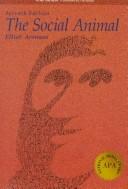
Elliot Aronson's textbook-turned-classic has introduced generations of students to social psychology. Covering conformity, persuasion, prejudice, aggression, attraction, and group dynamics, the book presents decades of landmark experiments in accessible prose. Aronson discusses the Milgram obedience studies, Zimbardo's prison experiment, cognitive dissonance research, and his own work on the jigsaw classroom technique for reducing prejudice. What distinguishes this book from other social psychology surveys is Aronson's ability to connect experimental findings to everyday life. Each chapter moves seamlessly between laboratory results and real-world applications. The book has been updated through multiple editions to address contemporary issues including social media, political polarization, and online behavior, keeping it relevant across decades.
24. The Blank Slate: The Modern Denial of Human Nature by Steven Pinker
Steven Pinker challenges the idea that the human mind is a blank slate shaped entirely by culture and experience. Drawing on evolutionary psychology, behavioral genetics, cognitive science, and neuroscience, he argues that human nature is real, that the mind comes equipped with innate cognitive and emotional tendencies shaped by natural selection. Pinker addresses the political and moral objections to this view head-on, arguing that acknowledging human nature does not justify inequality or determinism. The book is a sweeping intellectual history of the blank slate doctrine and a rigorous case for a more nuanced understanding of the interplay between nature and nurture. It remains one of the most important and controversial contributions to the public understanding of psychology and human behavior.
25. The Lucifer Effect: Understanding How Good People Turn Evil by Philip Zimbardo

Philip Zimbardo, the psychologist behind the Stanford Prison Experiment, uses that infamous study as a launching point for a broader examination of situational evil. The book argues that ordinary people can commit extraordinary cruelty when placed in the right circumstances, challenging the comfortable notion that evil is a property of individuals rather than situations. Zimbardo analyzes Abu Ghraib, genocide, and cult behavior alongside his own experimental findings to show how authority, anonymity, dehumanization, and group pressure create conditions where moral restraints dissolve. The final section offers a counterpoint, examining the psychology of heroism and what enables some people to resist situational pressures and act with moral courage. It is a challenging, sometimes disturbing book that forces readers to reconsider their confidence in their own moral character.
Best Psychology Books by Sub-Category
Best Behavioral Psychology Books
Behavioral psychology explores the mechanisms behind human decision-making and habitual action. Thinking, Fast and Slow by Daniel Kahneman remains the definitive work on cognitive biases and dual-process theory. Predictably Irrational by Dan Ariely demonstrates through ingenious experiments that our irrational behaviors follow consistent patterns. The Power of Habit by Charles Duhigg translates habit research into a practical framework for behavior change. Influence by Robert Cialdini maps the six principles that govern how people are persuaded. And Nudge by Richard Thaler and Cass Sunstein shows how small changes in how choices are presented can dramatically alter behavior without restricting freedom. Together, these books provide a comprehensive understanding of why we act the way we do and how behavior can be shifted through design rather than willpower.
If you are interested in how behavioral science intersects with professional success, see our list of best selling business books.
Best Psychology Books for Relationships
Understanding relationship dynamics is one of the most practical applications of psychology. Attached by Amir Levine and Rachel Heller offers a clear framework for understanding attachment styles in adult romantic relationships. Games People Play by Eric Berne reveals the unconscious transactional patterns that sabotage communication between partners. The Body Keeps the Score by Bessel van der Kolk explains how past trauma shapes present relationship behavior at a physiological level. Emotional Intelligence by Daniel Goleman demonstrates why the ability to manage emotions is essential for relational success. And Hold Me Tight by Sue Johnson, while not on the main list, extends attachment theory into couples therapy with her Emotionally Focused Therapy approach. These books collectively explain why relationships follow predictable patterns and how those patterns can be changed.
Best Cognitive Science Books
Cognitive science examines how the mind processes information, forms memories, and constructs its model of reality. The Man Who Mistook His Wife for a Hat by Oliver Sacks uses neurological case studies to reveal the brain's hidden architecture. Stumbling on Happiness by Daniel Gilbert shows how our mental simulations of the future are systematically biased. Blink by Malcolm Gladwell explores the power and pitfalls of rapid unconscious cognition. The Blank Slate by Steven Pinker makes the case for innate cognitive structures that shape how we learn and reason. And Behave by Robert Sapolsky integrates neuroscience with evolutionary biology to explain the full causal chain behind any human behavior. These books represent the best popular writing on how the mind actually works, bridging laboratory findings and everyday experience.
For more on how ideas shape our understanding of the world, explore the best selling philosophy books.
Best Pop Psychology Books
Pop psychology takes academic research and makes it accessible to a broad audience without losing the essential insights. Outliers by Malcolm Gladwell reframes success as the product of circumstance and accumulated advantage rather than innate genius. Quiet by Susan Cain challenges the cultural worship of extroversion with research-backed appreciation for introverted strengths. Grit by Angela Duckworth argues that sustained passion and perseverance outperform talent in predicting achievement. Mindset by Carol Dweck reveals how your beliefs about intelligence shape your motivation and resilience. And The Psychopath Test by Jon Ronson takes readers on a darkly funny journey through the world of personality disorder diagnosis. These books share a talent for making psychological research feel personal and immediately relevant.
If these titles resonate with you, you might also enjoy our guide to the best selling self-help books.
Frequently Asked Questions
What is the best psychology book for beginners?
Thinking, Fast and Slow by Daniel Kahneman is widely considered the best starting point for anyone new to psychology. It covers cognitive biases, decision-making, and the two systems of thought in a way that is rigorous but accessible. If you prefer something lighter, Predictably Irrational by Dan Ariely offers similar insights through entertaining experiments and a more conversational tone. Both books require no prior knowledge of psychology and will fundamentally change how you think about your own reasoning.
Are psychology books based on real science?
The books on this list are grounded in peer-reviewed research, though they vary in how directly they present that research. Authors like Kahneman, Dweck, and Duckworth are publishing scientists who draw primarily on their own laboratory work. Writers like Gladwell and Ronson are journalists who synthesize others' research into narrative form. In all cases, the most reliable psychology books cite their sources, describe experimental methodology, and acknowledge limitations. Readers should be aware that some popular psychology findings have faced replication challenges, but the core insights in these bestselling books have generally held up to scrutiny.
Can psychology books help with mental health?
Psychology books can improve your understanding of mental health, build self-awareness, and introduce coping strategies, but they are not a substitute for professional treatment. The Body Keeps the Score has helped millions of trauma survivors understand their symptoms, while Attached has given people in relationship distress a framework for understanding recurring patterns. Man's Search for Meaning has provided comfort to people facing existential crises. These books work best as complements to therapy, offering context and vocabulary that can deepen the therapeutic process rather than replace it.
What is the difference between psychology books and self-help books?
Psychology books explain how the mind works based on scientific research. Self-help books prescribe actions for personal improvement. The line between them is often blurry, as many psychology books have practical applications and many self-help books cite research. The key difference is emphasis. A psychology book like Stumbling on Happiness explores why we misjudge what will make us happy without prescribing solutions, while a self-help book would focus on steps to become happier. The best books in both genres are evidence-based, and many readers find that understanding the psychology behind their behavior is itself the most useful form of self-help.
Discover your next great psychology read without extra screen time. speakeasy converts book reviews, author interviews, and literary articles into audio you can enjoy anywhere. Paste any URL and listen -- 3 free articles per week, no account needed.