The best selling personal finance books have helped generations of readers take control of their money, build wealth, and achieve financial independence. Managing money well is not an innate talent. It is a skill, and the right book at the right time can change the trajectory of your financial life. The titles on this list range from Depression-era parables to modern guides written for millennials drowning in student debt. What they share is a commitment to actionable advice grounded in proven principles rather than get-rich-quick schemes. Whether you are just starting your career, digging out of debt, planning for retirement, or trying to build generational wealth, these books offer frameworks that have stood the test of time. Collectively, they have sold hundreds of millions of copies and continue to shape how ordinary people think about earning, saving, investing, and spending.
What Makes a Great Personal Finance Book?
The strongest personal finance books share several qualities. First, they teach principles rather than tactics. Markets change, tax laws shift, and specific investment vehicles come and go, but the fundamentals of spending less than you earn, investing consistently, and avoiding high-fee products remain constant. Second, great finance books are honest about risk. They do not promise overnight wealth or guarantee specific returns. Instead, they explain trade-offs clearly and help readers develop a framework for making decisions under uncertainty. Third, the best books in this genre are accessible. Personal finance can be intimidating, filled with jargon and math that discourages people from engaging. The most successful authors strip away complexity and present ideas that anyone can understand and implement. Finally, a great personal finance book motivates action. Knowledge alone does not build wealth. The books that endure are the ones that inspire readers to change their behavior, not just their understanding.
The Best Selling Personal Finance Books of All Time
1. Rich Dad Poor Dad by Robert Kiyosaki
Robert Kiyosaki's comparison of his own father (the "poor dad," a highly educated government employee) and his friend's father (the "rich dad," an entrepreneur with no college degree) introduced millions of readers to a different way of thinking about money. The book's central lesson is the distinction between assets and liabilities: the rich acquire assets that generate income, while the middle class accumulates liabilities they mistake for assets. Kiyosaki emphasizes financial literacy, entrepreneurship, and investing in real estate and businesses rather than relying solely on a paycheck. While some of his specific claims have drawn criticism from financial professionals, the book's ability to shift readers' mindset about money and work has made it one of the best selling personal finance books in history, with over 40 million copies sold worldwide.
2. The Total Money Makeover by Dave Ramsey

Dave Ramsey's step-by-step plan for getting out of debt and building wealth has become the go-to guide for millions of Americans struggling with financial chaos. The book presents his "Baby Steps" system: save a $1,000 emergency fund, pay off all debt using the debt snowball method (smallest balance first), build a full emergency fund, invest 15 percent of income for retirement, save for children's college, pay off your home early, and build wealth and give generously. Ramsey's approach is deliberately simple and emotionally driven. He argues that personal finance is 80 percent behavior and 20 percent knowledge, which is why he prioritizes quick wins over mathematically optimal strategies. The debt snowball method is not the fastest way to eliminate debt in terms of interest paid, but its psychological momentum has helped countless readers stay the course.
3. The Intelligent Investor by Benjamin Graham
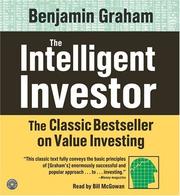
Benjamin Graham's 1949 masterpiece is widely considered the bible of value investing. Warren Buffett has called it "by far the best book on investing ever written." Graham introduces the concept of "Mr. Market," a metaphorical business partner who offers to buy or sell shares at different prices every day, sometimes rational and sometimes wildly emotional. The investor's job is to take advantage of Mr. Market's mood swings rather than be influenced by them. Graham distinguishes between investing and speculation, advocates for a margin of safety in every purchase, and outlines defensive and enterprising approaches to portfolio construction. The book is dense by modern standards, but its core principles of disciplined, value-oriented investing have guided the strategies of the world's most successful investors for over seven decades.
4. Think and Grow Rich by Napoleon Hill
Napoleon Hill's 1937 classic has sold over 100 million copies, making it one of the best selling books of all time in any category. Based on Hill's study of over 500 successful individuals including Andrew Carnegie, Thomas Edison, and Henry Ford, the book distills their common traits into thirteen principles of wealth creation. These include desire, faith, autosuggestion, specialized knowledge, imagination, organized planning, decision, persistence, and the "Master Mind" concept of surrounding yourself with like-minded achievers. The book straddles the line between personal finance and personal development, arguing that wealth creation begins with mindset and belief. While its language reflects its era and some claims about the power of thought are unverifiable, the book's influence on entrepreneurial culture and the self-improvement genre is undeniable.
5. The Psychology of Money by Morgan Housel
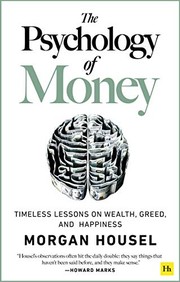
Morgan Housel's 2020 book quickly became a modern classic by examining the behavioral and emotional dimensions of financial decision-making. Rather than offering investment formulas, Housel presents nineteen short stories that illustrate how people actually think about money, which is often very different from how they should think about it according to textbooks. He argues that financial success is less about what you know and more about how you behave, and that your personal history with money shapes your risk tolerance and spending habits in ways you may not recognize. The chapter on "Reasonable vs. Rational" is particularly powerful, making the case that the financially optimal choice is not always the best choice if you cannot stick with it emotionally. The book's accessibility and wisdom have made it a favorite among both novice and experienced investors.
6. A Random Walk Down Wall Street by Burton Malkiel
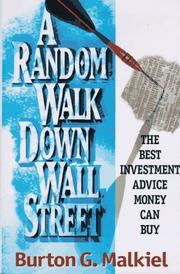
Burton Malkiel's argument for passive index investing has been vindicated by decades of market data since the book's original publication in 1973. The central thesis is that stock prices follow a random walk, meaning past movements cannot predict future performance, and that most professional fund managers fail to outperform a simple index fund over time. Malkiel surveys the history of market bubbles, examines technical and fundamental analysis, and concludes that the average investor is best served by buying and holding a diversified portfolio of low-cost index funds. The book has been updated through multiple editions to address new developments including cryptocurrency, ESG investing, and smart beta strategies, but its core message has remained remarkably consistent: keep costs low, diversify broadly, and stay the course.
7. The Millionaire Next Door by Thomas Stanley and William Danko
Thomas Stanley and William Danko's research shattered the popular image of millionaires as flashy spenders living in mansions. Their study of actual millionaires revealed that the typical American millionaire lives well below their means, drives a used car, and works in an unglamorous industry like welding supply or paving contracting. The book identifies seven common traits of wealth builders, including living below your means, allocating time and money efficiently, and choosing the right occupation. The distinction between "prodigious accumulators of wealth" and "under accumulators of wealth" highlights how income alone does not determine net worth. People who earn high salaries but spend lavishly often have less wealth than modest earners who save consistently. The book remains a powerful antidote to the consumer culture that equates spending with success.
8. I Will Teach You to Be Rich by Ramit Sethi
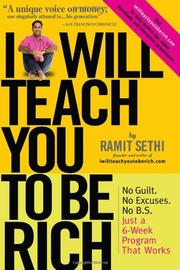
Ramit Sethi wrote the personal finance book that young professionals actually want to read. Rather than lecturing about lattes and sacrifice, Sethi advocates for automating your finances, negotiating your salary, investing in index funds, and spending extravagantly on the things you love while cutting ruthlessly on things you do not. The six-week program covers bank accounts, credit cards, investing, and conscious spending. Sethi's tone is direct, sometimes brash, and always practical. He provides specific scripts for negotiating bank fees, asking for raises, and setting up automated investment contributions. The updated second edition addresses changes in the financial landscape and expands the coverage of student loans, housing decisions, and relationship money dynamics. It remains one of the most actionable personal finance books available.
9. Your Money or Your Life by Vicki Robin and Joe Dominguez
Vicki Robin and Joe Dominguez pioneered the financial independence movement with this book, first published in 1992. The core concept is simple but radical: every dollar you spend represents life energy, the hours of your life you traded to earn that money. By calculating your true hourly wage (accounting for commuting, work clothes, stress-related spending, and other job costs), you can evaluate whether each purchase is worth the life energy it requires. The nine-step program includes tracking every cent that enters and leaves your life, minimizing spending, maximizing income, and investing savings in income-producing assets until passive income covers your expenses. The book predated the FIRE (Financial Independence, Retire Early) movement by decades and remains its foundational text. The updated edition maintains the original philosophy while addressing modern financial instruments and challenges.
10. The Simple Path to Wealth by JL Collins
JL Collins originally wrote the advice in this book as a series of letters to his daughter, and that personal, conversational tone makes it one of the most approachable investing books ever written. The strategy is deliberately simple: invest in Vanguard's Total Stock Market Index Fund (VTSAX), avoid debt, spend less than you earn, and let compound growth do the heavy lifting over decades. Collins explains why this approach beats the vast majority of professional money managers, how to think about bonds as you approach retirement, and why stock market crashes are buying opportunities rather than emergencies. The book strips away the complexity that the financial industry uses to justify its fees and presents a strategy that any person can implement in an afternoon. It has become essential reading in the financial independence community.
11. The Richest Man in Babylon by George S. Clason
George S. Clason's 1926 collection of parables set in ancient Babylon remains one of the most enduring introductions to personal finance. Through stories of chariot builders, camel traders, and money lenders, Clason presents timeless principles: pay yourself first by saving at least ten percent of your earnings, make your gold multiply through wise investments, guard your wealth from loss by seeking counsel from experts, and ensure a future income through long-term planning. The parable format makes abstract financial concepts concrete and memorable. "A part of all I earn is mine to keep" is one of the most quoted lines in personal finance literature. The book's brevity and storytelling approach make it an ideal first book for teenagers or anyone who finds traditional finance writing intimidating.
12. The Little Book of Common Sense Investing by John C. Bogle
John Bogle, the founder of Vanguard and inventor of the index fund, makes the definitive case for passive investing. Using decades of market data, he demonstrates that actively managed funds consistently underperform their benchmark indexes after fees. The math is relentless: the average fund charges fees that consume a staggering portion of returns over an investing lifetime. Bogle's solution is elegant: buy a total market index fund, keep costs at rock bottom, and hold forever. He addresses every objection that Wall Street professionals raise against indexing and dismantles each one with data. The book is short, focused, and persuasive. It has convinced millions of investors to stop trying to beat the market and start capturing its returns, saving them billions of dollars in unnecessary fees.
13. Broke Millennial by Erin Lowry
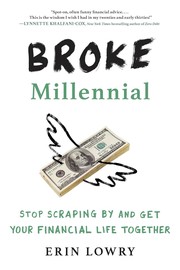
Erin Lowry addresses the specific financial challenges facing millennials, including student loan debt, stagnant wages, gig economy income, and the psychological burden of feeling perpetually behind. The book covers the basics of budgeting, debt repayment, and investing, but it also tackles topics that other finance books avoid: how to talk about money with your partner, how to handle financial peer pressure, and how to navigate financial decisions when your parents never taught you about money. Lowry's tone is relatable without being condescending, and her advice is specific to the challenges of building wealth in your twenties and thirties. The book has spawned a series, with subsequent volumes covering investing and wedding finances, making it a comprehensive resource for young adults at every financial stage.
14. Die with Zero by Bill Perkins
Bill Perkins challenges the conventional wisdom that you should save as much as possible for as long as possible. His argument is provocative: many people die with significant wealth they never enjoyed, having sacrificed experiences and relationships in pursuit of a number on a balance sheet. Perkins advocates for optimizing the allocation of your time and money across your entire lifespan, spending money on experiences when you are young and healthy enough to enjoy them rather than hoarding it for a retirement when your capacity for adventure may be diminished. The book introduces the concept of "memory dividends," the ongoing pleasure you receive from past experiences, and argues that these dividends make early spending on experiences a better investment than late spending. It is a thought-provoking counterpoint to the save-everything orthodoxy that dominates personal finance literature.
15. Money: Master the Game by Tony Robbins
Tony Robbins distills interviews with fifty of the world's most successful investors, including Ray Dalio, Warren Buffett, Carl Icahn, and Jack Bogle, into a comprehensive guide to building wealth. The book covers asset allocation, fee reduction, tax efficiency, annuities, and the power of compound returns. Robbins provides specific model portfolios, including Ray Dalio's "All Weather" portfolio designed to perform in any economic environment. At over 600 pages, the book is thorough to the point of exhaustiveness, but its core message is accessible: the financial industry is designed to extract fees from ordinary investors, and protecting yourself requires understanding how the game works. For readers who want a single volume that covers the entire landscape of personal investing, this book delivers.
16. The Automatic Millionaire by David Bach
David Bach's concept of paying yourself first through automatic payroll deductions transformed how millions of Americans approach saving. The book argues that the key to building wealth is not willpower or budgeting but automation. By setting up automatic transfers to savings accounts, retirement funds, and mortgage payments, you remove the decision-making that leads most people to spend rather than save. Bach illustrates this with the story of an ordinary couple earning modest incomes who accumulated over a million dollars simply by automating their finances and never touching the money. The "Latte Factor," the idea that small daily expenses add up to fortunes over time, became one of the most discussed concepts in personal finance, though it has also drawn criticism from those who argue that structural issues like wages and housing costs matter more than coffee purchases.
17. You Are a Badass at Making Money by Jen Sincero
Jen Sincero brings her irreverent, motivational style to the topic of money, focusing on the mindset shifts required to increase your earning potential. The book argues that most people have deeply ingrained limiting beliefs about money, often inherited from their parents or cultural background, that sabotage their financial success. Sincero combines personal anecdotes of her own journey from broke freelancer to financially successful author with practical exercises for identifying and overcoming these psychological barriers. While the book is lighter on specific financial strategies than some others on this list, its contribution is addressing the emotional and psychological relationship with money that determines whether people will actually implement the technical advice found in other books. It is particularly valuable for entrepreneurs and freelancers who need to overcome discomfort with charging what they are worth.
18. The Barefoot Investor by Scott Pape
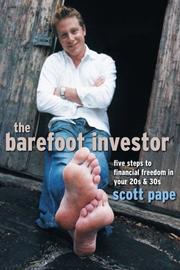
Scott Pape's guide to personal finance became a publishing phenomenon in Australia before gaining an international readership. The book presents a complete financial system organized around a "bucket" approach: allocate your income into specific accounts for daily spending, savings goals (called "smile" and "fire extinguisher" buckets), and long-term wealth building. Pape writes with warmth and humor, using stories from his own life, including rebuilding after a devastating fire destroyed his family home. The system is designed to work on any income level and requires about ten minutes a week to maintain. Pape is blunt about the financial products and services that he considers rip-offs, naming specific institutions and calling out industry practices that harm consumers. His no-nonsense Australian voice has made personal finance feel approachable for millions of readers who had previously avoided the subject.
19. Get Good with Money by Tiffany Aliche

Tiffany Aliche, known as "The Budgetnista," created a ten-step guide to achieving what she calls "financial wholeness." The book covers budgeting, saving, managing debt, improving credit, earning more, investing, building adequate insurance coverage, growing net worth, and building a financial legacy. What distinguishes this book is its emphasis on the emotional and cultural dimensions of money. Aliche draws on her experience as a first-generation Nigerian-American who went from financial devastation after the 2008 recession to building a financial education empire. She writes specifically for women and communities of color who have been historically excluded from mainstream financial advice. Each chapter includes specific action items with clear metrics for success, making it one of the most structured and actionable personal finance books available.
20. Smart Women Finish Rich by David Bach
David Bach addresses the unique financial challenges and opportunities that women face, from the gender pay gap to longer life expectancies to career interruptions for caregiving. The book provides a step-by-step plan for taking control of finances, including strategies for negotiating salary, understanding retirement accounts, choosing appropriate insurance coverage, and building an investment portfolio. Bach draws on his experience as a financial advisor and his observation that women who take charge of their finances often become better investors than men, partly because they tend to trade less and take fewer reckless risks. The book empowers readers to overcome the societal conditioning that discourages women from engaging with money and provides the practical tools to close the wealth gap on an individual level.
21. Unshakeable by Tony Robbins

Tony Robbins follows up his comprehensive Money: Master the Game with a shorter, more focused guide designed to help investors maintain confidence during market downturns. Drawing on historical data and interviews with leading financial minds, Robbins demonstrates that market corrections and bear markets are normal, predictable, and ultimately temporary. He outlines the four seasons of investing, shows how to position a portfolio to weather any economic environment, and exposes the hidden fees that erode returns. The book is particularly useful for investors who understand the basics but struggle with the emotional discipline required to stay invested during volatility. Robbins pairs investment strategy with the motivational approach he is known for, making the case that financial freedom is achievable for anyone willing to learn the rules and follow a proven system.
22. Profit First by Mike Michalowicz

Mike Michalowicz flips the traditional accounting formula from Sales minus Expenses equals Profit to Sales minus Profit equals Expenses. By taking profit first and then running your business on what remains, you force yourself to innovate, cut waste, and build a fundamentally healthier business. The book is aimed at small business owners and entrepreneurs who find that revenue growth never seems to translate into actual profit. Michalowicz provides a specific system of bank accounts and allocation percentages that makes the approach practical and automatic. The method is intentionally simple, designed for business owners who hate accounting and just want a system that works. It has helped thousands of businesses become profitable by changing the fundamental psychology of how owners relate to their revenue.
23. The Bogleheads' Guide to Investing by Taylor Larimore, Mel Lindauer, and Michael LeBoeuf

Named after Vanguard founder John Bogle, this book distills the collective wisdom of the Bogleheads, a community of investors devoted to Bogle's principles of low-cost, passive investing. The book covers everything a beginning investor needs to know: how to choose between taxable and tax-advantaged accounts, how to build a simple three-fund portfolio, how to rebalance, and how to avoid the behavioral mistakes that derail most investors. What makes this book valuable is its comprehensiveness combined with simplicity. It does not try to make investing exciting or complicated. Instead, it presents the evidence for a boring, reliable approach and then walks you through implementing it step by step. The book also benefits from the input of thousands of forum members who have tested these principles across different life circumstances.
24. Financial Freedom by Grant Sabatier

Grant Sabatier went from $2.26 in his bank account at age 24 to a net worth of over $1.25 million by age 30. This book details his strategy for achieving financial independence at an accelerated pace. Unlike traditional retirement planning books, Sabatier focuses on dramatically increasing income through side hustles, negotiation, and entrepreneurship rather than merely cutting expenses. He provides specific strategies for maximizing savings rates, optimizing investment returns, and reducing the timeline to financial independence from decades to years. The book addresses the math behind early retirement, including safe withdrawal rates, healthcare planning, and the psychological adjustment to leaving traditional employment. It is one of the most practical and motivating books in the FIRE movement, offering a roadmap that is ambitious but grounded in real numbers and personal experience.
25. The Index Card by Helaine Olen and Harold Pollack
The premise of this book is that everything you need to know about personal finance can fit on a single index card. Harold Pollack, a University of Chicago professor, made this claim during an interview, then wrote the rules on an actual index card. The resulting photo went viral, and this book expands on those simple rules: save 10 to 20 percent of your income, pay off your credit cards every month, maximize contributions to tax-advantaged accounts, invest in low-cost index funds, buy insurance to protect against catastrophe, and support the social safety net. Helaine Olen, a financial journalist and author of Pound Foolish, joins Pollack to provide context, evidence, and practical guidance for each rule. The book is a deliberate rebuke to the financial industry's complexity, arguing that simple rules consistently outperform sophisticated strategies.
Best Personal Finance Books by Sub-Category
Best Investing Books
For readers focused specifically on growing wealth through the markets, these books provide the strongest foundation. The Intelligent Investor by Benjamin Graham established the principles of value investing that Warren Buffett and other legendary investors have followed for decades. A Random Walk Down Wall Street by Burton Malkiel makes the data-driven case for passive index investing over active fund management. The Little Book of Common Sense Investing by John Bogle provides the definitive argument for index funds from the man who invented them. The Psychology of Money by Morgan Housel explores the behavioral side of investing, showing why temperament matters more than technique. And The Bogleheads' Guide to Investing offers a comprehensive, community-tested playbook for implementing these principles in practice. Together, these books give any reader a complete investing education.
For a broader look at business and career strategies, explore our list of best selling business books.
Best Budgeting Books
Budgeting is the foundation of every financial plan, and these books make the process manageable. The Total Money Makeover by Dave Ramsey provides a structured, step-by-step approach to eliminating debt and building savings through the debt snowball method. I Will Teach You to Be Rich by Ramit Sethi presents a modern, automation-first approach that focuses on big wins rather than penny-pinching. Your Money or Your Life by Vicki Robin and Joe Dominguez reframes budgeting as an exercise in aligning spending with values and life energy. The Barefoot Investor by Scott Pape offers a practical "bucket" system for organizing your money that takes minutes per week to maintain. And Get Good with Money by Tiffany Aliche provides a holistic ten-step framework that addresses budgeting as part of a larger picture of financial wholeness. These books prove that there is no single right way to budget, only the approach that you will actually follow.
Best Finance Books for Beginners
If you are starting from zero financial knowledge, these books will build a solid foundation without overwhelming you. The Richest Man in Babylon by George S. Clason teaches core principles through ancient parables that are easy to remember and apply. Rich Dad Poor Dad by Robert Kiyosaki shifts your mindset about money, work, and assets in ways that make all subsequent learning more meaningful. Broke Millennial by Erin Lowry addresses the specific challenges of building financial literacy as a young adult in the modern economy. The Index Card by Helaine Olen and Harold Pollack distills everything you need to know into rules simple enough to fit on a notecard. And The Simple Path to Wealth by JL Collins provides a complete investing strategy in conversational, jargon-free language. Start with any of these and you will have a stronger financial foundation than most adults.
Best Finance Books for Young Adults
Young readers face unique financial challenges, from student loans to entry-level salaries to the temptation of lifestyle inflation. Broke Millennial by Erin Lowry speaks directly to these challenges with relatable advice and practical scripts for awkward money conversations. I Will Teach You to Be Rich by Ramit Sethi offers a six-week financial setup designed for people in their twenties and thirties who want to automate their finances and stop worrying. Financial Freedom by Grant Sabatier provides a roadmap for aggressive wealth building through income maximization and high savings rates. The Psychology of Money by Morgan Housel helps young readers develop the right relationship with money before decades of compounding make bad habits catastrophically expensive. And Die with Zero by Bill Perkins offers a counterbalancing perspective, reminding young people that the point of money is to fund a well-lived life, not to accumulate the biggest number possible.
For books that develop the mindset and habits behind financial success, see our guide to the best selling self-help books.
Frequently Asked Questions
What is the best personal finance book for someone in debt?
The Total Money Makeover by Dave Ramsey is the most popular and effective book for people dealing with significant debt. His debt snowball method, paying off the smallest balance first regardless of interest rate, is designed to build psychological momentum that keeps you motivated. If you prefer a more nuanced approach that accounts for interest rates, I Will Teach You to Be Rich by Ramit Sethi covers debt elimination alongside broader financial automation. Both books provide step-by-step systems rather than vague encouragement, which is what most people in debt actually need.
Do personal finance books work, or is building wealth just about income?
Income matters, but it is not the whole story. The Millionaire Next Door demonstrated through research that many high-income earners have surprisingly low net worth because they spend everything they earn, while many modest-income earners build significant wealth through consistent saving and disciplined investing. The best personal finance books teach both sides: how to increase your earning potential and how to keep and grow what you earn. The Psychology of Money by Morgan Housel makes the case that behavior is the primary determinant of financial outcomes, not income, intelligence, or access to sophisticated investment strategies.
Should I read investing books if I am just starting out?
Yes, but start with accessible books that build foundational understanding rather than advanced strategy. The Simple Path to Wealth by JL Collins and The Little Book of Common Sense Investing by John Bogle both present simple, proven approaches that require no financial background. The most important lesson for beginners is that starting early matters far more than starting perfectly. A simple index fund portfolio set up in your twenties will outperform a sophisticated strategy started in your forties, simply because of the power of compound returns over time.
What is the difference between personal finance books and business books?
Personal finance books focus on managing your individual or household money: budgeting, saving, investing, insurance, retirement planning, and debt management. Business books focus on building, running, and growing organizations: strategy, leadership, marketing, operations, and entrepreneurship. There is natural overlap, especially in books like Rich Dad Poor Dad and Profit First that address both personal wealth building and business ownership. Readers who are interested in both areas will find value in exploring our list of best selling non-fiction books for a broader perspective on ideas that span categories.
Discover your next great personal finance read without extra screen time. speakeasy converts book reviews, author interviews, and literary articles into audio you can enjoy anywhere. Paste any URL and listen -- 3 free articles per week, no account needed.