The best selling self-help books have shaped how millions of people think about habits, relationships, productivity, and meaning. Unlike other genres, self-help is measured not just by copies sold but by lives changed -- the smoker who quit, the procrastinator who shipped, the anxious mind that found stillness. The genre has evolved dramatically from its early roots in positive thinking and affirmations toward evidence-based frameworks drawn from psychology, neuroscience, and behavioral economics. The books on this list are not the ones that promise overnight transformation. They are the ones that deliver practical, lasting insight backed by research and hard-won experience. These are the must-read personal development books that have earned their place on bestseller lists through genuine impact rather than marketing hype. Whether you want to build better habits, deepen your relationships, or find clarity in a noisy world, the 25 books below represent the best the genre has to offer.
What Makes a Great Self-Help Book?
The difference between a great self-help book and a forgettable one comes down to three things: specificity, honesty, and evidence. A great self-help book gives you a framework you can apply immediately -- not vague encouragement to "be your best self" but a concrete system for changing behavior. It acknowledges difficulty honestly, admitting that growth is uncomfortable and that setbacks are inevitable. And it grounds its claims in something verifiable, whether that is peer-reviewed research, extensive case studies, or decades of professional experience. The critically acclaimed books on this list all share another quality: they respect the reader's intelligence. They do not condescend or oversimplify. The best personal development writing treats the reader as a capable adult who needs better tools, not a broken person who needs fixing. That distinction separates the award-winning classics from the shelf-filler.
The Best Selling Self-Help Books of All Time
1. Atomic Habits by James Clear
James Clear's 2018 bestseller is the most practical book ever written about habit formation. Rather than focusing on motivation or willpower, Clear argues that lasting change comes from systems -- tiny adjustments to your environment, identity, and daily routines that compound over time. The book provides a four-step framework (cue, craving, response, reward) and dozens of actionable strategies for building good habits and breaking bad ones. Atomic Habits has sold over 20 million copies and spent years on the NYT bestseller list. It works because Clear writes with unusual clarity, turning behavioral science research into immediately applicable advice. This is the book that people actually finish and then apply.
2. How to Win Friends and Influence People by Dale Carnegie

Dale Carnegie's 1936 classic is the original self-help bestseller, and its principles remain remarkably relevant nearly a century later. Carnegie's core insight is simple but powerful: genuine interest in other people, sincere appreciation, and the ability to see situations from another's perspective will take you further than any manipulation technique. The book has sold over 30 million copies and has been translated into virtually every major language. Carnegie drew his principles from years of teaching public speaking and interpersonal skills classes. The writing is direct, anecdotal, and entirely free of academic jargon. For anyone entering a career that involves working with other humans -- which is everyone -- this remains required reading.
3. The 7 Habits of Highly Effective People by Stephen R. Covey
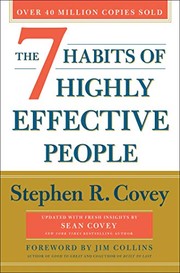
Stephen Covey's 1989 masterwork argues that lasting effectiveness comes not from techniques but from aligning your behavior with universal principles like integrity, fairness, and human dignity. The seven habits progress from dependence through independence to interdependence, providing a complete framework for personal and professional growth. The book has sold over 40 million copies and remains one of the most influential business and personal development books ever written. Covey's contribution was shifting self-help away from personality-based shortcuts toward character-based development. The writing is dense in places, but the framework is powerful enough that Fortune 500 companies and individuals alike continue to build their operating principles around it.
4. Think and Grow Rich by Napoleon Hill
Napoleon Hill's 1937 classic distills principles of success drawn from interviews with over 500 of America's most accomplished individuals, including Andrew Carnegie, Henry Ford, and Thomas Edison. Hill identified 13 principles that he argued were common to all forms of achievement, from desire and faith to specialized knowledge and the "mastermind" principle. Think and Grow Rich has sold over 100 million copies and remains the bestselling personal finance and success book of all time. The language is dated, and some claims lack modern scientific rigor, but Hill's emphasis on definite purpose, persistence, and surrounding yourself with capable people has proven remarkably durable. This is the book that launched an entire industry.
5. The Power of Now by Eckhart Tolle
Eckhart Tolle's 1997 book brought mindfulness and present-moment awareness to a mainstream Western audience years before meditation apps made it fashionable. Tolle argues that most human suffering comes from identification with the mind's constant stream of thought, and that freedom lies in learning to observe thoughts without being controlled by them. The Power of Now has sold over 10 million copies and was propelled to even greater fame by Oprah Winfrey's endorsement. Tolle writes from personal experience of a profound psychological transformation, and his calm, repetitive style functions almost as a guided meditation in text form. For readers struggling with anxiety or compulsive thinking, this book remains transformative.
6. Thinking, Fast and Slow by Daniel Kahneman

Nobel laureate Daniel Kahneman's 2011 book synthesizes decades of research on human judgment and decision-making into a framework built around two systems of thought: System 1 (fast, intuitive, emotional) and System 2 (slow, deliberate, logical). Kahneman demonstrates how systematic cognitive biases lead to predictable errors in everything from financial decisions to medical diagnoses. Thinking, Fast and Slow has sold millions of copies and is widely considered one of the most important books of the twenty-first century. It is not a light read -- the research is presented with academic thoroughness -- but the implications for understanding your own mind are profound. This is the award-winning book that changed how we think about thinking.
7. The Subtle Art of Not Giving a F*ck by Mark Manson

Mark Manson's 2016 bestseller was a deliberate counterpoint to the relentless positivity that dominates most self-help writing. Manson argues that the key to a good life is not caring about more things but caring about fewer, better things -- choosing your struggles deliberately rather than trying to eliminate all discomfort. The book has sold over 14 million copies and spent years on bestseller lists worldwide. Manson's irreverent, profanity-laden style made the book appealing to readers who would never touch a traditional self-help book. Beneath the provocative packaging lies a thoughtful synthesis of Stoic philosophy and existential psychology that resonates with anyone tired of being told to think positive.
8. Daring Greatly by Brene Brown
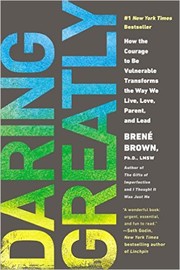
Brene Brown's 2012 book brought her research on vulnerability, shame, and courage to a popular audience. Brown argues that vulnerability is not weakness but rather the birthplace of innovation, creativity, and meaningful connection. Drawing on twelve years of research and thousands of interviews, she demonstrates that the willingness to be imperfect and emotionally exposed is the foundation of a wholehearted life. Daring Greatly became a NYT bestseller and established Brown as one of the most influential voices in personal development. Her TED talk on vulnerability, which preceded the book, remains one of the most-watched TED talks in history. This is essential reading for anyone who equates vulnerability with inadequacy.
9. Mindset: The New Psychology of Success by Carol S. Dweck
Stanford psychologist Carol Dweck's 2006 book introduced the distinction between "fixed mindset" (believing abilities are innate and unchangeable) and "growth mindset" (believing abilities can be developed through effort and learning). Through research spanning education, business, sports, and relationships, Dweck demonstrates that mindset profoundly shapes achievement, resilience, and fulfillment. Mindset has sold millions of copies and fundamentally changed how educators, parents, and managers approach development. The concept is simple enough to explain in a sentence but rich enough to fill a career of research. It is the kind of book that changes how you talk to your children, evaluate your employees, and respond to your own failures.
10. The Four Agreements by Don Miguel Ruiz
Don Miguel Ruiz's 1997 book distills ancient Toltec wisdom into four deceptively simple principles: be impeccable with your word, do not take anything personally, do not make assumptions, and always do your best. The book has sold over 12 million copies and spent years on the New York Times bestseller list. Ruiz's gift is making profound ideas accessible -- each agreement sounds obvious until you try to practice it consistently and discover how deeply ingrained the opposite behavior is. The Four Agreements is short enough to read in an afternoon and deep enough to practice for a lifetime. It remains one of the most recommended book club picks in the personal development space.
11. Man's Search for Meaning by Viktor E. Frankl
Viktor Frankl's 1946 book recounts his experience as a prisoner in Nazi concentration camps and the psychological framework -- logotherapy -- that emerged from that experience. Frankl's central argument is that humans can endure almost any suffering if they can find meaning in it, and that the search for meaning is the primary motivational force in human life. Man's Search for Meaning has sold over 16 million copies and has been named one of the most influential books in America by the Library of Congress. The first half, describing life in the camps, is among the most powerful nonfiction ever written. The second half translates that experience into a therapeutic approach that remains relevant eight decades later.
12. The Power of Habit by Charles Duhigg

Charles Duhigg's 2012 book explores the science of habit formation through research in neuroscience, psychology, and organizational behavior. Duhigg introduces the "habit loop" -- cue, routine, reward -- and demonstrates how understanding this loop enables individuals and organizations to transform entrenched behaviors. The book weaves together stories from Alcoholics Anonymous, Procter and Gamble, the civil rights movement, and the NFL to illustrate how habits shape everything from personal health to corporate culture. The Power of Habit spent over 120 weeks on the New York Times bestseller list. It was the book that made habit science mainstream, paving the way for later bestsellers like Atomic Habits.
13. You Are a Badass by Jen Sincero
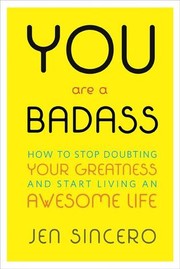
Jen Sincero's 2013 book is a motivational guide that blends humor, personal stories, and practical exercises designed to help readers overcome self-doubt and create lives they love. Sincero's voice is conversational, funny, and relentlessly encouraging without being saccharine. The book covers mindset shifts, relationship patterns, financial beliefs, and the stories we tell ourselves about what we deserve. You Are a Badass has sold over five million copies and became a word-of-mouth bestseller that resonated particularly with women in their twenties and thirties navigating career and identity questions. Sincero does not pretend to be a researcher or clinician -- she writes as someone who has been stuck and figured out how to get unstuck.
14. Grit: The Power of Passion and Perseverance by Angela Duckworth

University of Pennsylvania psychologist Angela Duckworth's 2016 book argues that the secret to achievement is not talent but a combination of passion and sustained persistence she calls "grit." Drawing on research with West Point cadets, National Spelling Bee champions, and corporate leaders, Duckworth demonstrates that effort counts twice: it builds skill, and it makes skill productive. Grit became a NYT bestseller and sparked widespread discussion in education and business about how to cultivate perseverance. Duckworth's framework is backed by rigorous research, but her writing is accessible and story-driven. The book is essential for anyone who has ever wondered whether natural talent matters more than hard work.
15. Deep Work by Cal Newport
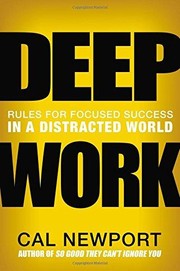
Cal Newport's 2016 book argues that the ability to focus without distraction on cognitively demanding tasks is becoming both increasingly rare and increasingly valuable. Newport calls this capacity "deep work" and provides practical strategies for cultivating it in an age of constant connectivity. He draws on examples from Carl Jung, J.K. Rowling, and tech executives to demonstrate that sustained focus produces disproportionate results. Deep Work became a bestseller among knowledge workers, particularly in technology and academia. Newport, a Georgetown computer science professor, practices what he preaches -- he has never had a social media account. The book is the must-read guide for anyone whose work requires thinking rather than merely responding.
16. The Alchemist by Paulo Coelho
Paulo Coelho's 1988 fable follows Santiago, a young Andalusian shepherd who dreams of finding treasure at the Egyptian pyramids and embarks on a journey that teaches him about listening to his heart, recognizing omens, and pursuing his "Personal Legend." The Alchemist has sold over 150 million copies worldwide, making it one of the best selling books in history. While technically a novel, it functions as a self-help book through allegory, delivering its lessons about purpose and courage through narrative rather than instruction. The prose is simple and parable-like, and the philosophical ideas are accessible to readers of any background. It is the book that people give to friends at turning points in their lives.
17. Emotional Intelligence by Daniel Goleman
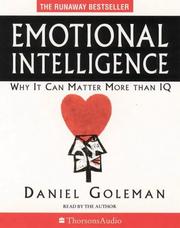
Daniel Goleman's 1995 book popularized the concept of emotional intelligence -- the ability to recognize, understand, and manage emotions in yourself and others. Goleman argued that EQ is at least as important as IQ in determining life success, drawing on neuroscience and psychological research to make his case. Emotional Intelligence spent over a year on the New York Times bestseller list and fundamentally changed how businesses and schools think about human competence. The book demonstrated that skills like empathy, self-regulation, and social awareness are not innate personality traits but learnable capabilities. It remains critically acclaimed and widely assigned in MBA programs and leadership development courses worldwide.
18. The 5 Love Languages by Gary Chapman
Gary Chapman's 1992 book proposes that people express and receive love in five primary ways: words of affirmation, quality time, receiving gifts, acts of service, and physical touch. Chapman argues that relationship conflicts often arise when partners speak different love languages, leading both to feel unloved despite genuine effort. The 5 Love Languages has sold over 20 million copies and remains one of the most recommended relationship books by therapists and counselors. The framework is elegant in its simplicity, and Chapman illustrates each language with case studies from his decades as a marriage counselor. This is the bestseller that gave couples a common vocabulary for discussing their emotional needs.
19. The Gifts of Imperfection by Brene Brown
Brene Brown's 2010 book preceded Daring Greatly and established the research-based framework for wholehearted living that made her a household name. Brown identifies ten guideposts for cultivating authenticity, self-compassion, and resilience, each grounded in her qualitative research on shame and vulnerability. The Gifts of Imperfection is shorter and more personal than her later works, reading almost like a research-backed journal of someone learning to let go of who they think they should be. The book became a grassroots bestseller and remains Brown's most intimate work. It is the ideal starting point for readers new to her research.
20. Meditations by Marcus Aurelius

Written nearly two thousand years ago as a private journal, Marcus Aurelius's Meditations is the most enduring self-help book ever produced. The Roman emperor's reflections on duty, mortality, patience, and the discipline of perception read as startlingly relevant guidance for modern life. Meditations has never gone out of print and has experienced a resurgence in popularity as Stoic philosophy has gained mainstream traction. The entries are short, pithy, and remarkably free of self-importance given their author's status. This is the book that Silicon Valley executives, military leaders, and philosophy students all claim as essential. It proves that the fundamental challenges of human existence have not changed in two millennia.
21. The Body Keeps the Score by Bessel van der Kolk
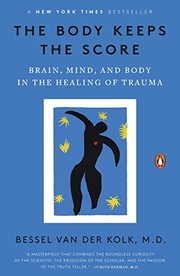
Bessel van der Kolk's 2014 book revolutionized public understanding of how trauma affects the body and brain. Drawing on three decades of clinical experience and research, van der Kolk demonstrates that trauma is not merely a psychological event but a physiological one, reshaping the brain's alarm systems and the body's stress responses. The Body Keeps the Score spent over 200 weeks on the New York Times bestseller list, a remarkable achievement for a clinical work. Van der Kolk covers treatments ranging from EMDR and neurofeedback to yoga and theater, arguing that healing requires engaging the body rather than just talking. It is the award-winning book that therapists and patients alike call indispensable.
22. Quiet: The Power of Introverts in a World That Can't Stop Talking by Susan Cain

Susan Cain's 2012 book challenged the cultural bias toward extroversion that dominates Western workplaces, schools, and social norms. Cain argues that introverts bring unique strengths -- deep thinking, careful listening, creative independence -- that are systematically undervalued in a society that rewards charisma and constant collaboration. Quiet became a massive bestseller and launched a cultural conversation about personality diversity that continues today. Cain's research spans neuroscience, psychology, and business history, but her writing is narrative and accessible. The book validated the experience of millions of introverts who had spent their lives feeling like something was wrong with them.
23. 12 Rules for Life by Jordan B. Peterson

Jordan Peterson's 2018 book combines clinical psychology, philosophy, mythology, and personal narrative into twelve principles for finding meaning and order in a chaotic world. The rules range from practical ("Stand up straight with your shoulders back") to philosophical ("Pursue what is meaningful, not what is expedient"). 12 Rules for Life has sold over 10 million copies and became one of the most discussed self-help books of the decade, generating passionate advocates and equally passionate critics. Peterson writes with unusual depth and intensity, drawing on Jung, Nietzsche, and biblical narrative alongside clinical case studies. The book resonated most powerfully with young men searching for direction and purpose.
24. The Happiness Project by Gretchen Rubin
Gretchen Rubin's 2009 book chronicles her year-long experiment in applying happiness research to daily life. Each month she focused on a different area -- energy, marriage, work, play, mindfulness -- testing specific strategies and reporting the results with characteristic honesty and humor. The Happiness Project spent over two years on the New York Times bestseller list and inspired a global movement of readers conducting their own happiness experiments. Rubin's strength is translating abstract research findings into concrete daily practices. The book is neither preachy nor naive about the difficulty of change. It is the self-help book for people who prefer experiments to affirmations.
25. Outliers: The Story of Success by Malcolm Gladwell
Malcolm Gladwell's 2008 book challenges conventional narratives about individual achievement by examining the hidden factors -- cultural legacy, timing, practice hours, community -- that shape extraordinary success. Through stories of Bill Gates, the Beatles, and Canadian hockey players, Gladwell popularized the "10,000-hour rule" and demonstrated that success is far more contextual than we typically acknowledge. Outliers has sold millions of copies and permanently changed how many people think about talent and opportunity. Gladwell's gift is making social science research feel like storytelling, and Outliers is his most focused and compelling work. It is the bestseller that made "opportunity" as important a concept as "ability" in discussions of achievement.
Best Self-Help Books by Sub-Category
Best Self-Help for Productivity
If your primary goal is getting more done with less friction, start with Deep Work by Cal Newport for focus strategy and Atomic Habits by James Clear for building productive routines. The 7 Habits of Highly Effective People by Stephen Covey provides the philosophical foundation for all productivity thinking, while The Power of Habit by Charles Duhigg explains the neuroscience behind why routines stick or fail. These four books together provide a complete system for productive work and life.
Best Self-Help for Relationships
Relationship improvement begins with The 5 Love Languages by Gary Chapman, which gives couples a shared framework for understanding each other's emotional needs. Daring Greatly by Brene Brown addresses the vulnerability required for genuine intimacy. How to Win Friends and Influence People by Dale Carnegie remains indispensable for professional relationships and social skills. And Emotional Intelligence by Daniel Goleman provides the scientific foundation for understanding why some people navigate relationships effortlessly while others struggle.
Best Self-Help for Mindset
Changing how you think is the foundation of all other change. Mindset by Carol Dweck provides the research framework. The Power of Now by Eckhart Tolle addresses the mental chatter that keeps people stuck. The Subtle Art of Not Giving a F*ck by Mark Manson offers a philosophical recalibration of values and priorities. And Man's Search for Meaning by Viktor Frankl demonstrates that meaning can be found in even the most extreme circumstances. These four books together constitute a comprehensive mindset transformation.
Best Self-Help for Beginners
If you have never read a self-help book and want to start with the most accessible and immediately applicable options, begin with Atomic Habits by James Clear -- it is clear, practical, and produces visible results within weeks. Follow it with You Are a Badass by Jen Sincero for motivation and mindset, and The Four Agreements by Don Miguel Ruiz for a simple philosophical framework. The Happiness Project by Gretchen Rubin is also ideal for beginners because it models the process of applying self-help principles to an ordinary life.
Frequently Asked Questions
What is the single best self-help book to start with?
Atomic Habits by James Clear is the best starting point for most people. It is backed by research, written in plain language, and provides immediately actionable strategies. Unlike many self-help books that inspire temporarily and then fade, Atomic Habits gives you a system that compounds over time. If your primary challenge is mindset rather than habits, start with Mindset by Carol Dweck instead.
Do self-help books actually work?
The best ones do, but only if you apply what they teach. Research on bibliotherapy -- using books as therapeutic tools -- shows that well-structured self-help books can produce measurable improvements in areas like anxiety, depression, and habit formation. The key is choosing books that are evidence-based rather than anecdotal and then treating the advice as something to practice, not merely read. The books on this list were selected specifically because they provide frameworks that translate into action.
What is the difference between self-help and personal development?
The terms are largely interchangeable, though "personal development" has become the preferred label for many readers and authors who want to avoid the stigma sometimes associated with "self-help." Personal development tends to emphasize skill-building and professional growth, while self-help traditionally covers a broader range including emotional health, relationships, and spirituality. The books on this list span both definitions. For more on the professional side, see our guides to the best selling business books and the best selling personal finance books.
Are self-help books good for listening as audio?
Self-help books are excellent for audio consumption. The conversational tone that characterizes the best personal development writing translates naturally to spoken word, and many authors -- like Brene Brown and Mark Manson -- narrate their own audiobooks with an authenticity that enhances the material. Listening to self-help books during commutes or workouts also creates a natural repetition loop that reinforces the concepts. For deeper exploration, see our guide to the best selling psychology books.
More Personal Development Recommendations
If you enjoyed this list, explore related genres for more growth-oriented reading:
- Best Selling Psychology Books -- the science behind human behavior
- Best Selling Business Books -- leadership, strategy, and career growth
- Best Selling Personal Finance Books -- money management and wealth building
Discover your next great self-help read without extra screen time. speakeasy converts book reviews, author interviews, and literary articles into audio you can enjoy anywhere. Paste any URL and listen -- 3 free articles per week, no account needed.