The best selling philosophy books prove that humanity's deepest questions never go out of style. For more than two thousand years, philosophers have wrestled with how to live well, what justice means, whether free will exists, and what gives life meaning. These questions feel as urgent today as they did when Plato wrote The Republic or Marcus Aurelius journaled from a military camp on the Danube. The modern resurgence of interest in philosophy, particularly Stoicism, has brought ancient wisdom to new audiences through accessible translations and contemporary applications. But philosophy is far broader than any single school of thought. This guide covers the 25 best selling philosophy books of all time, spanning ancient Greek thought, Eastern traditions, existentialism, ethics, and modern popular philosophy. Whether you are encountering these ideas for the first time or returning to them after years away, these are the books that have shaped how millions of people think about existence.
What Makes a Great Philosophy Book?
A great philosophy book does something rare: it changes how you think. Not just what you think about a particular topic, but the structure of your thinking itself. The best philosophy books present ideas with enough clarity that a motivated reader can follow the argument, enough depth that the ideas reward repeated engagement, and enough honesty that the author confronts objections rather than ignoring them. Accessibility matters, but not at the cost of rigor. A philosophy book that oversimplifies complex ideas does its readers a disservice, while one that is needlessly obscure serves only the author's ego. The books on this list span millennia, cultures, and traditions, but they share a common quality: they take the reader seriously enough to challenge them, and they repay that challenge with genuine insight.
The Best Selling Philosophy Books of All Time
1. Meditations by Marcus Aurelius
Marcus Aurelius never intended for anyone to read his Meditations. Written during military campaigns in the second century, these private journal entries represent a Roman emperor's attempt to hold himself to the principles of Stoic philosophy under extraordinary pressure. The result is the most intimate and practical philosophical text from the ancient world. Marcus reminds himself that reputation is meaningless, that obstacles are opportunities for virtue, and that death is a natural process unworthy of fear. The writing is direct and often surprisingly modern in its psychological insight. It has remained continuously in print for centuries and has experienced a dramatic sales surge in the 2010s and 2020s as the modern Stoic movement has grown. No book better demonstrates philosophy as a daily practice rather than an academic exercise.
2. The Republic by Plato

Plato's Republic, written around 375 BCE, remains the foundational text of Western political philosophy and one of the most debated books ever written. Structured as a dialogue led by Socrates, it asks what justice means for both the individual and the state, constructing an ideal city as a thought experiment to answer that question. The Allegory of the Cave, in which prisoners mistake shadows for reality, has become one of the most famous metaphors in intellectual history. The book covers education, the nature of knowledge, the structure of the soul, and the relationship between the philosopher and political power. It is demanding reading, but modern translations by scholars like G.M.A. Grube and Allan Bloom have made it more accessible than ever. Twenty-four centuries after its composition, it still provokes genuine disagreement about justice, truth, and governance.
3. Beyond Good and Evil by Friedrich Nietzsche
Nietzsche's 1886 work is a frontal assault on the philosophical traditions he inherited, challenging the assumptions underlying Western morality, religion, and metaphysics. Nietzsche argues that the distinction between good and evil is not objective truth but a construction of specific cultural and historical conditions, particularly what he calls "slave morality" rooted in resentment. The book is written in aphorisms and short essays rather than systematic argument, giving it an energy and provocation that more structured philosophical works often lack. Nietzsche's influence on existentialism, postmodernism, and contemporary ethics is immeasurable. The book demands active, critical reading. Nietzsche does not want agreement. He wants readers to think for themselves, even about his own claims.
4. Being and Nothingness by Jean-Paul Sartre
Sartre's 1943 magnum opus is the most rigorous statement of existentialist philosophy ever written. At its core is the claim that existence precedes essence: humans have no predetermined nature and are radically free to define themselves through their choices. This freedom is absolute and inescapable, which is why Sartre says we are "condemned to be free." The book examines bad faith (self-deception about our freedom), the look of the Other (how being observed shapes consciousness), and the nature of desire and interpersonal relationships. It is a difficult book, dense with phenomenological analysis, but its core insights about freedom, responsibility, and authenticity have permeated modern culture so thoroughly that many people absorb Sartre's ideas without knowing their source. For readers willing to wrestle with the text, it remains one of the most rewarding intellectual experiences available.
5. The Art of War by Sun Tzu
Sun Tzu's ancient Chinese treatise on military strategy has transcended its original context to become one of the most widely read books in human history. Composed around the fifth century BCE, it presents principles of conflict, leadership, and strategic thinking in concise, aphoristic form. "All warfare is based on deception." "Appear weak when you are strong, and strong when you are weak." "The supreme art of war is to subdue the enemy without fighting." The book's principles have been applied to business, politics, sports, and personal strategy far beyond the battlefield. Its enduring appeal lies in its recognition that conflict is not just about force but about intelligence, timing, positioning, and psychology. It is the most influential strategy text ever written.
6. Tao Te Ching by Lao Tzu
The Tao Te Ching, attributed to the sage Lao Tzu and composed around the sixth century BCE, is the foundational text of Taoism and one of the most translated books in history. In eighty-one brief, poetic chapters, it presents a philosophy of harmony, simplicity, and non-action (wu wei). The Tao, or "the Way," is described as the fundamental principle underlying all reality, but it cannot be fully articulated in language. "The Tao that can be spoken is not the eternal Tao." The book's paradoxical style, where strength comes from yielding and knowing comes from not-knowing, challenges Western assumptions about power, control, and knowledge. It has influenced philosophy, art, religion, and governance for two and a half millennia and continues to find new readers drawn to its quiet wisdom.
7. Thus Spoke Zarathustra by Friedrich Nietzsche
Nietzsche's 1883-1885 philosophical novel is unlike anything else in the Western philosophical canon. Written as a quasi-biblical narrative following the prophet Zarathustra, it presents Nietzsche's most famous ideas: the death of God, the Ubermensch (the ideal of human self-overcoming), and the eternal recurrence (the hypothetical that you would live your life exactly as it has been, infinitely). The writing is lyrical, prophetic, and deliberately provocative. Nietzsche chose a literary form because he believed his ideas could not be adequately expressed in academic prose. The book is exhilarating and disorienting in equal measure. It demands that the reader abandon comfortable moral frameworks and confront the question of what values are worth holding when traditional certainties have collapsed.
8. The Consolation of Philosophy by Boethius
Written in a prison cell in 524 CE while Boethius awaited execution, The Consolation of Philosophy is one of the most remarkable texts from the late ancient world. The book takes the form of a dialogue between the imprisoned Boethius and Lady Philosophy, who appears to comfort him and remind him of the truths he once knew. Their conversation covers fate, fortune, happiness, free will, and the nature of goodness. The central argument is that true happiness cannot depend on external circumstances, because fortune is inherently unstable. Only the pursuit of the highest good, which Boethius identifies with God, provides lasting consolation. The book was one of the most widely read texts in medieval Europe and remains a powerful meditation on finding meaning in suffering.
9. Sophie's World by Jostein Gaarder

Jostein Gaarder's 1991 novel is the most successful introduction to philosophy ever written, selling over 40 million copies worldwide. The story follows fourteen-year-old Sophie Amundsen, who begins receiving mysterious letters asking questions like "Who are you?" and "Where does the world come from?" These letters lead her through the entire history of Western philosophy, from the pre-Socratics through the Enlightenment to modern existentialism. The narrative frame becomes increasingly metafictional, raising its own philosophical questions about the nature of reality and fiction. It is a novel and a textbook simultaneously, and it has introduced more people to philosophy than any other single book. For readers who find primary philosophical texts intimidating, Sophie's World provides a narrative bridge that makes the ideas accessible and compelling.
10. Letters from a Stoic by Seneca
Seneca's letters to his friend Lucilius, written in the first century CE, are the most accessible and practically oriented texts from ancient Stoicism. Unlike the dense theoretical works of earlier Stoics, Seneca writes as a mentor sharing hard-won wisdom about grief, anger, time, friendship, wealth, and mortality. His prose is elegant and quotable: "It is not that we have a short time to live, but that we waste a great deal of it." "We suffer more often in imagination than in reality." The letters read like a conversation with a wise and honest friend, one who admits his own failures and struggles while gently pushing the reader toward greater self-awareness and equanimity. For readers approaching Stoicism for the first time, Seneca is often the most rewarding starting point.
11. The Daily Stoic by Ryan Holiday
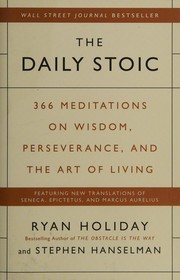
Ryan Holiday's 2016 book brought Stoic philosophy to a mainstream audience by organizing it into a daily meditation format. Each of the 366 entries pairs a quotation from Marcus Aurelius, Seneca, Epictetus, or another Stoic thinker with Holiday's interpretation and application to modern life. The book covers perception, action, and will across the calendar year. Holiday's contribution is not original philosophy but effective curation and translation. He makes ancient ideas feel immediately relevant to contemporary challenges like career stress, social media anxiety, and the pressure to succeed. The book has sold millions of copies and serves as a gateway for readers who then explore the primary Stoic texts on their own.
12. Zen and the Art of Motorcycle Maintenance by Robert M. Pirsig
Robert Pirsig's 1974 novel, rejected by 121 publishers before becoming a bestseller, is one of the most unusual philosophical texts ever written. The narrative follows a father and son on a motorcycle trip across the American West, interspersed with philosophical explorations of quality, technology, rationality, and the Greek roots of Western thought. Pirsig develops a "Metaphysics of Quality" that attempts to reconcile the romantic and classical views of the world. The book is challenging and rewards patient reading, unfolding its ideas gradually across hundreds of pages. It has sold over 5 million copies and resonated with generations of readers drawn to its blend of road narrative, autobiography, and genuine philosophical inquiry.
13. The Stranger by Albert Camus
Camus's 1942 novel is the most widely read work of existentialist fiction and a devastating exploration of absurdism. Meursault, the narrator, is a man who refuses to perform the emotional responses society expects of him. When his mother dies, he does not cry. When he commits a murder, he cannot explain why. His trial becomes less about the killing than about his failure to conform to social conventions of grief and remorse. Camus uses this spare, sun-bleached narrative to dramatize the absurd condition: the gap between humanity's desire for meaning and the universe's refusal to provide it. The novel is short, precise, and profoundly unsettling. It has sold millions of copies and introduced generations of readers to existentialist thought.
14. At the Existentialist Cafe by Sarah Bakewell
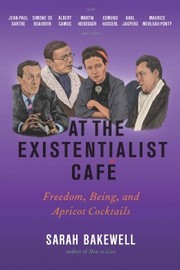
Sarah Bakewell's 2016 book is the best narrative history of existentialism in print. By focusing on the lives and relationships of the movement's central figures, Husserl, Heidegger, Sartre, Beauvoir, Merleau-Ponty, and Camus, Bakewell makes phenomenology and existentialism not just understandable but genuinely exciting. The book traces how a method of philosophical investigation developed in early twentieth-century Germany transformed into a cultural movement that shaped literature, politics, psychology, and popular culture across the globe. Bakewell writes with warmth, wit, and intellectual precision, making complex ideas accessible without condescending. It is the ideal companion volume for readers encountering the primary existentialist texts, providing context that enriches understanding of each work.
15. The Book of Joy by the Dalai Lama and Desmond Tutu
The Book of Joy records a week-long conversation between the Dalai Lama and Archbishop Desmond Tutu, two of the most respected spiritual leaders of the modern era, on the subject of finding lasting happiness in a world of suffering. Written with Douglas Abrams, the book combines personal stories, philosophical reflection, and practical exercises. Both men have experienced profound suffering, the Dalai Lama's exile from Tibet and Tutu's decades fighting apartheid, yet both radiate an infectious joy that the book attempts to explain and make accessible. The conversation touches on loneliness, fear, anger, grief, illness, and death, and the eight pillars of joy they identify (perspective, humility, humor, acceptance, forgiveness, gratitude, compassion, and generosity) synthesize Buddhist and Christian wisdom into a universal framework.
16. The Myth of Sisyphus by Albert Camus
Camus's 1942 philosophical essay opens with one of the most famous sentences in philosophy: "There is but one truly serious philosophical problem, and that is suicide." From this stark beginning, Camus examines whether life is worth living in the absence of meaning, concluding that it is. The absurd hero, personified by Sisyphus condemned to roll a boulder uphill for eternity, finds purpose not in the task but in the revolt against meaninglessness. "One must imagine Sisyphus happy." The essay is a passionate, lyrical argument for engagement with life despite its fundamental absurdity. It has shaped existentialist thought as much as any work by Sartre or Heidegger, and its influence extends into literature, psychology, and popular culture.
17. Nicomachean Ethics by Aristotle
Aristotle's lectures on ethics, compiled around 340 BCE, laid the foundation for virtue ethics that has experienced a significant revival in contemporary moral philosophy. The central concept is eudaimonia, often translated as happiness or flourishing, which Aristotle defines not as pleasure but as a life of virtuous activity in accordance with reason. Virtue, for Aristotle, is a mean between extremes: courage lies between cowardice and recklessness, generosity between stinginess and extravagance. The work covers friendship, justice, pleasure, and the contemplative life with analytical precision that remains impressive twenty-four centuries later. Modern translations by Terence Irwin and Robert Bartlett have made the text more accessible, and its emphasis on character development resonates with contemporary readers interested in practical ethics.
18. Man's Search for Meaning by Viktor Frankl
Viktor Frankl's 1946 book, born from his survival of Auschwitz, argues that meaning is the primary human motivation and that it can be found even in the most extreme suffering. The first half recounts Frankl's concentration camp experience with harrowing clarity. The second half outlines logotherapy, his school of psychotherapy based on the premise that the drive for meaning, not pleasure or power, is the fundamental human force. Frankl's famous observation that "those who have a 'why' to live, can bear with almost any 'how'" echoes Nietzsche and has inspired millions of readers to examine the sources of meaning in their own lives. The book has sold over 16 million copies and bridges philosophy, psychology, and memoir.
For more on the psychology of meaning and motivation, see our guide to best selling psychology books.
19. The Prince by Niccolo Machiavelli
Machiavelli's 1532 treatise on political power remains the most infamous work of political philosophy in the Western canon. Written as advice to Lorenzo de' Medici, it argues that effective rulers must be willing to act immorally when circumstances demand it, separating political ethics from personal morality. "It is better to be feared than loved, if you cannot be both." The book's candid examination of power, deception, and violence in politics earned Machiavelli a reputation as an advocate of evil, but modern scholars generally read The Prince as a realistic analysis of how power actually operates rather than a prescription for how it should. Its influence on political theory, international relations, and leadership thinking has been enormous and enduring.
20. The Enchiridion by Epictetus

The Enchiridion, or "Handbook," distills the Stoic teachings of Epictetus, a formerly enslaved person who became one of antiquity's most influential philosophers, into a brief, practical manual for living well. The opening line establishes the core Stoic principle: "Some things are in our control and others are not." From this foundation, Epictetus builds a philosophy of radical acceptance of what cannot be changed and radical responsibility for what can. The text covers desire, aversion, social relations, and the proper response to hardship with the directness of someone who experienced genuine suffering. At roughly fifty short chapters, it can be read in an hour but rewards a lifetime of return visits. It remains the most concentrated statement of Stoic practical philosophy.
21. The Analects by Confucius

The Analects, compiled by Confucius's students in the fifth century BCE, is the foundational text of Confucian thought and one of the most influential books in human history. Organized as a collection of sayings, dialogues, and anecdotes, it presents Confucius's teachings on ethics, governance, education, and the cultivation of virtue. Central concepts include ren (benevolence or humaneness), li (ritual propriety), and the ideal of the junzi (the exemplary person who cultivates virtue through self-discipline and study). Confucius emphasizes relationships, duty, and the transformative power of education. The text shaped Chinese civilization for over two millennia and continues to influence East Asian culture, politics, and philosophy. Modern translations by Edward Slingerland and Annping Chin have made the text more accessible to Western readers.
22. A History of Western Philosophy by Bertrand Russell
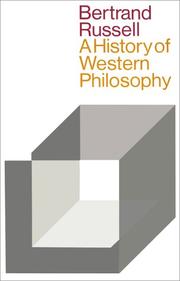
Bertrand Russell's 1945 survey of Western philosophy from the pre-Socratics to the early twentieth century won the Nobel Prize in Literature and remains one of the most widely read introductions to the philosophical tradition. Russell writes with clarity, wit, and strong opinions, making even the most abstract thinkers entertaining to read about. His treatment of individual philosophers is concise and opinionated, which means specialists often disagree with his interpretations, but no one disputes his ability to make complex ideas accessible. The book covers logic, metaphysics, ethics, and political philosophy across nearly 900 pages. It is best read as one brilliant philosopher's highly personal tour of the tradition rather than as a neutral textbook, and in that role it has no equal.
23. Siddhartha by Hermann Hesse
Hermann Hesse's 1922 novella tells the story of a young Brahmin's spiritual journey in ancient India, exploring themes of self-discovery, enlightenment, and the limitations of received wisdom. Siddhartha encounters the Buddha but chooses his own path, passing through asceticism, sensual indulgence, and worldly success before finding wisdom through the natural world. The book is a meditation on the difference between knowledge and wisdom, arguing that true understanding cannot be taught but must be experienced. Hesse's prose is lyrical and meditative, reflecting the Eastern philosophy that fascinated him throughout his life. The novel has sold millions of copies, particularly among young readers drawn to its insistence that each person must find their own way to meaning.
24. The Problems of Philosophy by Bertrand Russell
Russell's 1912 introduction to philosophy is arguably the best starting point for anyone new to the discipline. In just over 100 pages, Russell covers appearance and reality, the existence of matter, idealism, knowledge by acquaintance and by description, induction, universals, and the value of philosophy. The writing is a model of clarity, demonstrating that philosophical precision and accessibility are not opposing goals. Russell does not patronize the reader but rather respects them enough to present genuine philosophical problems in their full difficulty while making the arguments transparent. The book has remained in print for over a century and has introduced more university students to philosophy than perhaps any other single text.
25. The Courage to Be by Paul Tillich
Paul Tillich's 1952 theological and philosophical work examines anxiety as the fundamental human condition and courage as the response that affirms existence despite the threat of meaninglessness. Tillich distinguishes three types of anxiety: the anxiety of fate and death, of emptiness and meaninglessness, and of guilt and condemnation. Each requires a specific form of courage to overcome. The book draws on existentialism, psychoanalysis, and Protestant theology, synthesizing Kierkegaard, Heidegger, and Freud into a framework that speaks to both religious and secular readers. Tillich's concept of "the courage to be" as affirmation of life in the face of nonbeing has influenced theology, psychology, and philosophy across traditions, and the book remains a powerful resource for anyone confronting existential anxiety.
Best Philosophy Books by Sub-Category
Best Stoic Philosophy
Stoicism has experienced a remarkable modern revival, and these books represent the tradition's best. Meditations by Marcus Aurelius is the most personal and practically oriented Stoic text, written as a private journal by a man who ruled an empire. Letters from a Stoic by Seneca offers Stoicism as warm, practical mentorship, covering everything from grief to time management with literary elegance. The Enchiridion by Epictetus is the most concentrated statement of Stoic principles, distilled into a handbook brief enough to carry in your pocket. The Daily Stoic by Ryan Holiday serves as an accessible gateway, pairing ancient quotations with modern interpretation across 366 daily meditations. Start with Seneca if you want warmth, Marcus Aurelius if you want intimacy, and Epictetus if you want directness.
Best Existentialist Works
Existentialism asks what it means to be human when meaning is not given but created. Being and Nothingness by Jean-Paul Sartre is the movement's most rigorous philosophical statement, arguing that radical freedom and radical responsibility are inescapable. The Stranger by Albert Camus dramatizes the absurd condition through fiction, while The Myth of Sisyphus examines it through philosophical essay, both arriving at the conclusion that life is worth living despite its lack of inherent meaning. At the Existentialist Cafe by Sarah Bakewell provides the narrative context that makes the primary texts richer, telling the story of the movement through the lives of its central figures. Man's Search for Meaning by Viktor Frankl bridges existentialism and psychology, finding meaning even in the extremity of the Holocaust.
Best Philosophy for Beginners
Philosophy can seem impenetrable, but the right starting points make all the difference. Sophie's World by Jostein Gaarder introduces the entire history of Western philosophy through an engaging novel that has sold over 40 million copies. The Problems of Philosophy by Bertrand Russell covers fundamental philosophical questions in just over 100 pages with unmatched clarity. At the Existentialist Cafe by Sarah Bakewell makes existentialism and phenomenology accessible through vivid narrative. A History of Western Philosophy by Bertrand Russell provides a comprehensive, opinionated survey that is as entertaining as it is educational. And The Daily Stoic by Ryan Holiday offers a low-commitment daily format that builds philosophical thinking as a habit. Begin with Sophie's World or Russell's Problems, then follow whichever tradition captures your interest.
For related exploration of the human mind and behavior, see our best selling self-help books guide.
Best Eastern Philosophy
Eastern philosophical traditions offer perspectives that challenge and complement Western assumptions. Tao Te Ching by Lao Tzu is the foundational text of Taoism, presenting a philosophy of harmony and non-action in eighty-one poetic chapters. The Analects by Confucius established the ethical framework that shaped Chinese civilization for over two millennia, emphasizing relationships, virtue, and education. Siddhartha by Hermann Hesse, while a Western novel, beautifully captures the Buddhist insight that wisdom must be experienced rather than taught. The Art of War by Sun Tzu transcends military strategy to present principles of strategic thinking applicable to any domain of life. The Book of Joy by the Dalai Lama and Desmond Tutu brings Buddhist philosophy into dialogue with Christianity, finding common ground on the path to lasting happiness.
For books that bridge philosophical inquiry and spiritual practice, see our guide to best selling spirituality books.
Frequently Asked Questions
What is the best philosophy book for someone who has never read philosophy?
Sophie's World by Jostein Gaarder is the ideal starting point for complete beginners, because it presents the entire history of Western philosophy as an engaging novel. If you prefer a direct, non-fiction approach, The Problems of Philosophy by Bertrand Russell covers fundamental questions in roughly 100 pages with extraordinary clarity. For those drawn to practical wisdom rather than abstract theory, Letters from a Stoic by Seneca reads like advice from a wise friend and requires no prior philosophical knowledge. The key is to start with something that matches your interests, whether that is ethics, the meaning of life, political philosophy, or Eastern thought, and let curiosity guide you deeper.
Is Stoicism still relevant today?
Stoicism is arguably more relevant now than at any point since antiquity. Its core principles, distinguishing between what you can and cannot control, focusing on character over circumstance, and practicing equanimity in the face of adversity, address the specific anxieties of modern life with remarkable precision. Cognitive behavioral therapy, the most evidence-based form of psychotherapy, was directly influenced by Stoic exercises. The modern Stoic movement has attracted millions of practitioners who use Marcus Aurelius, Seneca, and Epictetus as daily guides for navigating career pressure, social media anxiety, and uncertainty about the future. The Stoics were not emotionless. They were deeply engaged with life while maintaining the perspective to respond thoughtfully rather than reactively.
What is the difference between existentialism and absurdism?
Existentialism, as articulated by Sartre, holds that humans create their own meaning through choices and commitments in a universe without inherent purpose. We are "condemned to be free" and responsible for defining ourselves through action. Absurdism, as developed by Camus, begins from the same premise that the universe is meaningless but argues that the attempt to create meaning is itself absurd, a futile rebellion against an indifferent cosmos. Where existentialism finds resolution in authentic choice, absurdism finds it in the refusal to stop searching for meaning even while acknowledging the search will never succeed. Camus's Sisyphus, eternally pushing a boulder uphill, is happy precisely because he embraces the absurd rather than trying to resolve it.
Can reading philosophy actually change how you live?
The Stoics would say that philosophy that does not change how you live is not philosophy at all. Marcus Aurelius wrote his Meditations as a daily practice of self-improvement, not as an academic exercise. Epictetus taught philosophy as a craft to be practiced, like medicine or carpentry. Modern research in cognitive behavioral therapy confirms that philosophical reframing techniques genuinely reduce anxiety, improve emotional regulation, and increase resilience. Reading philosophy does not automatically change behavior, but engaging with it actively, questioning your assumptions, testing ideas against your experience, and practicing new ways of thinking, can produce measurable changes in how you respond to adversity, relate to others, and understand your own values.
Discover your next great philosophy read without extra screen time. speakeasy converts book reviews, author interviews, and literary articles into audio you can enjoy anywhere. Paste any URL and listen -- 3 free articles per week, no account needed.