The best selling spirituality books have shaped how millions of people understand consciousness, purpose, and the human experience. These are not books confined to any single religion or dogma. They draw from Buddhism, Hinduism, Taoism, Christianity, Sufism, indigenous wisdom, and secular mindfulness traditions to address the questions that keep people awake at night: Why am I here? How do I find peace? What does it mean to live a meaningful life? Whether you are a lifelong practitioner or someone who picked up meditation last month, the books on this list offer frameworks for navigating the inner landscape that no amount of productivity advice can replace. They have sold tens of millions of copies collectively, and their continued popularity tells us something important about what people are searching for in an age of constant distraction and noise.
This list is part of our broader guide to Browse all genres →.
What Makes a Great Spirituality Book?
A great spirituality book does not require you to abandon your intellect at the door. The best ones invite skepticism, welcome questions, and present ideas that hold up under scrutiny even as they point toward experiences that transcend rational analysis. They are accessible without being shallow. They challenge without being preachy. The writing itself matters too -- spiritual insight loses its power when buried under jargon or academic abstraction. The books that endure are the ones that meet readers exactly where they are, whether that is in the middle of a crisis, at the start of a contemplative practice, or simply curious about what lies beneath the surface of daily life. Great spiritual writing changes how you see the world, not just what you believe about it.
The Best Selling Spirituality Books of All Time
1. The Power of Now by Eckhart Tolle
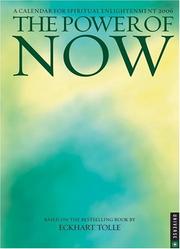
Published in 1997, The Power of Now became one of the most influential spiritual books of the modern era after Oprah Winfrey championed it in 2000. Tolle presents a deceptively simple argument: most human suffering is self-created through compulsive thinking about the past and future, and the antidote is full presence in the current moment. The book uses a question-and-answer format that makes dense metaphysical concepts feel conversational. Tolle draws from Buddhism, Hinduism, and Christian mysticism without pledging allegiance to any tradition. His concept of the "pain-body" -- an accumulated residue of emotional pain that feeds on negative thinking -- gave millions of readers a framework for understanding their own reactive patterns. Over 10 million copies sold worldwide.
2. A New Earth by Eckhart Tolle

Tolle's follow-up expanded on the ideas in The Power of Now by focusing specifically on the ego and its role in both personal suffering and collective dysfunction. A New Earth argues that humanity is in the early stages of a shift in consciousness, moving from ego-identification to a deeper awareness. The book became a cultural phenomenon when it was selected for Oprah's Book Club in 2008, leading to a ten-week online seminar that drew 35 million participants. Tolle's central metaphor -- that humans are like flowers emerging from the mud of unconsciousness -- captures the book's optimistic vision. It is less a manual for meditation and more a reframing of what it means to be human in a world dominated by mental noise and reactivity.
3. The Alchemist by Paulo Coelho

Paulo Coelho's allegorical novel follows Santiago, an Andalusian shepherd boy who travels from Spain to the Egyptian pyramids in pursuit of a recurring dream about buried treasure. Along the way he encounters a king, an alchemist, and the concept of a "Personal Legend" -- the idea that every person has a unique purpose and that the universe conspires to help those who pursue it. First published in Portuguese in 1988, The Alchemist was initially a commercial failure before word of mouth carried it to over 150 million copies sold in 80 languages. Critics sometimes dismiss it as simplistic, but its enduring appeal lies in its directness. Coelho strips away complexity to deliver a story about listening to your heart and trusting the journey, themes that resonate across cultures and belief systems.
4. Siddhartha by Hermann Hesse
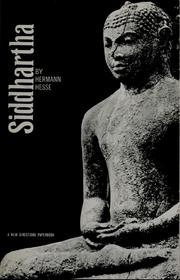
Hermann Hesse published Siddhartha in 1922, drawing on Buddhist and Hindu philosophy to tell the story of a young Indian man searching for enlightenment. Siddhartha tries every path available -- asceticism, sensual pleasure, wealth, family life -- before arriving at wisdom through direct experience rather than doctrine. The novel became a countercultural touchstone in the 1960s and continues to sell widely because its central insight feels perpetually fresh: true understanding cannot be taught or transmitted through words but must be lived. Hesse's prose has a meditative quality that mirrors the river imagery at the book's heart. At barely 150 pages, it packs more spiritual depth than books ten times its length.
5. The Four Agreements by Don Miguel Ruiz
Don Miguel Ruiz distilled Toltec wisdom into four principles: be impeccable with your word, don't take anything personally, don't make assumptions, and always do your best. Published in 1997, The Four Agreements has sold over 15 million copies in the United States alone. Its power lies in its simplicity. Each agreement sounds straightforward but reveals layers of difficulty in practice. Not taking things personally, for example, requires a fundamental shift in how you understand other people's behavior -- recognizing that their actions reflect their own reality, not yours. Ruiz writes in a direct, almost oral storytelling style that reflects his background in the Toltec tradition of passing down wisdom through spoken word.
6. The Untethered Soul by Michael A. Singer
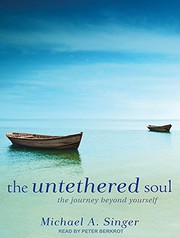
Michael Singer asks a disarmingly simple question: who are you? Not your name, your job, your story -- but the awareness behind all of those things. The Untethered Soul guides readers through the process of observing their own thoughts and emotions without identifying with them. Singer draws from yogic philosophy and presents consciousness as something separate from the mental chatter most people mistake for their identity. The book builds progressively, starting with accessible observations about the voice in your head and moving toward more challenging territory about death, surrender, and unconditional happiness. Published in 2007, it gained mainstream popularity through word of mouth and became a number one New York Times bestseller years after its initial release.
7. When Things Fall Apart by Pema Chodron
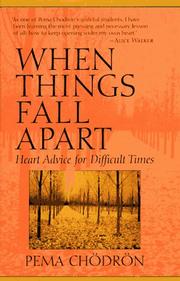
Pema Chodron, an American Tibetan Buddhist nun, wrote When Things Fall Apart as a guide for navigating life's most painful moments without running away. Drawing from the Buddhist concept of groundlessness, Chodron argues that the instinct to seek comfort and certainty is precisely what keeps people stuck in cycles of suffering. Instead, she suggests leaning into discomfort, sitting with uncertainty, and finding freedom in the willingness to not know. The book resonates particularly with people going through grief, divorce, illness, or any experience that shatters their sense of security. Chodron's tone is warm and unsentimental, and her teachings feel practical rather than abstract. It has become one of the most widely read Buddhist books in the Western world.
8. The Art of Happiness by the Dalai Lama and Howard C. Cutler
Psychiatrist Howard Cutler spent extended periods interviewing the Dalai Lama and then organized their conversations into a book that blends Eastern Buddhist philosophy with Western psychological research. The Art of Happiness argues that the purpose of life is happiness and that happiness is determined more by the state of one's mind than by external conditions. The Dalai Lama discusses compassion, dealing with suffering, handling anger, and cultivating inner peace, while Cutler provides clinical context and Western scientific frameworks that support or challenge these ideas. Published in 1998, the book became an international bestseller because it made the Dalai Lama's wisdom accessible to readers with no background in Buddhism. The conversational format makes complex philosophical ideas feel like advice from a thoughtful friend.
9. The Celestine Prophecy by James Redfield

James Redfield's 1993 novel blends adventure fiction with spiritual philosophy, following a narrator who travels to Peru to find an ancient manuscript containing nine insights about life and consciousness. Each insight builds on the previous one, covering topics like synchronicity, energy exchange between people, and the evolution of human awareness. Redfield originally self-published the book and sold copies out of his car before it became a number one New York Times bestseller. The Celestine Prophecy introduced millions of readers to concepts like energy fields and meaningful coincidences in a narrative format that made abstract spiritual ideas feel tangible. Its popularity in the mid-1990s helped catalyze the mainstream spiritual awakening movement.
10. Autobiography of a Yogi by Paramahansa Yogananda
First published in 1946, Autobiography of a Yogi introduced Western readers to yoga, meditation, and Indian spiritual traditions decades before these practices became mainstream. Yogananda recounts his childhood spiritual experiences, his training under Sri Yukteswar, and his mission to bring yoga to the West. The book includes accounts of miraculous events that will challenge skeptical readers, but its lasting impact lies in how vividly it portrays the guru-disciple relationship and the possibility of direct spiritual experience. Steve Jobs had it as the only book on his iPad and arranged for copies to be given to every attendee at his memorial service. It has been in continuous print for 80 years and remains a gateway text for people exploring Eastern spirituality.
11. The Book of Awakening by Mark Nepo
Mark Nepo wrote The Book of Awakening during and after his recovery from cancer, creating a 365-day devotional that blends poetry, personal reflection, and spiritual wisdom. Each entry is short enough to read in a few minutes but substantial enough to carry through the day. Nepo draws from Buddhist, Taoist, Christian, and Jewish traditions alongside his own experience of confronting mortality. The book gained widespread attention when Oprah selected it for her show, praising its capacity to help readers stay present and find meaning in ordinary moments. Nepo writes with the directness of someone who has faced death and returned with clarity about what matters. It functions as both a spiritual companion and a daily meditation practice.
12. The Seat of the Soul by Gary Zukav
Gary Zukav introduced the concept of "authentic power" -- power that comes from aligning personality with soul -- in this 1989 book that spent 31 weeks on the New York Times bestseller list. The Seat of the Soul argues that humanity is evolving from a species that pursues external power (the ability to manipulate the physical world) to one that seeks authentic power (harmony between intention and action). Zukav explores karma, intuition, and the role of the soul in human evolution. The book became a touchstone for the New Age movement and was championed by Oprah Winfrey, who called it one of the most important books she had ever read. Zukav's ideas about emotional awareness and responsible choice feel even more relevant in an era saturated with reactivity and distraction.
13. Wherever You Go, There You Are by Jon Kabat-Zinn

Jon Kabat-Zinn, the scientist who brought mindfulness meditation into mainstream medicine, wrote this book as an accessible introduction to mindfulness practice for people with no interest in Buddhism or spiritual traditions. Published in 1994, it strips meditation down to its essential elements: paying attention, on purpose, in the present moment, without judgment. Kabat-Zinn uses short chapters and practical exercises to guide readers into a practice that requires nothing beyond willingness and a few minutes of sitting still. The book avoids spiritual jargon almost entirely, making it one of the most recommended entry points for people curious about meditation but wary of religious frameworks. His work at the University of Massachusetts Medical Center provided the clinical evidence that meditation reduces stress, chronic pain, and anxiety.
14. Be Here Now by Ram Dass
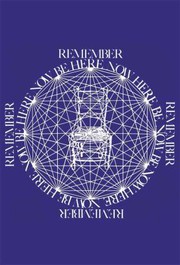
Richard Alpert was a Harvard psychology professor before LSD, a trip to India, and a guru named Neem Karoli Baba transformed him into Ram Dass. Be Here Now, published in 1971, documented that transformation in a format as unconventional as its content: the middle section is a psychedelic illustrated manual printed on brown paper with hand-lettered text. The book became the defining spiritual text of the 1970s counterculture, selling over 2 million copies. Its central message -- that the present moment is the only point of access to the divine -- predates Tolle by decades. Ram Dass blended Hinduism, Buddhism, and Western psychology with a humor and honesty that made Eastern spirituality feel personal rather than exotic. It remains a landmark of American spiritual literature.
15. The Seven Spiritual Laws of Success by Deepak Chopra

Deepak Chopra condensed his understanding of natural law and spiritual principles into seven daily practices: pure potentiality, giving, karma, least effort, intention and desire, detachment, and dharma. Published in 1994, the book reframes success not as the accumulation of wealth but as the ability to fulfill your deepest desires while contributing to the well-being of others. Each chapter is short and focused, making it possible to read the entire book in an afternoon. Chopra draws from Vedantic philosophy and quantum physics (his interpretations of the latter remain controversial among scientists) to argue that consciousness is the fundamental force behind all creation. Despite criticism from skeptics, the book has sold millions of copies and introduced mainstream audiences to concepts from Indian spiritual traditions.
16. The Road Less Traveled by M. Scott Peck

M. Scott Peck opens The Road Less Traveled with three words that set the tone for everything that follows: "Life is difficult." Published in 1978, the book spent over a decade on the New York Times bestseller list. Peck, a psychiatrist, argues that spiritual growth requires discipline, delayed gratification, and a willingness to confront pain rather than avoid it. He blends clinical psychology with spiritual exploration, moving from discussions of love and relationships to grace and the nature of evil. The book bridges the gap between psychotherapy and spirituality in a way that felt revolutionary at the time and remains relevant for readers who want spiritual depth without abandoning psychological rigor.
17. The Tao Te Ching by Lao Tzu

Written around the 6th century BCE, the Tao Te Ching is one of the foundational texts of Taoism and one of the most translated books in history. Its 81 short chapters use paradox, metaphor, and spare language to describe the Tao -- the fundamental, unnamed force that underlies all of reality. Lao Tzu advocates for simplicity, humility, and non-action (wu wei), arguing that the wisest approach to life is to align with the natural flow of things rather than forcing outcomes. Modern translations by Stephen Mitchell, Ursula K. Le Guin, and others have made the text accessible to contemporary readers. Its influence extends far beyond Taoism into leadership theory, environmental philosophy, and contemplative practice across traditions.
18. Man's Search for Meaning by Viktor Frankl
Viktor Frankl, an Austrian psychiatrist and Holocaust survivor, wrote Man's Search for Meaning based on his experiences in Nazi concentration camps. The first half recounts the daily horrors of camp life and his observations about which prisoners survived and why. The second half introduces logotherapy, Frankl's psychotherapeutic approach centered on the idea that the primary human drive is not pleasure (Freud) or power (Adler) but meaning. Frankl argues that people can endure almost any suffering if they can find purpose in it. Published in 1946, the book has sold over 16 million copies and is frequently cited as one of the most influential books of the twentieth century. Its spiritual dimensions emerge from lived experience rather than doctrine.
19. The Prophet by Kahlil Gibran
Kahlil Gibran's 1923 prose poetry collection follows a prophet named Almustafa who, before departing his adopted city, shares wisdom on love, marriage, children, work, joy, sorrow, freedom, pain, and death. Written in an elevated, biblical style, The Prophet has sold over 100 million copies and has been translated into more than 100 languages. It remains one of the most quoted spiritual texts at weddings, funerals, and graduation ceremonies. Gibran, a Lebanese-American artist and writer, drew from Christianity, Islam, Sufism, and his own mystical experiences to create a work that belongs to no tradition and all of them. Each chapter reads like a sermon from a sage who has seen the full range of human experience and distilled it into lyrical truth.
20. A Return to Love by Marianne Williamson
Marianne Williamson's 1992 book is based on the principles of A Course in Miracles, a channeled spiritual text that reframes Christianity through the lens of forgiveness and love. Williamson argues that fear is the root of all human dysfunction and that choosing love over fear in every situation is the path to both personal healing and social transformation. Her famous quote about "our deepest fear" being not inadequacy but power has been widely misattributed to Nelson Mandela. A Return to Love became a number one New York Times bestseller and positioned Williamson as one of the most prominent spiritual teachers in America. The book resonates with readers who want spiritual depth without leaving the Judeo-Christian framework.
21. The Miracle of Mindfulness by Thich Nhat Hanh
Vietnamese Zen master Thich Nhat Hanh wrote The Miracle of Mindfulness as a manual for his fellow monks during the Vietnam War, and it was later translated and published for Western audiences. The book presents mindfulness not as a meditation technique but as a way of living -- washing dishes mindfully, walking mindfully, eating mindfully. Thich Nhat Hanh's prose is gentle and precise, and his exercises are so simple they can feel deceptively easy. The book demonstrates that mindfulness does not require retreats, cushions, or special equipment. It requires only the decision to pay attention to what you are already doing. His approach has influenced the entire secular mindfulness movement and continues to serve as a foundational text for practitioners worldwide.
22. Radical Acceptance by Tara Brach
Tara Brach, a clinical psychologist and Buddhist meditation teacher, wrote Radical Acceptance to address what she calls the "trance of unworthiness" -- the pervasive sense of not being good enough that drives so much human suffering. Drawing from Buddhist psychology and her clinical work, Brach offers a practice that combines mindfulness with self-compassion. The book provides meditation instructions alongside personal stories and clinical examples that illustrate how radical acceptance works in real life. Brach's central argument is that freedom begins with accepting the full truth of your present experience, including the parts you wish were different. Published in 2003, the book has become a staple recommendation among therapists, meditation teachers, and recovery communities.
23. Living Untethered by Michael A. Singer
Singer's 2022 follow-up to The Untethered Soul goes deeper into the mechanics of consciousness and spiritual freedom. Living Untethered explores how stored impressions from past experiences (what yogic philosophy calls samskaras) create the patterns of thought and emotion that run most people's lives. Singer presents a systematic approach to releasing these stored energies rather than being controlled by them. The book builds on decades of Singer's personal meditation practice and his experience building and leading a spiritual community in Florida. It is more structured and philosophically rigorous than his earlier work, offering a roadmap for sustained spiritual development rather than a single insight about the nature of awareness.
24. The Wisdom of Insecurity by Alan Watts
Alan Watts, the British philosopher who became the foremost interpreter of Eastern philosophy for Western audiences, argued in this 1951 book that the search for security is itself the source of anxiety. Drawing from Zen Buddhism, Taoism, and Hinduism, Watts makes the case that trying to hold onto fixed beliefs, stable identities, and predictable outcomes is like trying to grip water -- the tighter you squeeze, the less you hold. The Wisdom of Insecurity challenges the Western assumption that happiness comes from controlling circumstances and proposes instead that genuine peace arises from embracing impermanence. Watts writes with wit and clarity that makes philosophical concepts feel immediate and personal. The book reads as urgently today as it did 75 years ago.
25. Awakening the Buddha Within by Lama Surya Das
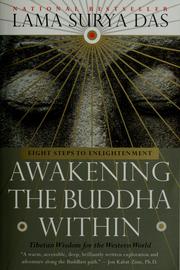
Lama Surya Das, an American-born lama in the Tibetan Buddhist tradition, wrote Awakening the Buddha Within as a comprehensive guide to Buddhist practice for Western readers. Published in 1997, the book covers meditation, ethics, mindfulness, and wisdom through the framework of the Noble Eightfold Path. What distinguishes it from other introductions to Buddhism is Surya Das's ability to translate traditional teachings into language that speaks directly to modern Western concerns -- stress, relationships, career dissatisfaction, and the search for meaning. He uses humor, personal anecdotes, and practical exercises to make the path feel achievable rather than monastic. The book remains one of the best-selling introductions to Tibetan Buddhism for non-specialist audiences.
Best Spirituality Books by Sub-Category
Best Mindfulness and Meditation Books
If your primary interest is developing a meditation practice or bringing mindfulness into daily life, these titles offer the clearest instruction. Wherever You Go, There You Are by Jon Kabat-Zinn is the gold standard for secular mindfulness, presenting the practice without any religious framework. The Miracle of Mindfulness by Thich Nhat Hanh takes a similar approach but with deeper roots in Zen tradition. The Power of Now by Eckhart Tolle provides the philosophical foundation for present-moment awareness, while Radical Acceptance by Tara Brach combines mindfulness with self-compassion in a way that is particularly helpful for people dealing with self-criticism. For a structured daily practice, The Book of Awakening by Mark Nepo offers 365 meditations that blend contemplation with lived experience.
Best Buddhist Literature
Buddhism has produced some of the most profound and accessible spiritual writing in the Western canon. When Things Fall Apart by Pema Chodron is the essential text on working with difficulty and uncertainty through a Buddhist lens. Siddhartha by Hermann Hesse tells the story of awakening in novel form, making Buddhist philosophy feel visceral and personal. The Art of Happiness by the Dalai Lama and Howard Cutler bridges Buddhist thought and Western psychology. Awakening the Buddha Within by Lama Surya Das provides a comprehensive path through the Eightfold Path adapted for contemporary life. The Miracle of Mindfulness by Thich Nhat Hanh demonstrates how meditation practice extends into every moment. Together, these books represent the range and depth of Buddhist spiritual literature available to Western readers.
Best Spiritual Memoirs
The best spiritual memoirs transform personal experience into universal insight. Autobiography of a Yogi by Paramahansa Yogananda is the original spiritual memoir, documenting one man's journey from childhood mystical experiences to becoming a world teacher. Be Here Now by Ram Dass charts the transformation of a Harvard professor into a spiritual seeker through psychedelics, India, and guru devotion. Man's Search for Meaning by Viktor Frankl extracts spiritual truth from the unimaginable suffering of the Holocaust. The Road Less Traveled by M. Scott Peck blends psychiatric case studies with the author's own spiritual evolution. These books succeed because their authors write from direct experience rather than theory, and their honesty about doubt, failure, and confusion makes their eventual insights feel earned.
Best Spirituality for Beginners
Starting a spiritual exploration can feel overwhelming given the sheer volume of traditions, practices, and terminology available. For newcomers, The Four Agreements by Don Miguel Ruiz offers four clear principles that require no prior knowledge of any tradition. The Alchemist by Paulo Coelho presents spiritual themes through an engaging story that reads like an adventure novel. The Untethered Soul by Michael Singer asks fundamental questions about identity and awareness in language that anyone can follow. The Seven Spiritual Laws of Success by Deepak Chopra provides a practical daily framework for applying spiritual principles. These books share a commitment to accessibility without sacrificing depth, making them ideal starting points for people who want to explore spiritual territory without committing to a specific path.
Related reading: Best selling philosophy books | Best selling self-help books | Best selling psychology books
Frequently Asked Questions
What is the difference between spirituality and religion?
Religion typically involves organized institutions, codified beliefs, rituals, and community worship centered on specific doctrines and texts. Spirituality is broader and more personal -- it refers to an individual's search for meaning, connection, and transcendence that may or may not involve religious structures. Many of the books on this list draw from religious traditions (Buddhism, Hinduism, Christianity, Taoism) while presenting their insights in a way that does not require adherence to any particular faith. You can be deeply spiritual without being religious, deeply religious without exploring independent spirituality, or both. The books that sell best tend to occupy the middle ground, offering wisdom rooted in tradition but framed for personal exploration.
Can reading about spirituality replace actual practice?
Reading about spirituality is to spiritual practice what reading about swimming is to swimming -- it can inform and inspire, but it cannot substitute for the experience itself. The authors on this list are nearly unanimous on this point. Tolle insists on present-moment awareness, not just understanding the concept. Kabat-Zinn provides meditation exercises meant to be practiced, not just read. Chodron points toward sitting with discomfort, not just thinking about it. The most effective approach is to read for inspiration and instruction, then put the book down and practice. Many readers find that alternating between reading and practice creates a productive cycle where each deepens the other.
Are these books appropriate for people of all faiths?
The majority of books on this list are written in a way that welcomes readers from any faith background, including those with no religious affiliation. Books like The Power of Now, The Untethered Soul, and Wherever You Go, There You Are are explicitly non-denominational. Others, like Autobiography of a Yogi and The Miracle of Mindfulness, are rooted in specific traditions (Hinduism and Buddhism, respectively) but present their teachings in universally accessible terms. A Return to Love has the strongest ties to a specific framework (Christian-adjacent through A Course in Miracles) but is read widely by people of all backgrounds. The common thread is that these authors prioritize direct experience and personal transformation over doctrinal allegiance.
Where should I start if I have never read a spirituality book?
Start with the book whose premise interests you most, not the one with the most impressive reputation. If you want practical simplicity, begin with The Four Agreements. If you want to understand the role of presence and awareness, The Power of Now is the modern standard. If you prefer narrative over instruction, The Alchemist or Siddhartha will engage you as stories first and spiritual texts second. If you are drawn to meditation specifically, Wherever You Go, There You Are provides the gentlest entry point. The most important thing is to start reading and see what resonates. Spiritual books tend to find their readers at the right time.
Discover your next great spirituality read without extra screen time. speakeasy converts book reviews, author interviews, and literary articles into audio you can enjoy anywhere. Paste any URL and listen -- 3 free articles per week, no account needed.